Ann-Margret

  • The Cincinnati Kid (1965)

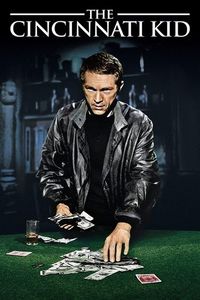
    The Cincinnati Kid (1965)

    (On Cable TV, October 2021) My disadvantage in watching poker movies is that (and hush, because this passes for a dishonourable secret), I don’t really understand poker. Not being a gambler nor having any poker-playing friends to entertain, I get the basics of the game and some of the better hands, but don’t ask me to explain the finer details of the game. And yet, the paradox is that I generally like poker movies: you don’t have to know exact odds to be fascinated by bluffs and high stakes. It helps that The Cincinnati Kid has plenty to offer even to non-poker players: Steve MacQueen in fine roguish form as a hotshot player about to rub shoulders with the best; Ann-Margret as a seducer; Edward G. Robinson in a great late-career performance as a notorious card shark; a rather convincing portrayal of New Orleans’ atmosphere. The period detail is interesting as well, but it quickly fades into the background once the cards are dealt and we’re back with the timeless high stakes of romance, cheating, deception and showmanship. Classic Hollywood legend Joan Blondell shows up in a small but memorable role, while director Norman Jewison marks this film as the one that broke him out of light comedies into the unpredictable blend of genres that marked the rest of his career. The similarities with the near-contemporary The Hustler are numerous, but despite knowing a lot more about pool than poker, I like The Cincinnati Kid best: the colourful cinematography is more appealing, MacQueen outdoes Newman in this specific case, and the ending seems gutsier and more meaningful as well. While not as compelling or steadily entertaining as other similar films, The Cincinnati Kid has nonetheless aged rather well, and remains accessible even to those who can’t quite distinguish their flushes from their suits.
  • Murderers’ Row (1966)

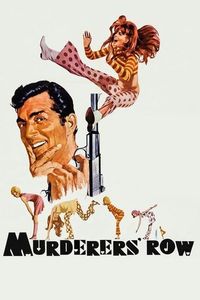
    Murderers’ Row (1966)

    (On TV, September 2021) Dean Martin is back as suave spy-photographer-womanizer Matt Helm in Murderers’ Row, a follow up to The Silencers: another Bond parody in which attractive co-stars help him foil dastardly plans. This second of four Helm movies is certainly in-line with the first: we get Helm at home with a plethora of gadgets optimized for the playboy lifestyle (pouring drinks in glasses, pouring women in pools), we get Dean Martin songs on the soundtrack (with another affectionate jab at Frank Sinatra), we get cartoonish villains, we get sexy co-stars. Indeed, Murderers’ Row benefits from a terrific co-star — none other than 1960s vintage Ann-Margret as a scientist’s daughter who comes to help the protagonist. The tone here is also an extension of the previous film: a mix of sex comedy in describing Helm’s alcoholic libidinous life, of spy thriller over-the-top evil plans, and of curiously restrained comedy to glue everything together. Spectacular sights include hovercrafts and an entire third act shot on a vast industrial construction site. It’s sort-of-fun if you can stomach Murderers’ Row’s good-natured sexism (if such a thing can exist), although it often feels — as with its predecessor—that it can’t quite commit to the comedy and leaves many jokes on the table. The pacing is also an issue, as the film seems far denser and more interesting in its first act, only to grow lax and repetitive in the second. Still, Martin is quite good at essentially playing his own rat-pack persona and if this is the kind of thing to make you smile, then Murderer’s Row should count as one of the better Bond imitators of the era.

  • The Last Remake of Beau Geste (1977)

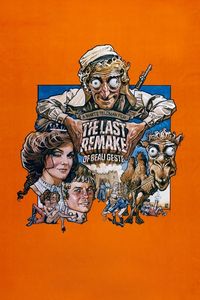
    The Last Remake of Beau Geste (1977)

    (YouTube Streaming, April 2021) I’m not often surprised by movie discussions, but when a colleague suggested The Last Remake of Beau Geste in the same lineage as Airplane! and Top Secret!, I had to admit that I’d never even heard of the film. Moments later, as I was looking up the film, seeing Ann-Margret in the cast sealed a hasty viewing. And my colleague was right — as far as silly absurdist comedies go, this is a film that feels more modern than its production date. Writer-director-star Marty Feldman goes for a wide variety of comic devices here, from dumb slapstick to meta-moviemaking jokes. The story takes off from the classic Beau Geste novels but soon turns to utter lunacy, as Michael York plays the impossibly virtuous Beau Geste, Feldman plays his bug-eyed “twin” brother and Ann-Margret schemes to steal the family fortune. We end up in the desert with the French Legion, taking aim at wartime movie clichés and meeting Gary Cooper (through the magic of editing shots of his 1930s take on Beau Geste against Feldman goofing off). A surprising number of familiar actors show up, from James Earl Jones playing a tribal chief to Terry-Thomas and Skip Milligan reinforcing the decidedly deep roots of the result in British comedy. Not every joke lands, is witty, or has aged well. (There’s a “used camel salesman” bit that really isn’t funny these days.) But the comedy has a fast-paced, almost anarchic quality that feels as if it emerged from the 1980s rather than the 1970s. The result is quite funny, and it’s a surprise to find out that The Last Remake of Beau Geste is somewhat forgotten today, perhaps overshadowed by later, more celebrated examples of the same kind of broad-shot comedy.

  • Once a Thief (1965)

    Once a Thief (1965)

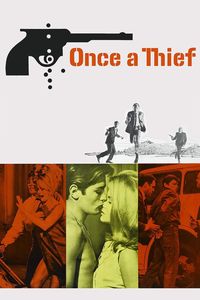
    (On Cable TV, March 2021) There’s a hit-and-miss quality to Once a Thief that steadily brings the film close to a good movie, then retreats and repeats. It does set itself an impossible high bar with a very modern-feeling opening sequence blending a great jazz piece with a robbery sequence. It soon settles for a much less flashy drama — the story of an immigrant (none other than Alain Delon!) trying to forget his past criminal life in order to settle down with his son and wife (none other than Ann-Margret!) but keeps getting dragged back into the criminal life. If you’re going to talk about a cast, this film has a pretty good one, with other roles played by Jack Palance and personal favourite Van Heflin. Ann-Margret’s red mane is wasted in the film’s black-and-white cinematography, but she gets quite a showcase for dramatic intensity with wild hair and screaming sequences. While Once a Thief came too late to be considered a classic film noir, it does have the advantage of its late production date: it’s socially conscious to a degree that would have been unusual in the 1940s and 1950s, concerned as it is about the immigrant experience and the way marginalized people are punished beyond fair retribution. The ending is quite harsh even by the standards of the genre, which paradoxically makes Once a Thief age better than its contemporaries.

  • Pocketful of Miracles (1961)

    Pocketful of Miracles (1961)

    (On Cable TV, December 2020) I’ll go easy on remakes if the director of the original is the one remaking it, and here we have Pocketful of Miracles, Frank Capra’s remake of his own 1933 romantic comedy Lady for a Day. The story of a mob boss transforming a street vendor into a society madam for the purpose of impressing her marrying daughter remains the same, but some aspects of the film have been upgraded – the colour cinematography is easier to take in for modern audiences, and the camera has a greater degree of freedom here than in the early 1930s. The acting talent here is also quite a bit better: It’s hard to argue against Bette Davis as the Pollyannaed street vendor, and the cast (which also had Glenn Ford and then-girlfriend Hope Lange) includes an early appearance by Peter Falk and a screen debut for Ann-Margret as the vendor’s daughter. Still, it’s not hard to prefer the original version: Capra’s early enthusiasm is not reflected in the more workmanlike execution of the remake (which would end up being his last film) and the story, even as a conscious 1930s period piece, seems to fit more closely in Depression-era America than the early-1960s. This remake is also far too long for its own good at a staggering 137 minutes. Still, if that’s going to be Capra’s swan song, then it’s not a bad one: Pocketful of Miracles still manages to exhibit the writer-director’s faith in the ordinary Americans and his compassionate touch.

  • C.C. & Company (1970)

    C.C. & Company (1970)

    (On Cable TV, September 2020) The more I explore the movies from earlier decades, the more I realize that while the best-known movies (the “classics”) have a timeless quality, you have to dig into the lesser-known one in order to get a better atmosphere of the times, its pet obsessions, fads and mood. Bikers were a big thing in 1970 with the rise of the Hells Angels, the success of Easy Rider and the free lifestyle that they pursued. It would be inevitable that cash-in pictures would follow, and that’s probably the best way of describing C.C. & Company. This one does have a few things going for it, though, the first of those being none other than Ann-Margret as a journalist who is seduced by our free-living protagonist and eventually kidnapped by his opponent. Much of the fun of the film is in its period detail, naïve-sounding approach to the subject matter, trying to be edgy and cool but today sounding a bit blunt and idealized. Still, considering the mood at the time, C.C. & Company was made to ruffle feathers: bad language and promiscuity abound, taking up the New Hollywood norms over traditional ones. It’s not a particularly good film: the script is not elegant, the shock effect is deployed in lieu of sophistication, and the climax hovers on the edge of ridiculousness. But it’s clearly a reflection of its times, and whose can be worth a look by themselves.

  • Bus Riley’s Back in Town (1965)

    Bus Riley’s Back in Town (1965)

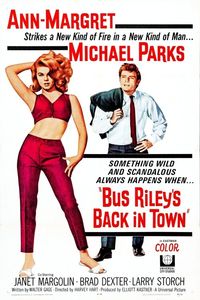
    (On Cable TV, September 2020) Even if 1967 is generally regarded as the year that movies changed forever (finally moving past the Hays Code and embracing a more naturalistic style), you can see a steady evolution of American movies throughout the 1960s, from black-and-white to colour, and slowly tackling modern issues in increasingly frank fashion. While Bus Riley’s Back in Town is not an exceptional movie in any regard, you can use it as evidence of how things were changing. Here we have a young man (Michael Parks) coming back to his hometown after three years in the Navy, trying to reconnect but feeling more alienated than ever. As a small-town domestic drama, the stakes are low but the plot is character-driven, what with him being seduced by an ex-girlfriend (Ann-Margret, playing a bad girl) now married and bored, his unwillingness to settle for a good but boring job as a mechanic, and his lack of acknowledgement that things keep changing. I was drawn into the film by Ann-Margret’s name, but her mid-1960s screen persona is here used for clearly dramatic effect, as she incarnates the temptation and regression that the main character must move past. Bus Riley’s Back in Town is not spectacular, but it’s considerably more intriguing than I expected, and as a slice of small-town America in the mid-1960s, it’s far more credible than many wilder and better-known movies.

  • Bye Bye Birdie (1963)

    Bye Bye Birdie (1963)

    (On Cable TV, February 2020) Unfortunately, Bye Bye Birdie’s first impressions are not all good. As a musical, it’s not that great even if adapted from a stage production—the songs are arrhythmic, not funny and (title song aside, by sheer force of simplistic repetition) not particularly memorable either. But it does fare better as a high school comedy that also acts as a satire of the music industry at the time, even if it takes some time to rev up: a lot of gags depend on a near-expert knowledge of early 1960s teenage pop-culture preferences. (Sure, the Elvis impersonation carries through, but many other references are now puzzling.) Fortunately, the over-the-top satire of 1963 teenage pop-mania does eventually become amusing, even if the premise about a singer going to kiss a teenage girl would not fly today. This being said, there’s one thing that this film exceptionally well: showcase Ann-Margret, who’s a constant joy whenever she’s on-screen. Some interesting special effects during “Put on a Happy Face” are also noteworthy. While Bye Bye Birdie is far from being as good as it could have been, it’s still joyful and easy to watch—a representative slice of early 1960s pop-optimism as incarnated by Ann-Margret herself.

  • Grumpy Old Men (1993)

    Grumpy Old Men (1993)

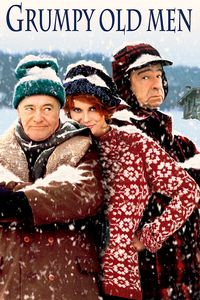
    (In French, On Cable TV, January 2020) As its stars age past retirement, Hollywood also developed its subgenre of victory-lap movies—one last chance for actors with recognizable screen persona to strut their stuff once more, and run on memories of past performances. Grumpy Old Men is a classic example of the form: It once again features Jack Lemmon and Walter Matthau as a bickering pair of lifelong elderly friends in wintry Minnesota, with none other than Ann-Margret looking amazing as the middle-aged temptress driving a further wedge between them. (It’s acceptable to have mixed feelings about this trio—While it’s rare and welcome to have a female romantic interest older than 30, there was still a 16-to-21 years difference between Ann-Margret—aged 52 at the time of the film’s release—and the Matthau/Lemmon duo—aged 73 and 68 at the film’s release.) Still, the point of the film isn’t to add thirty years to the usual Hollywood age difference, but to allow Lemmon and Matthau one more chance (which ended up being four more chances) to bicker on-screen decades after The Odd Couple. Anyone watching the film for the marquee names certainly knows what they’ll get: biting repartee and petty pranks are what keep those two characters bonded, and it’s not a September-November romance that’s going to get between them. It’s a romantic comedy, after all, and it even has a B-couple made up of the protagonist’s children. (Ann-Margret looks better than Darryl Hannah, but it’s a close thing.) There’s an adequate mixture of jokes, romance, jokes about romance and a bit of heart-driven drama toward the end to put everything in perspective. The ending fake-out won’t fool anyone. In those movies, the biggest measure of success isn’t about the plotting complexity or the quality of the filmmaking but whether the stars got a chance to remind audiences of what made them famous. On that criterion, Grumpy Old Men achieves its objective: Ann-Margret looks fantastic with red hair (at least this time nobody thinks it’s a natural red), Matthau is grumpy, Lemmon is funny and anyone even remotely familiar with 1960s cinema has also been driven once more around the lap.

  • State Fair (1962)

    State Fair (1962)

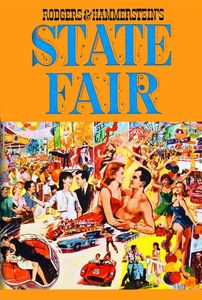
    (On TV, January 2020) I’m on a mission to see all 1960s Ann-Margret movies, but that didn’t make it any easier to power through State Fair, a wholly unremarkable musical remake of what I presume are two better movies. As a family of four makes its way to the Texas state fair with distinct objectives in mind, the film slogs through useless and forgettable musical numbers until the base outline of a plot emerges. (“It’s dollars to donuts that our state fair is the best state fair in our state” is mind-numbing enough, and even more so the fiftieth time you hear it.) Ann-Margret finally shows up as a state fair circuit dancer with a long succession of momentary dalliances, but while her red mane remains spectacular, her character is far too dark to take advantage of her screen persona—and doesn’t fit the rest of the film. Time has not been kind to this remake, as it creaks under a story first thought in the 1930s and songs from the 1940s, and unable to take advantage of the story’s spicier moments given the context of the time. It’s movies like State Fair that show how dull the musicals had become by the 1960s.

  • Made in Paris (1966)

    Made in Paris (1966)

    (On Cable TV, September 2019) Those who maintain that movie musicals are about style more than actually singing and dancing should be comforted by Made in Paris, a nearly obscure mid-1960s MGM film that has a minimal amount of music and dance, but pretty much the same attitude shared by the musical genre. The messy script has our New York-based heroine heading off to Paris to be pursued by three suitors, only to end unconvincingly not with the devastatingly charming French fashion designer, nor the cynical American journalist, but her boss (whom she’d previously bashed over the head with a frying pan after him getting a bit handsy) having crossed the Atlantic to win her back. I’m spoiling the ending because it’s best to be prepared for its unsatisfying nature, but also to make the point that the best reason to watch the film is Ann-Margret’s bubbly performance as a feisty redhead—it’s as is Amy Adams or Isla Fisher had travelled in time to end up in a cute 1960s musical with go-go dancing and enough haute couture to make any gal cry. Playing off no less than Louis Jourdan, Richard Crenna and Chad Everett, Ann-Margret is a redheaded tornado of joy here, and the film is an absolute must-see to anyone already charmed by her leading role in Viva Las Vegas and other movies of the period. Made in Paris is clunky, but she’s quite wonderful in the middle of it all, and she compensates for many other missteps.

  • Viva Las Vegas (1964)

    Viva Las Vegas (1964)

    (On Cable TV, January 2019) Come to Vegas for Elvis, stay for Ann-Margret. At least that’s my reaction to Viva Las Vegas: While the film remains Presley’s best-known film (he made 31 of them in 13 years, but few of them have endured), the real draw here is Ann-Margret as practically the equal to Presley. The plot reads like a melting pot of mid-1960s teenage obsessions, in between the racing, gambling, dancing and singing. The plot naturally leads to an amiable atmosphere and ten snappy musical numbers (including the one-shot of Elvis singing the classic title tune). The portrait of Las Vegas in the early 1960s is simply fascinating, especially considering how the city has changed since then. There’s also a pretty good car race at the climax of the film. Still, the one reason to watch Viva Las Vegas even today is seeing Presley measure up to Ann-Margret—she’s a dynamo of red-headed energy here, and it’s good to see a film in which both romantic leads are equally strong.