Grumpy Old Men (1993)
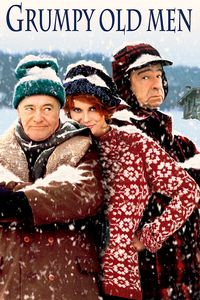
(In French, On Cable TV, January 2020) As its stars age past retirement, Hollywood also developed its subgenre of victory-lap movies—one last chance for actors with recognizable screen persona to strut their stuff once more, and run on memories of past performances. Grumpy Old Men is a classic example of the form: It once again features Jack Lemmon and Walter Matthau as a bickering pair of lifelong elderly friends in wintry Minnesota, with none other than Ann-Margret looking amazing as the middle-aged temptress driving a further wedge between them. (It’s acceptable to have mixed feelings about this trio—While it’s rare and welcome to have a female romantic interest older than 30, there was still a 16-to-21 years difference between Ann-Margret—aged 52 at the time of the film’s release—and the Matthau/Lemmon duo—aged 73 and 68 at the film’s release.) Still, the point of the film isn’t to add thirty years to the usual Hollywood age difference, but to allow Lemmon and Matthau one more chance (which ended up being four more chances) to bicker on-screen decades after The Odd Couple. Anyone watching the film for the marquee names certainly knows what they’ll get: biting repartee and petty pranks are what keep those two characters bonded, and it’s not a September-November romance that’s going to get between them. It’s a romantic comedy, after all, and it even has a B-couple made up of the protagonist’s children. (Ann-Margret looks better than Darryl Hannah, but it’s a close thing.) There’s an adequate mixture of jokes, romance, jokes about romance and a bit of heart-driven drama toward the end to put everything in perspective. The ending fake-out won’t fool anyone. In those movies, the biggest measure of success isn’t about the plotting complexity or the quality of the filmmaking but whether the stars got a chance to remind audiences of what made them famous. On that criterion, Grumpy Old Men achieves its objective: Ann-Margret looks fantastic with red hair (at least this time nobody thinks it’s a natural red), Matthau is grumpy, Lemmon is funny and anyone even remotely familiar with 1960s cinema has also been driven once more around the lap.