Audrey Hepburn

  • The Unforgiven (1960)

    The Unforgiven (1960)

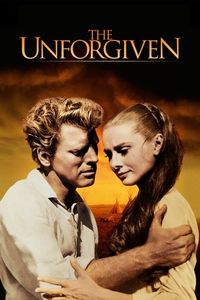
    (On TV, September 2021) In the pantheon of revisionist western movies, you could be forgiven for initially mistaking 1960’s The Unforgiven with 1992’s Unforgiven. But while both movies are independent from a storytelling perspective, they do share an intention to question some of the unexamined tropes of the genre. Clint Eastwood’s 1990s masterpiece was a deep meditation on violence that cleverly rifled through decades of doubts about impassible virtuous gunslingers, but if The Unforgiven isn’t anywhere nearly as successful, it does tackle the legacy of racism against Native Americans on film. But the way it gets there, though… can be problematic. Burt Lancaster ably stars as a rancher who learns that his sister (played by Audrey Hepburn) is, in fact, an adopted Native girl. That doesn’t go very well among the white settlers, and it doesn’t take a long time for them to become at odds both with their neighbours and with the Native Americans coming back to claim the girl as their own. It all climaxes in a scene that, for once, feels decently original — that of a dirt house being set on fire as Native Americans ride on the rooftop. The meditations on racism are atypical and rather welcome, considering the state of Native Americans in 1950s Hollywood, but the film itself is far from being as accomplished as one could have expected. Reading about its production history does help explain why, with enough behind-the-scenes drama (deaths, injuries, near-death experiences, and a disengaged director) to make a movie of its own. Suffice to say that the herky-jerky scene-to-scene rhythm of the film may not have been in the initial plans. Of course, there are other issues — as much as I love Audrey Hepburn and the lovely long hair she has here, she’s perhaps not the best pick for a Native American. Her performance bulldozes through objections of ethnically inappropriate casting, but it’s one more thing in a long series of issues with The Unforgiven. Lilian Gish and Audie Murphy are quite a bit better in supporting roles, each of them having a few standout sequences. Meanwhile, Lancaster provides yet another example of how he was willing to use his stardom to enable projects that poked at the kind of leading man he was supposed to play. In the end, The Unforgiven remains a provocative, big-budget revisionist western before it was cool to make revisionist westerns and in that, at least, it has appreciated from the underwhelming critical and commercial reception it got upon release.

  • Paris When It Sizzles (1964)

    Paris When It Sizzles (1964)

    (On Cable TV, July 2020) It would have been enough to put together a romantic comedy starring Audrey Hepburn and William Holden, set in Paris, and have him play a burnt-out writer on a deadline being helped by a winsome assistant. It’s not an original premise, yet it’s more than enough to be fun. But Paris When It Sizzles goes quite a bit further into charming ridiculousness, by presenting the result of their collaboration (a thriller called The Girl Who Stole the Eiffel Tower) on-screen with them playing the main characters, and throwing in not just plenty of Hollywood in-jokes, but cameos from notables such as Tony Curtis, Mel Ferrer, Marlene Dietrich and Frank Sinatra. The romantic narrative is predictable (would you believe the writer falls in love with his assistant?) but it’s the very funny metafictional game that holds audience interest as the reality of Paris When It Sizzles keeps going back and forth between the writers’ struggles and the imagined movie. Hepburn is in her element in a romantic comedy—and once again back in Paris. Fans will note one scene in which she has her long hair down—wow. Meanwhile, Holden is quite good as well—he looks like Tom Hanks at times, and like an authentic action hero at others. While many of the references can only be appreciated by Classic Hollywood fans, Paris When it Sizzles has aged well with its metafictional conceit and main stars. It’s a lot of fun even if the ending doesn’t provide complete closure. (Am I the only one who likes it when protagonists meet their deadlines?) But then again, that may be the point—the film is intent on making audiences happy even when it doesn’t make sense. As a romantic comedy set in Paris, how could it be otherwise?

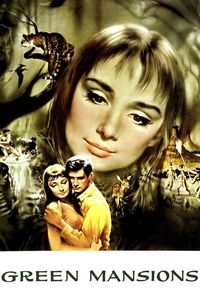
  • Green Mansions (1959)

    Green Mansions (1959)

    (On Cable TV, July 2020) I usually worship Audrey Hepburn and the films she stars in, but I’m willing to make an exception for Green Mansions. While Hepburn does look very cute with longer straight hair, the film itself hasn’t aged well at all. How could it? Adapted from a 1904 adventure romance novel, it features Anthony Perkins as a rugged adventurer (!) who escapes into the jungle and ends up meeting, and romancing, a native princess played by Hepburn—before some more action-filled adventures. This is already bad enough, but let’s just say that the result is a dull jungle romance. Perhaps the best thing about Green Mansions is its cinematography, which introduced Panavision widescreen lenses and features the Venezuelan jungle in lush green detail. Said to be based on true events, the film is sadly not terribly interesting—and whenever it is, it’s usually to make twenty-first century viewers stand up and say, “oh, come on.” Hey, even goddesses can make mistakes.

  • Two for the Road (1967)

    Two for the Road (1967)

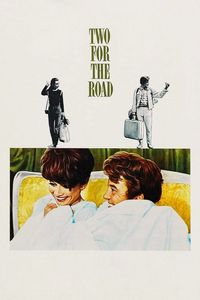
    (On Cable TV, July 2020) There’s something very unusual in Two for the Road’s premise, as it shows the evolution of a marriage (with its ups and downs) through the conceit of following the couple along a road trip from England to the south of France—repeated five times over twelve years. The narrative jumps in time as landmarks take the couple back to their courtship, early marriage and later breakdown of the relationship. It ends up being a very satisfying romantic comedy (even if the comedy does get thin at times) about a bickering couple. While Albert Finney is good with bon mots and debonair wit, Audrey Hepburn is the star here—it’s interesting that, to portray her at her youngest, the filmmakers gave her long hair opposite her usual gamine hairstyle—and we even get to hear her speak a few lines of French as well. There are a few dramatic moments later on, but this being a comedy reassures that it will conclude on a sunny note. Director Stanley Donen’s approach feels unusually modern through its mixed chronology structure, which allows us to go back and forth as the characters evolve and react ironically to similar situations. The film does sport a variety of humour from the high concepts to the low physical stuff. It’s all quite fun and not overly dated except for the party scene toward the end that powerfully reminds us that it was filmed in the mid-1960s after all. While likely to be a hit with a wide audience, Two for the Road will be a special treat for Francophiles, Hepburn fans and fans of good romantic comedies.

  • The Children’s Hour (1961)

    The Children’s Hour (1961)

    (On Cable TV, June 2020) It’s interesting to see a film resolutely take a stand against homophobia… while being unable to properly express what exactly it’s taking a stand against. But so is the curious juncture at which The Children’s Hour came about, as it describes how a girl with malevolent intentions starts a rumour about two teachers being a lesbian couple, leading to dismissal, social ostracism and everyone around them being affected as well. The lie may be debunked, but it’s too late—early 1960s America exacted its toll. That’s revolting by contemporary standards (although I bet it’s still happening in small communities), and The Children’s Hour clearly identifies its sympathies for the characters who should be able to live as they please. Still, the film is frustratingly elliptic in taking about “unnatural” relations, nor can it help itself by punishing a character in order to satisfy the requirements of the Hays Code. I watched the film because it featured Audrey Hepburn in one of her most dramatic roles and was not disappointed by her as a character in the middle of it all. But there’s quite a bit more to say about The Children’s Hour, as it touches upon issues too touchy to even mention—even if the execution falters, it did much under the constraints placed upon it in 1961.

  • Always (1989)

    Always (1989)

    (In French, On Cable TV, March 2020) In any examination of Steven Spielberg’s filmography, Always usually gets short thrift. There’s a two-hour-long Spielberg documentary out there that barely spends a few seconds on it, and it seldom pops up in any casual discussion of his work. There’s a good reason for that: standing awkwardly at the intersection between action movie, supernatural fantasy and romantic drama, Always is not ready for easy packaging. It’s also, perhaps understandably, a bit scattered in-between paying homage to its 1940s inspiration, delivering 1980s action sequences and trying to find a satisfying dramatic arc in a bone-simple story. Based on WW2 fighter pilot drama A Guy Named Joe (which shares much of the same awkwardness), Always updates the setting to modern-day firefighting bomber flyers, and kills off its lead character so that he becomes a ghost able to assist another pilot who grows closer to his ex-fiancée. There’s not a whole lot for the film to do beyond the grieving dramatic arc, and the second half of Always peters out into a far less interesting path to a predetermined conclusion. From a relatively strong start, the film progressively loses steam and doesn’t keep its most spectacular moments for the end. Still, there’s quite a bit to like in seeing how a veteran director like Spielberg tackles even substandard material. From the very first shot, we’re clearly in the hands of someone who likes to play with film narrative, and carefully composing his images to choose what the camera will or won’t show. Richard Dreyfuss is not bad in the lead role despite his typical 1980s arrogance, and Holly Hunter also does well as the female romantic lead. (Still, it’s John Goodman who shines in a comic supporting role.) Audrey Hepburn is an angelic vision in her last film role—she simply looks amazing at sixty. There’s a pair of good action flying sequences in the first half of the film, and the atmosphere of a firefighting camp is so vividly rendered that it’s a shame we couldn’t spend more time there. Still, Always makes a strong case for being Spielberg’s most ordinary, least distinctive film. It doesn’t have the glorious misfires of 1941, it’s not a kid’s film like The BFG, it’s not animated like The Adventures of Tintin—it’s just there, in all of its shortcomings, muddled execution and decreasing interest.

  • Robin and Marian (1976)

    Robin and Marian (1976)

    (On Cable TV, January 2020) There is a strong streak of melancholy running through Robin and Marian, a story about the last days of Robin Hood and Maid Marian. A romantic drama blended with a bit of medieval thrills, it’s a film about heroic icons aging into legend—he is back from a punishing crusade; she is now a nun. It’s also, perhaps more significantly for film buffs, a strange and intriguing paring between two screen legends: Sean Connery and Audrey Hepburn (in her first film in nine years). Connery looks like himself with the graying beard, but there’s something truly uncanny in seeing Hepburn with curly hair (and I say this as someone who usually finds nothing wrong at all with curly hair). But none of it is as surprising as a tragic climax that ties in merciful death for nearly everyone—this is meant as romantic tragedy, capping one last passionate moment between two characters that never made it work. As such, it does feel like the kind of film that could only be made in the New Hollywood era—a film that takes a chainsaw to a myth with one final tragic story. I didn’t like Robin and Marian all that much—but I have to admire its audacity.

  • The Lavender Hill Mob (1951)

    The Lavender Hill Mob (1951)

    (Criterion Streaming, November 2019) Post-war British film studio Ealing produced some solid hits, and the best of them usually managed a delicate balance between crime and comedy, executed in a debonair manner that made it all feel even more amusing. A near-exemplary illustration of this is The Lavender Hill Mob, a suitably funny take on a heist film in which a shipment of gold bullion is stolen, transformed, smuggled, pursued, and chased again. Alec Guinness stars with a bunch of other capable actors with none other than Audrey Hepburn making her (very short) movie debut in the framing device. It’s handled with what could be called a British flair for ridiculousness, complications and deadpan humour. Despite a bit of a mid-movie lull, The Lavender Hill Mob is 78 minutes of great fun—worth watching if you’re mining the Ealing comedies vein of cinema.

  • Wait Until Dark (1967)

    Wait Until Dark (1967)

    (On Cable TV, September 2019) There is a pleasantly modern sheen to the opening sequence of Wait Until Dark, pleasantly set in Montréal (all the way to a trip to the then-Dorval airport!) until the film lands in a New York City brownstone, where we first meet three criminals plotting to recover a drug shipment, and a blind woman played by none other than Audrey Hepburn. The theatrical origins of the script are more readily apparent though the setting largely confined to a single location, a below-ground apartment that turns from cozy to terrifying when the attackers strike. Hepburn is reliably great here—In a small triumph of casting, she here plays in her sole thriller movie and transfers audience sympathies intact as she comes under ever-increasing attack. But the film’s standout role belongs to Alan Arkin, who transforms a small part into a mischievous, clever, and utterly diabolic character. After an intriguing and unconventional beginning, the middle section of the film bogs down in what feels like too many repetitions and useless plotting. But the last ten minutes of the film are a masterpiece, as all of the pieces of the plot are finally assembled in time for a few minutes of maximum suspense. That final sequence does much to leave viewers happy with the result—it helps that the film feels a bit more modern than many other 1960s suspense films.

  • Love in the Afternoon (1957)

    Love in the Afternoon (1957)

    (On Cable TV, February 2019) From a twenty-first-century perspective, looking at the totality of an actor’s filmography at once certainly has a different impact that chronologically living through it one movie at a time. As much as I like Audrey Hepburn, for instance (and I do!), it’s hard not to notice that in between 1954 and 1967, she made no less than seven movies at least partially set in Paris, and at least four of them with significantly older men. While Sabrina was partially set in Paris but obviously not filmed there, Funny Face and Love in the Afternoon (both 1957, shot a month apart) get the subgenre properly started. In the latter film, Gary Cooper plays an aging playboy who sets his sights on an inexperienced young daughter of a detective. The remarkable difference between the two characters (in age, in social status, in understanding the world) is enough to make any viewer uneasy, and it’s a measure of writer/director Billy Wilder’s skill and both stars’ charm that the film (barely) holds together. Hepburn is up to her usual self here, although if you want another Paris movie in which she calls her father an ebullient “Papa!”, you’ll be better served by How to Steal a Million Dollars. Cooper is a bit less bland than usual here, with a character that does service to his stature in the industry at the time. Maurice Chevalier rounds up the marquee names with an on-target role as a wise, compassionate and knowing private investigator to the stars. There’s no avoiding that the material here is tricky, and that Wilder steers his movie through material that would instantly doom other directors. (Although much of the same can be said about Funny Face and Charade.) There are, fortunately, quite a few laughs along the way, my favourite being the gypsy band following Cooper’s character around, mixing diegetic and non-diegetic musical cues. But while the film does have its strengths (seeing Hepburn, Cooper, Chevalier and Wilder working together being the best of them), its place in a well-defined sub-sub-genre of “Hepburn with older men in Paris” also invites unfavourable comparisons. Funny Face has Astaire dancing and Hepburn keeping up, while Charade plays far more smoothly with the romance with the far more charismatic Cary Grant. If Love in the Afternoon makes you queasy despite its old-school Hollywood charm, you’re not alone.

  • The Nun’s Story (1959)

    The Nun’s Story (1959)

    (On Cable TV, January 2019) The premise of The Nun’s Story doesn’t sound like a good mix: Audrey Hepburn playing a noviciate nun? Her better-known screen roles aren’t anywhere near that type of character, and yet she successfully delivered an intense dramatic performance here, solidifying her ingénue superstar status with several accolades for her acting talent. Coming almost exactly in the middle of her film career, some have called the movie Hepburn’s finest dramatic performance, and that sounds about right even if you think that comic performances are often more challenging. At first, The Nun’s Story does feel like a wandering procedural about the life of a noviciate, going through the somewhat dull process of the apprenticeship required for a young woman to take her vows. For a rather long time, the film navigates a fine line between being boring and interesting, as it doesn’t hurry through its protagonist’s apprenticeship even after taking her vows. But The Nun’s Story does become far more interesting—and relevant to Hepburn’s life—once the last act rolls around and suddenly the Nazis invade the movie. That’s the point when we can understand Hepburn’s interest for the role (after all, she did serve in the Dutch Resistance as a teenager), and the film becomes far more interesting in opposing obedience versus the moral imperative to resist the occupation. The conclusion feels very appropriate to the character. The direction and cinematography could have been a bit stronger, but even in their current state they do carry the film to a satisfying conclusion. Anyone who feels restless during the first half of The Nun’s Story should stick around—it’s laying down the groundwork for later moral choices, and the film sharply improves in time for its conclusion just as Hepburn herself comes back to the fore.

  • Sabrina (1954)

    Sabrina (1954)

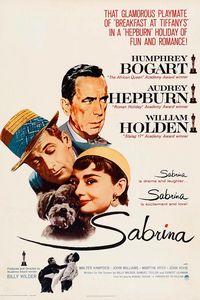
    (In French, On Cable TV, January 2019) If you want to understand why so many people love Audrey Hepburn as an actress, as a style icon or even as a person, you can start with Breakfast at Tiffany’s … or you can start with Sabrina. I know which one I’d pick: Despite Breakfast at Tiffany’s little black dress, Sabrina has Hepburn in a far more suitable role, avoids many of the unpleasant edges of the other film, and showcases Hepburn at the very beginning of her long association with high fashion. It’s also, to put it bluntly, a better movie. Here we have Humphrey Bogart, certainly too old for Hepburn at thirty years her senior but playing a fascinating deviation on his usual persona as a sophisticated businessman thrown in a romantic role. Plot-wise, Sabrina is filled with tricky material—the acknowledged age difference, the class issues, the messy familial romantic entanglements, heck the opening scene’s suicide attempt—but it succeeds largely because of writer/director Billy Wilder’s typically light touch on difficult material. The intriguing glimpse at the life of New York’s upper-class set is window dressing for a romance that’s not as clear-cut as in many other movies of the period, and that’s the territory in which Wilder excelled. Still, for most, Sabrina will be enjoyable on a purely aesthetic level: This is the movie that first paired Audrey Hepburn with Paris (even if only in studio shots), and also the film that launched her lifelong association with Givenchy. Sabrina is far less sappy and mindless than you’d expect from a mid-1950s romance, and that’s what gives it enduring power—plus Bogart and Hepburn, of course.

  • Funny Face (1957)

    Funny Face (1957)

    (On Cable TV, January 2019) On paper, Funny Face looks like a perfect combination: A musical comedy with Fred Astaire, Audrey Hepburn and Paris. Thankfully, the film lives up to expectations: Fred Astaire dances as well as he can, and while Hepburn isn’t quite as much of a dancer as some of Astaire’s other screen partners, she did have dancing (and singing!) chops and couldn’t possibly be cuter as an intellectual bookseller—even Hollywood’s idea of an intellectual bookseller. Paris and Hepburn were a regular item (“Bonjour, Paris !”), but they look great together and the film doesn’t miss a chance to use a French stereotype when it can. (I had to laugh at the spat between two bohemian Parisians: “Salaud ! Dégueulasse ! *Slap* *Kiss*”) Unlike some musicals, Funny Face does have strong comic elements: The look at a fashion magazine—Astaire plays a fashion photographer—is amusing, and seeing both Astaire and Hepburn as black-clad undercover beatniks is hilarious especially as they skewer the philosophical excesses of Left-Bank thinkers. (Alas, Funny Face does have an anti-intellectual bent, but so it goes in musicals.) The romantic ending is more conventional and not as interesting, but as usual the fun is getting there. Less fortunately, you do have to get over the usual Astaire romantic issues in liking the film: His characters are often written as having revolting ideas about consent in the face of romantic persistence (“No” usually means “try again later with more charm” in his movies) and there’s a thirty-year difference between Astaire and Hepburn. That last item used to infuriate me, but then I recently realized that very few people could keep up with Astaire as a dancer—younger actresses at least had a chance to move as quickly and gracefully as he did. (It’s not much of an excuse, but it’s the one I cling to.) If you can manage to get past that, Funny Face is a perfectly charming and enjoyable musical, somewhere between a classic and a strong representative entry in the genre. (While technically a Paramount production, a number of key crewmembers such as director Stanley Donen were from MGM’s legendary Freed unit.) Plus, of course, it’s an essential piece of Hepburn’s filmography by showcasing her at her best.

  • How to Steal a Million (1966)

    How to Steal a Million (1966)

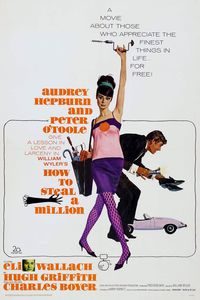
    (On TV, October 2018) I wasn’t expecting much from mid-1960s comedy How to Steal a Million except that it starred Audrey Hepburn, but I quickly grew charmed by the result. Hepburn plays the daughter of an art counterfeiter, trying her best to avoid her father’s handiwork from being discovered by appraisal experts. To this end, she befriends a burglar and quickly finds herself planning a museum heist. The plot is good enough to allow Hepburn to play her ingenue best (in her mid-thirties!), bouncing off Peter O’Toole’s charm and the fatherly attention of Hugh Griffith. Hepburn being her usual lovable self, the film unfolds at a pleasantly breezy pace, once again reuniting her with Paris and haute couture. It’s not necessarily one of Hepburn’s best movies, but she delivers here a quintessential performance: Funny, charming, intensely likable and more than cute. As a result, How to Steal a Million is the kind of film that isn’t necessarily listed as an essential 1960s film but packs a lot of entertainment. It’s perhaps best approached as a happy discovery.

  • Charade (1963)

    Charade (1963)

    (On Cable TV, March 2018) It does take a while before Charade comes into focus. It begins strangely, with a contrived meet-cute at a ski resort in the Alps that turns into an even stranger succession of events once the heroine comes back to Paris to find out that her husband has died, a large amount of money is missing, and three strangers really hated her ex-husband. The artificiality of the setup is almost overpowering, and even the comforting presences of Audrey Hepburn as the widow and Cary Grant as a mysterious free agent aren’t quite enough to unpack the heavy-handed setup. But as the deaths and double-crosses being to pile up, Charade does acquire a nice velocity, and even answers the questions raised in the first act. Hepburn is adorable as the endangered heroine, despite being too young for the role. Meanwhile, Grant is terrific as someone who may or may not be friendly—he’s occasionally very funny (ha, that shower scene!), and his last grimace of self-revelation at the very end is like seeing a split-second callback to the classic comedies early in his career. Also noteworthy as supporting roles for Walter Matthau, George Kennedy and James Coburn. Great scores and visual design by Henry Mancini and Saul Bass round up an impressive crew. Surprisingly not directed by Alfred Hitchcock, Charade is increasingly endearing the longer it goes on, and satisfyingly blends romance, comedy and suspense. It’s well worth watching. Just make sure to give it more than thirty minutes to make sense.