Barbara Stanwyck

  • East Side, West Side (1949)

    East Side, West Side (1949)

    (On Cable TV, October 2020) There’s a glorious, fascinating messiness to East Side, West Side that shows how the Hays Code era wasn’t necessarily an impediment for some heavy-duty melodrama. The film begins with a seemingly-happily married couple. But this façade soon comes tumbling down when, first, an ex-flame of the husband comes to town and then an ex-crush of the wife comes to town. That would be enough to power a film by itself, but the script peppers complications throughout, throwing in performers such as Cyd Charisse in a minor role that serves no real big purpose, then hinges an entire third act on the murder of one of the four main players, leading to a detective subplot that suddenly involves another main character. (It also leads to a fairly long and now-shocking sequence in which the male detective gets into a slaps-and-punches struggle with a female killer.) There are characters and sudden shifts of tone here that add a lot of texture, at the expense of what we would consider a polished script. It’s messy but a lot of fun, although you’ll have to work harder than usual to keep up with the twists and turns. An all-star cast sweetens the deal. James Mason is quite good in his own distinctive fashion as the protagonist cad, while Barbara Stanwyck is equally compelling as his increasingly estranged wife. Ava Gardner is the temptress that exposes the fault lines in their marriage, while Van Heflin rounds up the main cast with a character that increasingly reveals how resourceful he truly is over the course of the film. Top dialogue keeps things rolling, while the cinematography gives a noirish edge to New York City. Director Mervyn Leroy has enough experience to keep all the moving pieces together, and the result is a strong drama that will keep you invested from beginning to end despite its lack of clear focus.

    (Second Viewing, On Cable TV, June 2021) The interesting thing about revisiting East Side West Side, even after a few months, is its all-star cast. In-between James Mason, Barbara Stanwyck, Eva Gardner and Van Heflin (with none other than Cyd Charisse being fifth-billed in a remarkably small role), it’s very much a collection of some of my favourite actors in the business at the time. But here’s the thing: It took me an embarrassingly long time to become a fan of Stanwyck and Gardner – While Mason is distinctive and easy to like, and a previous viewing of East Side West Side made me an instant fan of Van Heflin largely thanks to his remarkable character, it took me years to like Stanwyck given her lack of adherence to a rigid persona. Meanwhile, it took me until Night of the Lizard to finally see what others saw in Ava Gardner. But now that I’m on-board for all of them, East Side West Side takes on a different quality. Oh, the film more than stands on its own as a 1950s Manhattan melodrama – With the plot revolving around an ill-fitting couple contemplating affairs with past flames, it’s rife with dramatic situations, including woman-to-woman verbal combat and a superb mother-in-law-to-no-good-husband put-down. Mason is (as often) surprisingly good as a bad husband, while Heflin gets to play a character than, in most other movies, would be the protagonist: an immensely capable special forces operative with an uncanny ability to solve problems. One of the film’s highlights remains the physical altercation he gets with a murder suspect while they’re both sitting in a car – the fact that it’s a male/female fight is surprisingly shocking, perhaps even more so given that he’s clearly in the right in subduing a killer. The slapping, pulling and grabbing goes on for a surprisingly long time, and the close quarters of the car’s front seats mean that there’s nowhere to go. It’s not necessary to like the entire film (including a slow start and adequate finale) when it has those highlights and those stars. East Side West Side is well worth a revisit, especially if you get to appreciate the actors in other films in between those viewings.
  • The Strange Love of Martha Ivers (1946)

    The Strange Love of Martha Ivers (1946)

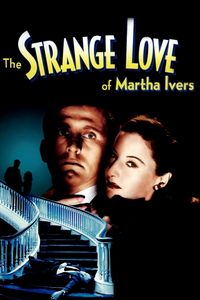
    (On Cable TV, May 2020) Film noir classic The Strange Love of Martha Ivers may not be all that iconic, but it has enough great things in it to warrant a look for fans of the genre. For one thing, it sports Grande Dame Barbara Stanwyck playing the kind of superpowered character she did best. Then the casting gets surprising: Kirk Douglas (in his film debut) playing her weak and easily cowed husband, then Van Heflin as a street-smart punk whose arrival on the scene creates danger—for he is the third holder of a secret that could have a devastating impact on the two other characters. There’s more, and quite a bit of murderous melodrama along the way, but the film (as with its score) builds up to a grandiose ending. It’s pretty good—although film noir fans will say that it doesn’t have enough noir concision to be a classic. True, but also besides the point: By the standards of mid-1940 Hollywood melodrama, The Strange Love of Martha Ivers is competent and absorbing. See it for Stanwyck, for Douglas or for Heflin, but it’s worth a look.

    (Second Viewing, On Cable TV, September 2021) It’s really interesting to revisit The Strange Love of Matha Ivers after tearing through Barbara Stanwyck and Van Helfin’s filmographies, because their on-screen antagonistic romance is the highlight of the film. It felt like a decent-enough film noir upon first viewing, but re-watching it with particular attention to Stanwyck’s performance as a femme fatale, and Heflin’s unusually muscular turn as a man who easily dominates every room he’s in (often roughly) is a different experience. As is, for that matter, seeing Kirk Douglas’ first film role as a meek, ineffectual, rather loathsome supporting character. The other highlight is the aggressive score, which shows no shame in highlighting the action with bold musical accents every time the characters butt heads – which is often. There are a few subplots and a prologue starring the characters as kids, but the film is most fascinating when Heflin and Stanwyck figuratively dance warily around each other, sometimes kissing, sometimes trying to kill each other. A fine noir melodrama, it’s easy to see why The Strange Love of Matha Ivers continues to earn such acclaim – and even more so if you’re a fan of both lead actors.

  • The Man with a Cloak (1951)

    The Man with a Cloak (1951)

    (On Cable TV, April 2020) Two Classic Hollywood genres crash into each other in The Man with a Cloak: The historical drama and film noir. I mean—why not? Part 1948 costume drama, part historical fantasy involving the fate of Napoleon’s France being played out in Manhattan by Edgar Allan Poe, specifically through the vast fortune of one of the film’s characters. Alas, many people are after that fortune, and the film takes a sombre turn when wills, poisons and deaths come into play. While it takes a while to heat up (frankly, the beginning is just dull), The Man with a Cloak does get nicely dramatic after a while—all the way to a knock-down drawn-out fist-fight at the end. This being said, I suppose that most twenty-first viewers will have a look due to Barbara Stanwyck (always magnificent) in one of the lead roles, alongside Joseph Cotton as a mysterious investigator and Leslie Caron playing a visiting Frenchwoman. It’s not quite correct to call The Man with a Cloak a pure film noir, but in addition to borrowing plot elements from the genre (and a bit of gothic mystery), it also tries to ape many of its stylistic features—albeit to middling effect, as director Fletcher Markle wasn’t exactly a gifted stylist. Still, it does add a bit of atmosphere to a film that can certainly use it. The film’s final revelation feels more like a joke than a serious twist, but there it is. The Man with a Cloak is hardly a great film, but it does offer something slightly different from either pure costume drama or film noir. Plus, hey : Stanwyck.

  • The Lady Eve (1941)

    The Lady Eve (1941)

    (On Cable TV, February 2020) I’m slowly starting to understand what film enthusiasts mean when they point at writer-director Preston Sturges’ extraordinary 1938–1944 run. The Lady Eve remains a spectacular film by any standards, and yet it’s only one of the four Sturges movies from the period often mentioned as an all-time comedy classic. In some ways, the premise feels familiar: the grafter taking aim at a wealthy target for purely monetary objectives, only to fall in love along the way. But there are twists and turns here that complement a well-executed delivery. It certainly helps that Henry Fonda is very likable as a hapless romantic lead, a bookish scientist who falls for Barbara Stanwyck’s scheming seducer. If Stanwyck has been sexier or funnier in any other movie, please tell me, because this is a classic performance—her opening sequence, as she provides colour commentary on seduction attempts on her target, says it all. The duo has a pair of very funny seduction sequences—first an unbroken shot of Henry with his head on her lap, and then later on a barn conversation interrupted by a curious horse. The film’s conventional first half leads to an unexpected turn midway through, and then even more comic sequences later on. Deftly mixing top-notch dialogue (you can quote that movie all day long) with physical comedy and absurd situations, The Lady Eve is indeed a screwball comedy classic, and a very good showcase for Fonda, Stanwyck and Sturges. This is what we mean when we say that they don’t make them like this anymore.

  • Titanic (1953)

    Titanic (1953)

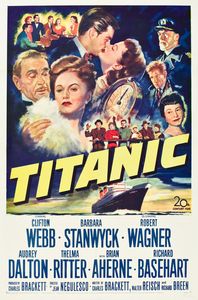
    (On TV, January 2020) Most movies are released, seen, discussed and then slowly fade away from memory. A few have the arguably worse fate of permanently being overshadowed by a sequel or remake. While the 1953 version of Titanic wasn’t necessarily remade by the blockbusting 1997 version, there’s only so many ways you can tell the same story, and so both movies will remain forever linked. It’s certainly not the only “earlier version” of the Titanic story (Wikipedia helpfully lists at least three more of those films made prior to 1953), but it’s the one with the most star power, what with Barbara Stanwyck and a very young Robert Wagner in the cast. It’s also one with the bigger budgets, although that money did not stretch to cover historical accuracy—there are significant issues here in terms of factual history, which is highlighted by some generic subplots running through the film in typical Hollywood fashion. The drama is staid, but it does have its moments. Special effects are fair for the time, which may not pass muster today. Considering the film’s context, unflattering comparisons with the 1997 version may not wrong, but they may be misguided—this was blockbuster filmmaking in the early 1950s, and you can almost feel the wheels turning toward the kind of wide-scale spectacle that would be popular toward the end of the decade. A better comparison is with the near-contemporary but superior 1958 film A Night to Remember.

  • Ball of Fire (1941)

    Ball of Fire (1941)

    (On Cable TV, January 2020) I’ll watch anything directed by Howard Hawks, but even I got a bigger surprise than expected with Ball of Fire, a romantic comedy with a few unexpected treats. Gary Cooper stars in his own solid way as an encyclopedist who steps out of his reclusive existence to study contemporary slang… and ends up paired with a lounge singer who needs to lay low after her mobster boyfriend comes under scrutiny. Barbara Stanwyck is at the top of her game as the female lead invading the sanctity of the encyclopedia writers’ refuge, teaching them much and falling for one of them in return. The plot, in typical screwball fashion, makes little logical sense but impeccable comic sense. Before long, we’re in a clash in which bookish old men take on gangsters holding them hostage through science—and win. Along the way, we get a performance out of the legendary drummer Gene Krupa playing the original Drum Boogie (a welcome surprise, given that I was familiar with Swing Republic’s electro house remix), first with his big band and then minimally with two matchsticks (with the expected final flourish). The rapid-fire dialogue is a Hawks trademark (working from a script written by a young Billy Wilder), and having Stanwyck as a typical Hawksian heroine only bonifies the result. I’m not as happy with the film’s clear anti-intellectual skepticism, but much of it simply powers the plot—by the end brawl between Cooper and a mobster, there’s no doubt as to who will triumph. It all makes for a very likable film working from a Snow White and the Seven Dwarves template, with two lead actors at their most sympathetic, and a writer-director combo who clearly knew what they were going for.

  • Meet John Doe (1941)

    Meet John Doe (1941)

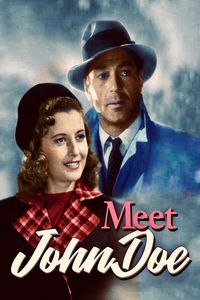
    (On Cable TV, September 2019) It’s easy to recognize Meet John Doe as a Frank Capra movie, and just as easy to see why it’s not one of his best-known works. On one hand, here we have Gary Cooper blandly (but sympathetically) playing another everyman role—this time, the plot literally turns around that idea, as a newspaper columnist creates a “John Doe” persona out of sheer job-preservation determination. Before long, however, the blank person selected to incarnate the decency of the ordinary man becomes all too real, and may be the only one to stop what dark forces are planning to do with this populist movement. You can see Capra’s strain of American exceptionalism running here, along with a populist fervour for decency and strong values. There’s also the montages and newspaper headlines flying at the screen used as exposition devices—Capra handled those better than anyone else, and the result here is undeniably a film shaped by his sensibilities. Barbara Stanwyck is also remarkable in the lead female role, although her initially prominent place in the story gradually gets sidelined in favour of Cooper’s character. Which leads us to the weaker third act, in which the appeals to decency feel manipulated by the demands of an overarching plot with a specific destination in mind. The ending, as much as it wraps up matters in a way that’s satisfactory, nonetheless leaves us wondering if there wasn’t a better way to conclude matters. There’s certainly material in Meet John Doe for contemporary contemplation as the nature of populism is examined, and shaped in a markedly more optimistic direction than current trends. It almost makes one long for some neo-Capra filmmaking, with sometimes-naïve optimism, human decency and all.

  • Union Pacific (1939)

    Union Pacific (1939)

    (On Cable TV, August 2019) I’m not sure how much we twenty-first century sophisticates truly understand the meaning and importance of the first coast-to-coast railway. To put in modern context, it was akin to building the first highway and the first Internet link throughout the country at the same time. The first transcontinental railway (1869 in the United States, 1886 in Canada) did as much to tie the country together as any law. It standardized time, facilitated the mobility of labour, ended the wild frontier, improved the flow of news and information—all things that we now take for granted. We may never be able to fully appreciate that it meant then, but at least there are movies like Union Pacific to make us appreciate the details of how it was done. Focusing on a troubleshooter for a railroad company, this is a film that takes a look at the nitty-gritty of building such a revolutionary endeavour, from shooing away undesirables that prey on railroad workers, to the logistics of keeping such a group of workers fed and productive, to negotiations with the native tribes. Joel McCrea plays the troubleshooter, bringing his usual charisma to the part and helping to humanize a complex subject. Barbara Stanwyck plays the love interest, while you can see (or rather hear) Robert Preston and Anthony Quinn in the supporting cast. But this is director Cecil B. de Mille’s film—an expansive, spectacular subject matter that never misses a chance to stage a large-scale action sequence. While the film does regrettably rely on native attacks as a pretext to action scenes, it does spend more time than was usual back in 1939 showing how those attacks were motivated by the white businessmen breaking their promises to the tribes. Union Pacific is my kind of western—not a celebration of the wild frontier using the usual macho tropes of the genre, but a study in how civilization spread throughout the land and closed the frontier. Some film historians point to this film and Stagecoach as when the Western grew up, but I can only testify as to the interest that it created and sustained over a two-hours-and-fifteen minutes running time: It’s a fascinating railway procedural, and it manages to have a nice human edge to it.

  • Double Indemnity (1944)

    Double Indemnity (1944)

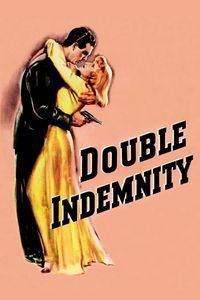
    (On TV, June 2018) Like many, I like film noir a lot, and Double Indemnity is like mainlining a strong hit of the stuff. Pure undiluted deliciousness, with black-and-white cinematography, unusual investigator, femme fatale, crackling dialogue, strong narration and bleak outlook. Here, the focus on insurance agents trying to figure out a murder mystery is unusual enough to be interesting, while the Los Angeles setting is an instant classic. Fred MacMurray is a great anti-hero (morally flawed, but almost unexplainably likable along the way), Barbara Stanwyck is dangerously alluring and Edward G. Robinson is the moral anchor of the film. Double Indemnity does have that moment-to-moment watching compulsion that great movies have—whether it’s the details of an insurance firm, dialogue along the lines of the classic “There’s a speed limit in this state” exchange, a trip at the grocery store, or the careful composition of a noir film before they even had realized that there was a film noir genre. Double Indemnity is absorbing viewing, and a clear success for director Billy Wilder, gifted with a Raymond Chandler script from a James M. Cain novel.

  • Dead Men Don’t Wear Plaid (1982)

    Dead Men Don’t Wear Plaid (1982)

    (On TV, January 2000) I can testify that Dead Men Don’t Wear Plaid works pretty well as a comedy without catching any of its references to the noir genre it’s so obviously parodying. This fabulous cinematic experiment intercuts actual scenes from classic 1930-1950 films into its own B/W footage, and so includes Steve Martin and the gorgeous Rachel Ward interacting with the great Humphrey Bogart, Ingrid Bergman, Vincent Price, Cary Grant, Greta Garbo… and a few others. It presumably blows the mind of the fans of these type of films, but as a total neophyte to this period, I though the film was pretty darn successful without knowing the references. You’ve got to love the recurring tie gag.

    (On DVD, November 2021) How interesting it is to revisit Dead Men Don’t Wear Plaid after watching a few hundred noir films – the basic comedy of the film is still the same, but now I can recognize the actors, and sometimes even the clips used by Carl Reiner and Steve Martin in putting together their homage. The distinction of the film is not only having Martin play a private investigator in 1940s Los Angeles, but especially having him interact (through clips from older movies) with Classic Hollywood actors. While the film features a heroic re-creation effort in set design, cinematography and costuming (sometimes from people who had worked on the original films, such as Edith Head!), the difference between the original and new footage is quite obvious on DVD: Since Dead Men Don’t Wear Plaid was shot in 1980s widescreen and the original footage is in 4:3 “Academy ratio,” the older footage is zoomed into widescreen format and the grain difference is perceptible. Still, that doesn’t do much to lessen the fun of Martin arguing over the phone with Barbara Stanwyck, telling Humphrey Bogart what tie to wear, sharing a train cabin with Cary Grant or getting hit on by Joan Crawford. While the film’s first two acts can often feel disconnected as the protagonist goes investigating and lands in separate films, the last act is more cohesive given how it borrows much of the sequences from The Bribe. While the comedy has its ups and downs, it’s all good fun – and having the beautiful Rachel Ward as the original-footage femme fatale doesn’t hurt either. Martin sports dark hair and is a good sport about the silliness asked of him – Dead Men Don’t Wear Plaid is clearly part of his early-1980s heyday as a film comedian, and still a funny film today… although it’s a different kind of funny for film noir fans.