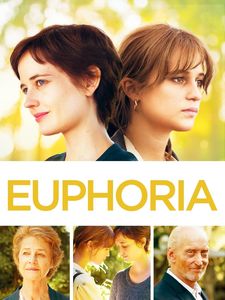
Euphoria (2017)
(On Cable TV, February 2021) I hate when a promising concept is extinguished by the weight of pedestrian execution, and the latest example of that is found in Euphoria, a low-budget drama that delights in being as dull as it can be after a promising beginning. Although, let’s not overpraise those opening moments: As two estranged sisters reunite, the mystery that accumulates through their interactions and strange behaviour is already overshadowed by a heavy ponderousness. This is going to be an overwrought drama, quickly says the film through its execution. Before long, we have both the explanation to the mystery and nearly the last interesting thing about Euphoria: One of the women is mortally sick and has chosen to go, accompanied by her sister, to a secluded euthanasia clinic when she’ll be able to live her last days in peace before undergoing a fatal injection. It’s a sign of the script’s overwrought melodramatic tendencies that this (including the terminal cancer) is all explained to the protagonist once they’re already at the clinic rather than at any reasonable moment before then… you know, like normal people would do. But no — Euphoria is about creating a pressure cooker of an environment in which the sisters can hash out their recriminations, childhood traumas and repressed feelings in time for a conclusion that isn’t nearly as climactic as the filmmakers hoped for. Despite the acting talent of Alicia Vikander and Eva Green, the film struggles to make it past the finish line, weighed down by a graceless exploration of familiar themes that completely forgets the spark of mystery that led its first few minutes. Director Lisa Langseth is clearly trying for artistic drama here and succeeds too well: the film feels interminable even at less than two hours, and not even Charlotte Rampling as a therapist nor Charles Dance as another terminally-ill patient can quite manage to save the film even if they manage to make us temporarily interested again. It’s a bad, bad sign for a film when you start wishing for the lead character to die so that it can finally end. I still think that there was potential here for something much better — and a purely theatrical take on the same elements may be far more effective than a film that seems to exhaust itself in aimless meanderings. But as it is, Euphoria is anything but exhilarating.
