Chevy Chase

  • The Very Excellent Mr. Dundee (2020)

    The Very Excellent Mr. Dundee (2020)

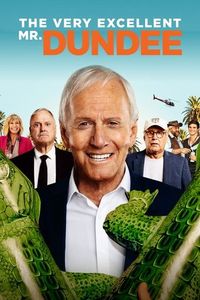
    (On Cable TV, July 2021) You have to have some sympathy for entertainers who, after a lifetime of hard work, personal development and multiple projects, still end up recognized for one single thing. Paul Hogan may have had quite a varied career in Australia, but his North American legacy will forever remain playing “Crocodile” Dundee, and so The Very Excellent Mr. Dundee ends up being a meta-Hollywood comedy that sees the 80-year-old wrestle with his unescapable legacy. Hogan was old back in 2001 with the third Dundee film — he’s even older here and looks like it. Perhaps the film’s best moments are allowing a few fellow senior citizen comedians to poke fun at the passing of fame by playing “themselves” — John Cleese shows up as a maniacal ride-share driver to make ends meet; Chevy Chase as an egomaniac; Wayne Knight as a tap-dancing singer; and Olivia Newton-John as something like window dressing. Hogan’s character himself is quite unlike his own best-known character — mild, gaffe-prone, and trying to retire peacefully even as others try to bring him back, often speaking from a position of ignorance. Much of the film’s structure is cyclical, with Hogan exploring the world of 2021 and committing a series of faux pas that land him on the news as the worst person ever. That gets old quickly (especially when the gags are stretched-out and not all that funny in the first place), even as other moments in the film work relatively well. I did like Cleese’s role and some of the comical flourishes poking fun at modern Hollywood. This being said, there is something a bit awkward about a film built around an older man’s lack of comfort in the world — a film about retirement in which Hogan shows up with his first starring role in a decade. I smirked a few times at The Very Excellent Mr. Dundee and it ranks as one of the weirdest legacy sequels so far, so it’s not all that bad — but there are plenty of missed opportunities along the way for a more incisive take on aging stars and whether they should retire once and for all.
  • Cops and Robbersons (1994)

    Cops and Robbersons (1994)

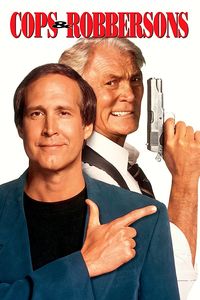
    (In French, On Cable TV, June 2021) I haven’t held back in calling out Chevy Chase as one of the unfunniest comedy stars of the 1980s — while his shtick occasionally works (I’m a big, big fan of Christmas Vacation), it’s often smarmy to an intolerable degree, and it’s interesting to see that it got worse with time, until his hubris grew too big for audiences to like. After his 1980s heydays, he experienced flop after flop in the early 1990s, with Cops and Robbersons arguably being the nail in his box-office coffin — you can just look at his filmography before and after 1995 to see a striking difference. To be fair, the problem with Cops and Robbersons isn’t just Chase — but other than “this is not a great script,” most of the specific problems with the film can be summarized as “Chase.”  It could have been much, much worse — rather than being portrayed as an “irresistible” ladies’ man as in Fletch or Memoirs of an Invisible Man, Chase here reverts to a variation on his bumbling suburban dad persona made famous in the Vacations films. A familiar character played on autopilot — with the same largely being true of Jack Palance as a misanthropic hard-boiled veteran cop forced to play Granddad in moving to the suburbs for a stakeout. The casting of Dianne Wiest as a funny mom is slightly perplexing considering her persona and the sitcom nature of the gags, but that’s among the least of the film’s problems. The main issue here is that the script has one good idea (encapsulated in the too-cute title) executed in very familiar riffs. You’ll say that this does make it look like plenty of other mainstream comedies of the time and you’d be right — the failure mode of Cops and Robbersons is being overly familiar, and that’s better than being actively obnoxious as other Chase films. Still, that doesn’t make it a better film — and for Chase it was a three-strikes-you’re-out kind of career realignment, not helped along by his abysmal reputation off-screen. When egomaniacs get humbled, not all of them repent and change their ways — some simply take their ball and go home.

  • Modern Problems (1981)

    Modern Problems (1981)

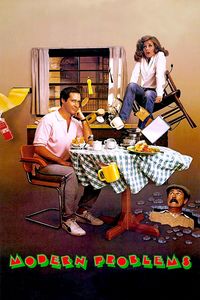
    (In French, On Cable TV, June 2020) There are movie stars of the past whose appeal seems inexplicable now, and 1980s era Chevy Chase is a prime example of those. For every Vacation film in which he was funny, there seem to have been three more movies seemingly built around his inexplicably smarmy comic persona made of equal parts lecherousness and arrogance. Modern Problems doesn’t help itself by stringing along a disjointed plot made of supernatural power and icky romantic comedy in which a man tries to stop his ex-wife from dating other people. There’s a racist explanation at the end when the superpower ends up being a case of possession—at which point you can be forgiven for checking out of the film altogether. I suppose that there’s something funny about someone being given superpowers and using them for hilariously petty purposes, but I’m not even sure that this lazy script has even thought of seeing things from that angle. In the end, Modern Problem is not all that interesting nor funny and given the overbearing place taken by Chase in the film, it’s impossible not to place at least some of the blame on him.

  • Fletch (1985)

    Fletch (1985)

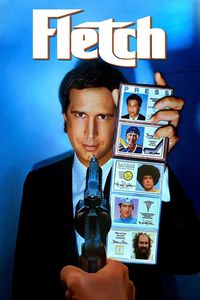
    (On TV, January 2020) The paradox of Chevy Chase is the paradox of Fletch—which makes sense considering how much the film relies on Chase’s comic persona. And that paradox is that Chase’s comedy always ran very close to abrasiveness: arrogance, showboating and self-satisfaction can either lead to good jokes (“I’m Chevy Chase and you’re not” remains a great one-liner) or sheer exasperation. Thus Chase’s performance here as a disguise-loving undercover journalist who turns to amateur sleuthing: while the bones of the story (adapted from an acclaimed Gregory McDonald novel) are solid, the script never misses an occasion to get Chase’s protagonist to play another character, multiplying accents, props, hairstyles and over-the-top histrionics. If you’re a Chase fan, the substantial plotting comes as a bonus to make this a better-than average Chase film; if you’re a mystery fan, Chase’s antics are annoying and stop the narrative drive of the film whenever it indulges him. As far as Chase films go, however, Fletch remains significantly better than the average, even with him indulging in his own worst excesses—director Michael Ritchie walks the fine line between extracting laughs from Chase without necessarily letting him run away with the film. The mid-1980s atmosphere as aged into a period patina and the technical credentials are well in-line with mainstream Hollywood studio polish at the time. Fletch may not necessarily work equally well on everyone, but it usually scores higher than average and that’s not too bad considering the very large Chase-shaped wildcard at its centre.

  • Spies Like Us (1985)

    Spies Like Us (1985)

    (On Cable TV, October 2019) As I go through the 1980s back catalogue, it feels as if every new Chevy Chase movie I see highlights how badly his abrasive comic persona has aged. Or maybe been overexposed: his arrogant man-child persona has been repeated ad nauseam by other performers such as Will Ferrell and Vince Vaughn, and I found it all more annoying than funny in Spies Like Us. Whoever thought he was even remotely likable as a womanizer has now been proven wrong and unfortunately, we’re still stuck with the result. The film takes the low road to international comedy, by featuring two bumbling Americans being pressed into the spying business as decoys for other more competent operatives. Of course, the rules of comedy mean that they’ll end up being Big Heroes by the time the nuclear missile flies. (This shouldn’t be a spoiler.)  It’s easy to see why director John Landis would be interested in a script with large-scale comic set-pieces, international vistas, Dan Aykroyd and Chevy Chase and half-a dozen cameos from comedy directors that you have to be a cinephile to catch. Spies Like Us is not bad, but it does drag much longer than necessary and it relies far too much on Chase’s unpleasant comedy persona—Aykroyd is far more sympathetic. I do wish we’d see more ambitious big-budget comedies these days (rather than the improv-type stuff), but I don’t miss Chase at all.

  • Funny Farm (1988)

    Funny Farm (1988)

    (In French, On Cable TV, July 2019) Chevy Chase heads to rural Vermont in a comedy that pretty much plays as you’d expect. As Funny Farm begins, a Manhattan sports journalist and his wife head over to the country in the hopes of transforming an advance for a novel into a fresh start for them both, away from the busy rhythm of the city. Of course, they don’t know squat about the new house, the town, its people or even how to make friends with the locals. Hilarity, or at least predictable gags ensue. The inversions happen, the ironies pile up and yet Funny Farm isn’t much of a comedy. The comic style is very broad, to the point of feeling overly familiar even before seeing what happens next. You can call out the jokes from their setup, and even a slightly less predictable third act doesn’t really improve the entire thing. Chase is up to his usual self (which is either funny or not—his specific brand of comedy can go both ways), while Madolyn Smith is more remarkable as his wife. As someone who fetishizes the idea of writing full-time, I did get a kick out of some aspects of the film. Alas, that’s not quite enough to make me like the film. On the plus side, I didn’t quite hate Funny Farm either. But it would be fair to say that I found it almost useless, and not really worth revisiting.

  • Nothing but Trouble (1991)

    Nothing but Trouble (1991)

    (In French, On Cable TV, April 2019) If you’re curious to know what would happen if you mixed Silent Hill with gross-out dumb comedy, then have a look at Nothing but Trouble … but heed this: It’s not going to make you happy. This so-called horror comedy follows Chevy Chase and Demi Moore as they make their way from their comfortable upper-class Manhattan penthouse to the depths of rural New Jersey where they will be tormented by murderous hillbillies led by the local hanging judge. The film’s execution is meant to be comic (with a lot of fake screaming, cultivated grotesqueries and a series of dumb sketches strung along) but the effect is more puzzling and dreadful than funny. The only sequence worth highlighting as being tolerable features Digital Underground and a few party girls bringing some welcome urbanity back in the film—but then the same sequence features Dan Aykroyd’s worst tendencies in having him join the song with a piano bit. Landing the blame at Aykroyd’s feet is only natural given that he’s the film writer, director and producer, in addition of holding two on-screen roles—with a smattering of other Aykroyd family members in the supporting cast list. Nothing but Trouble definitely reflects a personal comic sensibility trying to find a happy middle ground between horror and comedy, but doesn’t succeed at even mastering one or the other—at best, the film settles for a series of disgusted yucks and blank stares at what it thinks is funny. There’s a waste of John Candy (in dual roles, one of them in drag), the overuse of Chevy Chase (now known to have been as unpleasant behind the scenes as his reputation suggests), and not a whole lot to do for Demi Moore. The set design is good, though—it’s a shame that it couldn’t have been used for anything better. I suspect that the film has aged slightly better than upon its reception, if only because it features a few familiar names in earlier roles, because there’s now an even bigger glut of hellbilly horror movies that it could be seen as parodying and because today’s audiences may be more familiar now with genre hybridization. On the other hand, there’s been many better horror/comedy hybrids since 1991, and the limits of Nothing but Trouble are now even more apparent.

  • Three Amigos (1986)

    Three Amigos (1986)

    (Second viewing, On DVD, October 2018) It’s easy to see why noted film buff/historian John Landis would jump at the occasion to direct Three Amigos—among many other things, it’s a chance for him to re-create a small part of Hollywood history, specifically the early days of silent comedy films. Add to that the idea of satirizing Seven Samurai, as well as working with comedians such as Martin Short, Chevy Chase and Steve Martin … it certainly looks like a great project. Alas, the final version of Three Amigos is missing something. It’s not dull or bad, but it’s certainly duller and worse than it could and should have been. When I saw the movie as a teenager, my favourite sequence (and the only one I could remember thirty years later aside from the salute) was the one with the signing bush and the (fallen) Invisible Gunman. As a middle-aged man, it’s still my favourite sequence, and I think it shows just how wild and absurdly funny the rest of the film could have been—I liked the too-brief look at silent Hollywood, but I would have enjoyed Three Amigos far more if its tone had been consistent with the crazy singing bush/invisible man sequence. The rest often feels perfunctory and well-mannered despite a few good stunts and the potential to go beyond the obvious. Would it have been so hard to do just a bit more?

  • Caddyshack (1980)

    Caddyshack (1980)

    (On DVD, May 2017) As a quintessential golf comedy, Caddyshack’s reputation precedes it in many ways. A favourite filler on golf TV channels, it seems to enjoy a consecrated reputation as something of a lowbrow classic. Taking a good look at it, however, may reveal a film weaker than expected. The plot zigs and zags in mystifying fashion, largely uninterested in the action of its putative teenage leads but all too eager to showcase comic routines by Rodney Dangerfield, Chevy Chase and Bill Murray. It makes for a clash of comic sensibilities, considering how their styles don’t necessarily belong in the same narrative. The most egregious instance of this is Dangerfield’s quasi-stand-up routine blasting the age and status of a country club members—the movie pretty much stops dead during that time. Another physical comedy bit involves nautical hijinks, while Chevy Chase has his own comic-seduction routine, and Bill Murray kind of dawdles into the movie with his own absurdist take (He’s got that going for him, which is nice) and a groundhog exists in a separate explosive movie. Very little of this actually fits together, making for a disconnected but occasionally very funny film. Caddyshack’s impact makes more sense once you find out the chaotic nature of its production and the various ways then-novice director Harold Ramis altered the film is post-production. The result is a mess, but an entertaining one—if only for seeing Chase, Dangerfield and Murray each playing up their comic persona, leaving the other aspects of the film far behind.

  • Vegas Vacation (1997)

    Vegas Vacation (1997)

    (On DVD, February 2017) As the fourth entry in an uneven series, Vegas Vacation is no more and no less than average. The chuckles are there as the Griswold family takes a trip to Las Vegas, but the film struggles to have anything akin to the memorable sequences of the previous films. While better than European Vacation, it doesn’t reach the comedy heights of Christmas Vacation, nor attains the archetypical Americana of the first film. Chevy Chase’s doofus-dad character is very familiar by now, and if Beverly d’Angelo only seems to become more attractive with age, her character doesn’t have much to do except flirt with Wayne Newton. Some sequences are terrible (such as the Hoover Dam segment) while others are mildly amusing (such as the boy being an incredibly lucky gambler). The ending, appropriately enough for a final movie in a series, triumphantly sends off the Griswold family in the sunset with a drive home that could have been a movie in its own right. By far the most average and featureless film in the series, Vegas Vacation is worth a look if it’s in the same DVD case as the other movies of the series—otherwise, well, there are funnier film out there.

  • National Lampoon’s Vacation (1983)

    National Lampoon’s Vacation (1983)

    (Second viewing, On DVD, February 2017) Movies become semi-classics for a reason, and the appeal of National Lampoon’s Vacation can be found in nearly-universal nostalgic reminiscences of childhood road trips to visit some far-off destination. That’s the vein that John Hughes picked up in giving life to the episodic Vacation, featuring Chevy Chase as a bumbling dad trying to ensure happy holidays for his family. Nearly thirty-five years later, there’s a pleasant eighties patina over the film, but many of the gags remain just as funny today. (There are exceptions, of course—some scenes, such as the saloon fake-shootout, remain more mystifying than anything else.) It’s a great piece of Americana, a rather good showcase for Chevy Chase’ comic persona, and it remains a fairly solid touch-point for references even today. Plus you’ll get to hum “Holiday Road” for days. It’s not my favourite of the series (that honour goes to Christmas Vacation), but it’s solid enough to show why it remains popular even today.

  • National Lampoon’s Christmas Vacation (1989)

    National Lampoon’s Christmas Vacation (1989)

    (In French, Fourth or fifth viewing, December 2016) Surprisingly enough, I can’t find a review of National Lampoon’s Christmas Vacation in my files even though I must have watched it a handful of times before. Heck, the film has even become a Christmas tradition in my household. What’s not to love about it? It’s an itemized look at the excesses of Christmas for the middle-class, deftly zigzagging between cynical laughs and exasperated sentiment. It’s a collection of memorable sequences, each of them madcap and taken to the limits. (My hands-down favourite: the “Squirrel!” sequence) It’s a showcase for Chevy Chase, who reprises his role as the Griswold patriarch, but gives him added depth by staying home. For men, it’s an excuse to look at the combined charms of Nicolette Sheridan, Beverly D’Angelo’s green outfit and eighties-chic Julia Louis-Dreyfus. It remains very funny even today, and I suspect that its timeless charm only makes it feel even more relevant nowadays. Worth seeing again; worth seeing every year.

  • Vacation (2015)

    Vacation (2015)

    (Video on Demand, January 2016) Are Hollywood studios so desperate that we’re now down to comedy franchise reboots? Oh, you can make a good case for the Chevy-Chase “Vacation” quartet as some sort of classic (especially the Christmas one), but rehashing vacation-themed films through the son’s character in the original series seems more crassly desperate than most other attempts to exploit moviegoers. The result isn’t fit to make anyone think more highly of the process: It’s not that Vacation is terrible, but that it’s scattered everywhere, without much control over its own tone or jokes as it seemingly leaps off in all directions (sometimes literally straddling four states at once). There’s heartwarming family reconciliation, some gross-out material, several quick appearances by known comedians, undercooked subplots and an overall lack of cohesion. Ed Helms is pretty good as the stereotypically harried husband/father and some of the cameos are fine (this does not include Chevy Chase, who looks as if he should have retired a long time ago) and yet Vacation is as ordinary as it comes. It’s funny enough, but it could have been better given slightly more effort.