Chris Rock

  • Spiral: From the Book of Saw (2021)

    Spiral: From the Book of Saw (2021)

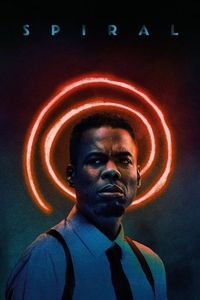
    (On Cable TV, October 2021) As a vocal opponent of torture films, gory violence and cinematic nihilism, I do have a softer spot than many would expect about the Saw series. While I don’t have much use for its elaborate traps or sudden sprays of bodily parts, I rather liked some of its more outrageous narrative twists, grimy industrial settings, go-for-broke editing (especially when it’s trying to cover up some plot nonsense) and moralistic intentions—even when it doesn’t stick to it. This being said, I wasn’t begging for another instalment: Considering Tobin Bell’s inimitable performance and the convoluted backflips of the narrative after nine instalments, the series can rest easy for a long while. Spiral wisely doesn’t try to fit even more material in the series’ overstuffed mythology—it plainly goes for an explicit spinoff, and adopts a slightly different tone by moulding itself into a police thriller. Chris Rock, of all possible choices, gamely tries to reinvent himself as a more serious dramatic actor by playing an outcast police officer who becomes the focus of a copycat killer working in Jigsaw’s tradition. Much of the film, from a narrative perspective, plays like one of those 1990s serial killer thriller, with the police racing to find the culprit. The distinction here is that the killer is targeting corrupt cops—alas, a concept that seems too timid now that everyone is grappling with the consequence of systemic police brutality. The result is something like a new direction for the series, but one that doesn’t manage to get very far in establishing itself as something worth pursuing. Sure, it’s interesting to see Rock (his face sculpted by age and facial hair) go for thrills and drama while still spouting his fair share of one-liners. Oh yes, Samuel L. Jackson does have something new to do here. Fine, the police procedural is a nice change of pace. Indeed, there’s a narrative twist worthy of the Saw series. But none of this is quite enough. The fascination for the traps is overdone and underwhelming: the film could have dispensed with them without problem, especially considering how insipid they become over time. (Worse: the film tries to have its cake and eat it too by allowing the victims to defeat the trap… only for them to die gruesomely anyway moments later. But this is far from the first instance of botched morality in the series.)  It’s all loud and quick on the editing, but the substance is just as lacking as in earlier repetitive instalments of the series. I’m not sure if Spiral will ever get a sequel, but I don’t think anyone will demand it.

  • Pootie Tang (2001)

    Pootie Tang (2001)

    (On TV, July 2020) I’m about a generation too late at the Pootie Tang party, and a lot of it has to do with its reputation as a terrible movie. It’s not wholly undeserved, but the film itself is a great deal funnier than expected. Stemming from sketches from The Chris Rock Show and directed by then lesser-known Louis C.K., Pootie Tang is the kind of absurd satirical comedy that either falls flat or strikes a chord. It’s ingeniously dumb, as it revolves around a character (Pootie Tang!) meant as a parody of multi-hyphenates artists in the wake of the blaxploitation era. Pootie Tang (and please decline any drinking game in which the mention of the name is a trigger for alcohol consumption) is a rapper, actor and positive role model whose appeal is largely inexplicable to viewers but deeply felt by the characters in the film’s reality. Lance Crouther is pretty good in the lead role, while Robert Vaughn deliciously shows up at the antagonist, Jennifer Coolidge and Wanda Sykes provide some decent sex appeal, and Chris Rock goofs around in a variety of roles—plus many cameos big and small. Pootie Tang is almost aggressively stupid at times, but darn if I didn’t giggle during a good chunk of it: I liked the anti-corporate message, the semantic tour de force presented by the title character’s dialogue and the unapologetic weirdness of its humour. Don’t go in Pootie Tang expecting an ordinary, let alone good movie: you will know within moments if the absurdity of it all will grab you.

  • New Jack City (1991)

    New Jack City (1991)

    (On TV, May 2020) Often lumped in with the neo-Blaxploitation “hood movies” of its time, New Jack City ends up being something a bit more grandiose, enjoyable and action-oriented than the films it’s often compared to. It certainly does not deal in the quotidian lives of ordinary people stuck in the hood—it’s a New York City-wide criminal epic with unsubtle, grander-than-life characters, overblown action and ham-fisted atmosphere… and that is part of its charm. Part of the appeal is an interesting cast of actors in early roles, from Wesley Snipes as a crime lord, Ice-T as a detective, Chris Rock in a supporting role, director Mario van Peebles also taking on a small role, and the beautiful Vanessa Williams as new-style gun moll. It’s all a clever blend of an unusually good soundtrack, an ambitious script, social inequality commentary, interesting (but inconsistent) stylish direction, a good ending and great moment-to-moment watchability. Explicit references to James Cagney and Superfly tie the black cinema of the 1990s both to the Blaxploitation era of the 1970 and the gangster films of the 1930s. Given this, New Jack City is better than expected, and a decent film in its own right. Have fun watching it on BET, though—the film is heavily censored and inconsistently so: sometimes, the closed captioning bleeps out mild profanity even when the audio doesn’t!

  • 2 Days in New York (2012)

    2 Days in New York (2012)

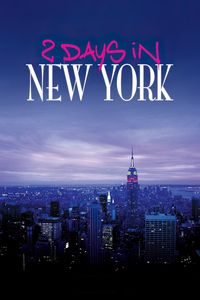
    (On TV, April 2020) By the time I realized that 2 Days in New York was the sequel to another film called 2 Days in Paris, it was too late to stop, and I was increasingly sure that I wasn’t in any hurry to watch another film in this series. A comedy of familial humiliation, it stars Julie Delpy and Chris Rock as a Franco-American couple living in New York whose lives are upended when her French family decides to visit. The visitors are skilled in creating trouble and cannot be trusted alone in society, whether because of excessive lust, property crimes or casual racism. The tensions keep rising within the couple, and Delpy the writer-director-star seems determined to create a film of maximum discomfort. Alas, there’s a hard limit to how much of this we’re willing to tolerate, and 2 Days in New York hits it pretty early on. To Delpy’s credit, the actors are fine, the story ends well and this is the film to watch if ever you want to see her fight with Vincent Gallo about her soul. (Fortunately, Rock does especially well as “the American boyfriend.”) One character is so strikingly unpleasant that even the movie is giddy about having him deported from the United States midway through. Still, this doesn’t do much to improve the result: 2 Days in New York is still a grating, deliberately off-putting experience. I didn’t exactly hate it, but I’m not planning on watching it ever again.

  • I’m Gonna Git You Sucka (1988)

    I’m Gonna Git You Sucka (1988)

    (On TV, March 2020) I’m not sure that I’m Gonna Git You Sucka is as distinctive today as it was when it came out. Black voices in cinema are significantly more numerous now, and you can now program at least a day’s worth of a blaxploitation spoof film festival. But there’s a semi-pioneering aspect to writer-director-star Keenen Ivory Wayans’s big-screen debut that should be highlighted along the film’s innate qualities. Not that I’m Gonna Git You Sucka is any less silly not knowing the context—although knowing more about Blaxploitation certainly helps, as the film finds roles (big and small) for stars of the earlier era of black-starring thrillers and rarely wastes an occasion to make specific references. It’s generally funny, although there’s some awkwardness to the way the film tries to be absurd and yet sustain a strong narrative—there are plenty of times where twenty-first-century viewers (perhaps trained on more modern takes on similar material) will wonder when the next joke is coming. To be fair, I’m Gonna Git You Sucka does find a surer footing in its later half as the gags become more visual, more self-assured and more focused. It even weaves in some stinging social commentary without overdoing it in the way that more modern takes have often done, so there’s plenty to dig into beyond just jokes. There’s a surprisingly good cast here, including Chris Rock’s debut in a small but showy role. The spoof comedy subgenre has certainly seen far worse—indeed, tracking the Wayan’s downward trajectory in matters of crudeness, it’s regrettable that the family didn’t follow in the tradition of I’m Gonna Git You Sucka rather than end up with White Chicks and digging downward.

  • Bad Company (2002)

    Bad Company (2002)

    (Netflix Streaming, September 2016) I really like Chris Rock as a performer, so seeing him alongside Anthony Hopkins in the middle of an espionage comedy should have been interesting. But while Bad Company has its moments of inspiration, it doesn’t rise to much more than a middle-of-the-road action comedy. Unlike some similar film (and there are plenty of similarities between this one and its 2002 contemporary I Spy), Bad Company doesn’t have much in terms of action, focusing rather on the verbal sparring between Rock and Hopkins, as well as a plot that could have served as a basis for a much more serious film. Here, Rock plays a gifted street hustler who is recruited by the American government to impersonate his long-lost twin brother. Street meets high society with a big splash of undercover intrigue—you can imagine the predictable laughs that the street-smart protagonist gets once he confronts both the CIA, upper-class friends of his brother and eastern European terrorist villains. Thanks to Joel Schumacher’s competent direction, the film moves at a good clip and nearly always looks good. Still, the most memorable sequences have more to do with comedy (such as Hopkin’s lame attempt to bring him back into the fold, or whenever Kerry Washington shows up as his brother’s exploitative girlfriend) that with suspense, which is not necessarily a bad thing. As a vehicle for Rock, Bad Company isn’t bad, but it doesn’t rise much above that.

  • Top Five (2014)

    Top Five (2014)

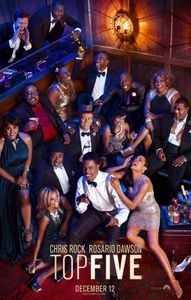
    (Video on Demand, March 2015) Chris Rock is an incredibly gifted comedian, but his fiction output as a writer/director has been disappointing so far: Head of State and I Think I Love my Wife are both OK without being spectacular, and it took Good Hair, a documentary, to showcase his talents as a filmmaker.  Fortunately, Top Five is a strong new entry in his filmography, a down-to-the-streets romance with occasional moment of lunacy, a few great performances and a warm fuzzy feeling.  The premise smells of autobiography, as a comedian feeling unmoored by commercial success rediscovers his roots over a hectic day.  And while this film is definitely Rock’s show, he surrounds himself with a steady stream of cameos, hilarious short performances and enough quotable material to last a while.  The chemistry he shares with co-star Rosario Dawson is remarkable, as she gets one of her best roles in years.  Filled with laughs, spiced with wit and never empty of real emotions, Top Five feels like the film closest to Rock’s best comic persona so far. 

  • The Longest Yard (2005)

    The Longest Yard (2005)

    (In French, On TV, February 2015)  Surprisingly enough, this Adam Sandler film doesn’t feel all that much like an Adam Sandler film… largely, I suspect, because it’s a remake of a 1974 film.  Not having seen the original, I’m left wondering at the remake and how I’m pretty sure it has neutralized a lot of the original’s seventies realism in favor of more contemporary jokes.  Sandler isn’t particularly credible as a NFL-level football player, but he’s charming enough in the lead role, and allows the supporting characters to get their laughs.  Chris Rock has a good role as an inmate fixer and so do James Cromwell and William Fitchner on the prison staff side.  Not being a football fan, I found the film interminable during its far-too-long third act, set during a football game that never seems to end despite fairly preordained plot points.  But then again, I’m not really the target audience for this film: I suspect that The Longest Yard will appeal far more to those with an interest in football, prison machismo and Adam Sandler.  There are enough jokes to make much of the film pass by harmlessly.  Of note is the realization, seeing a French-dubbed version of the film, how much I’ve come to associate Chris Rock’s voice with his effectiveness as a comedian.

  • I Think I Love My Wife (2007)

    I Think I Love My Wife (2007)

    (On TV, September 2013) Marriage isn’t easy, and as the sorely tempted protagonist of I Think I Love My Wife discovers, nobody has the answers leading to perpetual bliss.  Written and directed by Chris Rock, this comedy is an honest (if uneven) look at the life of a bored husband suddenly seduced by someone from his past.  Rock keeps the lead role for himself, giving the female lead role as the temptress to Kerry Washington.  (Meanwhile, poor Gina Torres is stuck as the nagging shrew, but that’s how the script goes.)  Much of the film’s best laughs come from its cynical observational humor, especially in the first part of the film as the protagonist can’t help but let his domestic disillusionment contaminate even his fantasies.  (But then again, the film is co-written by Louis C.K., who’s made a career out of domestic disillusionment.)  Rock is sympathetic enough as the lead, and the film does toy, as expected, with how far it can go while keeping our sympathy.  The one single biggest false note of the film comes late as the married couple inexplicably launches into song, killing what should have been a heartfelt moment with dumb silliness.  Much of I Think I Love My Wife is a bit messy (in that some tangents quickly go nowhere) and it’s considerably tamer than Rock’s stand-up act.  Fortunately, Rock isn’t too bad as a director, and the film does have a decent comic timing.  While the result is bland enough to have sunk back in obscurity six years later, it’s not a bad film, and there are enough good laughs here and there to make it worth viewing.

  • Head of State (2003)

    Head of State (2003)

    (On DVD, December 2003) Chris Rock playing a black man running for President of the United States: what else do you need to know about Head of State?  I’m almost sorry that I waited this long to see this film, but then again it probably feels like a very different film post-2008 than upon its release in 2003.  The delicious frisson of “black man running for president of the United States” has now been archived for history with Obama’s election, and there are a number of scenes here that play very differently now.  (Such as Rock’s initial campaign speech to an audience, echoing Obama’s “Fired up!” stump speech.)  But it may be placing far too much weight to consider the film through the lens of real-world politics, since Head of State has the annoying tendency to veer in-between a variety of tone.  Writer/director Rock never quite knows whether his film wants to be a silly black-themed spoof, a clever political satire, rabble-rousing populist agitprop or just another mainstream comedy with the requisite love interest subplot.  As a result, the film feels a bit out of control, with more serious sequences interrupted by sillier fare.  It doesn’t make the film unpleasant to watch (there are more than a good number of laughs here and there) but it makes it feel scattered and less enjoyable than a more polished product may have been.  Rock is immensely likable, and so is the film despite a few excursions in lala-land: Head of State may not fully achieve its potential, but it’s not too bad, and there are a few interesting ideas here to go along with the laughs.

  • Good Hair (2009)

    Good Hair (2009)

    (In theaters, October 2009) Don’t be fooled by writer/director Chris Rock’s comic reputation, the frivolous-sounding subject of “Black Hair” and the constant laughter from audiences watching this film: Good Hair is a serious film tackling real issues with a substantial impacts on a number of us. Hair is not just hair: It’s a political statement, it’s a booming business, it’s a signifier of relationship intimacy, it’ s a measure of how much people with non-straight hair are willing to sacrifice in order to fit in. But as Rock comes to discover in his quest to understand the way black women feel about their hair, the topic quickly expands to touch upon economic servitude, third-world exploitation, dating patterns and appearance alteration. Thanks to Rock’s comic instincts, Good Hair touches upon those issues with a deft touch, sometimes even extracting jaw-dropping ignorant statements from simple showboating. It’s a deft balance, especially given the number of time where the images on-screen call for outrage. What’s also noteworthy are the candid celebrity interviews that dot the film, with a number of black actresses willing to speak frankly about the nature of what’s on their hair. Some of the interview moments are fantastic: Al Sharpton actually makes sense, Ice-T gets to be the voice of reason, Tracie Thoms is both hot and funny, while Maya Angelou manages to one-up one of Rock’s punchlines to earn an even bigger laugh than him. Hilarious, but also eye-opening (Rock does a good job at mirroring white viewers’ “You’ve got to be kidding me” expressions.), Good Hair will make quite a few viewers wonder “ Why didn’t I know that?” and give them a renewed appreciation for women with short hair. See it, if you can, with a big vocal crowd: It’s a movie that demands and benefits from audience participation. It’s an open question as to whether the same subject could or should be treated with self-righteous indignation and rage… and whether such a documentary would be better, or even appropriate. The real tragedy here may not be the unimaginable sacrifices made to the ideal of good hair, but the “eh, what are you going to do?” acceptance that this is what people do.

    (Second viewing, on DVD, April 2011) The documentary holds up to a second viewing: The laughs are still there, the insights are just as sharp, and Rock’s exploration of his subject seems just as revealing. What’s frustrating is the DVD: Aside from a commentary track with Rock and the co-producer of the film, there’s nothing else… even though the commentary repeatedly refers to a number of deleted scenes intended to be included on the DVD. It doesn’t help that the commentary itself is average and perhaps a bit drier than one would expect: While it does a lot to explain how a documentary can evolve into something quite different than envisioned (and how production challenges arise to meet heightened expectations), it doesn’t soar anywhere near the film itself.