Freida Pinto

  • Needle in a Timestack (2021)

    Needle in a Timestack (2021)

    (On Cable TV, December 2021) As far as low-budget SF films go, there’s a lot of intriguing material in Needle in a Timestack. Taking place in a future where time travel is expensive but commonplace, the film explores the consequences of an existence where the present may be altered abruptly, leaving characters wondering if things have always been that way. For instance, our protagonist’s happy marriage is complicated by the idea that the ex-husband of his wife is rich enough and jealous enough to go back in time to try to get her back. In the film’s rather romantic outlook, characters can sense when things are wrong (such as having a cat rather than a dog) and find themselves longing to fix things. There’s a lot of cold melancholy in writer-director John Ridley’s film (as adapted from SF legend Robert Silverberg’s short story of the same name), and an effective use of SF devices rather than special effects in creating its world. I wasn’t completely convinced by the film’s logic, but so it goes for films more driven by dramatic logic than science fact. (Furthermore, logic and time travel don’t go well together when causality itself is a suggestion.)  The cast can be surprising at times, with Leslie Odom Jr. in the lead role, Orlando Bloom as the antagonist and Freida Pinto as one of the two women in their lives. The low budget is used as well as it could, I suppose, although the film could have used a slightly wider scope in order to create its worldbuilding. Still, Needle in a Timestack finds its place among other recent low-budget SF films executed tastefully, with some intriguing dramatic situations made possible by extraordinary devices.
  • Hillbilly Elegy (2020)

    (Netflix Streaming, November 2021) On the one hand, Hillbilly Elegy does have the merit of looking at some of the most marginalized people in America — the white lower-class of semirural Midwestern America, usually the butt of jokes and derision by the cultural establishment. Of course, the story doesn’t quite commit to the nobility of such people — the viewpoint character of the film (adapted from an autobiography) is that of a young man who managed to get out of there and become a more socially respected East coast prestige-firm lawyer. (Whether that’s better than, say, a lawyer working in a small Midwestern town to help his fellow citizen is not a debate that the film is interested in having.)  The film switches between him dealing with the latest family crisis in the middle of job interviews, and flashbacks to his younger years dealing with members of his family. Amazingly, I’ve made it this far in the review without mentioning the film’s two showiest assets: Amy Adams as a volatile heroin-addicted mother, and Glenn Close as an elderly crusty no-nonsense grandmother who ends up being the closest thing to what this film has to a hero. Both are willing to shed their glamour for the role, but there’s a freak-show element to their turn — more impression than inhabitation in keeping with the film’s gawking attitude. Director Ron Howard does a workmanlike job here, typically adapting his style to the demands of the script, but not necessarily doing anything to change the base story’s most troubling elements, and consciously giving in to the requirements of showcasing Adams and Close as much as possible. Hillbilly Elegy would have been a very, very different film had it been made at a lower budget with a cast of unknowns rather than shouting from its prestige perch how brave and bold it is in stooping down to that level and giving bad haircuts to its stars. The result uncomfortably brings to mind some of the weirdest misfires of Classic Hollywood, in which you’d see major stars get under makeup to play some impoverished “other,” but all the time hogging the spotlight to themselves. At least there’s Freida Pinto: wasted in nothing more than a supportive girlfriend role, but still likable no matter the role or the film. In the end, Hillbilly Elegy remains a weird movie, superficially inspiring and intense, and yet paternalizing and overly familiar at once. [November 2024: And now Hillbilly Elegy is the villain origin story for the vice-president of the United States? What just happened here?]

  • Black Gold aka Day of the Falcon (2011)

    Black Gold aka Day of the Falcon (2011)

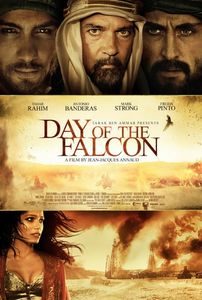
    (Video on Demand, June 2013) If you feel that there’s been a dearth of desert-adventure films out there, then take heart in Day of the Falcon’s existence and enjoy a trip to 1930s Arabia for an old-fashioned epic.  Tahar Rahim stars as Prince Auda, a bookworm son who eventually learns to lead an army and uphold progressive values at a time when the West is taking an interest in the oil reserves under the sand.  A co-production involving four countries, Day of the Falcon has a decent budget and a refreshingly earnest viewpoint toward traditional values in the face of western imperialism.  Directed with competence by veteran French filmmaker Jean-Jacques Annaud, the film can be enjoyed for its epic scope, interesting visuals and sympathetic characters.  It’s hardly perfect: there are a few pacing issues, and as much as I like Mark Strong and Antonio Banderas, casting them as warring emirs feels like a bit of a wasted opportunity for ethnicity-appropriate actors.  (The same goes, to a lesser extent, for Freida Pinto, except that she’s sultry enough to make anyone believe that the hero would wage all-out war simply in order to come back home to her.)  Historical parallels with the early days of Saudi Arabia are interesting (albeit not to be taken at face value) and so is the obvious commentary on the dominance of the oil industry in the region.  Parallels with Lawrence of Arabia are obvious, especially considering that the film offers a few desert-war sequences not commonly seen elsewhere in movies.  The stilted dialogues and acting definitely take a back seat to sweep of the film’s adventure.  For a film that probably flew under the radar of most north-American moviegoers, Day of the Falcon definitely qualifies as an underappreciated gem.

  • Immortals (2011)

    Immortals (2011)

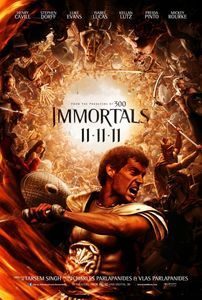
    (Cable TV, September 2012) The most dependable thing about director Tarsem Singh’s work is the astonishing visual polish of his work: From The Cell to The Fall to Immortals to Mirror, Mirror, the least one can say about his work is that it’s pretty to look at.  In terms of story, though, he doesn’t always pick the best scripts: His own writing on The Fall was intriguing, but his other films are disappointing to some degree.  Immortals is no exception to the rule: While it features a number of sequences that are pretty enough to work as classical paintings, its story veers between confusion, dullness and trite clichés.  Based on Greek mythology, Immortals is partly an excuse to produce a turbo-charged fantasy action film using top-notch special effects, and partly an excuse to play in the rarefied sphere of intensely operatic sword-and-sandal drama.  It works, but not completely: While the visuals are one-wow-a-minute, the story takes a long time to get going, and even then merely works in fragments.  Henry Cavill doesn’t have anything to regret in his performance as Theseus, while Freida Pinto perfectly plays the part of a reluctant oracle and Mickey Rourke brings some energy in the picture as the villainous King Hyperion.  Still, this isn’t an actor’s film: it’s really a directorial showpiece, and Immortals has a lot of visually memorable set-pieces.  The atmosphere may feel a bit claustrophobic (at time, it seems as if half the outdoors scenes are set on a cliff overlooking the sea), but the sequences are polished to such a degree that the entire film feels photo-shopped. (Immortals may feature some of the goriest slow-motion deaths in recent fantasy, but it’s so pretty that the only response is an astonished “oooh”.) Too bad the script hasn’t been re-worked to such degree: we’re left with a dull beginning, a muddled middle and a straightforward ending.  A blend of 300 aesthetics with Clash of the Titans mythology, Immortals works best as a plot-less eye candy.  Maybe, some day, Tarsem will manage to combine his superlative visuals with a good script.