Gary Oldman

  • Crisis (2021)

    (On Cable TV, September 2021) It’s easy to see where writer-director Nicholas Jarecki wants to go in presenting Crisis as a three-strand overview of the opiate overdose crisis: First at the very high level with a scientist (Gary Oldman) uncovering the synthetic drug’s incredible addictive potential and getting pilloried for it by corporate interests; at the medium level with a police officer (Armie Hammer) playing dirty to interrupt the flow of drugs into the United States; and finally at the lowest, personal level by featuring a mom (Evangeline Lily) grieving her son, dead of an opioid overdose, and going on a revenge quest to find out who’s responsible. It’s all quite noble, and it intermittently works: The objectives are ambitious and the main actors do decent work. Best of all, though, is how much of Crisis takes place in Montréal, with none other than Guy Nadon playing the evil drug kingpin and some naturalistic bilingual dialogue. (The filmmakers know what they’re doing with some pitch-perfect Michel Pagliaro playing in a French-Canadian bar scene.)  But where I cool off on the film is in seeing how it all comes together: While the cop and mother storylines are fated to collide in interesting ways, they play according to some very familiar rules, half-heartedly executed. The cop theatrics are sometimes troubling in their unquestioned use of police power, and some sequences (notably the helicopter-on-a-cliff arrest that begins the film) are overdone compared to the more tepid rest of the film. But the bigger problem is that the third narrative strand, at the scientific level, remains isolated from the other — clearly the most substantial subplot, but also the one that seems most underdeveloped. Crisis doesn’t quite gel together and fumbles the ball despite its laudable intentions. The opioid crisis will eventually get the film that does it justice, but Crisis isn’t it.

  • Mank (2020)

    Mank (2020)

    (Netflix Streaming, March 2021) For all of the times when I felt excluded by a favourite director getting interested in some esoteric topics far away from mine, here is the exact opposite: David Fincher going full out on an examination of 1930s Hollywood, through a dramatization of Herman Mankiewicz’s work on the script that would become Citizen Kane. Written from a script authored by Fincher’s father, Mank is a film that goes back ninety years to show, in fantastic black-and-white, the tumultuous Hollywood experience of a writer too clever for his own good — a member of MGM’s screenwriting team who gets involved in state politics, who hobnobs with Hollywood royalty, who challenges and alienates nearly everyone he gets in contact with. Mankiewicz was a larger-than-life personality — consciously abrasive, ferociously talented, witty but also prone to obsessive behaviour and all-consuming alcoholism. Through him, we get a tour of the Hollywood machine from 1934 to 1940 in short vignettes that ring remarkably true to those who know the era. Thanks to Fincher’s legendary attention to detail, we know that even the silhouetted one-line characters are meant to be real historical characters, and you can recognize several of them just by their headshots. As for the lead character himself, his terrific lines are delivered by none other than Gary Oldman — clearly twenty years too old to play the fortysomething Mankiewicz, but clearly relishing the material as a cantankerous screenwriter dealing with a blank page. It’s a great deal of fun, but I’m saying so with a few years’ worth of interest in 1930s Hollywood and an increasingly encyclopedic understanding of who was who at the time. I don’t particularly agree with some of the dramatizations used here (I’m one of those traditionalists who think that Orson Welles equally shaped Citizen Kane’s script) but I like that Fincher has turned his energies to this project for years and that we got a wonderful look at the early days of the Dream Factory as a result. Yes, Mank is long and talky and occasionally too dramatic (such as the scene where Mankiewicz gets cast out of Hearst House) but I still liked it quite a bit. For all of the times when a film doesn’t play to my interest, here’s one that does, and I’m going to appreciate the results.

  • Mary (2019)

    Mary (2019)

    (On Cable TV, June 2020) Over the decades, Gary Oldman has gone from playing Sid Vicious to Winston Churchill and has, along the way, become an elder statesman of movie acting—the kind of highly respected actor with a successful long-life career. Seeing him pop up to headline a cheap schlock horror film like Mary is a surprise, and he definitely lends far too much gravitas to what remains a down and dirty production. In many ways, Mary is the kind of horror film we’ve seen far too often, with a supernatural force far more interested in stylish kills than efficiently dealing out its revenge. As a result, don’t expect the film to make any sense once you get to the end—but what the film does have is a distinctive take on nautical horror, with plenty of nighttime rain as the boat is rocked back and forth and people aboard are possessed in various ways. It’s a bit tedious, although from time to time, Oldman does deliver a few speeches above the film’s level and the framing device is handled in a generally competent way.

  • Sid and Nancy (1986)

    Sid and Nancy (1986)

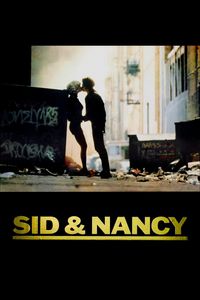
    (On TV, June 2020) One of the greatest “wait, that was Gary Oldman?” hits in the actor’s filmography, Sid and Nancy is also a raw, uncut dive into 1970s punk culture through the lens of the deeply problematic relationship between The Sex Pistol’s Sid Vicious and Nancy Spungen, which would end with their deaths. Under writer-director Alex Cox, it turns into a sad but not depressing tale of love, music and drugs—a cautionary tale, but one that can’t help but stare longingly at romantic self-destruction. Often energetic, somewhat well served by a “true story” that spanned mere months rather than years or decades, Sid and Nancy is the kind of film that feels like a cult favourite. It’s all grimy and falsely glamorous even in its slightly contemptuous observation of two severely damaged people getting together against squalid backdrops. (The film’s most consciously romantic moment makes beauty out of falling garbage!) Oldman is terrific as Vicious, but Chloe Webb also makes it work as Spungen. The ending is inevitably divisive—it’s designed for those who already know the entire story, but also leaves a lot of material out—be ready to have the relevant Wikipedia articles ready to read by the time you finish watching Sid and Nancy.

  • Hunter Killer (2018)

    Hunter Killer (2018)

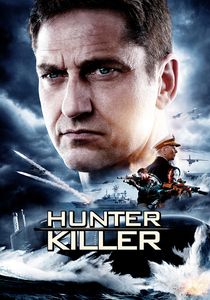
    (Netflix Streaming, December 2019) As a quick look through this web site will reveal, I spent a substantial part of the 1990s and 2000s reading military techno-thrillers (including many submarine thrillers) and I have kept a lingering affection for the subgenre, even if it hasn’t been particularly served well on the big screen. There’s usually one submarine thriller every year or two, and I probably saw all of them. Lately, both Phantom and Black Sea had their issues, but neither were the kind of slam-bang contemporary military thriller that the genre deserved. Hunter Killer, on the other hand, is almost exactly what I was looking for: A slick movie version of those submarine technothrillers, blending military valour with pulse-pounding action sequences in the service of a plot riffing off today’s headlines. (Well, maybe yesterday’s headlines: The US president here is a competent blonde woman while the Russian president is a likable and humane statesman. But nobody would believe the current reality in fiction.)  The crux of the plot has to do with a coup in Russia, and American forces lending a hand through a submarine crew in the water and Special Forces operatives on land. Gerald Butler stars as an unorthodox sub captain, the kind of square-jawed hero so prevalent in those kinds of novels. A capable cast of supporting characters (Gary Oldman is unrecognizable as always, but also Michael Nyqvist, Common, Linda Cardellini and Toby Stephens) helps flesh out a cheerfully plot-driven film, which has a major submarine battle in the firth thirty minutes and then goes on to other, bigger action sequences. It’s all familiar and cool and highly enjoyable thanks to Donovan Marsh’s direction, even though I suspect that people without my accumulated baggage of experience with the subgenre may not react so positively. As for me, though, I got almost exactly what I was looking for in that kind of movie. Butler has earned quite a bit of critical scorn for his choices, but in most of his recent films (Den of Thieves, Geostorm, the Has Fallen series), I find that he’s playing a very kind of specific role in a very specific sub-genre, and that he’s pretty much perfect for what the filmmakers are looking for. I can’t guarantee that other viewers will find in Hunter Killer the same kinds of thrills that I did, but I’m surprisingly happy that it exists, and that it brings to the big screen the kind of expansive thrillers that I like.

  • Darkest Hour (2017)

    Darkest Hour (2017)

    (On Cable TV, October 2018) After decades of stellar character roles, it seems fitting that Gary Oldman would win his first Oscar for playing none other than Winston Churchill in a biographical film. Focused on the crucial months during which England found itself alone (well, alone with its globe-spanning empire) against the Nazis, Darkest Hour becomes a political thriller in which Churchill had to manoeuvre between the population and the Nazi-appeasing politicians. It’s fact-based without being entirely factual (that wonderful scene about Churchill riding the underground—never happened) yet made with such restraint that we’re led to imbue more credibility to the film than we should. There’s another word for it, of course, and that mythmaking: a deliberate attempt to further shape Churchill’s stature as the English bulldog, providing further Britannia Triumphant material. (There’s been a surprising number of those lately, from King Arthur to the newest iterations of James Bond focused on home territory—I’m thinking there’s a link with Brexit, but I’m not sure what it is yet.) Director Joe Wright seems in his element here, with a high-stakes historical drama and plenty of opportunities for respectable filmmaking. It’s not a bad movie despite the uncomfortable feeling of being manipulated through a very selective vision of history. To be fair, Oldman is very good, and Darkest Hour does manage to inject a lot of drama into historical events. It could have been worse, and if it did get Oldman a much-deserved body-of-work Oscar, then why not?

  • The Space Between Us (2017)

    The Space Between Us (2017)

    (Netflix Streaming, August 2018) The good news, I suppose, is that the Young Adult Science Fiction field has grown tired of endless dystopias and now seems ready to take on other clichés. Things like star-crossed romance between a Martian-born teenager and his earthling pen pal. Considering the focus here on teenage protagonists and the romantic pretext to the film, it’s really no surprise to see that The Space Between Us doesn’t hold up as serious Science Fiction: the mistakes start early and get increasingly implausible with time, and even the knowledge that we’re not supposed to worry about those in a film made for romance aren’t enough to bring us back into the story. Then there’s the severely formulaic and forgettable nature of the film’s plot, including its buddy robots, dumb plot-driven choices, fish-out-of-water comic bits and lovers on the run. It’s all not just familiar, but done without much grace nor wit. It ends with a conclusion that you could have guessed after seeing the poster. Good supporting actors (Gary Oldman and Carla Gugino, for instance) can’t save the film from terminal boredom. Granted, I’m more than twice the age of the target audience for The Space Between Us … but still: would it be too much to ask for a minimum of competence even for younger audiences?

  • Léon [The Professional] (1994)

    Léon [The Professional] (1994)

    (In French, Second viewing, On Cable TV, June 2016) I know I’ve seen Léon at least once twenty-some years ago, but I didn’t remember much more than one or two images for it. Count that as a good thing, because it allowed me to rediscover Léon in most of its glory. It’s not a triumph of plotting, but of execution: writer/director Luc Besson’s a flawed filmmaker, but in Léon has managed to play to his strengths such as action, atmosphere and iconic characters, while minimizing most of his weaknesses like stupid dialogues and tiring anti-establishmentarianism. Well, most of his weaknesses, because if you go down the rabbit hole of the movie’s deleted scenes picturing a romantic relationship between the two lead characters and then match that to Besson’s own personal romantic history you will be screaming, “No, Luc Besson, no!” faster than you’d expect. But moving on: Léon distills a strong but uncomplicated story to a few action set pieces and clever character moments. It’s almost uncluttered (save from some oddities such as the shooting-the-president comic sequence), focuses on its better moments and showcases three great actors: Natalie Portman in her screen debut, Jean Reno in what’s perhaps still his best-known role (luckily, he dubs his own voice in the French version), and Gary Oldman in another great role in a long and varied filmography. The action beats are impeccable, and the atmosphere of a bustling but slightly rotten New York City is fantastic. Léon holds up all right, especially considering how often the teenage-assassin idea has been redone since then.

  • Dracula aka Bram Stoker’s Dracula (1992)

    Dracula aka Bram Stoker’s Dracula (1992)

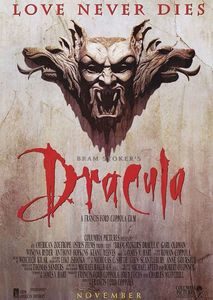
    (On Cable TV, May 2016) My expectations were pleasantly exceeded by this Dracula’s grandiose and overdone take of Bram Stoker’s classic. I’m not sure what I was expecting, but the film’s blend of pre-digital special effects, unabashed naughtiness, over-the-top direction (thanks to Francis Ford Coppola), melodramatic acting and scenery-chewing restlessness made it feel remarkably fresh even twenty-five years later. Adapting the epistolary Stoker novel will always be difficult, but Dracula gives it a spirited go, with a blend of various techniques to evoke the letters of the original, operatic visuals, dramatic dialogue and go-for-broke modernity. The special effects are made even better by the lack of a digital safety net, but Gary Oldman and Anthony Hopkins provide all of the film’s spectacle via consciously overdone acting. The film has far more sex appeal than I’d expected, laying bare the Victorian metaphors and double entendres that were in the novel, and making good use of Winona Ryder and Sadie Frost. (Plus, hey: an early role for Monica Bellucci.) The sour note here remains Keanu Reeves, earnest but sleepwalking though a role that demanded far more energy. Still, this Dracula is a lot of fun in its own devilish way, and it’s this eagerness to be as flamboyant as possible that makes the film still well worth seeing a quarter of a century later.

  • Paranoia (2013)

    Paranoia (2013)

    (On Cable TV, April 2014) There is very little that new, inspiring or even interesting about Paranoia, a completely average thriller. One young man, stuck between warring superiors in a corporate espionage thriller: we’ve seen nearly all of the bits and pieces in other better movies before, and director Robert Luketic can’t do much to save the end result from terminal mediocrity. Liam Hemsworth is blander than bland as the pretty-face protagonist, but the surprise here is to see Gary Oldman being so… dull even as a shaved-head Harrison Ford gets to chew some scenery as one of the two villains. For a thriller, Paranoia is almost refreshingly devoid of violence: There’s some running around and one solid car-on-pedestrian hit, but the rest of the film plays out in very civilized threats of economic turmoil and career setbacks. What is mildly interesting about the film is the contemporary wrapping around the plot: The hero makes an inspiring opening speech about his generation being robbed of a future by the financial downturn (hey, what about the rest of the 99%, all ages included?), has money problems due to medical costs for his ailing father, and spends much of the movie blathering about smart-phone technology. All are signs of the time, often more fascinating in bad-to-average movies than in innovative ones. Still, that doesn’t’ necessarily make Paranoia any more than a passable, calmer-than-usual thriller fit to entertain only if there are no other more compelling alternatives.

  • Guns, Girls and Gambling (2012)

    Guns, Girls and Gambling (2012)

    (On Cable TV, November 2013) One of the small underrated pleasures of watching movies on specialized cable TV channels is the opportunity to discover small films that otherwise flew underneath everyone’s radar, especially when so much attention goes to theatrical releases.  So it is that we get to Guns, Girls and Gambling, a low-budget crime comedy that doesn’t try to innovate, but still manages to earn its share of twisty comic pleasures.  Featuring Christian Slater in a lead role good to remind everyone that he can actually be funny, this is one of those crime comedies heavily-narrated in non-linear fashion, and where seemingly-random bizarre occurrences in the first half are (almost) all explained by the twists of the film’s second half.  It works as long as you’re willing to cut writer/director Michael Winnick a lot of narrative slack (and even then, you can’t really explain characters such as “The Blonde” assassin in anything resembling our reality.)  It works if you want to play along, but it’s certainly rough around the edges: many of the recurring gags are a bit exasperating, and there’s a sense that another pass at the script would have cleaned up some of the less-funny material.  Many of the last plot twists can be guessed ahead of time as the only sane way to explain what’s going on (If you’re thinking Lucky Number Slevin after the first half-hour, well, you’re not far off), and the violence gets a bit excessive for what is otherwise a fairly amiable comedic romp.  Also disappointing is the film’s rather less-than-promised exploitation content: With a title like Guns, Girls and Gambling, I would have expected a lot more of all three, and definitely more Girls.  Still, those with a tolerance for the film’s own brand of excess are likely to get a few laughs out of the film: It’s genuinely attempting to be funny, and a number of the cameos are successful: Gary Oldman as an Elvis impersonator is, by itself, enough to warrant a look at the film’ trailer.  Winnick’s direction is both stylish and engaging, and some of the sugar-rush enthusiasm of the film’s early moments produces enough momentum to keep viewers past the repetitiousness of the second third and well into the revelations of the final act.  For a film that seemingly came out of nowhere and onto DVD shelves and movie channel line-ups, Guns, Girls and Gambling is a decent find.

  • Lawless (2012)

    Lawless (2012)

    (On Cable TV, April 2013) As far as period crime-dramas go, Lawless offers a quasi-charming throwback to Prohibition-era booze bootleggers.  Adapted from a docu-fictive novel written by descendants of the bootleggers (Matt Bondurant’s The Wettest Country in the World) Lawless obviously takes the side of the hero bootleggers as they face off against the real criminals and the corrupt self-righteous representatives of the law.  This is a romanced view of criminal activity, and while Lawless attempts something more than the usual crime drama, it doesn’t have the heft or scope required to produce a memorable result.  Still, what’s on-screen isn’t too bad, especially when Lawless takes a few moments to indulge in its rural-Virginia setting.  It helps that the cast is so impressive: between brother-outlaws played by Tom Hardy and Shia Labeouf, an extended cameo by Gary Oldman, an evil turn from Guy Pearce and a love interest played by Jessica Chastain, Lawless has enough star-power to keep anyone interested.  (Hardy’s portrayal of an almost-comically-gruff character is a standout, as is Pearce’s repellent antagonist.) Still, the film’s biggest asset is in its somewhat-sympathetic portrait of moonshine production.  Our outlaw heroes aren’t sadistic or repellant: they use the minimal possible amount of violence as a tool to keep things tidy in the pursuit of an extra buck.  Occasional moments of significant violence are almost expected for the genre, while lengthier lulls in the pacing sap away some of the film’s energy on the way to attempt a more ambitious kind of film. Lawless ends up falling between two chairs, never completely happy to stick to an entertaining crime drama, while never having quite what it takes to become a criminal epic for the ages.  Lawless will have to settle for a good-enough film, probably more disposable than the filmmakers intended (what film isn’t?) but still reasonably entertaining in its own right.

  • Tinker Tailor Soldier Spy (2011)

    Tinker Tailor Soldier Spy (2011)

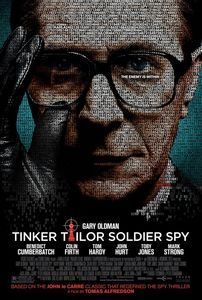
    (On-demand video, July 2012) As the Cold War recedes from popular consciousness, it’s slowly taking on a nice historical patina.  Judging from Tinker Tailor Soldier Spy, the color palette of that patina is going to be made of dull browns with the occasional flash of garish orange foam.  Well-adapted from John le Carré’s classic novel about the hunt for a Soviet mole within the British spy establishment, it faithfully sticks to the author’s portrayal of English spies as dull grey bureaucrats fighting for the realm from little drab offices.  It’s a refreshing antidote to the overblown portrayal of spies as action heroes, but it does require a willingness from viewers to adjust their entertainment expectations.  This is a slow film, and it doesn’t have much in terms of conventional thrills: The biggest suspense sequences of the film (sneaking documents from the archives, waiting for the mole to show up) are moments that would have been glossed-over in an action film.  So it’s no surprise if Tinker Tailor Soldier Spy works best as an atmospheric period piece, featuring two handfuls of capable actors and a mature view of the reality of the intelligence game that is far closer to reality than most other films.  Information here is far more important than bullets. Gary Oldman is mesmerizing as George Smiley, a spy who does his best work by interviewing people and then thinking really hard about what he has learned.  The surrounding cast is very strong, from Mark Strong’s atypical performance as a wounded ex-spy to Colin Firth’s unrepentant seducer to Toby Jones’s slimy ladder-climber.  The adaptation from the novel is skillful, as it seems to completely re-structure the chronology of the story while keeping much of the plot points intact.  The result may not be up to everyone’s favored speed, but it’s a skillful film, and one that does wonder in terms of pure atmosphere.  It works much like the novel does, as a counter-point to espionage fantasies.