Geena Davis

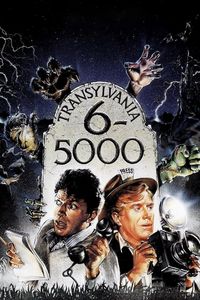
  • Transylvania 6–5000 (1985)

    Transylvania 6–5000 (1985)

    (In French, On Cable TV, May 2021) Silly by design, Transylvania 6–5000 is another attempt to put some comedy into typical horror tropes. Don’t expect anything close to Young Frankenstein, obviously — this is much dumber fare, and it’s scattershot enough to aim at the entire stable of Universal monsters rather than just one target. The humour doesn’t fly high: in fact, it’s probably more accurate to say that the film is more amusing (in a somewhat undisciplined, juvenile way) than actually funny. Still, writer-director Rudy De Luca gets a few chuckles. The title of the film alludes to a song that shows up as a phone ring, and a few of the exchanges are funny. But perhaps the most impressive thing about Transylvania 6–5000 is the cast, which bats far above that kind of film: Jeff Goldblum and Ed Begley Jr. in the two lead roles, plus Geena Davis as a sex-crazed vampire (in a PG-rated film, alas) with such notables as Jeff Jones and Michael Richards in smaller roles. All of them somewhat pre-celebrity, but all of them paid (as the film’s production history goes) by Dow Chemical Yugoslavian currency that they were unable to repatriate directly, and so paid for a film co-production. It’s a weird production history for a middling kind of comedy. I liked it mildly, but I can certainly understand if Transylvania 6–5000 strikes others as unbearable.

  • Majorie Prime (2017)

    Majorie Prime (2017)

    (On Cable TV, June 2020) An example of how science fiction can take place in mere words rather than necessarily drowning in special effects, Majorie Prime is an adaptation of a theatrical play exploring memory and grief through the replacement of deceased persons by androids. It’s an intimate and quiet SF film with quite a cast—Geena Davis and Tim Robbins in heavy-duty dramatic roles, Jon Hamm in a role that’s both charming and profound, and perhaps most of all Lois Smith as the grieving woman who finds solace in an android version of her ex-husband. Most of the actors have quite a challenge in approaching their characters in two different ways. Director Michael Almereyda keeps Majorie Prime quite restrained in presentation (it’s essentially a living-room movie), but the narrative gets wilder and wilder as it digs into its themes, landing on a tone not dissimilar to a Black Mirror episode. There is some unachieved potential, perhaps due to a limited budget and a consequent refusal to get to the end of the premise. (One fundamental limitation: Actors who remain the same age.) Ever the contrarian, I found myself darkly amused by Majorie Prime’s less-than-comic resolution: the particulars of the SF device justifying the plot don’t always make a lot of sense, even if it leads to a conclusion of pitch-black humour in which our cast of characters has become something else, co-fabulating their ways into better and better memories.

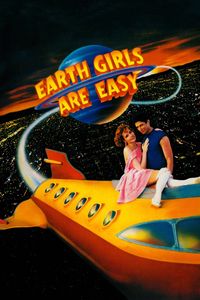
  • Earth Girls are Easy (1988)

    Earth Girls are Easy (1988)

    (On Cable TV, June 2020) Normally, calling a film ridiculous is a slam—but in the case of Earth Girls are Easy, it’s both a compliment and a recognition of what the film was trying to achieve. Director Julien Temple helms this silly comedy about three harmless aliens crash-landing in a valley girl’s backyard and getting close encounters with Earth culture. Considering that the valley girl is played by Geena Davis and the three aliens by Jeff Goldblum, Damon Wayans and a pre-stardom Jim Carrey, well, the thing gets silly pretty quickly—but not in a dumb way, more like a very clever way masquerading at being stupid. The fish-out-of-water comedy becomes a romantic comedy, with several great lines and a carnival of silly scenes. If I was in an analytical frame of mind, I would discuss how The Alien, in this film, is a seductive blank slate, innocent (without sin) and powerful at the same time. But I’m not really in such a mood right now—Earth Girls are Easy is just a lot of fun on a surface level… although I wouldn’t be surprised to revisit this one soon enough.

  • Cutthroat Island (1995)

    Cutthroat Island (1995)

    (In French, On TV, June 2020) Infamous for being such a box-office bomb that it killed Carolco Pictures, Cutthroat Island is, like many celebrated flops, not quite as bad as its historical reputation would suggest. Now that its notoriously troubled production and budget overruns are things of legend, twenty-first century audiences are free to assess the film on its own merits as a pirate-themed swashbuckler. I will not try to pretend that Cutthroat Island is a misunderstood work of genius—it’s sufficiently flawed that you can see where the disappointed reviews came from. While the film does have its strong points (some of the sets, stunts and action sequences are really good), much of it plays far blander than it should for a film of its type. Geena Davis may look spectacular, but she’s ill suited to the role; the same goes for Matthew Modine, who’s clearly not as memorable as he should be in playing the male lead. The seams of the film’s troubled production are glaringly obvious in the inconsistent writing, cinematography, set design and pacing issues: an added layer of polish is simply missing from the final result despite what feels like a large budget. Other moments (like the baffling presence of a monkey) show that director Renny Harlin was unable to keep the production under control. While the result is watchable, Cutthroat Island merely has everything one expects from a pirate movie, but nothing more. But swashbuckling adventure is a subgenre that thrives on excess, and comparisons with the Pirates of the Caribbean series show how much better the film could have been had it featured sharper characters, more appropriate actors, stronger set-pieces and a savvier use of familiar tropes.

  • The Accidental Tourist (1988)

    The Accidental Tourist (1988)

    (In French, On TV, March 2019) From its multiple award nominations, it’s clear that a lot of people liked The Accidental Tourist when it came out. Decades later, it still holds up … as long as you’ve got some tolerance for grieving dramas that hinge on the middle-aged male protagonist being rescued by an eccentric woman. It’s focused on the life of a travel guide writer going through a very rough patch following the death of his son. His wife leaves, his dog bites and he breaks a leg. One more verse away from being in a country song, forced into the care of his sister, he connects with a dog trainer who takes a strong interest in him. Despite many questionable decisions taken by the protagonist, coincidences are there to help him in the end. What saves The Accidental Tourist, in general, from becoming an undistinguishable mainstream drama is its quirkiness—a protagonist who job it is to write about travel advice, an unimaginably over-the-top trauma that propels the entire plot, an off-the-wall romantic interest, a protagonist going crazy with grief in very interesting ways—this is both a standard kind of drama with oversized details. It’s a messy journey, but ultimately a satisfying one. William Hurt and Geena Davis make for an interesting couple of actors, especially given the richness of the material that the story provides them. It all amounts to something more palatable than it may seem at first glance—even if there’s something a bit off-putting about so much attention placed on a middle-aged man being comforted out of his issues by a free-spirited woman.

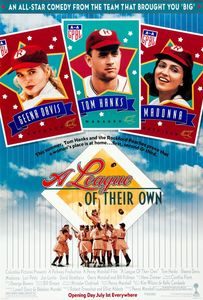
  • A League of their Own (1992)

    A League of their Own (1992)

    (On Cable TV, February 2017) There’s a good-natured quality to A League of Their Own that makes it hard to dislike, but that doesn’t mean the film is a solid home run. As a look inside all-women baseball leagues during World War II, it manages to thread a fine line between social concern and outright entertainment. You do have to be a baseball-loving American to get the most out of it, though, as the script quickly takes the familiar route of making baseball a national prism rather than a simple sport. At least Geena Davis is a good lead, with able supporting performances from Tom Hanks (in an out-of-persona turn as a boozy has-been) and (believe it or not) Madonna back when she was trying to be taken seriously as an actor. Jon Lovitz also shows up in a surprisingly non-annoying role. Much of the story will feel familiar, but the epilogue stretches our affection for the film by trying too hard for instant nostalgia for characters we’ve barely met. Thanks to Penny Marshall’s no-nonsense direction, A League of their Own is an effective, basic movie. Not too challenging, not too dry—just good enough to leave everyone happy but not bowled over.

  • Beetlejuice (1988)

    Beetlejuice (1988)

    (Second viewing, On TV, October 2016) I’ve been re-watching a lot of pre-1997 movies lately, mostly films that I saw before starting to put capsule reviews on this web site. Much of the time, it’s an imposed event: the films haven’t aged well, fall short of what I remember, or don’t benefit from the power of discovery. And then there are exceptions like Beetlejuice, who ends up being just as good, if not better, than what I remembered. Beetlejuice is peak Tim Burton after all, blending gentle horror and black comedy in a mixture that remains largely unique even today. Alec Baldwin is fun as a good-hearted character (especially after his persona solidified in cad roles) while Geena Davis is spectacular as his wife. Winona Rider is remarkable as a goth teen, but it’s Michael Keaton who remains the film’s biggest asset, delivering an unbridled performance as Beetlejuice that remains, even today, a bit of an oddity in a far more restrained filmography. The special effects are still terrific, and their pre-CGI jerkiness adds to the film’s charm. Beetlejuice still works well largely because it’s so off-beat, doing and considering things that would be polished away in today’s far more controlled environment. The two musical numbers are a delight, and the macabre gags still feel faintly daring. It’s a film that certainly doesn’t overdo its welcome and scarcely more than 90 minutes, and it’s still a lot of fun as a comedic Halloween choice. See it if you haven’t, see it again if it’s been awhile—chances are that you will be surprised at how well it holds up.

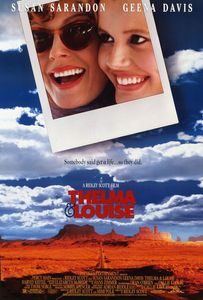
  • Thelma & Louise (1991)

    Thelma & Louise (1991)

    (On TV, June 2016) Watching Thelma & Louise twenty-five years after its release, I expected the experience to be less … upsetting than it was. After all; Thelma & Louise is recognized as a feminist classic, I’m pro-feminism; it’s a quarter-century later, social attitudes have changed … why should this be anything but a safe period piece? But it’s not. Susan Sarandon and Geena Davis star as two women out for a weekend away from their spouses, but find themselves driven to a crime spree through a set of circumstances—and despicable men. Thelma & Louise remains an infuriating film even today largely due to the realization that it’s still an exceptional film. Films with two strong female leads are still rare, and film to be written from such an explicitly female perspective are even rarer—especially in Hollywood. Ridley Scott may have directed the film with his typical visual flair, but most of its impact squarely depends on a script written by Callie Khouri, channelling female frustrations and anxieties in reluctant wish fulfillment. Pretty much all the male characters are out to do harm to our leads: It’s not just Christopher McDonald’s unrepentant abusive husband or Brad Pitt’s captivating first turn as an opportunistic thief: It’s also Harvey Keitel as an investigator, sympathetic to our protagonist but tasked to enforce the dominant male narrative that has designated the protagonists as dangerous criminals. Thelma & Louise still pushes buttons a quarter-century later, and forces audiences to realize how little progress has been made along the way. Perhaps worse is the realization that the kind of film that is Thelma & Louise, muscular mid-budget standalone thrillers with some social relevance, have been almost evacuated from the Hollywood scene, replaced by fantasy narratives designed to sell latter instalments. I’m upset all right, and I can’t think of higher praise for the film.

  • The Fly (1986)

    The Fly (1986)

    (On TV, June 2013) As amazing at it may seem, I had actually forgotten that The Fly was directed by David Cronenberg.  Don’t worry, though: within moments, it all came rushing back… as did the memories of being utterly terrified by bits of the film at age 12.  Seen from the perspective of an adult, The Fly isn’t as terrifying at a purely visual level.  It is, however, quite a bit more insidious about its body horror and the gradual devolution of its character into a mindless beast.  Jeff Goldblum can still look upon this as one of his most defining performances as the mutating scientist, while Geena Davis strikes just the right notes as a journalist who finds herself with a lot more grief than she expected chasing a good story.  What really doesn’t work so well is John Getz’s character arc going from creepy ex-boyfriend to shotgun-wielding saviour.  Cronenberg’s craft means that the film still, more than twenty-five years later, works quite well despite analog effects and sometimes-torpid pacing.  The Fly is worth a look, and not just as part of Cronenberg’s filmography.