Glenn Close

  • Hillbilly Elegy (2020)

    (Netflix Streaming, November 2021) On the one hand, Hillbilly Elegy does have the merit of looking at some of the most marginalized people in America — the white lower-class of semirural Midwestern America, usually the butt of jokes and derision by the cultural establishment. Of course, the story doesn’t quite commit to the nobility of such people — the viewpoint character of the film (adapted from an autobiography) is that of a young man who managed to get out of there and become a more socially respected East coast prestige-firm lawyer. (Whether that’s better than, say, a lawyer working in a small Midwestern town to help his fellow citizen is not a debate that the film is interested in having.)  The film switches between him dealing with the latest family crisis in the middle of job interviews, and flashbacks to his younger years dealing with members of his family. Amazingly, I’ve made it this far in the review without mentioning the film’s two showiest assets: Amy Adams as a volatile heroin-addicted mother, and Glenn Close as an elderly crusty no-nonsense grandmother who ends up being the closest thing to what this film has to a hero. Both are willing to shed their glamour for the role, but there’s a freak-show element to their turn — more impression than inhabitation in keeping with the film’s gawking attitude. Director Ron Howard does a workmanlike job here, typically adapting his style to the demands of the script, but not necessarily doing anything to change the base story’s most troubling elements, and consciously giving in to the requirements of showcasing Adams and Close as much as possible. Hillbilly Elegy would have been a very, very different film had it been made at a lower budget with a cast of unknowns rather than shouting from its prestige perch how brave and bold it is in stooping down to that level and giving bad haircuts to its stars. The result uncomfortably brings to mind some of the weirdest misfires of Classic Hollywood, in which you’d see major stars get under makeup to play some impoverished “other,” but all the time hogging the spotlight to themselves. At least there’s Freida Pinto: wasted in nothing more than a supportive girlfriend role, but still likable no matter the role or the film. In the end, Hillbilly Elegy remains a weird movie, superficially inspiring and intense, and yet paternalizing and overly familiar at once. [November 2024: And now Hillbilly Elegy is the villain origin story for the vice-president of the United States? What just happened here?]
  • The Wilde Wedding (2017)

    The Wilde Wedding (2017)

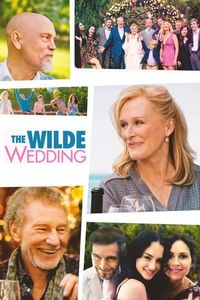
    (In French, On TV, August 2021) I rarely talk about the quality of a French dub, let alone lead a review by its mention. There are a few good reasons for that: Not only are French dub assessments of no interest to Anglophone readers of these reviews, the French dubbing industry has grown remarkably competent during the decades of American filmmaking hegemony. It’s not rare to find some clever turns of phrase in the translations, and the actors specialized in dubbing are good at what they do — films with less-than-average actors are often improved by the dubbing process. (Madonna and Kirsten Stewart, for instance, are far better in French than in English — their dull line readings are improved by more capable actresses.)  In other words — most of the time, it doesn’t make that much of a difference if you see a film in original English or in dubbed French. But we Francophones have grown complacent regarding the quality of dubs, and it takes one striking counterexample to highlight how good we’ve got it, and that example is the French dub of The Wilde Wedding (“Mariage chez les Wilde”), which is by far the worst dub I’ve experienced in years. There’s a basic disconnect between the voices and the actors, and the dub direction is atrocious to the point of wondering who allowed it to be released. The worst performers are, alas, the most important two: The male lead (played by John Malkovich in English, and a wheezing amateur in French) and—ack—the narrator of the film dubbed with an almost-complete lack of affect that makes you wonder if it wasn’t a voice synthesizer at work. I’m not blaming the dubbing actors as much as the dub director here, because it’s that’s terrible. Worse: this terrible dub is overlaid on top of a film that would be disappointing even in an original 4K 3D stereo widescreen presentation: Taking on the old trope of a wedding bringing together friends, family and exes in a posh remote location, it starts out breathlessly presenting more than a dozen characters, only a handful of which will prove to be actually important in the ensuing chaos. There are so many sex scenes shown or implied that it probably would have been better as a pornographic film. Worse yet: The Wilde Wedding leads to a place so trite that you can see it coming well in advance, and can’t muster any sympathy for the characters. (If you were expecting anything close to the wit of Oscar Wilde, as I was… you’re not going to have a good time.)  The result is all the more disappointing that it features actors that I either really like (Minnie Driver, Patrick Stewart — albeit that last one near unrecognizable with some curly hair) or respect. (Glenn Close, Malkovich, bringing back memories of Dangerous Liaisons that aren’t to this film’s advantage.) They don’t have a lot to play with, even with sex hijinks and family strife (and sometimes sexy family hijinks). Even the plotting feels doubly dubious toward the end: Much of the third act is a detonation caused by a character sleeping with… the only dark-skinned character of note, whose exoticism in the middle of so many WASPs is highlighted by her bisexuality and her dancing at the drop of, er, anything. Hey, I get it — Paula Singer is lovely. But she’s stuck with a really problematic character in the middle of a damaged film. Even the extensive use of electro swing, a favourite genre of mine, simply sticks out incongruously. Writer-director Damian Harris clearly fumbles the ball here, and his multi-decade career means that he doesn’t have the excuse of youth or inexperience. But the result is a disappointment no matter the reason, as they layer on top of each other. At least watching it in the original English will remove the constant irritation of the French dubbing.

  • Strip Search (2004)

    Strip Search (2004)

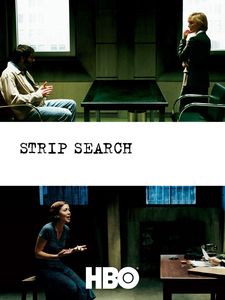
    (In French, On Cable TV, November 2020) It goes without saying that I can appreciate any film that reinforces my values and outlook on life. But it sometimes happens that a film simply goes too far, preaches too much and wears its politics too visibly on its sleeve that I can turn on it in the worst way. Look: I was around and awake in 2004. I remember how Americans were practically forbidden from speaking ill of any anti-terrorism initiative. I remember the public discourse curdling against any dissenting voice, and anyone trying to introduce any kind of sophisticated analysis being branded as anti-American. I remember the hysteria of the War on Terror and how anyone who thought it may not have been an unqualified good felt so alone. The fact that Strip Search, which makes explicit parallels between terrorism and American values, was made at the time (even as a TV movie!) was nothing short of amazing—which explains why, according to Wikipedia, the film almost immediately disappeared after its HBO premiere. (I ended up seeing in French translation, which is probably significant.) The premise is simple: An American woman gets detained and interrogated in an unspecified Asian country, while an Arabic man gets detained and interrogated in the United States. The parallels between both situations are not meant to be subtle: much of the dialogue is repeated word-for-word in both strands of the plot. Which ends up being the single worst irritant of the film: As a good third of it simply repeats itself with very few variations, the touches of wit of the dialogue get dulled fast, and once you realize that this is what the film is going to do for the following hour, well, you’re stuck with it for the following hour indeed. There’s quite a bit of talent assembled here: Directed by Sidney Lumet and starring no less than Glenn Close (as the American interrogator) and Maggie Gyllenhaal (as the American prisoner), the film hits above its weight in terms of star power. Alas, this comes to naught thanks to the heavy-handed nature of its discourse. Even when I agreed with the intent of the film, I felt irritated by the brute-force nature of its repetitiveness. A savvier script would have intercut into both conversations as a way to show how both were the same, but Strip Search simply re-rolls the tape with very minor variations, with us knowing the exact words about to be repeated for the next few minutes. It probably doesn’t help that, fifteen years later, we don’t need to be convinced about the film’s then-upsetting thesis. We now know about the horrors of Abu Ghraib, of Guantanamo, of secret detention camps and the 2004–2008 period. Strip Search was brave and bold and misguided upon first broadcast. Now, it simply seems misguided—not for the core of what it’s saying than the way it says it, then forces us to listen to it again.

  • The Wife (2017)

    The Wife (2017)

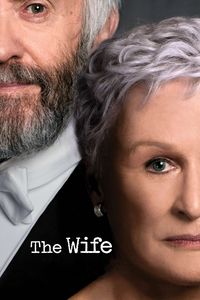
    (On Cable TV, June 2020) It’s about time that I admit that for all of my so-called progressive sympathies, there’s always going to be a core of reactionary (I’d argue contrarian) impulse somewhere in my system. At its worst, The Wife toys directly with that core, although I’m not sure how much of my reaction is about the movie, and how much of it is due to the acclaim it got as a Grand Statement. But let us summarize: a 90-minute-long extension of the old “behind any great man there’s a great woman” saw, The Wife stars Glenn Close as the long-suffering wife of a celebrated American writer who learns that he’s just won the Nobel prize for literature. The trip to Stockholm proves more dramatic than expected once the façade is stripped away: It turns out that he’s a serial philanderer and that she’s been writing most of the books. I am, going back to my contrarian core, getting a bit tired of the wave of works going out of their way to bash achievements from white men by revealing (egad) how the achievements were, really all about some oppressed minority doing all the work. At this point, it feels like clichés and lazy storytelling, and so the most interesting bits of The Wife don’t simply show her doing the work, but hint at a complex relationship in which husband and wife both have something that only the other can fulfill despite there being only one name on the cover. An exploration of that would have been a bit more nuanced and interesting than the rather trite ending that follows. Still, despite my contrarian knee-jerk reaction, I did like the film a lot—Close is quite good in the lead role (she did get an Oscar nomination out of it) and Jonathan Pryce does play the crusty old veteran writer with some panache. What’s more, Christian Slater has a plump supporting role. I am a sucker for movies about writers, and this one does have some fun with that conceit, even though most sequences about women’s writers do feel on the nose. I would have liked The Wife more if it had just gone off its high horse and started poking and the complexities of its own premise. But that would have led to a far less message-driven movie, right?

  • 101 Dalmatians (1996)

    101 Dalmatians (1996)

    (Video on-Demand, November 2019) Long before the recent spate of Disney live-action remakes, there was 101 Dalmatians, reprising the animation film with actors such as Glenn Close, Jeff Daniels and Hugh Laurie. While Disney will argue to this day that the box-office receipts justified the film, us non-shareholders will instead point to Close’s performance as one of the few reasons to watch it. She is deliciously evil playing the cruel Cruella, and some of the special effect work is rather amusing now that the state of the art has evolved far beyond what’s in the film. The rest of the film skews heavily to young audiences, with much of the shenanigans being handled by bumbling associates of Cruella. The remake simply doesn’t bring enough to the original to displace it, although we can count our blessings that it’s better that the sequel 102 Dalmatians. It’s rather amusing to read 1990s reviewers complain about the pointlessness of the remake—they clearly hadn’t seen what was yet to come.

  • The World According to Garp (1982)

    The World According to Garp (1982)

    (On Cable TV, March 2019) I recall reading The World According to Garp in high school and being bemused at the novel’s obvious artificiality, going from one attempt to shock to another. Even today, it would probably be seen as a checkmark exercise in hitting as many hot-button issues as possible, from violent feminism to adultery to transgender characters to sexual assault to many other issues. The film adaptation, for all its faults (most of them self-inflicted) is relatively faithful to the book, although the actors do an incredible job in humanizing what, on paper, often feels like an exercise in authorial fiat. Should we give a bullhorn to John Updike? Many smarter people than me haven’t come to a conclusion. So it is, though, that the film adaptation is a blend of extreme characters, out-there hijinks (many of them sex-related), a writer obsession about being a writer, and so on. A young Robin Williams is in fine form with a character that’s not entirely aligned with his later screen persona. Glenn Close is good as his mother, but John Lithgow is even better as a transsexual friend—and the film, fortunately enough, has aged far better than expected in this regard, largely because it treats its character with respect and affection, making up for an otherwise lack of sophistication. I’ll admit that The World According to Garp remains interesting on a basic what-the-heck-is-going-to-happen-next level, but there is an extreme contrivance to much of the plotting that make it hard to take seriously upon reflection. It was a weird book and it remains a weird film, so at least it has that going for it.

  • 102 Dalmatians (2000)

    102 Dalmatians (2000)

    (In French, On TV, February 2019) There are times when I’m tempted to keep reviews strictly factual and let readers figure out the rest. In talking about 102 Dalmatians, for instance, is it really useful to say anything but “this is a sequel to the live-action Disney animal comedy film featuring Glenn Close”? There’s a lot packed in that statement. It implies a continuity of tone, and if you know about live-action Disney comedies of the mid-nineties then there’s not a lot more left to say. Glenn Close is remarkable as usual, but clearly slumming in a cartoonish role. (At least she gets a chance to try out-acting Gérard Depardieu.) Nothing in the film, from script to production design, is meant to be even halfway realistic. The dogs will predictably outwit their human opponents. It does without saying that the previous film’s villain, introduced as being reformed, will snap back to form. (If I was of a more analytical disposition at the moment, I’d probably look at 102 Dalmatians’ troubling portrayal of a former villain going back to evil action, reinforcing contemporary society’s prejudices against those who have suffered from mental health issues or narcotic addition, always considered at risk of relapse.) There is, to be fair, a bit of imagination on display in production design terms, but much of the film feels like a straight rethread of the original, and the innovations aren’t much of an improvement. I mean: what’s with “Digga Digga Dog”, the Snoop Doggy Dog inspired theme rap song? At least it’s catchy.

  • The Paper (1994)

    The Paper (1994)

    (Second viewing, On Cable TV, September 2017) I recall seeing The Paper on its opening week, happy (as a former high-school paper editor) to see a film where newspapermen were heroes. I kept a good memory of the result, but I was curious to see if it held up two decades later. Fortunately, The Paper remains almost a definitive statement on 1990s city journalism. Tightly compressed in not much more than 24 hours of action, The Paper follows a hectic day in the life of a newspaper editor juggling work, family and citywide tensions. Directed with a lot of nervous energy by Ron Howard, The Paper can boast of an astonishing cast. Other than a top-form Michael Keaton as a harried news editor, there’s Robert Duvall as a grizzled senior editor, Glenn Close as something of an antagonist, Marisa Tomei as a pregnant journalist desperate for a last bit of newsroom action, Randy Quaid as a rough-and-tough journalist … and so on, all the way to two of my favourite character actresses, Roma Maffia and Siobhan Fallon, in small roles. The dense and taut script by the Koepp brothers offers a fascinating glimpse at the inner working of a nineties NYC newspaper, bolstered by astonishing set design: That newsroom is a thing of beauty as the camera flies by and catches glimpses of dozens of other subplots running along the edges of the screen. You may even be reminded of how things used to work before the rise of the 24-hour Internet-fuelled news cycle. (Of all the things that the Internet has killed, “Stop the presses!” is an under-appreciated loss.)  The Paper is one of those solid, satisfying movies that don’t really revolutionize anything, but happen to execute their premise as well as they could, and ends up being a reference in time. I’m sad to report that by 2017, The Paper seems to have been largely forgotten—while I caught it on Cable TV, it rarely comes up in discussions, has a scant IMDB following, and is rarely mentioned while discussing the careers of the players involved. Too bad—with luck, it will endure as the kind of film you’re happy to discover by yourself. 

  • Dangerous Liaisons (1988)

    Dangerous Liaisons (1988)

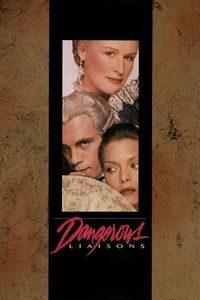
    (On Cable TV, August 2017) I’m not always a good audience for period drama, but Dangerous Liaisons is something else. At times, and at first, it feels like top-class smut, as two obscenely wealthy members of the French aristocracy scheme the seduction of innocent women for nothing more than carnal stakes. There is quite a bit more nudity than expected (especially from Uma Thurman) and the dialogue is first-class. Behind the fine manners, elaborate costumes and lavish historical recreation lies a pitch-black comedy of cynical matters. John Malkovich are Glenn Close are superbly reptilian in their power games—Malkovich in particular is perverse in the best sense of the word. Familiar faces abound, including baby-faced Keanu Reeves and Peter Capaldi in minor roles. But what begins as comic debauchery soon turns to more serious matters, and by the time Dangerous Liaisons ends with death and dishonour, the ending has been amply set up by the journey. Knowing the origins of the story as an epistolary novel turned into a theatre play and then a film, the big-screen adaptation proved adept in incorporating the best elements of its complex DNA—letters end up being essential plot devices, the razor-sharp dialogue is as good as it gets, and the film manages to achieve a few authentic purely cinematic moments, either during the opening “dressing up for war” montage, or the ending sequence collapsing cause and effect of three separate scenes. Unusually for a historical drama, Dangerous Liaisons is fun to watch—either aghast at the character’s actions, or nodding along as those awful people get their comeuppance at the end.

  • The Big Chill (1983)

    The Big Chill (1983)

    (On Cable TV, April 2017) It’s interesting to read that writer/director Lawrence Kasdan interprets the meaning of The Big Chill as the disillusionment that hits thirtysomethings once they trade young ideals for practical realities. Watching the movie, I was most struck by the way is comfortingly presents a small group of friends spending a mostly relaxed time together—i.e.: chilling. But, hey, it’s his film, and a fascinating aspect of The Big Chill is how, nearly thirty-five years and two generations later, it remains intelligible as an expression of friendship, drama, love, lust, regret, grief and mid-thirties reflections. It remains engrossing despite having few laughs and even fewer thrills. Part of its enduring effectiveness has to do with the actors assembled for the occasion. These are early roles for notables such as Glenn Close, Jeff Goldblum, William Hurt, Kevin Kline and Meg Tilly. (Pay attention, and you will even see Kevin Costner’s hairline.) The nearly all-hits soundtrack is also quite good. For a movie that wrestles complex relationships between no less than eight people (that’s 28 different relationships, if my math is OK), the story remains relatively clear at most times. Perhaps most surprising is how somewhat unusual things (hitting on your dead pal’s girlfriend at his funeral, a wife arranging for a friend’s natural insemination by her husband, insider trading, an adulterous affair while the husband’s away with the kids, etc.) are portrayed as being no big deals. The ending is weak, but there’s an upbeat wistfulness (if such an expression isn’t oxymoronic) that permeates the final moments of the film. The Big Chill couldn’t possibly have been more reflective of the late baby-boomer generation, yet it remains relevant today. And despite all the icky things in the movie, it still feels heartwarming and relaxed. Go figure.

  • Fatal Attraction (1987)

    Fatal Attraction (1987)

    (On TV, December 2016) Both hilarious and a bit terrifying, Fatal Attraction’s story of adultery gone horribly wrong still rings as a cautionary tale thirty years later. Peak-era Michael Douglas stars as a lawyer who starts an affair with a dangerously obsessive woman (Glenn Close, more scary than sexy even in lingerie) and nearly loses everything in the process. The rather endearing term “bunny boiler” comes from this film, along with a substantial amount of reactionary emotions. Is it an anti-feminism tale, or the kind of story that men tell themselves in order to keep themselves in check? Who knows—what’s for sure is that this is as pure an erotic thriller as Hollywood was capable of turning out back then (I don’t think it can do anything like this any more)—the early sex scenes definitely have some heat to them, and the latter suspense moments do get ridiculously intense. With time, the lines that the movie draws for itself become blurry—a modern take would probably empathize more with Close’s characters. But, of course, such a modern take would quickly fade away—the point of Fatal Attraction’s enduring popularity is that it is extreme and black-and-white and scary and cautionary. Otherwise, why bother … and shouldn’t Hollwyood take note of that?