Goldie Hawn

  • The Christmas Chronicles: Part Two (2020)

    The Christmas Chronicles: Part Two (2020)

    (Netflix Streaming, December 2021) Having Kurt Russell as Santa Claus was so nice, they had to do it twice. Of course, Netflix wanting its own slate of holiday favourites clearly helps — The Christmas Chronicles was apparently a success, and the idea of bringing in Goldie Hawn in a bigger role as Mrs. Claus (after a short glimpse at the end of the first film) must have been compelling. No matter the reason, The Christmas Chronicles: Part Two is up and streaming, giving you another opportunity to see Russell-as-Claus hamming it up by playing the saxophone. The story has to do with an attempted takeover of the Claus empire by a renegade elf and eventually involves time travel, but the point is having a big budget, big star, big director (Chris Columbus), and a big-special-effect offering as prestige counterpoint to the multiple low-budget Christmas offerings from the Netflix roster. The initial novelty of the first film is gone, but this follow-up is sufficiently independent to work without immediate knowledge of the first. It’s not that impressive, but it works relatively well and offers a few things to see that simply would not be possible in a lower-budgeted film. As of this writing, there seem to be no plans for a third film in the series, which is not necessarily a tragedy nor a promise set in stone.

  • Deceived (1991)

    (In French, On Cable TV, October 2021) Sometimes, casting is not about putting familiar actors in familiar roles, but having them play against type and bring something new to a formula. Seeing Goldie Hawn in an unusually dramatic role in Deceived is more interesting than many other casting decisions, for instance. It certainly helps bring some interest into a twisty suspense that nonetheless feels very familiar: a wife discovering that her loving husband is someone else, living a double and even triple life unbeknownst to her inattentive self. There is, despite the familiar elements, a solid core of mystery at the heart of the film that does get it going once past the lovey-dovey depiction of a perfect couple perfectly in perfect love. We know that these things don’t last long in thrillers, and before long the husband is dead (?), his identity is questioned, his new family revealed aaand he pops up again as a born-again psychopath. That’s the way such films go, and seeing Hawn dealing with this in a rare non-comic role is part of the fun. Still, Deceived manages to be both familiar and nonsensical—the over-the-top ending burning up much of the accumulated goodwill gathered so far. Not a terrible viewing experience, but ultimately a disappointing one—but the ride in getting there is not without its own fun.

  • Housesitter (1992)

    Housesitter (1992)

    (In French, On TV, December 2020) As the 1980s became the 1990s, Steve Martin’s film career turned from absurd high-concept comedy into a safer, far more mainstream comic fare. In this lens, Housesitter is early evidence of a process that would eventually lead to Cheaper by the Dozen 2. Martin plays an architect who, after designing the ideal house, gets his heart broken and has a one-night stand that results into something much more complicated when she moves into the house and starts saying that she’s his wife. It sounds slightly creepy but the script, as directed by Frank Oz, is about as innocuous as it comes. It helps that Martin is playing opposite a perfectly charming Goldie Hawn, and a gallery of supporting characters out of a Norman Rockwell painting. Martin plays the straight man here, reacting to Hawn’s antics more than acting. The story itself is fair, but the restraint through which it’s executed is almost overbearing – Housesitter is a film that plays it incredibly safe, and could have benefited from a bit more comic audacity. But Martin’s career, as shown here and later films, has been a steady retreat into more broadly accessible fare – still funny, if less so.

  • There’s a Girl in My Soup (1970)

    There’s a Girl in My Soup (1970)

    (On Cable TV, August 2020) It’s tough to resist a film titled There’s a Girl in My Soup, although seeing Peter Sellers play the aging playboy is certainly enough to cool any enthusiasm. I’ve had a hard time liking Sellers’ work even since reading his biography, and having him in a somewhat repellent role can be a tough sell. At least there’s Goldie Hawn (in one of her earliest screen appearances) to keep his character in check. As would befit a film from the early New Hollywood era, There’s a Girl in My Soup doesn’t end well – although it’s not exactly a downer either. Along the way, we get two capable actors batting good dialogue back and forth (as you can reasonably expect from a theatrical source), perhaps the highlight being a lengthy dialogue sequence as he takes her back to his place and she deconstructs his seduction techniques. The third act of the film doesn’t have anywhere as rich to go, and There’s a Girl in My Soup deflates as it makes its way to its inevitable ending. Still, Sellers does manage to create a complete character by the end of it, keeping his personality shifts to a minimum along the way. Fittingly enough for him, the ending is a perverse celebration of narcissism as a solution to heartbreak.

  • $ aka Dollars (1971)

    $ aka Dollars (1971)

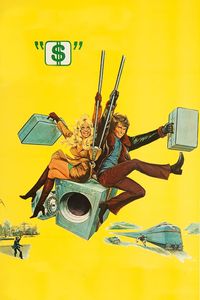
    (On Cable TV, August 2020) More promising than successful, Dollars is certainly watchable, but there’s a sense that a few tweaks would have helped it tremendously. It does have the tremendous advantage of starring a young Warren Beatty (charming) and Goldie Hawn (also charming), so there’s clearly a high floor to how bad this can be. Plus, it features a complex heist narrative where an intricate crime leads to a just-as-intricate game of crosses and double-crosses, as the previous owners of the money they’ve stolen chase them to get it back. It all takes place in rarely-seen picturesque Hamburg, further adding to the unusual appeal of the film. With all of those ingredients, it’s hard to imagine where Dollars goes wrong, but it does. For a lighthearted caper comedy, it clearly overdoes the very, very, very long chase sequence that forms most of the film’s second half—taking out half of it would have improved the rest, already overlong at 120 minutes. It’s also, less clearly identifiably, a film that doesn’t have the added spark that such films require: it’s not light on its feet, it’s not particularly romantic, it’s not sustainably clever (even if the heist itself is ingenious). You can argue that its story choices (notably in a second half that separates the protagonist and turns into repetitive wintertime chases) are not conducive to the kind of expected patter and romantic tension and that’s fair—but Dollars is still the kind of thing you watch and wonder why it’s not better given all of the elements at its disposal.

  • Cactus Flower (1969)

    Cactus Flower (1969)

    (On Cable TV, June 2020) The one thing that holds together the somewhat bland romantic comedy Cactus Flower is a fascinating trio of actors from very different eras of cinema—Ingrid Bergman, Walter Matthau, and Goldie Hawn in her first big-screen lead role. It’s quite a cast, and the film around them never quite reaches the potential of that trio. The story is a bit of a jumble, but largely about a dentist (Matthau) who keeps pretending he has a wife to avoid commitment in his affairs, except when he falls for a record-store clerk (Hawn) and has to find a pretend wife (Bergman) in a hurry to keep control over the affair. While the cast is amazing, the casting is more disputable—Matthau as a playboy is something I’ll shrug over, while Bergman may not be the most obvious pick as a screwball lead. Hawn does very well, though (she won an Oscar for it), fully capturing the hip 1969 Manhattan vibe that the film is aiming for—the extended sequence in a music store will delight who considers movies to be a fanciful time-travelling device. While often blander than expected, Cactus Flower does get a few smiles along the way, plus a jazzy take on the song “I’m a Believer.” It ends exactly how we expect it to, but the fun is in getting there. Plus, if you’re looking for a linchpin in your “Seven Degrees of Kevin Bacon” game, it’s a film that effortlessly takes you from the 1990s to the 1940s thanks to Hawn and Bergman.

  • Bird on a Wire (1990)

    Bird on a Wire (1990)

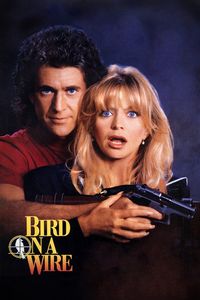
    (In French, On TV, May 2020) A good old-fashioned star vehicle combining action and romance, Bird on a Wire is about as generic and calculated a box-office bid as you can imagine—but it does work if you’re a fan of the actors involved. Mel Gibson and Goldie Hawn star as, respectively, a fugitive informant and his ex-girlfriend who finds herself on the run along with him after a chance encounter. As a pretext for chases and kisses, that’s all you need: action director John Badham dutifully handles the mayhem. The plot here clearly takes a backseat to the checkbox-ticking required of such craven crowd-pleasers: clear character-establishing introductions, one car chase to kick off the plot, one bedroom sequence, some funny bickering between exes, more action beats as the story moves from one location to another, and a sailing into the sunset finale. The story is familiar and plodding in order to let the stars show off why they were hired—the belligerent romantic tension is made-to-order, and the villains are merely perfunctory. But while some of the execution looks stodgy today (action scene standards are much higher than they used to be), Bird on a Wire will work if you like the earlier incarnations of Hawn and Gibson—what’s notable here is how she is ten years older than him, which is a still unusual-enough age pairing when it’s usually twenty years in the other direction. Overall, Bird on a Wire is not bad but not good either and more of a demonstration of circa-1990 Gibson and Hawn on autopilot than anything else.

  • The First Wives Club (1996)

    The First Wives Club (1996)

    (On Cable TV, March 2020) I read nearly everything by author Olivia Goldsmith before her life was cut short by complications following plastic surgery (an irony for the ages, considering that her novels were all about middle-aged women becoming comfortable with their own aging), and The First Wives Club was not only her first, but perhaps her most representative novel as well. Here we have three “first wives” teaming up to take out their ex-husbands after many transgressions. The adaptation is a rare opportunity for middle-aged actresses to have great memorable roles, and much of the fun of the film consists in seeing Bette Midler, Goldie Hawn and Diane Keaton tear up the scenery as they wreak revenge. The lead trio is complemented by an impressive supporting cast of known actors — some of them before they became famous, such as Sarah Jessica Parker. The First Wives Club is not a subtle film, and the social commentary can be blunt, but it’s part of its charm that none of the ex-husbands is anything but irremediably evil and that the heroines exert nothing but righteous retribution for a litany of sins. It’s actually fun in its own way, even if the film is intended for middle-aged women.

  • The Christmas Chronicles (2018)

    The Christmas Chronicles (2018)

    (Netflix Streaming, December 2019) There are some casting calls that justify an entire movie, and I can easily imagine someone at Netflix going “Kurt Russell as Santa Claus? Here’s your budget!”  While The Christmas Chronicles is, at best, a serviceable take on Christmas movies, Russell remains the star attraction here as a gruff no-nonsense Claus explaining how it all works to our two young heroes. Easily recalling Christmas wishes for anyone over the age of four, his Claus rocks a tune, bemoans the portrayal of Santa as fat and jolly, steals a sports car (with the film missing an opportunity to use Brian Seltzer’s “Santa’s Got a Hot Rod”) and isn’t above a few subterfuges in order to teach his charges a lesson in Christmas cheer. Benefiting from mid-budget production values, The Christmas Chronicles turns terminally cute in its last half with the introduction of CGI elves as likable as they are handy (or terrifying) with power tools. It’s generally enjoyable viewing, with a lighthearted self-aware tone throughout and a love for logistical explanations that rivals Arthur Christmas and The Santa Clause. In short, it’s the kind of Christmas movie that household members may watch once they’ve seen plenty of other Christmas movies. Plus, it’s on Netflix, meaning that it’s going to be right there for many subscribers. I’ve seen much, much worse. Plus: having Kurt Russell as Santa means that you also get none other than Goldie Hawn in a late cameo as Mrs. Claus.

  • Wildcats (1986)

    Wildcats (1986)

    (In French, On Cable TV, December 2019) As far as I can determine, Wildcats is essentially Private Benjamin in an inner-city high school football context: a quirky blonde (Goldie Hawn) being thrown into a man’s world where she gets to overcome prejudice, grow as a person, and prove herself worthy. Add a little bit of inspiration for the disadvantaged students, and you’ve got every single uplifting teacher movie included in the mix as well. It’s a comedy, but it’s more annoying than amusing to get through. Of note: Wesley Snipes and Woody Harrelson both make their film debut here in minor roles. Goldie Hawn is certainly in her element, carrying the film as the star vehicle that it is. Otherwise, well, there isn’t much to say: Wildcats is a film on autopilot, obvious from the get-go as to how it’s going to end. There’s been better and worse movies along the same ideas, but you’d have a tough time picking this one out of a line-up.

  • Overboard (1987)

    Overboard (1987)

    (In French, On TV, September 2019) You don’t have to go back all that far in time to find movies with premises that seem unacceptable by today’s standards. With Overboard, for instance, we have a man taking revenge over a rich woman by making her believe that she’s his wife after she suffers a comprehensive case of amnesia. There are complications, and the film tries its best to not make it extra-creepy, but that’s still a film based on an extended series of lies passing itself off as a comedy. (Significantly enough, when the film was remade in 2018, the genders were swapped, and several other details were added to make less creepy.)  You can either take the premise as-is, or have a hard time with the film. If you’re the forgiving suspension-of-reality type, you’ll find that the result is a middle-of-the-road 1980s comedy, albeit once with the great good sense of having husband-and-wife Goldie Hawn and Kurt Russell in the lead roles, leading to quite a bit more chemistry than usual. Considering the average nature of the film and its humour, it’s a good thing that at least the lead performances are watchable. The belligerent romantic tension works within the premise of the film, although there’s a layer of discomfort that’s also built into it. Overboard is not exactly an essential, not exactly a dud, just a film that gives its actors just enough slack to pull the film on their own shoulders.

  • The Sugarland Express (1974)

    The Sugarland Express (1974)

    (In French, On Cable TV, June 2019) There were many “criminal lovers on the run” movies in the early days of the New Hollywood, so it’s not exactly surprising to realize that The Sugarland Express, Steven Spielberg’s first theatrical film, was in that vein. Already at this early stage of his career, you can recognize several of his characteristic touches as a director: The great camera moves, the touches of humour, and how the film comes alive during its chase sequences. While the conclusion of the film isn’t all laughs, The Sugarland Express is markedly more optimistic than (say) Bonnie and Clyde or Badlands—the very premise of having a couple on the run is made almost comical by this being a slow-speed chase that even recreational vehicles can join as part of a long caravan. Despite the steadily darkening tone, the film is easily at its best during the absurdly slow pursuit in the film’s first two acts. The premise is sustained throughout the film, although there is a near-fatal lull in the middle as the action stops for the night. It’s not particularly easy to emphasize with the dumb thick-headed protagonist, but the dynamic between him, his wife (Goldie Hawn in a somewhat early role) and the policeman they kidnap and hold hostage throughout the rest of the ordeal. Still, especially for Spielberg fans, the quality of the images and the direction remains one of the best reasons to watch The Sugarland Express.

  • Snatched (2017)

    Snatched (2017)

    (On Cable TV, March 2019) The issues with Snatched start from the first title card, where a wittier “The kidnappers were also to blame” was replaced by a much cruder and dumber formulation. But so it goes throughout the entire film—while the premise and structure aren’t bad, the execution rushes to irritating, gross and dumb material every chance it gets. For an actress as polarizing as Amy Schumer, it’s not the best decision to spend the first five minutes of the film establishing the maximally irritating nature of her character. Much of the film goes on in much of the same vein, with Schumer’s vulgar comic persona harming whatever strengths Snatched may have. Not that she’s the sole irritating character in a film that has another character (her brother) also defined by his self-absorbed annoying nature. The film does get a few laughs and has a few high points, mind you: There is a certain welcome unpredictability to the adventures along the way, as plans go awry for both prey and pursuer. Much of the film’s go-for-broke humour should have been reined in, though: the tapeworm sequence depends on an amazing disregard for human biology, is grosser than funny and never leads to a worthwhile laugh, petering out into an unrelated next scene rather than ending on any kind of note high or low. (I suspect that improv is to blame — actors goofing off on a set are far less adept at crafting a punchline as screenwriters tying away with a plan.) And so it goes for the rest of the film. While Wanda Sykes is quite funny (alongside an unrecognizable Joan Cusack), while it’s actually good to see Goldie Hawn making a comeback after fifteen years, while Schumer can manage an occasional moment of comedy, Snatched as a whole is just dumb, exasperating and hypocritical in its attempt to be heartfelt, and far from being as good at it could have been.

  • The Banger Sisters (2002)

    The Banger Sisters (2002)

    (On Cable TV, December 2018) The Boomers were clearly getting old in 2002, and The Banger Sisters can certainly be seen as an attempt to impose their own anxieties on the big screen. Here we have fifty-something Susan Sarandon and Goldie Hawn playing forty-something characters who reconnect after a few years apart—while both were rock groupies in their youth, one of them has settled and the other one hasn’t, and much of the film’s comedy/drama comes from the contrast between the two. There’s not a whole lot there that we haven’t seen in other movies, but if the film works it’s because of the well-worn charms of the stars. Sarandon is very much in-persona as the once-wild now-straight mom who (predictably) learns to loosen up, while Hawn plays the still-wild one who does the loosening up. (It would be Hawn’s last role before a 14-year eclipse from acting.) Geoffrey Rush is remarkable playing a writer with issues of his own. It’s not much of a movie, and those who have a grudge against Hollywood Boomers’ refusal to age gracefully will find much material for their angst. But in a sense The Banger Sisters isn’t supposed to be much more than an actor’s lighthearted showcase. It works better as such.

  • Private Benjamin (1980)

    Private Benjamin (1980)

    (In French, On TV, July 2017) I was originally tempted to launch this review by comparing Private Benjamin to the 1981 Bill Murray comedy Stripes, but it’s a comparison that only goes so far: While both movies follow a similar structure in transforming their protagonist from a civilian zero to a military hero, they do look at the same subject from very different perspectives. While Stripes is more of a goofy slob-power fantasy, Private Benjamin is largely about the self-empowerment of a young woman cast adrift. And that carries an entirely different tone, much like the fact of this being a female-led film does lend it a distinctive comic flavour. It does work … but much of the impact of the comedy seems blunted by the intention to have it mean something more. Behind the laughs, and to the conclusion of the movie, Private Benjamin is about tough choices that may or may not lend themselves to giggly laughs. As such, there’s a tension at the heart of the film between Goldie Hawn’s more overtly comic moments (“the army with the condos and the private rooms!”) and its more serious intention of resisting male domination. (But then again this is a movie about a woman whose husband dies on top of her on their wedding night.) It works, but it doesn’t quite click. Some of the material in the beginning is audacious; some of the material in the middle is funny; some of the material at the end is depressing. Hawn herself is great, and she’s supported by a good cast that has an early appearance by Armand Assante. This is one of the rare cases when a remake may be interesting—Most of the themes remain contemporary, and I’m not sure that nearly forty years have changed much in the way women are integrated in US military forces.