Gregory Peck

  • Designing Woman (1957)

    (On Cable TV, September 2021) At this point of my cinephile journey, I’ve seen the landmark movies, the classics, and the box-office sensations. All that’s left is a deeper and more scattered journey through the rest. That’s not necessarily a bad thing: “the rest” includes a number of solid commercial and critical successes that many people have enjoyed, even if they haven’t necessarily remained references throughout the decades. From time to time, you even get something that’s a lot of fun. Such is the case with Designing Woman, a cleverly subversive romantic comedy that pokes at 1950s clichés and offers enjoyable second-tier performances by a well-known cast. In this case, we have Gregory Peck and Ingrid Bergman (stepping in for, we’re told, Cary Grant and Grace Kelly — a downgrade for Grant-to-Peck, but an improvement for Kelly-to-Bergman) as a sports writer who meets an alluring woman while covering a golf tournament in California. They get married within a week (as often happens in classic Hollywood) only to then discover upon returning to New York City who they are. Or, crucially, that she’s a fashion designer with more money, class, clout and well-connected friends than he does. The resulting loss of panache from the male protagonist is very amusing, and the rift only gets bigger once they start entertaining their respective circles of friends (his: working-class schlubs; hers; insanely well-connected artists) in her (now their) apartment. That’s more than enough to fuel the first half of the film—the rest is taken up with old flames and threats from mobsters that have him lie and flee to protect her, and her suspecting the worst from his lies and his disappearance. Director Vincente Minelli can’t quite manage to make the second half as convincing and amusing as the first (especially with an ending that’s too abrupt to be satisfactory), but the entire film does work quite well. Peck sells the undermining of masculinity in hilarious fashion, while Bergman is an icon of elegance throughout. The framing device of “talking” to the characters after the fact does add a bit more comedy and suspense to the story, further showing that this was a film with clear and bold intentions. In other words, Designing Women is worth recommending — it’s another proof that the 1950s were far more self-critical than we think, and a great example of a Technicolor romantic comedy with more bite than expected.
  • The Sea Wolves (1980)

    The Sea Wolves (1980)

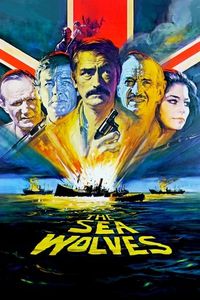
    (On Cable TV, September 2021) There’s an unmistakable aura of nostalgia surrounding The Sea Wolves, both in concept and execution. Not only taking 1980 Great Britain audiences to the glory days of World War II, it also features a variety of actors who peaked years before. Oh, sure, Roger Moore was at the mid-Bond tenure prime of his career at the time — but he was well into his fifties, and the other players in the film are none other than Gregory Peck, David Niven, and Patrick Macnee — all great actors, but all running on past glories. The plot has to do with older and semi-retired military personnel taking on Nazi radio transmissions off the coast of India, under the guise of being lost fishermen. The presence of Moore, not really playing much of a variation on his debonair persona, does lend some additional sense of adventure to the film, but it’s the older actors who are asked to carry much of the humour and adventure. There’s even a little bit of post-colonial wistfulness in taking in the Indian setting. While the story is adapted from a relatively obscure real-life incident, everyone will acknowledge the rather large liberties taken with the fact. The Sea Wolves does amount to a decent WW2 adventure in a somewhat classical mould — virtuous allies, perfidious Nazis, stiff upper-lip and a rather happy ending without anguish. It fits the bill for pleasant, not-too-demanding viewing, echoing other, somewhat better works from the actors involved.

  • The Gunfighter (1950)

    The Gunfighter (1950)

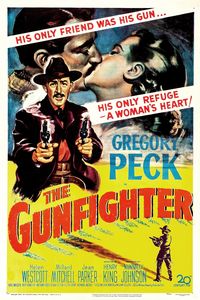
    (On Cable TV, January 2021) I don’t particularly like westerns, but the specific sub-genre that had to do with the end of the wild west always has me intrigued—it’s as close to an original take on deliberate colonization as American cinema gets, and I find those issues to be more inherently interesting than the typical desperadoes-on-their-horses too often seen. 1950’s The Gunfighter, in some ways, can be seen as a precursor to a wave of revisionist westerns that would build on the clichés of the genre. Here we have a familiar figure—the fastest hand in the west—treated in a more realistic fashion: the trouble with being known as the top dog is that others will target you to make their own reputation, and there’s no end to that except, well, being shot by the newest and fastest kid in town. Gregory Peck stars as the titular gunslinger, portraying him as a man who’s tired of being at the top and is looking for a way out. The film dangles a quiet retirement in front of him, but we know it won’t be so simple, and the elegiac ending has hints of inevitability that almost puts The Gunfighter alongside film noir themes. Unfortunately, the film does not have the snappy rhythm than its 85 minutes and almost real-time chronology would suggest—some of the plot screws could have been tightened. But it’s an interesting western that heralds many similar end-of-an-era films—including the superior The Shootist—and survives a modern viewing better than many of its contemporaries.

  • The Snows of Kilimanjaro (1952)

    The Snows of Kilimanjaro (1952)

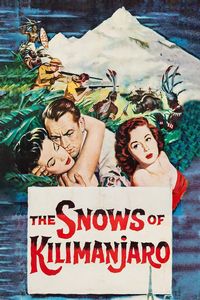
    (On Cable TV, November 2020) Some movies come with impressive pedigrees, and so The Snows of Kilimanjaro can boast of being based on a Hemingway short story. It’s certainly in the grand dramatic tradition of other Hemingway adaptations: The framing device has Gregory Peck playing a writer dying on the slopes of Mount Kilimanjaro and flashing back to earlier episodes of his life. You can see here an early attempt at the kind of epic film that would come to dominate the later half of the decade: going through decades of history and many foreign locations (although much of the film is visibly shot in the studio), it’s meant as a grand tragic statement, a sweeping romance and a summing-up-a-life kind of film. The effect is slightly ruined by the unexpectedly happy ending invented for the film, although it does end the film on a more positive note than you’d expect. Some of the resonances with other Hemingway stories get predictable (oh no, another love interest killed while working in ambulances during the Spanish Civil War!), but that only counts if you’re familiar with the Hemingway-Hollywood corpus. Otherwise, The Snows of Kilimanjaro is very close to what we think of when we picture “old-school Hollywood romantic drama” for better or for worse—I found it a bit long, a bit predictable, a bit dull and a bit overdone. But so it goes.

  • Moby Dick (1956)

    Moby Dick (1956)

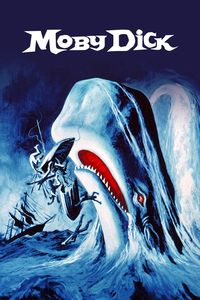
    (On TV, October 2020) Considering the central place of Herman Melville’s Moby Dick in the American literary canon, any film adaptation would be an ambitious undertaking, roughly akin to Captain Ahab’s maniacal quest for the Great White Whale that maimed him. It’s hard to imagine a better director for that gigantic endeavour than a middle-aged John Huston, considering the ways his directorial style has been described. In some ways, this adaptation is quite good: With novelist-screenwriter Ray Bradbury cracking the case of adapting a very long book into a movie, the script is not bad. Some very good production means (for a mid-1950s movie) have gone into recreating the world of a whaling ship and the gigantic animal they intend to fight. Where Moby Dick doesn’t do as well is in a small but crucial detail—casting. Specifically, the casting of Gregory Peck as Captain Ahab—look, no one ever dislikes Peck, but he is far too well-mannered to be an effective Ahab. You want someone able to spittle around their grandiose rants, with crazy eyes and stabby hands. In other words: Not Peck. It’s not that he’s bad, it’s just that he’s not close enough to the ideal version of the character. This is driven even deeper with the knowledge that John Huston was right there, behind the camera rather than in front of it. Or that Orson Welles shows up briefly for a cameo but not as Ahab. Too bad—with a fresh coat of CGI paint and another lead actor, this Moby Dick could be much, much better.

  • Captain Horatio Hornblower R. N. (1951)

    Captain Horatio Hornblower R. N. (1951)

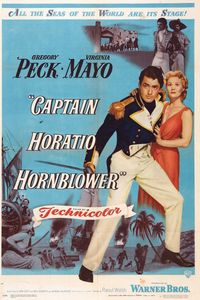
    (On Cable TV, October 2020) It doesn’t necessarily fit to call Captain Horatio Hornblower a swashbuckler—while there are plenty of wonderful nautical adventures here, it’s a fairly rare example of a captain in the employ of the crown, battling pirates, Spaniards and the accursed French along the way. (It’s the “Royal Navy” in the title.) But despite the official sanctions, expect plenty of ship battles shot in great Technicolor. Gregory Peck makes for a compelling Hornblower, and the addition of Virginia Mayo as a romantic interest only adds to the interest of the casting. The minutia of life on the sea is not described too badly, whereas the complex political machinations of the Napoleonic wars are explained in easily understandable dialogue. (Particularly amusing is the moment where Hornblower is told that the Spaniards are now allied with the English, so it’s a good thing that they never had to fight one of those massive Spanish ships. Cue the “well, actually…”) Peck and the battle footage are, in themselves, worth the viewing—but the amount of adventure and rollicking drama of the film are enough to keep anyone invested in the result.

  • Twelve O’Clock High (1949)

    Twelve O’Clock High (1949)

    (On TV, November 2019) By the late 1940s, war movies had changed—it wasn’t necessary to produce propaganda pieces any more, so the way was open for filmmakers to take a somewhat more balanced look at the war. At the same time, there were plenty of hardware lying around and veterans of the war to ensure authenticity, and an audience with vivid memories of the events portrayed on-screen. Accordingly, Twelve O’Clock High is not the kind of war-hurrah films that would have been produced during the war, nor the war-is-hell antipropaganda that would emerge from the 1970s.  It’s a sober-minded film that takes a look at American aviators stationed in England and running bombing missions against Germany—with a clear emphasis on the logistics and the people-management aspect of running airborne warfare. Much stock footage (from both sides of the war) is used to complement the original material, although that material famously includes a shot of a bomber deliberately crashing. (The stunt pilot survived as planned.)  Twelve O’Clock High is a film that spends a surprising amount of time on the ground before getting up in the air: The focus here is on the tension of the group effort as entire crews never come back, as the war drags on and on, and as bomber crews are often easy pickings for nimble fighter pilots if not escorted. There’s a unique blend of period attitude, production means, lived experiences and filmmaking skill (having Gregory Peck in a lead role helps) that helps makes the film feel credible—indeed, it got top marks from real American aviators regarding its authenticity upon release and was long featured in US military training. That realism, and slightly off-combat focus still makes Twelve O’Clock High worth a watch even if you think you’ve seen most of what WW2 aviation movies have to offer.

  • Gentleman’s Agreement (1947)

    Gentleman’s Agreement (1947)

    (On Cable TV, April 2019) For all the flack that Hollywood social-issues drama films often get as insincere, award-begging performative exercises, they certainly can help chart the social evolution of the United States throughout the decades. Gentleman’s Agreement, having won a Best Picture Oscar (albeit being one of the most obscure winners of the award), can be considered a successful A-grade social-issues drama, and it does make for intriguing viewing. Gregory Peck is in fine likable form as a writer who, as an assignment in a new city, tells everyone he’s Jewish. Antisemitism being the topic of the film, you can imagine how well that goes: Ostracism, prejudice, snide remarks, exclusion, fights with his girlfriend and so on. Taking place in upstate New York fine society makes it more infuriating. By focusing as much on the bigotry than on the duty to stand up to bigotry, the film remains effective despite a few naïve moments and on-the-nose messages: nobody likes to think of themselves as bigot, but it’s not as obvious to be against bigotry, especially given the so-called “grown-up” desire to get along and not be perceived as a troublemaker … as happens to the protagonist here. It’s not a perfect film: the romantic ending seems to come out of nowhere—especially since the film seems to play with presenting a suitable alternative to the proudly prejudiced fiancée. It’s also a bit unlikely that a man of the world such as the lead character would be initially surprised at the prejudice he encounters as a self-proclaimed Jew—the film becomes more effective once it dispenses with the first few early scenes to show the tension in being part of that social circle and yet making sure that it is restricted from “these people.”  Finally, there’s the issue of “temporal inconvenience” that has dogged majority representation of minority issues, but let’s stop there—Gentleman’s Agreement was daring enough in 1947 that it should be assessed kindly. Few other actors than Peck or director Elia Kazan would be able to pull off the righteousness of his protagonist without coming across a sanctimonious and that ultimately is what separates Gentleman’s Agreement from other, less successful films. (There’s also the prestige A-list star treatment to help make sure this was the winning pick rather than the same year’s film noir Crossfire, but that’s an entirely different review…)

  • The Yearling (1946)

    The Yearling (1946)

    (On Cable TV, April 2019) While I’m not one to turn up my nose at black-and-white films anymore, I get almost unaccountably giddy every time I see 1940s films in colour—the garishness may feel off, but it makes the films feel more alive than many of their contemporaries—and that’s particularly the case with pictures largely shot outdoors such as The Yearling. The subject matter remains unusual, focusing as it does on seventeenth-century Florida homesteaders as they work their way through isolation, the death of most of their children, withholding of parental affection and the adoption of a baby deer as a pet. While the plot itself is meandering (something to blame on the source novel) and rests on shaky foundations for modern parents, the film’s animal scenes quite impressive: the bear sequence alone still holds up. Young Gregory Peck is fantastic in the lead role. Still, the highlight is probably the great outdoors cinematography—much of the film was shot on location, and that clearly shows on screen. (Amusingly or not, legend has it that there was a previous attempt to film The Yearling at the same place four years earlier with Spencer Tracy, but It had to be dropped due to the bugs, the heat and Tracy’s distaste for the material.)  I’m not that fond of the result, but The Yearling certainly remains unique.

  • Marooned (1969)

    Marooned (1969)

    (On Cable TV, March 2019) Considering that I really like the subgenre of space disaster thrillers, I’m more favourably predisposed than most toward Marooned. On the one hand, it’s an early example of the space thriller, and you’d be surprised at the numerous parallels that this 1969 film has with both the 1970 real-life Apollo 13 incident and its 1995 movie depiction. The close cooperation that director John Sturges got from NASA helps the film’s credibility, and in turn helped it age remarkably well—the Cold War period feel is a glimpse into how such premises played out at the end of the 1960s, and give a fascinating patina to the result. The film won an Oscar for best Visual Effects, and much of the miniature work is still quite good—and there’s a lot of it. Acting-wise, the film can depend on the great Gregory Peck, Richard Crenna and a young Gene Hackman. On the other hand, there’s a reason why the film was also featured on Mystery Science Theater 3000—it’s stoic to the point of being bloodless, almost unbearably dull even in the middle of the suspense. The realism is pushed to an extreme that prevents it from being truly involving. Marooned can’t quite figure out the difference between displaying steely-eyed upper-lip stiffness and between allowing its characters to feel endangered. Later movies of the subgenre, from Apollo 13 to Gravity, would fare much better.

  • Spellbound (1945)

    Spellbound (1945)

    (Youtube Streaming, November 2018) Lost among the moniker “master of suspense” is the stone-cold fact that Alfred Hitchcock could be downright weird when it suited his purpose. In his quest for unpredictable thrills, Hitchcock’s career is crammed with ludicrous plot devices, unbelievable psychological quirks, formal experimentation and frequent return to basics. Some of his best and worst films are far away from reality, meaning that there’s little relationship between their eccentricity and their success. Sandwiched between the far more prosaic Lifeboat (1944) and Notorious (1946), Spellbound shows Hitchcock diving deep into psychoanalytical plot devices (something that would come up again later in his career) and coming up with surreal results. Literal surrealism, in fact, since there’s a dream sequence midway through the film that was designed by none other than Salvador Dali. The man-on-the-run plot feels familiar to Hitchcock fans (echoed in, say, North by Northwest), but it allows stars Gregory Peck and Ingrid Bergman to develop some pressurized chemistry. The details of the plot are less important than the meticulous details of its execution, and the way the film becomes just a bit more straightforward in time for its conclusion. There’s a memorable moment near the end that still jolts viewers through a combination of an obvious practical effect and a flash of colour. This isn’t one of Hitchcock’s finest films, but it’s nowhere near the bottom either—although it’s perhaps more fascinating as a prototype of later Hitchcock movies and a reunion of some very different artists than a wholly pleasing thriller in its own right.

  • To Kill a Mockingbird (1962)

    To Kill a Mockingbird (1962)

    (On DVD, December 2017) on the one hand, it seems to me that the movie version of To Kill a Mockingbird is structurally lopsided. It spends a lot of time on a trial in which a black man is accused of sexually assaulting a white girl, but that’s not the beginning nor the end of the story, which spends even more time watching over three kids as they grow up in an absurdly racist Southern town with their loving father. In modern terms, this would be a non-starter: the script would be rewritten to emphasize the trial, everything else shuffled to the side. But this is not a modern film and it’s not meant to be a trial movie—it’s adapted from a slice-of-life novel in which the trial is important but hardly the point of it all. To Kill a Mockingbird being shown from the kids’ perspective, it even comes as a clever reframing of a classic story through a slightly alien perspective. But Harper Lee’s adaptation aside, the film’s single biggest asset is Gregory Peck’s impeccable performance as impossibly virtuous attorney Atticus Finch. Not enough good can be written about Peck and his role—it’s the kind of award-winning performance that doesn’t just impress but inspire us all to become better persons. He carries the rest of the meandering movie by virtue of being a terrific dad, a righteous lawyer … and (the movie takes great care to point out) a terrific marksman able to put down a rabid dog with a single shot. Never mind the whimper of a conclusion (featuring no less than an already old-looking Robert Duvall)—the rest of the film is fine, but Peck is extraordinary. 

  • Cape Fear (1962)

    Cape Fear (1962)

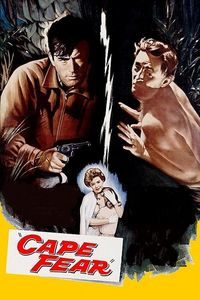
    (On TV, September 2017) I caught this film mostly as a prelude to watching the 1991 remake, but I’m actually impressed at how well this Kennedy-era thriller has held up. Even (slightly) pulling its punches regarding violence and sexual assault, Cape Fear does manage to be gripping and nightmarish. Much of this effectiveness has to be credited to Robert Mitchum: Gregory Peck is fine as the stalwart hero of the story, but it’s Mitchum’s incredibly dangerous ex-convict character that makes the movie work so well even fifty-five years later. The houseboat assault sequence alone, a lengthy one-shot that begins with an egg being smashed on the film’s female lead, is still off-putting even today. It certainly helps that Cape Fear has a strong Hitchcock influence (he storyboarded it; J. Lee Thompson stepped in after Hitchcock quit the project but kept most of the style intact), and remains distinctive despite imitators and a lasting influence. I was favourably impressed by the film, and actually prefer it to its slick 1991 remake in many ways.

  • The Omen (1976)

    The Omen (1976)

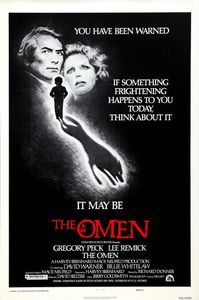
    (On DVD, April 2017) Many horror movies from the seventies have not aged very well, and The Omen hovers in that strange zone between ridiculousness and effectiveness. What generally works is the atmosphere of dread, the middle section, the period detail and the refreshingly older protagonist (Gregory Peck, sixty years old at the time of the film’s release) anchoring the film. Those help The Omen maintain freshness even in light of everything that now look stupid about the film: The predictable nature of the bad-seed plot, slow pacing, familiar rehash of Catholic mythology, badly-staged horror sequences… It’s difficult, even psychopathic to think that you’d laugh at a plate-glass decapitation … until it happens and you think “gee, couldn’t this have been more convincing?” If nothing else, this sequence is a lesson in less-is-more—a tastefully restrained approach of not attempting to show the actual decapitations would have been far more effective. The Omen may have codified its share of horror clichés, but they are now clichés and the film suffers from their overuse. Still, there is some decent mainstream ambition from director Richard Donner in making this horror story a decent film for large audiences (rather than going the genre route) and it’s one of the reasons why, even if it does feel faintly silly, The Omen still reverberates today. [May 2017: Ah-ha! I finally remembered that I had read about The Omen’s decapitation scene in Harlan Ellison’s An Edge in my Voice … and that after seeing the actual result, it’s obvious that Ellison’s completely tone-deaf in describing his appalled reaction at audience laughter during the scene. The scene is over-the-top and almost designed, as is, to provoke laughter. Sorry Harlan—you’re not always right!]