Gus van Sant

  • My Own Private Idaho (1991)

    My Own Private Idaho (1991)

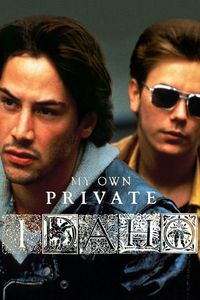
    (YouTube Streaming, September 2020) I suspect that most circa-2020 viewers will approach My Own Private Idaho because it happens to star young Keanu Reeves and River Phoenix and you know what? That’s a perfectly respectable reason. Phoenix’s talent, taken too soon, is showcased here, and Reeves turns in a looser performance than in many of his other roles. But it’s not the only reason to watch My Own Private Idaho. Some will flock to it because of its strong gay themes at a time where such topics were not yet part of the mainstream; others for watching one of writer-director Gus van Sant’s early efforts; and others for the film’s stylish presentation halfway between realism and dreamlike escapism. It is because of this whole package that My Own Private Idaho remains interesting, even to those who, like me, aren’t particularly interested in either of those specific reasons. It’s a film that doesn’t quite play out like expected. The expressionistic moments are refreshing in the middle of so much grimy meditation on the outcasts of society; and the narrative remains a stream of surprises. While I don’t particularly like My Own Private Idaho (too long, too scattered, too sad), I can certainly respect it, no matter why anyone would want to watch it.


  • Drugstore Cowboy (1989)

    Drugstore Cowboy (1989)

    (On Cable TV, June 2020) It takes a special kind of skill to ride along with junkies, and that’s more or less what writer-director Gus van Sant wants viewers to do in Drugstore Cowboy, as the film follows the adventures of a young man whose addiction is fuelled by a well-practised racket of robbing drugstores and moving from one temporary location to another. Headed by a strong lead performance from Matt Dillon, the film does start on a promising note and keeps going for a while on a strange blend of drug poetry. (Accordingly, no less than William Burroughs briefly shows up as an elderly street philosopher.) There’s something interesting in the structure of the film, as it portrays an addict at his arguable finest, then keeps dragging him down and down through reversals of fortune, then a difficult decision to go straight and try to stick to the narrow path of sobriety. (The ending is ironically open-ended as to whether it will stick.) While it doesn’t quite reach the kind of street poetry that it may have aspired to, Drugstore Cowboy remains a decently entertaining watch—perhaps more interesting as a deep dive into the mindset of hardcore addicts than a sustained narrative.

  • To Die For (1995)

    To Die For (1995)

    (On Cable TV, October 2017) Spoofing American society’s appetite for fame is self-obvious now that reality TV can launch mini-careers going all the way to the US presidency, but back in 1995, director Gus van Sant had to work harder with To Die For in order to present his mockumentary about an insanely ambitious woman working her way to the top of the local media ecosystem. Nicole Kidman headlines a solid cast made of competent character actors (Matt Dillon, Dan Hedaya, and the incomparable Illeana Douglas) as well as some up-and coming actors (Joaquin Phoenix, Casey Affleck) who have since made a mark. Kidman proves surprisingly game to indulge in the film’s black comedy, preening herself up in a textbook-worthy depiction of psychological disorders. Everyone else stands in her shadow, mirroring how society tries to deal with such amoral dangers in its midst. The film runs a bit long (something that isn’t helped by the pseudo-documentary format) but is seldom dull thanks to the cast and the tone. While To Die For seems to have sunk back in relative obscurity these days, it’s still worth a look, if only as a precursor to the reality-TV era that would begin in earnest half a decade later.

  • Psycho (1998)

    Psycho (1998)

    (Netflix Streaming, September 2017) There are a lot of remakes, but very few shot-by-shot remakes sticking as closely to the original as possible, down to the dialogue and specific shots as this 1998 version of Psycho does. But what Gus van Sant has done with his version of the classic film is unexpectedly fascinating rather than annoying. Moviemaking techniques evolved considerably between 1962 and 1998, and one of the most interesting aspects of this Psycho is comparing the extra details in the same frames, the depth of perception and the increased energy of the camera. Some changes are fully justified, from the opening bird-eye introduction to the characters to mercifully shortening the end monologue introducing the concept of split personalities to 1962 audiences. Other changes aren’t so remarkable: Vince Vaughn is (to put it bluntly) no Anthony Perkins, and Anne Heche is rather dull as a heroine. Still, trying to make sense of this film as a standalone thriller is difficult (the structure is lopsided enough), and simply treating it as a remake misses the point that it actively tries to be the same film, except made for 1998. I’m not going to call it good, but I will call it interesting.

  • Finding Forrester (2000)

    Finding Forrester (2000)

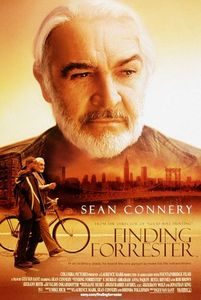
    (On Cable TV, August 2016) Sometimes, catchphrases stem from the unlikeliest places. So it is that Finding Forrester’s “You’re the man now, dog!” became an integral part of Internet meme history, which is really truly weird coming from such a staunchly classic inspirational film. Here, Sean Connery gets one of his last good roles as a reclusive author who discovers a brilliant but disadvantaged teen writer/athlete (Rob Brown’s debut performance). Much of the movie runs on autopilot, predictably portraying both men helping each other with their problems. There’s gratuitous antagonism provided by F. Murray Abraham, a cameo by Matt Damon, some basketball, romance with Anna Paquin and an attempt to make writing look really exciting. Finding Forrester blurs quickly with many other similarly themed films, although Connery’s presence is a bonus. The glimpse inside an elite high school can be interesting, the emphasis on literary matters will please a number of middlebrow viewers, and the movie does get points for not insisting too much on the protagonist’s racial struggles. Otherwise, there really isn’t much to say: Finding Forrester is the kind of inspiring story that Hollywood churned out by the truckload for decades, and while director Gus van Sant’s work is not exactly dull, it’s not particularly memorable either. Well, aside from the sight of Connery barking out “You’re the man now, dog!” once his protégé figures out how to type correctly. That’s still weird sixteen years later.