Henry Fonda

  • The Cheyenne Social Club (1970)

    The Cheyenne Social Club (1970)

    (On Cable TV, December 2021) I have no doubt that the filmmakers behind The Cheyenne Social Club did exactly what they intended in casting James Stewart as a cowboy who inherits a brothel. Even at a time when New Hollywood was breaking all of the rules, Stewart’s aw-shucks appeal meant that this wasn’t a film that was out to offend sensibilities. At best, it uses the suggestion of naughtiness as a lure, but doesn’t do anything that could be misconstrued as offensive. (The closest it gets to actual naughtiness is in its repeated suggestions that the house of ill repute is actually a boon for the town… and clearly not of ill repute.)  Stewart plays a laconic cowboy thrust in a situation he doesn’t want — it’s a rather familiar role, and the demands of the comedy don’t stretch his range too much either. Where the film does get more interesting is in pairing him with his good friend Henry Fonda in front of the camera, with none other than Gene Kelly as a director. The plot is thin to the point of aimlessness, an impression that is not helped by a rather disappointing conclusion that fails to show growth for the protagonist. Except that maybe that’s the point — such a fundamentally conservative film (despite Kelly’s often-bawdy instincts) could not end in any other way, and that’s probably the biggest joke in the entire story. Still, even with its flaws and lack of audacity, The Cheyenne Social Club remains a smooth film to watch — more light-hearted than many of Stewart’s previous westerns, and with some cleavage on display. I don’t think it fully uses the elements at its disposal, but that’s the case for most movies anyway. The paying public probably wouldn’t have stood for anything too daring.
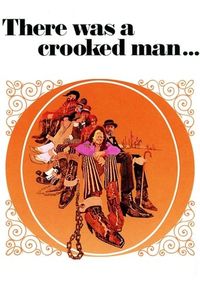
  • There Was a Crooked Man… (1970)

    There Was a Crooked Man… (1970)

    (On Cable TV, November 2021) I’m far from being the world’s biggest movie western fan — it’s a genre that easily falls into repetition and cheap dumb machismo. But hearing that There Was a Crooked Man was a creation of witty urbane dialogue-heavy director Joseph L. Mankiewicz definitely had me interested, an interest that only grew once Kirk Douglas and Henry Fonda (and Hume Cronyn) showed up in leading roles. The plot is a blend of hidden treasure thriller, prison procedural and ensemble drama all wrapped up in lighthearted direction except when people start dying. Douglas is particularly interesting as a bespectacled ruthless thief, and him going up against Fonda is a good screen pairing. Still, while There Was a Crooked Man has its moments of interest, the overall impression isn’t quite as strong as its pedigree or elements would suggest — it fades away more easily than you’d think, and doesn’t do enough to distinguish itself from so many other westerns. Too bad — I can see, here and there, how a better western could have been put together with those elements. Douglas and Fonda remain worth a look, though.

  • Stage Struck (1958)

    Stage Struck (1958)

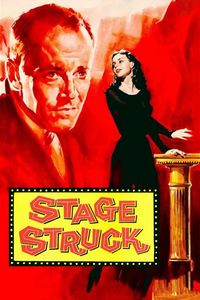
    (On Cable TV, May 2021) It took me about ten minutes too long to figure out that Stage Struck was a remake of the 1933 Katharine Hepburn vehicle Morning Glory, but that’s the least of the film’s problems. No, the problem with the film is one you rarely expect — an overacting, over-articulating, falsely cheerful, badly cast (or directed) lead actress: Susan Strasberg. I get that the film is the story of an overeager girl from the sticks heading to the big city and finding out that reality doesn’t measure up to her dreams. In that context, it makes perfect sense for the character to be exuberant, annoyingly upbeat and pretentiously mannered… at least at first. Similarly, you don’t need to point out that Hepburn was doing even more overacting back in 1933: that was the acting style at the time, and she made it work for herself. The problem with Strasberg is that she stays at eleven out of ten on the theatricality scale during the entire film, well after reality should have brought her down to earth. What a wasted opportunity, and an inexplicable lack of directorial judgment from Sidney Lumet, who would go on to direct several much-lauded films. It’s all the more regrettable, given how the rest of the film (filmed in colour on location) offers a rather wonderful look at Broadway circa 1958 in its grittiness and vitality. Henry Fonda is on hand as an older producer who, inevitably, falls in love with the half-as-young woman; other notables include Christopher Plummer as a writer (his first film) and Joan Greenwood as an acting rival. Stage Struck itself would be fine if it wasn’t for the way Strasberg uses highly stylized theatrical acting in an otherwise normal film — she stands out in a bad way and actively harms the rest of the film.

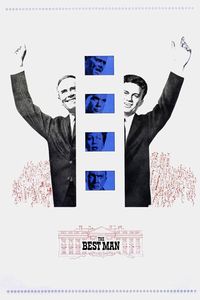
  • The Best Man (1964)

    The Best Man (1964)

    (On Cable TV, January 2021) I’m an avowed good audience for any movie that takes a peek and a poke at the American political process—especially now, in the dark days of January 2021, where American democracy is under attack from within with plenty of bad faith, outright lying and self-serving cowardice against authoritarianism to go around. The Best Man takes us back to the not-so-innocent 1960s, at that quasi-mythical event so beloved of pundits: a contested primary where every vote is on the line to decide who’s going to represent a major political party to the presidency. Henry Fonda makes the best use of his innate likability as an intellectual candidate with plenty of hidden baggage—not as much the multiple affairs, but a mental health episode that would be damaging if revealed to the public, as his chief rival, a venal opportunist, intends to do to secure the nomination. (This anticipates what happened to Vice-Presidential nominee Thomas Eagleton in 1972, dropped from the Democratic ticket to disastrous effect after his own history of mental health issues became known—which, in retrospect, became something of a karmic retribution for Eagleton’s then-anonymous quip denouncing the nominee’s “amnesty, abortion, and legalization” agenda. But I digress.)  A film of pure backroom deals and untoward pressure put on delegates, The Best Man is a political junkie’s dream. It ends up tackling some interesting issues for the time and Gore Vidal’s script pulls few punches considering the constraints under which studio films operated at the time. (It’s known as the first major American film to use the world “homosexual.”)  William Schaffner’s direction is taut (watch that twirling camera later on!), the black-and-white cinematography is appropriate, and the atmosphere of a political convention is cleverly re-created through good mise en scene and stock footage. While politics have changed, and one of those changes is the likely disappearance of contested conventions, some other aspects of the film remain curiously contemporary. I defy anyone to hear one of the final lines of dialogue, “you have no sense of responsibility toward anybody or anything. And that is a tragedy in a man, and it is a disaster in a president,” and not be reminded of a recent disastrous president with no sense of responsibility toward anything or anything.

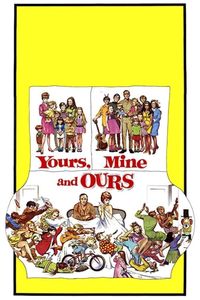
  • Yours, Mine and Ours (1968)

    Yours, Mine and Ours (1968)

    (On Cable TV, July 2020) It may be based (somewhat) on a true story, but the premise of Yours, Mine and Ours is comic gold: A widower with ten kids meets a widow with eight of her own and, well, chaos ensues. Henry Fonda plays the patriarch, Lucille Ball (aging, but still funny) the matriarch, and an ensemble cast’s worth of 18 kids fills out the rest. The film feels as if it has two halves—a more sedate beginning in which the adults get together, and then a higher comedic pace once the family moves together and modern logistics have to be used to wrestle control over a household of 20. While clearly a mainstream 1960s comedy with the expected exaggerations, minor conflicts and gags, it does have a fair amount of character development and heartfelt emotion toward the end. Yours, Mine and Ours is clearly not a great or refined film, but it does hit its comic targets. While there’s a 2005 remake that may be slicker and more attuned with modern values, this one now has a definitive historic charm to it.

  • The Wrong Man (1956)

    The Wrong Man (1956)

    (On Cable TV, February 2020) It’s paradoxical yet inevitable that while “the wrong man at the wrong place” ends up being a perfectly valid plot description for much of director Alfred Hitchcock’s oeuvre, The Wrong Man finds a true story that perfectly fits this description and somehow manages to produce something less involving than pure fiction. A dramatized depiction of real-life events, this is a movie that stars Henry Fonda as an innocent man accused of robbery through bad luck and happenstance. Given its status as a true story (as ponderously announced on camera by Hitchcock himself in the film’s first moments), it’s no surprise if The Wrong Man goes for more of a more realistic atmosphere than many of Hitchcock’s contemporary works. It doesn’t quite feel like one of his movies—the black humour is toned down, the stylistic camera tricks are mostly absent and the return to black-and-white here feels like an accidental rehearsal for Psycho than anything else. The inclusion of a mental health breakdown (toned down from true events) is also a bit of a downer that carries through the end credits. Still, one thing that The Wrong Man does get right is the casting of likable everyman Henry Fonda in the lead, equally able as other heroes in Hitchcock’s filmography. It still works today, but more like an attempt at true-crime realism than a Hitchcockian thriller by itself. But then again, reality is usually duller than fiction.

  • The Lady Eve (1941)

    The Lady Eve (1941)

    (On Cable TV, February 2020) I’m slowly starting to understand what film enthusiasts mean when they point at writer-director Preston Sturges’ extraordinary 1938–1944 run. The Lady Eve remains a spectacular film by any standards, and yet it’s only one of the four Sturges movies from the period often mentioned as an all-time comedy classic. In some ways, the premise feels familiar: the grafter taking aim at a wealthy target for purely monetary objectives, only to fall in love along the way. But there are twists and turns here that complement a well-executed delivery. It certainly helps that Henry Fonda is very likable as a hapless romantic lead, a bookish scientist who falls for Barbara Stanwyck’s scheming seducer. If Stanwyck has been sexier or funnier in any other movie, please tell me, because this is a classic performance—her opening sequence, as she provides colour commentary on seduction attempts on her target, says it all. The duo has a pair of very funny seduction sequences—first an unbroken shot of Henry with his head on her lap, and then later on a barn conversation interrupted by a curious horse. The film’s conventional first half leads to an unexpected turn midway through, and then even more comic sequences later on. Deftly mixing top-notch dialogue (you can quote that movie all day long) with physical comedy and absurd situations, The Lady Eve is indeed a screwball comedy classic, and a very good showcase for Fonda, Stanwyck and Sturges. This is what we mean when we say that they don’t make them like this anymore.

  • Sex and the Single Girl (1964)

    Sex and the Single Girl (1964)

    (On Cable TV, January 2020) The sex comedy subgenre of the early-to-mid-1960s has not aged well at all, and yet it remains curiously irresistible. I could watch several of those films one after the other—the only thing stopping me is that I would run out of them too quickly. So it is that Sex and the Single Girl has both a prime-era Tony Curtis and a spectacular stockings-clad Natalie Wood battling it out romantically against the dual backgrounds of psychiatry and Manhattan magazine publishing. (I strongly suspect that this was one of the main sources of inspiration for 2003’s pastiche Down with Love.) Having Henry Fonda and a gorgeous Lauren Bacall in supporting roles really doesn’t hurt either, even if their roles are underwritten. While the film itself does miss several comic opportunities and could have been more sharply written, there’s a lot of fun to be had simply plunging into the film’s atmosphere, rediscovering relics from another time (gags from coin-operated devices?) and enjoying the naughty-but-not-vulgar style of that era’s guiltless sex comedies. Pure wholesome fun is the special glue holding these films together despite their specific weaknesses. Wood’s Audrey-Hepburnesque qualities are in full display here, and Curtis is at his most Curtisesque all the way to a reference to Some Like it Hot. While the film could have been written more carefully, there’s a deliberate approach to its idiot-plot structure, with misunderstandings and misdirection between characters growing bigger and wilder every minute, climaxing with a consciously self-aware highway climax that’s a pack-and-a-half of logistics to juggle. By the time the characters are all chomping down on pretzels, it’s all non-stop joy that ends remarkably well. I could certainly go for another film much like Sex and the Single Girl right now. A shame they’re not making them like this any more, even with the disappointing writing.

  • My Darling Clementine (1946)

    My Darling Clementine (1946)

    (On TV, November 2019) I’m aware that My Darling Clementine is often praised as a western classic (it even gets a rare “1”—Masterpiece—rating from the influential Mediafilm service), and I’m partially nonplussed by the acclaim. I’m not going to make an argument that it’s a bad movie: with Henry Fonda playing Wyatt Earp in an early take on the O.K. Corral shootout, it’s a John Ford production executed with all of the skill that a big-budget western could muster in the 1940s. Even by Hollywood standards, it’s a very fanciful retelling of history that invents or combines (or kills) historical figures, rearranges the chronology of events and certainly imbues them with virtues or failings that makes the entire thing more accessible as a story. Actually, it goes even further than that: Watching My Darling Clementine, there’s a palpable desire to create a piece of American mythology. A desire fully fulfilled, in that the O.K. Corral shootout has been told and retold in movies even decades later. That, too, plays against My Darling Clementine: To modern viewers weaned on Tombstone, this early take feels unfocused, ham-fisted, and clichéd, bested by its own inheritors. Even at a relatively spry 103 minutes, it feels long, especially as it offers tangential material such as Shakespeare in the Wild West, and strange narrative choices such as building up a surgery sequence and then telling us in the next scene that the sick character (perhaps the most striking of them) has died. These little issues accumulate to the point that My Darling Clementine ends up feeling like a decent but underwhelming western, far from being all all-time classic even in Ford’s filmography, especially when there’s Stagecoach or The Searchers or The Man Who Shot Liberty Valence to pick from.   But now I’m reviewing the reviews rather than the film itself.

  • Mister Roberts (1955)

    Mister Roberts (1955)

    (On Cable TV, July 2019) There’s a very odd quality to Mister Roberts that makes itself known early on, as this “war movie” remains behind the front lines, spending its time with the crew of a supply ship that never gets close to the front. The forced comedy of the first few scenes feels amazingly close to the anarchic spirit of 1970’s MASH at times, with sailor goofing off in between their war effort, characters intentionally shirking their duties (most notably Jack Lemmon) and the title character (Henry Fonda) trying to shield his crew from an irascible captain (James Cagney). The main cast is intriguing, but the rhythm of the film feels forced, making jokes that remain unfunny and multiplying the episodes that don’t amount to much. The material is there for an examination of men at-war-but-not-at-war, but Mister Roberts, perhaps shackled by source material (it was first a novel and then a Broadway play), seems split between rambling dialogues, incongruous voiceovers and mildly annoying characters. It does feel like a film out of time, more at ease in the anti-war movies of the 1970s than the still-triumphant mood of 1950s WW2 films. (I’m actually amazed that the film got the full cooperation of the US Navy for location shooting.)  Mister Roberts’ plot does get better as the film advances, but it leads to a tragic conclusion that feels at odds with the rest of the film.

    (Second Viewing, On Cable TV, April 2021) Revisiting Mister Roberts two years later but with better knowledge of the main actors involved does give a different perspective on the entire film. Jack Lemmon in an early role, going up against a mid-career Henry Fonda, a late-career turn from James Cagney and William Powell’s last screen role. It’s the kind of cast that makes the film worth viewing no matter what. Mister Roberts does play with tone at times, delving into absurdity and then coming back to some kind of funny realism only to plunge into wistful drama a few seconds before the end. I kept thinking about MASH in seeing the way the film takes an almost-affectionate look at men coping with war (or their decidedly unheroic role in it) by cracking jokes until they sound insane. (Interestingly enough, the last moments of the film sound like a paean for those smart enough not to be a hero, which is a kind of attitude we wouldn’t often see in Hollywood movies until the 1970s.)  In some ways, this kind of tonal yo-yo makes the second viewing a more interesting experience – we know what to expect and when to expect it, and to take in the sketches that make up much of the film’s running time. Still, there’s no denying that the draw here is the cast . Lemmon is already comfortable in his semi-manic persona, while Powell couldn’t be more at ease, dignified and funny as the ship’s doctor. Meanwhile, Fonda and Robinson are up to themselves here – matching established personas to strong roles. Some movies don’t pack as big of a punch the second time around, but Mister Roberts feels like a better film the second time around.

  • On Golden Pond (1981)

    On Golden Pond (1981)

    (Popcornflix streaming, July 2019) I probably expected a bit too much out of On Golden Pond-the-movie as compared to On Golden Pond-the-career-highlight. For cinephiles with extensive knowledge of film history, every movie operates on at least two levels—the basic surface level of what we see and experience on-screen, and the way the film slots into the history of its genre, actors, and filmmakers. On that second level, On Golden Pond is essential: It’s one of Katharine Hepburn’s last great performances in a role that cleverly builds upon her own lifelong evolving persona; it’s Henry Fonda’s sole Oscar-winning performance; it’s an illustrated peek into the relationship between father and daughter Henry and Jane Fonda’s relationship; and it’s a major Oscar-winning movie. How could you not want to see a film with that kind of pedigree? I was there as soon as “Hepburn” was shown on-screen. But then there is the film, in which an old couple gets to care for their daughter’s new step-son during a summer at the cottage. Given that On Golden Pond is a theatrical adaptation, you can bet that the film is an actor’s dream with fully realized characters, strong dialogue, an undeniable thematic depth (with death and father/daughter relationships jockeying for importance) and a structure that allows for a lot to happen in a confined space and time. And yet, and yet, I think I was expecting just a bit too much. For all of Fonda’s fantastically cantankerous performance, witty bon mots and deathly obsession, I expected a grand finale for him—but the film is a bit too nice to get to the end of that thematic obsession. Hepburn is great, the Fondas are very good but the film does seem a bit too good-natured to truly get to the bottom of its themes. I’m as surprised as anyone to feel this way—I’m usually the first person to argue in favour of happy endings even when they’re not deserved. But it strikes me that this story had the potential to wring a lot more drama out of what it started with, and that it blinked in favour of far more superficial results. I’ll allow for the possibility that I’ve misunderstood the result or wasn’t quite in the right frame of mind for it. But it seems to me that the legend of On Golden Pond has outstripped its actual viewing experience.

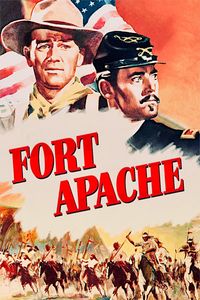
  • Fort Apache (1948)

    Fort Apache (1948)

    (On Cable TV, March 2019) To modern viewers, classic Hollywood is as wild a territory as the wild west was to Eastern-Americans. Everything is harsher, our intuitions fail us and only the most traditional of Anglo-Saxon white males find themselves in friendly territory. But there are occasionally a few havens of civilization, even as tentative and rudimentary as they were. So it is that film historians are generally complimentary toward classic traditional western Fort Apache as marking a turning point in Hollywood’s depiction of Native Americans, portraying them as capable, intelligence opponents motivated by real grievances and possessing distinct tribal identities. It’s not a portrayal that sustains much scrutiny today—clichéd, naïve, offensive … but still a step in the right direction compared to previous portrayals as of gratuitously murderous hordes. It also prefigures later nuanced portraits from director John Ford himself, such as The Searchers. As for Fort Apache itself, often considered the first of Ford’s “cavalry trilogy,” it features John Wayne and Henry Fonda butting heads as commanding officers of a small fort, with Wayne playing the reasonable one and Fonda playing the rigid autocratic one. Both of them do well, but Fonda is perhaps more remarkable for an unusual role as an unsympathetic character. There’s some great Monument Valley footage here, especially when the battle sequence starts. Fort Apache reasonably entertaining to watch, although definitely too long in its first hour as the film seems to be flaying about for a story to tell.

  • Battle of the Bulge (1965)

    Battle of the Bulge (1965)

    (On Cable TV, January 2019) I wonder if there’s an arc to the amount of historical accuracy we expect from real-life events depending on the proximity to those events. Anything made in the ten years following the event must be reasonably exact given that most of the principals (and audiences) are still there to compare notes. (Although this close to the action, things can be slanted toward a specific ideological purpose, or limited by rights issues and/or classified information.) Then there’s a lengthy period in which accuracy is not deemed as important, as memories fade and the era becomes an increasingly loose storytelling playground. Then there’s the longer-term “reverence” period when following the historical record is deemed respectful, especially given the work of professional historians with some detachment. In this progression, Battle of the Bulge would squarely belong to the second, less accurate era. While it does tackle real-life events such as the Ardennes offensive and the logistical challenges of that stage of the war (as opposed to more fanciful WW2 adventures à la Where Eagles Dare or Kelly’s Heroes), the film does so by outrageously compressing events in an unrealistic time period and being shot in a place that looks nothing like the Ardennes. The Wikipedia entry about the film’s historical inaccuracies is a mile long, but you only need a cursory knowledge of the Ardennes counteroffensive (where the forest environment and the cold and sudden snow all played a role, hence the famous anecdotes about Allied forces using white bedsheets as impromptu camouflage) to be taken out of the film’s ambitious but flawed depiction of the events as being in a wide-open plain. This being said, historical accuracy isn’t the ultimate determinant of a film’s worth, and The Battle of the Bulge does fare better when considered as a reality-adjacent WW2 adventure. The Nazis are deliciously devious, the allied are fine folks and the battle (one of the few rare post-Normandy successes for the Axis side) does offer some opportunity for tension and tank engagements. Actors such as Henry Fonda and Robert Shaw add to the appeal, and director Ken Annakin keeps things moving. It’s not a classic war movie but it is a decent one, and should appeal to WW2 buffs even—perhaps especially—given the historical inaccuracies.

  • C’era una volta il West [Once Upon a Time in the West] (1968)

    C’era una volta il West [Once Upon a Time in the West] (1968)

    (On DVD, October 2018) Is Once Upon a Time in the West the western to end all westerns? Probably not, but watching it after seeing Sergio Leone’s Eastwood-led man-with-no-name trilogy, I was struck at the sheer scope of his achievement here. Far from the low-budget heroics of A Fistful of Dollars, Leone goes for big-budget maximalism in showing how the railroad makes its way to an isolated western town, and the violence that ensues. It takes a while for everything to come into focus, but when it does we have a four-ring circus between a nameless protagonist (Charles Bronson’s “Harmonica,” and you know the tune he plays), a woman trying to transform herself in the West (Claudia Cardinale, captivating), an evil industrialist henchman (Henry Fonda, playing a villain!) and a bandit there to mess everything up (Jason Robart, not outclassed by anyone else). The four quadrants of the plot having been defined, the film then takes on its narrative speed—although at no fewer than 165 minutes and considering Leone’s typically contemplative style, there isn’t quite enough plot here to sustain the film’s duration. Still, it’s entertaining enough if you’re not in a hurry—This is clearly a film by someone who has seen a lot of westerns, and it regurgitates familiar elements in entertaining permutations. Plus there’s Leone’s visual style—the film’s best shot is a slow pullback from a man about to be hanged from an arch, with Monument Valley as a majestic backdrop. Not being much of a Western fanatic (although I appreciate it more and more as I see the best movies of the genre), I can say that there’s a limit to how much I can like Once Upon a Time in the West, but it was more entertaining than I expected, and almost as good as its lengthy running time would justify.

  • 12 Angry Men (1957)

    12 Angry Men (1957)

    (On Cable TV, July 2018) Some movies struggle with the burden of their reputations, but 12 Angry Men ably supports its considerable acclaim. The concept is terrific (twelve men in a sequestered jury decide whether to condemn a young man to death) and the execution does justice to the premise. While clearly a film from the fifties (all-male, all-white cast), it still crackles with dramatic energy and great performances. The way the audience is gradually made aware of the case though conversations and questions is intriguing, and the way no less than twelve characters are sketched in less than 100 minutes is also impressive. Henry Fonda is the star of the film as the lone holdout juror who eventually gets everyone to change their minds, but each actor gets a piece of drama to distinguish themselves. It’s interesting how 12 Angry Men, from a judicial perspective, is both inspiring and horrifying—while the film has a strong message to send about the civil importance of jury duty, it also depends on the jury acting in terrible ways—investigating the case themselves, then building presumption upon presumption. Still, we’re here for the drama more than the lecture, and there is a lot to like in the individual scenes that mark the turning point for each character—particularly satisfying is the sequence in which jurors tell another incredibly racist one to shut up now that he’s had his say. 12 Angry Man is tightly wound-up, with every facet of its background (most notably the weather, and the fan starting to work once the jury shifts) integrated in the plot. It’s quite a movie, and it’s still well worth watching sixty years later.