Hume Cronyn

  • There Was a Crooked Man… (1970)

    There Was a Crooked Man… (1970)

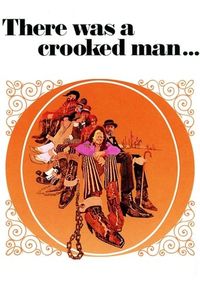
    (On Cable TV, November 2021) I’m far from being the world’s biggest movie western fan — it’s a genre that easily falls into repetition and cheap dumb machismo. But hearing that There Was a Crooked Man was a creation of witty urbane dialogue-heavy director Joseph L. Mankiewicz definitely had me interested, an interest that only grew once Kirk Douglas and Henry Fonda (and Hume Cronyn) showed up in leading roles. The plot is a blend of hidden treasure thriller, prison procedural and ensemble drama all wrapped up in lighthearted direction except when people start dying. Douglas is particularly interesting as a bespectacled ruthless thief, and him going up against Fonda is a good screen pairing. Still, while There Was a Crooked Man has its moments of interest, the overall impression isn’t quite as strong as its pedigree or elements would suggest — it fades away more easily than you’d think, and doesn’t do enough to distinguish itself from so many other westerns. Too bad — I can see, here and there, how a better western could have been put together with those elements. Douglas and Fonda remain worth a look, though.

  • The Arrangement (1969)

    The Arrangement (1969)

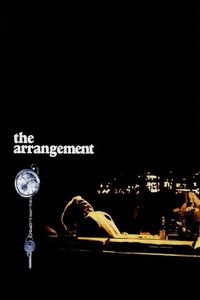
    (On Cable TV, September 2021) I don’t remember much about reading Elia Kazan’s The Arrangement nearly twenty-five years ago, but my contemporary notes suggest that I found it overlong and sporadically funny. That actually turns out to be a remarkably good take on the film adaptation as well — with writer-director Kazan adapting his own novel to the screen. The film version of The Arrangement does have the advantage of casting, though:  I’ll watch Kirk Douglas in nearly everything, and here he is as a California-based ad man going through a psychotic break in which he (the only sane man of the story, or so we’re told) starts rethinking the various social obligations that bind him. Suicide attempts, affairs, insulting clients, dying parents, arson, psychiatric confinement and pop-philosophy about the meaning of life in a modern world are what The Arrangement is made of. It’s… sporadically funny. Douglas is often much more compelling than the material, and the same goes for Deborah Kerr (who plays his wife) and Fay Dunaway (his mistress). It’s rather amusing to see Hume Cronyn play a dying man considering that he still had another forty years ahead of him as an actor. Still, despite the jokes and performances, there’s not much to like in The Arrangement. Self-indulgent and convoluted, it can’t be bothered to get to the point: it wanders in a quest to score fake epiphanies that feel trite today and can’t quite maximize its humour into something more cohesive. This may be Kazan at his most self-indulgent, as the result often seems to score goals against an unseen and uninteresting opponent. Oh well — it’s one more Douglas performance worth watching even in a film that’s not necessarily worth the trouble.

  • Sunrise at Campobello (1960)

    Sunrise at Campobello (1960)

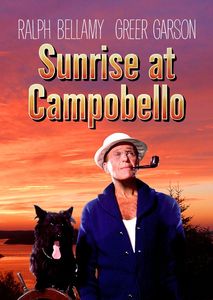
    (On Cable TV, April 2021) You can’t always predict your own reactions to a film, and my weirdly idiosyncratic hostility to Sunrise at Campobello proves it. On paper, it looks like the kind of inner-baseball political drama that I should enjoy — the origin story of future-President Franklin Delano Roosevelt, following his sudden paralysis. All of this is assorted with a look at his family, friends and political allies all the way to a triumphant podium appearance on his way to his nomination as presidential candidate. Considering that FDR ranks highly on my list of most admired presidents, I should have loved this. In practice, however, it only took a few minutes for the film to grate on my nerves. From the irritating tones of Greer Garson as Eleanor Roosevelt (another historical figure I admire in the abstract, but proves to be annoying in the flesh) to the self-satisfied family life of privileged white New England neo-aristocrats, Sunrise at Campobello started out on a very bad note that it never really recovered from. The artificial nature of circa-1960 filmmaking did not help, as this intimate drama feels stuck in this weird overblown Hollywood aesthetics it did not need. Oh, it’s not as if there’s nothing worth noticing in the rest of the film: Ralph Bellamy is fine as FDR, Hume Cronyn is a bit of a highlight as a sarcastic counsellor, the political shenanigans eventually take their place in the film, and the suspense builds up to a good conclusion. It does get better by the last act — even Greer’s characterization is meant to make her less grating. Historically, the film is also noteworthy for being more forthright than before about FDR’s medical condition, which was famously downplayed and unreported before and during his presidency. Still, I’m left curiously annoyed by the result — not being American is part of it (although, dear Americans, you really should elect people like FDR more often) but perhaps simply starting off on the wrong foot is enough. We all know how some films play differently from how they’re described on paper, and Sunrise at Campobello is a splendid example of it.

  • The Green Years (1946)

    The Green Years (1946)

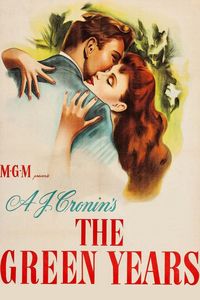
    (On Cable TV, April 2021) There is, on paper, not much to distinguish The Green Years from stereotypical Dickensian sad stories, as a young orphan boy comes to stay with distant relatives after losing his mother. Despite the inevitable setbacks and villains, trials and tribulations, we can broadly guess where the story is going to go—but that doesn’t really take into account the likable Oscar-nominated performance of Charles Coburn as the patriarch who takes our plucky protagonist under his wing, often going against the indifference or outright hostility of other members of the family. Also noteworthy are long-time couple Hume Cronyn and Jessica Tandy, amusingly playing father-and-daughter. The Green Years is not that good, but it does have its fine moments and the kind of fist-pumping victory (with a side order of vengeance from the grave) that we expect from such family melodramas.

  • Brute Force (1947)

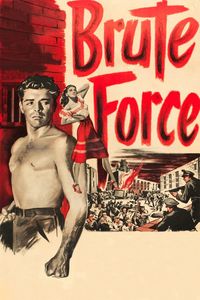
    Brute Force (1947)

    (On Cable TV, January 2021) If you’re looking for a midway point between prison movies of the 1930s and film noir of the 1950s, Brute Force fits the bill. Directed by Joe Dassin (who would become a noir auteur before his Blacklist-forced exile to Europe) and clearly playing rougher than movies from the previous decade, the film continues to codify tropes of the subgenre. Prisoners that aren’t that bad; a sadistic warden who’s worse than the prisoners (to the point of machine-gunning them with relish) and a daring escape plan that, in noir tradition, is doomed to failure. The ending moments of Brute Force are unusually harrowing and nihilistic for a film of that time—everyone is doomed to failure, and even the women outside the prison have their share of responsibility in leading their men to crime. Burt Lancaster shows up as the lead character in one of his first screen appearances, but the standout performer here is no less than Hume Cronyn, whose sadistic and violent prison warden character here completely undoes a screen persona with decades of meek appearances. All in all, Brute Force is a bit of a surprise—as brutal as its title promised, and occasionally a gripping piece of suspense and action.

  • The Seventh Cross (1944)

    The Seventh Cross (1944)

    (On Cable TV, December 2020) There are a few good reasons to watch The Seventh Cross – It’s an early film from Academy-award-winning director Fred Zinnemann, it features Spencer Tracy and it’s the first on-screen pairing of real-life couple Hume Cronyn and Jessica Tandy (the last being 1987 science fiction family comedy Batteries Not Included). More significantly, it’s one of the very few Hollywood films to talk about Nazi concentration camps as WW2 was going on, and before the true horrors of the camps were revealed. The story has to do with seven escapees from a concentration camp trying to evade capture, despite a commandant determined to bring them all back (“on crosses,” hence the title). Our protagonist (Tracy) is the seventh, the last escapee trying to get out of Germany despite a population not sympathetic to his goals. The premise is not bad, the acting talent is remarkable, the director would go on for better things and the script has a few flourishes (notably in having the narrator being one of the first dead escapees), but I found The Seventh Cross to be surprisingly uninvolving once past the first few minutes. This may be a reflection of a contemporary view of the situation: escaping Nazis would seem, today, to be of utter urgency, leading to a suspenseful film – but it seems more intent on an examination of the human spirit than out-and-out thrills. Whatever the reason, The Seventh Cross seems more interesting than purely enjoyable or entertaining today.

  • The Postman Always Rings Twice (1946)

    The Postman Always Rings Twice (1946)

    (On Cable TV, July 2019) As others have said, noir is a style more than a narrative genre, and as such it can allow itself multiple deviations from reality that would be unforgivable in another kind of movie. Does The Postman Always Rings Twice make sense? Only barely—even the most forgiving of audiences will probably cry out in disbelief a few times, whether we want to talk about narrative, romantic or even legal incoherencies. But this is mid-1940s noir, and believability takes a distant back step to the atmosphere of two lovers plotting murder and then trying to get away with it. Adapted from a novel by crime-fiction legend James M. Cain, it doesn’t take long for the film to revel in the particularities of that kind of fiction, with all the darkly humorous complications, twisted characters, fatal ironies and (in)convenient contrivances. It does help that the film is spearheaded by capable actors, starting with one of Lana Turner’s best individual performances (as others have said, the problem with being a star is that you’re often appreciated for a body … of work—not always a single role) and John Garfield as a blandly likable drifter who finds reason to stick around. For more contemporary viewers, there’s also a young Hume Cronyn turning in a memorable performance as a devious defence lawyer. At times, it does feel as if the third act runs far too long after what would have been a climax in another movie, but it ultimately turns out that the script has quite a bit more on its mind for the real end of the film—and even gives meaning to the title. The Postman Always Rings Twice all amounts to a classic noir with the qualities and issue of its genre, but no less of a pure pleasure to watch.

  • *batteries not included (1987)

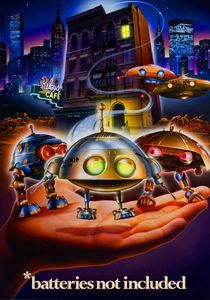
    *batteries not included (1987)

    (Second Viewing, On TV, March 2019) I must have seen *batteries not included as a teenager in the early 1990s, and remembered a strange mix between special effects work and unabashed sentimentality. As it turns out, that’s not too far away from an impression left by a second middle-aged look at the film, as the film blends then-top-notch special effects work with a script that wears its heart on its sleeve at multiple levels. The premise focuses on an old building in the middle of an area cleared for high-rise development. As you’d expect, the villains are real estate developers doing their best to force the tenants to move out. It just so happens that alien creatures then enter the picture, nesting on top of the building and helping with minor repairs and good actions throughout the building. The rest goes on from there, with no one really being surprised at how it ends. Director Matthew Robbins keeps a good balance between special effects showcases (some of them still quite effective) and more humanistic moments. The film is built on a nice unity of place, to the point where it feels off-putting when the action eventually leaves the apartment block. It’s sentimental for sure, but it’s difficult to dislike a film so optimistic—although the “baby alien” creature is pushing things. For cinephiles, what’s perhaps most remarkable about *batteries not included is the number of known names from different eras assembled for the occasion: It’s one of the last recognizable roles for veteran actor Hume Cronyn, a decent performance from his wife Jessica Tandy, a rather young Elizabeth Pena, and a screenwriting debut for Brad Bird. Predictable but not bad, *batteries not included still works as a film for the entire family.

  • Cocoon (1985)

    Cocoon (1985)

    (Second Viewing, On Cable TV, January 2019) I remember seeing Cocoon as a kid, but considering the film’s themes of aging it’s very different to see it as a middle-aged adult. (There’s one shot in the film, in which “human skins” are discarded and thrown to the floor by the alien characters, that seriously freaked me out when I was younger.) Efficiently directed by Ron Howard, this is a clever blend of SF, romance and comedy as retirement-aged characters discover alien eggs and the rejuvenating effects of the pool in which they’re stored. Of course, the aliens are there for a reason and their minders have good reason to be concerned. The script cleanly moves between one mode to the other, gradually making its way to a sentimental action-driven finale. There’s a tremendous amount of irony and foreshadowing in Cocoon’s early lines, showing the craft in the script. This probably remains the best film in which Steve Gutenberg ever starred, although his acting simply can’t reassure up to the impressive elderly ensemble cast assembled in between Don Ameche, Wilford Brimley, Hume Cronyn, Jessica Tandy and others. Now that the baby boomers are taking over retirement homes, I expect the film to undergo a modest rediscovery as its themes of eternal youth directly addresses them. For younger viewers, Cocoon can occasionally be a meditation on growing old (and what people would do if there was an alternative), although it doesn’t forget to leaven the meditation with genre elements and comedy.

  • Rope (1948)

    Rope (1948)

    (On DVD, December 2006) Any Hitchcock film is now regarded with respect, but even on its own, this cleverly-made thriller would be worth a look. The first and most obvious distinction of the film is how it’s conceived as a filmed play with a minimal amount of cuts: The lengthy segments lend an air of sustained tension to the storytelling, showcasing the skill of the actors. But beyond the surface, there’s a lot of subtext to the piece, whether it’s the references to the Leopold/Leob case, or the heavy allusions to homosexuality. James Stewart unfortunately looks like a boy-scout in the middle of all this, but his reassuring presence makes up for his lack of emotional involvement in the story. The technical fascination of the film’s making-of only adds to the interest of the film itself, making for a viewing experience that will reward viewers even sixty years later. Among other questions raised by the film is this one: Why hasn’t this type of film-making been attempted more often since, aside from oddities such as Mike Figgis’ Timecode?

    (Second Viewing, On Cable TV, June 2021) I thought a second viewing of Alfred Hitchcock’s Rope would damage the film – I remembered semi-fondly as an audacious but flawed experiment in “real time” one-cut cinema, but I expected to be disappointed in measuring it against many more recent examples of the form. Much to my surprise, I ended up liking as much, if not even more, this time around. For one thing, it’s obviously not a “real-time” film – the camera may move smoothly around the studio (with not-so-invisible cuts), but there’s clearly several hours of action crammed in 80 very efficient minutes, with the sun setting outside the confines of the set and people arriving, leaving and coming back to the action. James Stewart is quite good here as the man who figures out the murder mystery, but John Dall and Farley Granger are also quite good as the two young men who murder their classmate, then host a party while the body of their victim is hidden inside a chest visible to everyone as a buffet table. The party mixes inane chatter with far more portentous philosophical discussions outlining the thematic concerns at the heart of the film, all leading to a great conclusion. I don’t see the flaws of the film as much as I applaud its audaciousness and the way it manages to reach its objective – but that may say more about my evolution as a movie critic and the weight I now tend to place on high concepts. Hitchcock (working from a story by none other than Hume Cronyn!) does create an almost-subliminal sense of tension in the way standard film editing devices are avoided – the “can they pull this off?” is as meta-cinematic as it is plot-driven – and he pulls one of the most unusual cameos of his filmography here. Rope is a daredevil act by 1948 standards (through premise, execution and not-so-veiled references to homosexuality), and it still works really well for twenty-first century viewers. Don’t miss it.