Humphrey Bogart

  • All Through the Night (1942)

    (On DVD, November 2021) Now here’s a curio — a Humphrey Bogart comedy in which he plays a Manhattan gambler with mob connections who goes up against Nazi infiltrators plotting a strike against the United States. I got wind of All Through the Night during a TCM documentary on Bogart’s pre-stardom days, and it’s clearly a film from the period during which Warner Brothers knew he was a charismatic leading man, but before he became The Bogart of legend. As a result, his character is incredibly confident (his establishing moment is in ordering his favourite cheesecake and having restaurant staff panic when they don’t have it on hand) but the film doesn’t bow to him like latter ones would. The result is a strange but pleasant mixture of spying thrills, gangster suspense and lighthearted comedy. It’s not strictly comic, but some sequences come close to it: the gobbledygook sequence in which they try bluffing their way through a saboteur meeting is somewhat amusing, but the scene in which they end up realizing they’re in a Nazi stronghold is clearly not completely at ease with comedy. (A more comic director would have made the reveal stronger and built up the characters’ reaction.)  Not every aspect of All Through the Night works just as well, nor is as harmonious: the film’s production history confirms that some comic sequences were added after the start of shooting to take advantage of studio players and the film’s overall leaning toward comedy. Still, even imperfect results can be fun to watch, and Bogart is at ease as a Big-Man-on-Broadway, lending some credibility to a film otherwise not grounded in realism. A young and slim Peter Lorre shows up as a supporting antagonist (one taken out of the film too swiftly). The dialogue is better than average and the flavour of the time is interesting—the film was shot before Pearl Harbor, but released after the United States entered the war. Despite its shortcomings, I liked All Through the Night quite a bit: it’s fun and unassuming, and even its plotting shortcuts are part of the charm.
  • The Harder They Fall (1956)

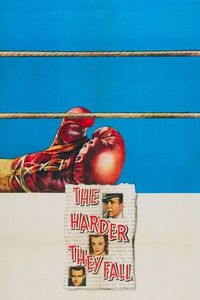
    The Harder They Fall (1956)

    (On Cable TV, July 2021) Even if The Harder They Fall doesn’t feature guns, femmes fatales, violent crime or private investigators, there is absolutely no doubt that it is a film noir, and that’s part of why it remains so interesting. Let’s see: Humphrey Bogart (in his last movie before his death), boxing (and the violence of it), corruption both of the system (in showing a series of fixed matches meant to promote an incompetent boxer) and of the individual (in having the protagonist help create the deception), organized crime (touch your nose and grab your ear), great black-and-white cinematography, and a hard-nosed tone suggesting that the real world is much seedier than most movies. Bogart doesn’t play a man of action, but as a former sports columnist his character understands better than most the darkness that lies behind the façade of boxing, especially when he’s asked to create the illusion of a heavyweight contender from a big but unskilled Argentinian. There’s an elusive but solid narrative drive to the results, helped along with a wealth of credible details. The Harder They Fall has aged amazingly well in becoming a time capsule of mid-1950s boxing corruption — the numerous exterior shots featuring Bogart walking down the streets of Manhattan are almost worth watching the movie by themselves. If you do a bit of research on the film’s boxing figures, you’ll find out that at least two roles are essentially two boxers playing themselves — something that audiences would have known in 1956 but not in 2021. Still, there’s no denying the effectiveness of the result even today—Director Mark Robson keeps things moving, and the boxing scenes are still surprisingly effective. I’ve seen quite a few boxing movies, but few are as scathing about the sport as The Harder They Fall — and few are as interesting either.

  • The Return of Doctor X (1939)

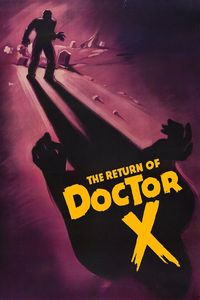
    The Return of Doctor X (1939)

    (On Cable TV, June 2021) Saying, “You have to see this!” isn’t always a measure of how good a film can be. So, when I point at The Return of Doctor X and recommend that it should be seen, it’s a very specific recommendation, based on the idea that any classic film fan would enjoy seeing Humphrey Bogart play a zombie vampire in what ended up being the only horror/Science Fiction film of his career. Not that this is the only weird thing about the film — an unwieldy mixture of thriller, horror and comedy (with frankly more comedy than horror), The Return of Doctor X is the kind of B-grade film that studios churned out in industrial numbers during the 1930s, using their stable of actors and filmmakers to the fullest extent of their contracts. Unrelated to the much-better Doctor X, it plays along uncanny lines rather than outright horror themes — despite the presence of a blood-drinking vampire, the comic relief almost overwhelms the picture. The result is definitely odd, and made odder by Bogart (not anyone’s idea of a horror/SF fan — indeed, he overtly dismissed the picture a few years later) as a bespectacled, white-streaked presence. You have to see this is you like Bogart, 1930s horror or studio misfires — but don’t expect too much out of it. At least it won’t waste your time at barely 62 minutes.

  • The Two Mrs. Carrolls (1947)

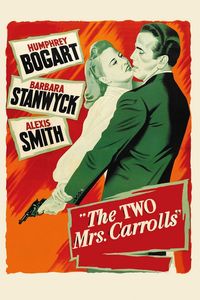
    The Two Mrs. Carrolls (1947)

    (On Cable TV, February 2021) Some films have far more curb appeal than actual polish, and The Two Mrs. Carrolls is a fine example of those. It’s hard not to get intrigued by a film featuring no less than Humphrey Bogart and Barbara Stanwyck in a domestic thriller. But there’s a reason why the film is far less often mentioned as those two stars’ best work: it ends up being a clunky mixture of miscasting, undercooked screenplay, dull direction and its own inability to stick to a gothic presentation. None of this applies to Stanwyck: She owns the film’s best moments, and while she’s playing a naïve character far away from her usual tough dames, she plays her with the kind of elegant dignity she could lend to any dramatic role at that point in her career. Sadly, Bogart doesn’t do so well, and much of it has to do with a double mismatch with the screen persona he took up in the 1940s — his shtick was a roguish but ultimately honourable man’s man, not the insane gothic villain painter that the script requires him to be, all the way to an over-the-top conclusion in which he crashes through a window with a murderous look in his eyes. He simply doesn’t fit the requirements of the story — a similar problem that many domestic thrillers of the 1940s found in casting likable leading men in darker roles (such as Cary Grant in Suspicion). It really doesn’t help that The Two Mrs. Carrolls is saddled with an unsatisfactory script: adapted and beholden to a stage play, it piles on the implausibilities and incoherences, with a female protagonist who should have figured something well before she laboriously pieces everything together. The film always seems to be holding back — perhaps due to its stars being unwilling to commit to a truly gothic take on the Bluebeard tale, perhaps by elevating director Peter Godfrey beyond his competencies at the time. The result is far from being unwatchable — but The Two Mrs. Carrolls’s interest is how odd of a film it is, and how it simply doesn’t meet its own objectives. Further reading on the film’s troubled production history reveals more of the backstory: Filmed in 1945 but held back for a variety of possible reasons until two years later, it suffered from a cavalcade of issues, not the least of which being a too-strong similarity with similar evil-Bogart vehicle Conflict.

  • They Drive by Night (1940)

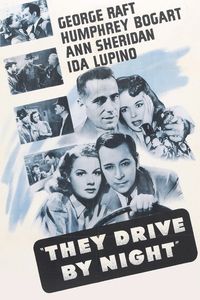
    They Drive by Night (1940)

    (On Cable TV, January 2021) If you’re lured to They Dive by Night by Humphrey Bogart’s name, be warned that this is a film from his ascending stardom era—not the Bogart of pop-culture legend, but the rough-hewn character actor he was before his trench-coat fame. The story definitely has him as a supporting player to a lead duo played by George Raft and Ida Lupino as, respectively, a truck driver trying to make ends meet, and the scheming seductive wife of a trucking company owner. This being on the edge of a film noir, she kills her husband and promotes Raft’s character in a bid to get closer to him, but he’s already smitten with a far more wholesome girl. Bogart plays Raft’s brother/trucking partner, while Ann Sheridan plays the good girl. The thriller elements are solid enough (although the ending clearly belongs to a more reasonable, less spectacular age), but the look at circa-1940 trucking can be fascinating—my favourite sequence in the film details how the brothers take a load of produce across the state and negotiate themselves a nice windfall. Bogart remains interesting in one of his last supporting roles, while the normally compelling Lupino is even more captivating as a lust-crazy murderess. While a minor film by most standards, They Drive by Night remains a solid early noir with a few compelling performances.

  • Chain Lightning (1950)

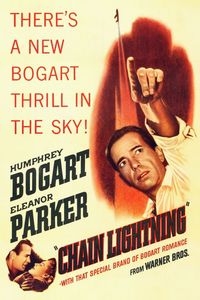
    Chain Lightning (1950)

    (On Cable TV, November 2020) I have often written that the Science Fiction genre offers surprisingly few rewards to its creators for being right about the future: if you somehow happened to predict the future with 100% accuracy, it would feel like history and thus be completely unremarkable to those encountering the speculations years later. 1950’s Chain Lightning is a work of engineering fiction more than science fiction, but it still managed to be somewhat accurate in predicting the following decade of development in aeronautics… something that goes completely unremarked by modern viewers. In watching the result, we twenty-first century viewers are more likely to completely ignore the triumphant spirit of fast-paced jet development and instead focus on Humphrey Bogart playing a test pilot living at the very edge of human capabilities. A contemporary take on The Right Stuff’s first act, Chain Lightning remains interesting, either by its focus on the growing mystique of test pilot, or in seeing Bogart somehow try to fit his streetwise tough guy’s persona to the confines of an airplane cockpit. I don’t quite think he pulls off the trick, and much of the problem goes to a very technically minded script that chooses to focus on technology rather than make use of an actor like Bogart in character interactions. I am conflicted: I like techno-thrillers and actively relish long passages of exposition, but then again, the number of movies that Bogart did is limited and seeing him misused in a feature that can’t be bothered to take advantage of his strengths is really disappointing. Nonetheless, Chain Lightning is not a bad watch for fans of aviation movies… and having even a substandard Bogart is still better than no Bogart at all.

  • Men Are Such Fools (1938)

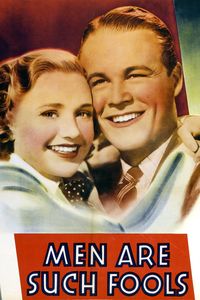
    Men Are Such Fools (1938)

    (On Cable TV, November 2020) One of the ways a screenwriter can sabotage a script is in unintentionally make their lead character wholly unlikable. Oh, there are plenty of opportunities for anti-heroes, magnificent cads and tortured protagonists… but since the point is a lighthearted romantic comedy, you should make sure that the heroine is, at least, likable—otherwise, many viewers will just wonder why the bother. Such is nearly the case in Men Are Such Fools, a story meant to show the corporate and romantic success of a plucky girl played by Priscilla Lane. Except that the pluckiness gets overdone: after leaving her husband to strike out on her own for suspiciously thin reasons (further evidence of a script being manipulated toward an ending, rather than evolving organically), we’re left to wonder why he even bothers chasing after her. An ending that rewards this pursuit doesn’t leave a triumphant taste, largely because (to reiterate the point), the heroine is simply too unlikable to be considered a goal. This being said, any Humphrey Bogart fan should miss this one: Here Bogart seems unusually ill at ease playing an executive cad, hitting upon the heroine in an office environment when he has no business doing so, and being almost entirely characterized by those actions. I also enjoyed some of the dialogue, although not really the story it’s in service to. Men Are Such Fool has maybe half of what it needs to succeed on its own as a romantic comedy, but it mishandles those elements so blatantly that it ends up backfiring upon itself.

  • Beat the Devil (1953)

    Beat the Devil (1953)

    (On TV, September 2020) I’m a bit surprised at how Beat the Devil doesn’t work as well as I was expecting. On paper, it looks like a slam-dunk: a comic adventure starring Humphrey Bogart (plus Jennifer Jones, Gina Lollobrigida and Peter Lorre!), directed by John Huston and co-written by Truman Capote, all taking place in exotic British East Africa. It’s explicitly made as a parody of earlier films, and concerns swindlers trying to claim uranium-rich lands. I mean, how can this fail to deliver? But it does—the herky-jerky script struggles with consistent tone (a likely artifact from having been reportedly rewritten on a daily basis), the comedy is weighted down by bland direction and the visual flourish of the film is nothing worth reporting on. Some of the film’s production history suggests that it was almost treated as a vacation by Huston, Bogart and others, and this lack of discipline clearly shows—it’s also unclear if Huston had a sense for comedy, as demonstrated by what Beat the Devil tries to pass off as funny. This being said, I’m putting an asterisk (*) here to revisit this film in a while, just to see if I either understand more about what it’s reputedly trying to parody, or if I’m in a potentially better mood to accept what’s going on here.

    (Second Viewing, On TV, December 2021) This is my second go-around on Beat the Devil, and I’m still as dumbfounded (or disappointed) as during the first. At another glance, this still feels like a can’t-miss film: A group of shady characters; striking actors such a Humphrey Bogart, Peter Lorre, Gina Lollobrigida and Jennifer Jones; directing by John Huston; and a script by Truman Capote. Better yet – the film is often presented as comedy, spoofing the kind of character-based adventure films that Hollywood was churning out at the time. The problem is that none of these things quite add up. It’s clearly not serious, but it’s not all that funny either, and the florid dialogue doesn’t add up to a compelling storyline. Some of this weirdness can be explained by taking a look at Beat the Devil’s production history – with the director ripping up the script on the first day of shooting and Capote churning out material as the shoot went on. The disjointed aspect of the film isn’t helped by actors goofing off when the goofing off doesn’t have a point. I gave the film a second look hoping that it would make more sense a second time around, but merely found my interest wandering again for what I feel are the same reasons. Oh, the occasional bon mot perked up my interest from time to time, but it’s not enough, not sustained into a coherent narrative nor a coherent comic tone. Maybe I’ll give it a third try. Maybe I’ll just ignore Beat the Devil as something that simply doesn’t work on me.

  • High Sierra (1941)

    High Sierra (1941)

    (On Cable TV, August 2020) According to many film historians, High Sierra is the film that put Humphrey Bogart on the map: He was already a steadily working, well-regarded actor for Warner Brothers, and his fame would be consecrated within the next year with The Maltese Falcon and Casablanca, but High Sierra is the film that made people stand up and take notice of him as a star. Watching it, it also strikes me as a strong early noir film, what with the dark forces of fatality stopping even a well-meaning character from a happy ending. Bogart here plays a character recently released from prison, but already planning a big heist. The film describes his own dramatic arc along the way from prison to recidivism, made more interesting by the character being tempted by the righteous path. This being an early noir, you can expect that it’s not going to end well… but it’s the journey that counts, and seeing Bogart ruminate on the choices his character is making. This may be the transition point between Warner’s 1930s gangster films and true honest noir as we’d know it later on – you can point to The Public Enemy one way, and Detour the other. It’s also quite entertaining to watch – Bogart looks terrific with a very severe haircut, torn between Ida Lupino as a fantastic bad girl, and Joan Leslie as the flip side of his morality. The result is impressive even today, and not merely as a precursor to Casablanca-era Bogart.

  • Dark Victory (1939)

    Dark Victory (1939)

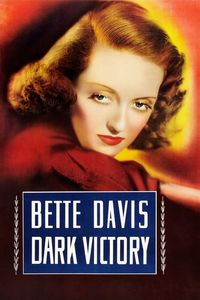
    (On Cable TV, August 2020) The difference between drama and melodrama is often whether it works or not, and Dark Victory does play with highly combustible material, as it focuses on a hedonistic socialite who discovers she has roughly a year left to live. Trying to rearrange her affairs in order to exit with dignity, she discovers love, respect and acceptance. This could have gone wrong in a dozen embarrassing ways, but the big surprise here is how well it manipulates audiences and carries them willingly to a weeper of a conclusion. Dark Victory ranks high on the list of Bette Davis’s performances, and it’s not hard to see why: a lesser actress could have made the material ridiculous, but here she carries the entire film on her shoulders. It’s not just an acting performance: Davis also (says the film’s production history) pushed hard for such a tearjerker to be made in the studio system, believing that she could do justice to the material. Indeed she could, although later generations of viewers could also spot Humphrey Bogart (as a likable stable master, no less) and Ronald Reagan in small roles. Director Edmund Goulding gives Davis all the freedom she needs to nail the character, and the result speaks for itself. Yes, Dark Victory is manipulating your emotions and yes, you’ll see it coming, but it’s not melodrama if it works – it’s crowd-pleasing art.

  • Dead End (1937)

    Dead End (1937)

    (On Cable TV, July 2020) As much as I’d like to be more positive about Dead End, it just ends up being a fairly dull New York crime drama. It does star an ascendant Humphrey Bogart in one of the 1930s roles most suited to his later persona (albeit as a villain), plus a leading role for Joel McCrae. The plot is perhaps a bit more sedate than you could expect: it’s based on a theatrical play, spends a lot of time on social issues class commentary on gentrification and doesn’t quite capitalize on its assets—or maybe just isn’t interested in telling anything but a drama opposing high class characters and low street urchins. Director William Wyler does have a few impressive camera moves, especially in the film’s opening moments. Alas, that’s not enough to make Dead End any more distinctive—the plot is uninvolving, and even Bogart’s supporting turn can’t save it completely.

  • Across the Pacific (1942)

    Across the Pacific (1942)

    (On Cable TV, June 2020) What looks like one more WW2 propaganda film is given slightly more interest by featuring none other than Humphrey Bogart. Not stepping too far away from his persona in Across the Pacific, he plays a dishonourably discharged soldier who ends up on a ship going to Panama and gets involved fighting a dastardly plan by the Japanese. Far more of a thriller than an outright military film, much of it plays on-board the confines of a ship, with Bogart investigating a Japanese sympathizer on-board. There are clear echoes of The Maltese Falcon here, given that both movies share Bogart, the always-menacing Sidney Greenstreet, Mary Astor and director John Huston. A decent-enough adventure, Across the Pacific (which never even makes it to the Pacific), is nonetheless dragged down by uneven pacing and too-late narrative development. As a propaganda film, don’t expect much subtlety in its depiction of Japanese characters—in fact, expect to be very uncomfortable whenever they appear on-screen and the xenophobia gets roaring. Still, Bogart is Bogart and if you can stomach the stereotypes, the film is interesting enough.

  • Angels with Dirty Faces (1938)

    Angels with Dirty Faces (1938)

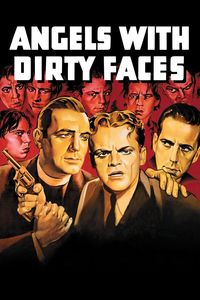
    (YouTube Streaming, April 2020) If you’re looking for a 1930s gangster movie, you could do much worse than Angels with Dirty Faces, a street-level crime thriller set in Manhattan that showcases no less than James Cagney and Humphrey Bogart in a plot that blends criminals, priests, kids, lawyers and fifteen years’ worth of resentment. Unusually enough, the film severely undermines the image of its lead gangster is the most effective way possible—by having him beg for mercy at the moment of his execution, showing just how much of a coward he truly is. Cagney has a great iconic role here, and he doesn’t let anyone forget it. Meanwhile, Bogart is in a stranger position: While the role is good and the Bogartian speech patterns are there, he here plays a white-collar scoundrel, underdeveloped when compared to his later roles. Meryn Leroy directs the film with sharpness and precision, whether it’s setting up a complex street scene, or fluently going over years of events through newspaper headlines and documents. The result is quite a good proto-noir film, especially when measured against similar movies of the time.

  • The Roaring Twenties (1939)

    The Roaring Twenties (1939)

    (On Cable TV, March 2020) Two things help The Roaring Twenties distinguish itself from other late-1930s crime dramas. The most superficial one is having both Humphrey Bogart and James Cagney in the same film, something that only happened three times — all within 1938–1939, as Warner Brothers was still establishing the limits of the ascendant Bogart’s screen persona. The more interesting aspect is contextual—this was Warner’s attempt to recapture some of their glory days of early-1930s gangster movies. To this end, the script takes a look back at the 1920s through a very sensationalistic lens: it posits a decade made of WWI veterans turning to crime in an attempt to climb up the economic ladder, something made easier than usual by Prohibition and its illicit opportunities. (There’s a contrast to be made here with The Best Years of Our Lives, or perhaps even the original Ocean’s Eleven.) This historical material is reshaped in somewhat classic late-1930s gangster film material, an instant homage from that era’s perspective that is lost on twenty-first century viewers. Fittingly for a Production Code film (one handicap that early-1930s gangster film didn’t have to contend with), crime doesn’t pay all the way to the melodramatic end. The Roaring Twenties is a pretty good film, no matter whether you care all that much about the Bogart/Cagney reunion—veteran director Raoul Walsh delivers what audiences then or now expect, and is easy to watch from beginning to end. Meanwhile, as I sit at home in COVID lockdown, I wonder how they’ll eventually nickname these just-beginning twenty-twenties.

  • The Barefoot Contessa (1954)

    The Barefoot Contessa (1954)

    (On Cable TV, August 2019) If I had to boil down a review of The Barefoot Contessa to two words, they would be Bogart/Gardner, with Mankiewicz as the third word. Not much else is needed considering that the point of the film is to see Humphrey Bogart as a movie director witnessing the rise and fall of a Spanish dancer (Ava Gardner) groomed to become a movie star. Written and directed by Joseph L. Mankiewicz, the film is a Hollywood tragedy with strong ties to the European aristocracy, and much of the film’s second-half drama comes from entanglements with an Italian count. Savvily taking viewers from Hollywood familiarity to the escapist melodrama of the old-world, The Barefoot Contessa was part of the “Hollywood on the Tiber” movement which saw studio movies shot in Rome. The Technicolor production values are impressive, and they all serve to reinforce the film’s old-school glamour: in some ways, you can see the film as being very near the apex of the studio system and the style in which old-school Hollywood built itself. It is melancholic, however: the ending is a downer (in keeping with a film that flashes back from a funeral) and Bogart’s character has far less to do than you’d think from his top billing: he is a witness to events outside his control, a chronicler of someone else’s story. (There’s an interesting double-bill to be made here with In a Lonely Place as a glum Bogart-as-filmmaker mini-festival.) Off-kilter touches like that are why I keep going back to Mankiewicz movies—they clearly understood the way that Hollywood worked and used that to create an element of surprise or freshness. But let’s not fool ourselves: The Barefoot Contessa is Ava Gardner’s movie. The title of the film has become closely associated with her (she herself liked to go barefoot), and it still ranks high as a showcase for her specific brand of glamour.