Humphrey Bogart

  • Dark Victory (1939)

    Dark Victory (1939)

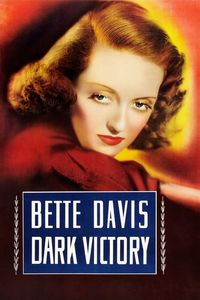
    (On Cable TV, August 2020) The difference between drama and melodrama is often whether it works or not, and Dark Victory does play with highly combustible material, as it focuses on a hedonistic socialite who discovers she has roughly a year left to live. Trying to rearrange her affairs in order to exit with dignity, she discovers love, respect and acceptance. This could have gone wrong in a dozen embarrassing ways, but the big surprise here is how well it manipulates audiences and carries them willingly to a weeper of a conclusion. Dark Victory ranks high on the list of Bette Davis’s performances, and it’s not hard to see why: a lesser actress could have made the material ridiculous, but here she carries the entire film on her shoulders. It’s not just an acting performance: Davis also (says the film’s production history) pushed hard for such a tearjerker to be made in the studio system, believing that she could do justice to the material. Indeed she could, although later generations of viewers could also spot Humphrey Bogart (as a likable stable master, no less) and Ronald Reagan in small roles. Director Edmund Goulding gives Davis all the freedom she needs to nail the character, and the result speaks for itself. Yes, Dark Victory is manipulating your emotions and yes, you’ll see it coming, but it’s not melodrama if it works – it’s crowd-pleasing art.

  • Dead End (1937)

    Dead End (1937)

    (On Cable TV, July 2020) As much as I’d like to be more positive about Dead End, it just ends up being a fairly dull New York crime drama. It does star an ascendant Humphrey Bogart in one of the 1930s roles most suited to his later persona (albeit as a villain), plus a leading role for Joel McCrae. The plot is perhaps a bit more sedate than you could expect: it’s based on a theatrical play, spends a lot of time on social issues class commentary on gentrification and doesn’t quite capitalize on its assets—or maybe just isn’t interested in telling anything but a drama opposing high class characters and low street urchins. Director William Wyler does have a few impressive camera moves, especially in the film’s opening moments. Alas, that’s not enough to make Dead End any more distinctive—the plot is uninvolving, and even Bogart’s supporting turn can’t save it completely.

  • Across the Pacific (1942)

    Across the Pacific (1942)

    (On Cable TV, June 2020) What looks like one more WW2 propaganda film is given slightly more interest by featuring none other than Humphrey Bogart. Not stepping too far away from his persona in Across the Pacific, he plays a dishonourably discharged soldier who ends up on a ship going to Panama and gets involved fighting a dastardly plan by the Japanese. Far more of a thriller than an outright military film, much of it plays on-board the confines of a ship, with Bogart investigating a Japanese sympathizer on-board. There are clear echoes of The Maltese Falcon here, given that both movies share Bogart, the always-menacing Sidney Greenstreet, Mary Astor and director John Huston. A decent-enough adventure, Across the Pacific (which never even makes it to the Pacific), is nonetheless dragged down by uneven pacing and too-late narrative development. As a propaganda film, don’t expect much subtlety in its depiction of Japanese characters—in fact, expect to be very uncomfortable whenever they appear on-screen and the xenophobia gets roaring. Still, Bogart is Bogart and if you can stomach the stereotypes, the film is interesting enough.

  • Angels with Dirty Faces (1938)

    Angels with Dirty Faces (1938)

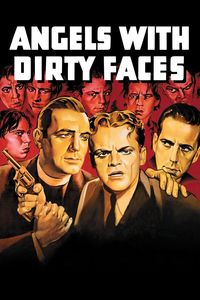
    (YouTube Streaming, April 2020) If you’re looking for a 1930s gangster movie, you could do much worse than Angels with Dirty Faces, a street-level crime thriller set in Manhattan that showcases no less than James Cagney and Humphrey Bogart in a plot that blends criminals, priests, kids, lawyers and fifteen years’ worth of resentment. Unusually enough, the film severely undermines the image of its lead gangster is the most effective way possible—by having him beg for mercy at the moment of his execution, showing just how much of a coward he truly is. Cagney has a great iconic role here, and he doesn’t let anyone forget it. Meanwhile, Bogart is in a stranger position: While the role is good and the Bogartian speech patterns are there, he here plays a white-collar scoundrel, underdeveloped when compared to his later roles. Meryn Leroy directs the film with sharpness and precision, whether it’s setting up a complex street scene, or fluently going over years of events through newspaper headlines and documents. The result is quite a good proto-noir film, especially when measured against similar movies of the time.

  • The Roaring Twenties (1939)

    The Roaring Twenties (1939)

    (On Cable TV, March 2020) Two things help The Roaring Twenties distinguish itself from other late-1930s crime dramas. The most superficial one is having both Humphrey Bogart and James Cagney in the same film, something that only happened three times — all within 1938–1939, as Warner Brothers was still establishing the limits of the ascendant Bogart’s screen persona. The more interesting aspect is contextual—this was Warner’s attempt to recapture some of their glory days of early-1930s gangster movies. To this end, the script takes a look back at the 1920s through a very sensationalistic lens: it posits a decade made of WWI veterans turning to crime in an attempt to climb up the economic ladder, something made easier than usual by Prohibition and its illicit opportunities. (There’s a contrast to be made here with The Best Years of Our Lives, or perhaps even the original Ocean’s Eleven.) This historical material is reshaped in somewhat classic late-1930s gangster film material, an instant homage from that era’s perspective that is lost on twenty-first century viewers. Fittingly for a Production Code film (one handicap that early-1930s gangster film didn’t have to contend with), crime doesn’t pay all the way to the melodramatic end. The Roaring Twenties is a pretty good film, no matter whether you care all that much about the Bogart/Cagney reunion—veteran director Raoul Walsh delivers what audiences then or now expect, and is easy to watch from beginning to end. Meanwhile, as I sit at home in COVID lockdown, I wonder how they’ll eventually nickname these just-beginning twenty-twenties.

  • The Barefoot Contessa (1954)

    The Barefoot Contessa (1954)

    (On Cable TV, August 2019) If I had to boil down a review of The Barefoot Contessa to two words, they would be Bogart/Gardner, with Mankiewicz as the third word. Not much else is needed considering that the point of the film is to see Humphrey Bogart as a movie director witnessing the rise and fall of a Spanish dancer (Ava Gardner) groomed to become a movie star. Written and directed by Joseph L. Mankiewicz, the film is a Hollywood tragedy with strong ties to the European aristocracy, and much of the film’s second-half drama comes from entanglements with an Italian count. Savvily taking viewers from Hollywood familiarity to the escapist melodrama of the old-world, The Barefoot Contessa was part of the “Hollywood on the Tiber” movement which saw studio movies shot in Rome. The Technicolor production values are impressive, and they all serve to reinforce the film’s old-school glamour: in some ways, you can see the film as being very near the apex of the studio system and the style in which old-school Hollywood built itself. It is melancholic, however: the ending is a downer (in keeping with a film that flashes back from a funeral) and Bogart’s character has far less to do than you’d think from his top billing: he is a witness to events outside his control, a chronicler of someone else’s story. (There’s an interesting double-bill to be made here with In a Lonely Place as a glum Bogart-as-filmmaker mini-festival.) Off-kilter touches like that are why I keep going back to Mankiewicz movies—they clearly understood the way that Hollywood worked and used that to create an element of surprise or freshness. But let’s not fool ourselves: The Barefoot Contessa is Ava Gardner’s movie. The title of the film has become closely associated with her (she herself liked to go barefoot), and it still ranks high as a showcase for her specific brand of glamour.

  • In a Lonely Place (1950)

    In a Lonely Place (1950)

    (On Cable TV, April 2019) While In a Lonely Place would be a great film noir no matter who was cast in the lead role, seeing Humphrey Bogart as an impulsively violent screenwriter embroiled in a sordid murder plot does add a lot to the result. Many critics with a good knowledge of Bogart’s career will single out his performance here as the closest to Bogart’s real-life personality and an underrated critic’s choice. The metareferential aspects of the story set in Hollywood are enough to recall Sunset Blvd and All about Eve, also released in 1950. But it’s the execution that shines. The direction and set designs are straightforward, but the dialogues, characters and plot more than make this a great watch. (Some acting is a bit off, but it has to be measured against the looser standards of the time.)  It ends on a tragic note in the classic sense, as the protagonist’s flaws prevent him from getting what he wants. (It’s more optimistic than the original scripted ending, but no less heartbreaking.) Bogart is quite good here—while he doesn’t really come across credibly as a screenwriter, he definitely manages to portray the violent impulses of the character more efficiently than another actor would. Twenty-first century viewers will be quick to identify this as a look at toxic masculinity decades before the term was coined, and does so with Humphrey Bogart—who exemplified its characteristics in a glamorous fashion. While sometimes presented as a film noir without qualifications, In a Lonely Place earns a second look in part because it pulls back from noir at the last moment, ending in a way that is far more relatable than the usual everybody-dies-then-goes-to-prison conclusion that other comparable film would have taken. Sometime the harshest prisons are the one we build for ourselves, and there’s no better tour guide that Bogart’s haggard look.

  • The Petrified Forest (1936)

    The Petrified Forest (1936)

    (On Cable TV, April 2019) By 1936, Humphrey Bogart was a repertory player in the Warner Brothers stable inching toward leading-man status, and they were clearly trying a few things for him to see how he’d catch the audience’s attention. One of his early successes was The Petrified Forest, a thriller in which he plays a gangster evading a police chase, and taking hostage the patrons of a small desert diner. It’s clearly not meant to feature Bogart as a lead character—that would be Leslie Howard as a writer turned drifter who’s affected by the characters and events of the diner. As a semi-confined thriller, the film makes a good double-bill with Bogart’s latter Key Largo, but does make effective use of its desert atmosphere to crank the tension between its characters. Bogart, young and with a full head of hair, is convincing as the heavy (something that would clearly be noticed in later films) but the film isn’t quite a gangster picture. As the third act rolls in, it becomes closer to a contemplative meditation on life and death, as befits its theatrical origin. That’s when our intellectual protagonist is transformed into someone who discovers, perhaps too late, a reason to live. Great dialogue and great characters make this a potent 1930s film, although let’s be honest—most viewers will seek this out for Bogart first.

  • To Have and to Have Not (1944)

    To Have and to Have Not (1944)

    (On Cable TV, March 2019) On paper and on the screen, you really have Classic Hollywood running on overdrive in To Have and to Have Not: Let’s see—Howard Hawks directing from a script by William Faulkner from a story/treatment by Ernest Hemingway; Humphrey Bogart and Lauren Bacall as the lead couple, while they were having an affair behind the cameras that would lead to their marriage later on. Coming from Warner Brothers, there’s an obvious kinship here to be made with Casablanca, especially as the story delves into wartime shenanigans between the French Resistance and the Vichy government. Bogart himself clearly plays his own screen persona as the tough and glum smuggler, while Bacall (despite her young age) delivers an exemplary Hawksian-woman performance with more iconic lines of dialogue than most actors get in an entire career. None of this is particularly new (although the Hemingway/Faulkner collaboration is noteworthy), but it’s fun to have another go-around when it works so well—and the Bogart/Bacall chemistry would itself lead to a few encores. Typically for Hawks, there are a few choice quotes, and the direction is limpid, going to the heart of what you can do with Bogart-as-a-rogue and a luminescent Bacall as a strong wartime dame. Not quite noir but certainly not fluffy, To Have and to Have Not is so much fun to watch (although you may want to space your viewing away from Casablanca due to the inevitable parallels) that it ends a bit abruptly, although not without having Bogart shoot a guy, as it should be. The work of several craftsmen all working at the best of their abilities, it’s quite a treat, but also a good example of what the studio system could do when it was firing on all cylinders.

  • Sabrina (1954)

    Sabrina (1954)

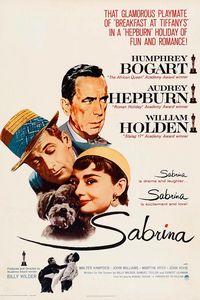
    (In French, On Cable TV, January 2019) If you want to understand why so many people love Audrey Hepburn as an actress, as a style icon or even as a person, you can start with Breakfast at Tiffany’s … or you can start with Sabrina. I know which one I’d pick: Despite Breakfast at Tiffany’s little black dress, Sabrina has Hepburn in a far more suitable role, avoids many of the unpleasant edges of the other film, and showcases Hepburn at the very beginning of her long association with high fashion. It’s also, to put it bluntly, a better movie. Here we have Humphrey Bogart, certainly too old for Hepburn at thirty years her senior but playing a fascinating deviation on his usual persona as a sophisticated businessman thrown in a romantic role. Plot-wise, Sabrina is filled with tricky material—the acknowledged age difference, the class issues, the messy familial romantic entanglements, heck the opening scene’s suicide attempt—but it succeeds largely because of writer/director Billy Wilder’s typically light touch on difficult material. The intriguing glimpse at the life of New York’s upper-class set is window dressing for a romance that’s not as clear-cut as in many other movies of the period, and that’s the territory in which Wilder excelled. Still, for most, Sabrina will be enjoyable on a purely aesthetic level: This is the movie that first paired Audrey Hepburn with Paris (even if only in studio shots), and also the film that launched her lifelong association with Givenchy. Sabrina is far less sappy and mindless than you’d expect from a mid-1950s romance, and that’s what gives it enduring power—plus Bogart and Hepburn, of course.

  • The Caine Mutiny (1954)

    The Caine Mutiny (1954)

    (In French, On Cable TV, October 2018) The history of mutinies in the US Navy is a very short one, making The Caine Mutiny an even more interesting depiction of sailors rebelling against their captain. Adapted from the Herman Wouk novel, this film steadily cranks up the pressure as crewmembers of the Cain grow increasingly concerned with the mental stability of their commanding officer. (He’s played by none other than Humphrey Bogart, in a somewhat atypical role as a weak and cowering character.) It culminates in mutiny … but the film has quite a bit longer to go before being over, and it’s that third act that proves perhaps the most interesting portion of the film. Because after the mutiny comes the reckoning, as our rebellious protagonists face martial court for their actions. That’s when a lawyer (ably played by Miguel Ferrer) takes care of the mutineers, long enough to get them a fair or suspended sentence but also to deliver a terrific post-judgment speech explaining in detail how much he loathes them for what they’ve done. The Caine Mutiny also manages a terrific overturning of familiar expectations by making a semi-villain (or at least a weakling) out of its novelist character. Fictional writers being written by real writers usually means that most writers in any kind of novel/movie are usually semi-virtuous canny observers. Not here, as Wouk avatar Fred MacMurray turns out to be a coward and pointed out as such. Such overturning of expectations makes the film as good as it is, pointing out that mutinies aren’t necessarily admirable or glorious even when there’s a reasonable doubt of their necessity. The Caine Mutiny is not a short film, but it does put us on the bridge during a very tense situation, and then plays out the consequences.

  • Sahara (1943)

    Sahara (1943)

    (On TV, October 2018) Considering the time it now takes to make movies and bring them to market, it’s sometimes amazing to watch WW2-era films discussing events that happened mere months prior to their release. It’s even more amazing to find out that some of them remain remarkably effective even despite their ridiculously short gestation period. So it is that Sahara is a welcome surprise: a solid war adventure set during the African campaign of WW2. It certainly helps that it features no less than Humphrey Bogart as the commanding officer of a lost tank trying to rejoin their main battalion after a fierce battle. Lost in the desert, they gradually find other survivors and spend the first half of the film searching for an oasis. Alas, their troubles only begin when they do find a source of water—before long, they find themselves guarding a dry well against a much larger force of Nazi soldiers. Action, derring-do, amazing coincidences and character drama all punctuate the second half of the film, raising the stakes and providing a capable war adventure made as it was going on. There is a really interesting moment midway through the film in which the Italian character blames the German character for his nation having duped in joining the alliance—a far more nuanced portrait of the enemy than you would have expected at the time. Bogart is quite good in the lead, with a secondary role by a young Lloyd Bridges—and this is one of those rare films with an all-male cast. Sahara firmly belongs in the “war is an adventure” school of filmmaking: the film is not trying to make a statement about the futility of it, but neither is it unbearable propaganda. A clever, tight script wraps everything together in a topical war drama that has nevertheless withstood the test of time significantly better than most of its contemporaries.

  • The African Queen (1951)

    The African Queen (1951)

    (In French, On Cable TV, July 2018) If you’re even a casual fan of classic cinema, The African Queen is a must see, even for no other reason than it features Humphrey Bogart and Katharine Hepburn playing off each other in familiar roles—Bogart’s kind-hearted rogue, and Hepburn later-career matriarch. The story takes place deep in Africa during World War I, as a Canadian adventurer (Bogart) rescues an English nun from German attack. Escaping to friendly territory is not a certainty, especially when their tiny boat is faced with the threat of a German warship blocking their way. The adventures build up to a pretty good finale. While the innovation of shooting much of The African Queen on-location deep in Africa has paled a bit for today’s audiences, the results are clearly appreciated on-screen with a film that looks quite a bit more realistic than many of its studio-shot black-and-white contemporaries. (Legend has it that most of the crew suffered greatly from the shooting conditions, except Bogart and director John Huston who mostly drank alcohol rather than water.)  Bogart got an Academy Award out of the film (a lifetime achievement reward in all but name) while Huston and Hepburn got nominated for their efforts. The result is a product of its time, but The African Queen has aged rather well and significantly better than many other films of the time.

  • Dark Passage (1947)

    Dark Passage (1947)

    (On Cable TV, June 2018) Humphrey Bogart was the man’s man in the 1940s (and even well thereafter), his marriage to Lauren Bacall was the stuff of tabloid legends, and film noir was the decade’s flavour. So it is that Dark Passage goes down smoothly as we’re presented a sordid little melodrama of murder, double-cross, escaped criminal and cosmetic surgery. Unusually enough, much of the film’s first half does not show the protagonist’s face—the film either features first-person camera shots, or obscures the protagonist’s face until he undergoes cosmetic surgery and takes off the bandages—at which point he’s revealed to have none other than Humphrey Bogart’s face. The rest of Dark Passage speeds by, as our unjustly convicted protagonist tracks down his ex-wife’s killer and finds love with Lauren Bacall. San Francisco plays a good role in the story—there might have been something in the Hollywood water system at the time, given how Orson Welles’s noir The Lady from Shanghai also used the city’s backdrops liberally the same year. The plot is far-fetched, but the atmosphere and the stars help make Dark Passage a classic film noir.

  • Key Largo (1948)

    Key Largo (1948)

    (On Cable TV, February 2018) There are actors that elevate the material they’re given no matter the genre or how many years later you see the result, and so while Key Largo is in itself a perfectly serviceable thriller, having Humphrey Bogart in the lead role certainly doesn’t hurt. At times a small-scale thriller in which various people are trapped in a Florida hotel during a hurricane (showing its theatrical origins), the film eventually opens up to a boat-set finale. In another classic pairing with Bogart, Lauren Bacall plays the dame in distress, with strong supporting performances from Edward G. Robinson and Claire Trevor. Director John Huston keeps things tight and suspenseful as characters are forced to interacting in a small setting—you can see the influence that the film had over some of Tarantino’s work, for instance. Key Largo is not particularly remarkable, but it does have this pleasant late-forties Hollywood studio sheen, meaning that you can watch it and be assured of a good time.