I Am series

  • I Am Chris Farley (2015)

    (On TV, September 2019) I wasn’t much of a Chris Farley fan — his comedic appeal is undeniable, but I always felt it was better-suited to others. In I Am Chris Farley, documentarian Derrick Murray uses the familiar “I Am” formula to describe Farley’s meteoric rise and abrupt death. Much of the film consists of interviews with fellow comedians and SNL alumni, interspaced with clips from Farley’s best-known sketches. Unlike some of the other films of the series, this one doesn’t allow any niceties regarding Farley’s drug abuse — it’s all handled respectfully, with testimonials from friends (and some very insightful commentary from people in the same celebrity sphere as Farley was), but there’s no mistaking the criticism of his behaviour. Perhaps the most entertaining aspect of the documentary ends up being the insider’s look at comedy by seasoned comedians — from Adam Sandler (with bad audio), Bob Saget, Tom Arnold, Dave Foley and such. Some sketches are dissected almost beat-by-beat, as other professionals try to explain how a comedian can transform written material into something else (or outright steal a sketch with a single line). There is some repetitiveness to the clips used, rerunning the same sketches a few too many times. Still, the whole thing does stand as an eloquent testimonial to Farley’s oversized personality, his prodigious appetites, his almost childish attitude toward many things, and how he could elevate material through performance. It may not be the best “I Am” biopic, but it’s solidly in its good tradition.
  • I Am Steve McQueen (2014)

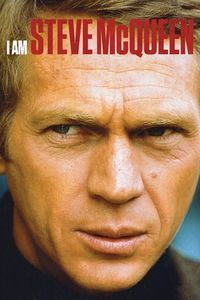
    I Am Steve McQueen (2014)

    (On Cable TV, June 2021) The “I am” series of hagiographies is a better fit for some dead celebrities than others, and it strikes me that Steve MacQueen is a more interesting pick than many of the series’ other subjects. For one thing, he is long dead — there aren’t as many fresh emotional issues to navigate than with (say) Paul Walker or Heath Ledger. This allows the friends and family interviewed in I am Steve MacQueen to be more honest, and for a certain historical flavour to help drive the film — a “life and times” kind of polish. But I suspect that the biggest factor may have more to do with MacQueen’s persona itself and how well it lends itself to the tone of the series. MacQueen, simply put, is a personality that demands a legend. He was the cool bad boy of filmmaking, barely interested in acting only for what it allowed him to do in-character and to fuel his passions away from the screen. Sex-symbol, race-car driver, risk-taker, much-married, tragically deceased before achieving his fullest potential: that was the King of Cool himself and you can’t really go for a warts-and-all look here—the legend makes more sense, so I Am Steve McQueen play up the legend. The mostly chronological look at MacQueen’s life and career is quite satisfying, from his origins as a small-town thug to the cancer that took him far too soon. The variety of archival footage and talking heads (including many modern-day celebrities expressing their admiration for someone they didn’t personally know) is up to the series’ standard, and MacQueen himself enhances the result by virtue of being more interesting than many other people whose life is celebrated in the series. Despite the obvious limitations of a rah-rah series with heavy involvement by his family (don’t expect explorations into his temper, violence or on-set difficulties) and frustrating lack of depth, I am Steve MacQueen works because it delivers the expected — a reverent look at the coolest man in Hollywood, brought up to an untouchable icon. If you want more, you should be reading books.

  • I Am Alfred Hitchcock (2021)

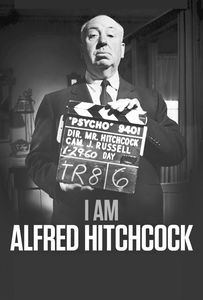
    I Am Alfred Hitchcock (2021)

    (On Cable TV, May 2021) It’s nothing short of fascinating to see the public discourse on Alfred Hitchcock shifting in real time. His place among the great cinema auteurs is unquestionable, but recent years have seen a slew of allegations (some of them admittedly disputable) about his behaviour, allegations that do appear to confirm tendencies, rumours, quotes and outright visual evidence from one film to another. Hitchcock was, to put it simply, not so admirable on set or in dealing with his leading actresses — immensely controlling, outright remaking actresses into his portrait of an ideal woman, maybe even (if we’re to believe the worst accounts) an outright sexual abuser. It adds a lot to his portrait to know about these things, especially in an era where past behaviour is finally recognized as unacceptable and not just boys-of-the-time material. This being said, don’t expect such a radical re-imagining of Hitchcock in I Am Alfred Hitchcock. As with other films in the “I Am” series of documentaries, this one is largely sympathetic to its subject during its fast-forward view of his life and career that polishes the legend. While there is some acknowledgement of his issues, much of the film is an appreciation from directors, actors, relatives, and commentators (including TCM’s Ben Mankiewicz). Hitchcock’s penchant for self-promotion gets quite a mention, but the focus is often on his best-known films. The result is very much an introduction to the character — there’s not a lot of depth here, although it’s slightly more critical than other films of the series about more recent figures where friends and family take centre-stage. Hitchcock is long dead, his relatives aren’t numerous and the historical perspective allows for more distance. Still, if you want more, you will have to look elsewhere — and if you want the dirt, you’ll have to go back to the salacious The Girl (2012) in which Hitchcock is portrayed as a stalker-movie villain.

  • I am Bruce Lee (2012)

    I am Bruce Lee (2012)

    (On Cable TV, May 2021) Bruce Lee was an extraordinary figure — not merely a gifted martial artist (a mean feat in itself), but an intelligent and charismatic one, able to place his skills on a solid intellectual foundation, and then rally everyone to a very personal point of view. I am Bruce Lee, his entry in Derik Murray’s long-running “I Am…” biographical series is very much in-line with the other films in the series: Interviews with friends and family building up a portrait that may acknowledge a few flaws but will never be anything less than completely enamoured of its subject. This isn’t much of an issue here, as it’s remarkably easy to praise and like Lee on absolute terms. You probably know what to expect, though: testimonials from celebrities who never met Lee, more touching interviews with family members and friends with recollections of the man, a biographical overview of his life touching upon the main achievements of his filmography, and—best of all—interview excerpts with the man himself, allowing his innate likability to overpower the rest of the film. As with other “I Am…” films, this is not to be trusted as an insightful piece of work: it’s meant as a paean (made easier by his untimely and much-regretted death) and a highlights reel, but you’ll have to go digging elsewhere (usually in books) for more even-handed, interesting material. Still, there is a place for that kind of biographical documentary: as a reminder of Lee’s grander-than-life stature, I am Bruce Lee is worth a look. It immediately compelled me to have a look at the one major Lee film that I still hadn’t seen (Fists of Fury), so there’s that for impact.

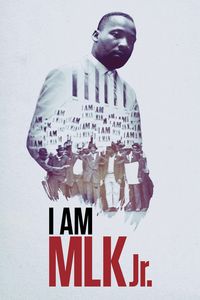
  • I Am MLK Jr. (2018)

    I Am MLK Jr. (2018)

    (On Cable TV, April 2021) After establishing its identity as a biographical series focused on deceased figures in the world of entertainment, Network Entertainment’s “I Am” series takes a political turn by focusing on Martin Luther King Jr., whose assassination in 1968 marked yet another trauma for a shell-shocked nation. Now, there are two ways to talk about MLK Jr.: The first one is the way he’s discussed in K-12 textbooks, as an admirable apostle of racial tolerance who was on the frontlines of the Civil Rights movement and became a martyr for it. It’s a portrait that mythologizes him without quite delving into a full portrayal. The other way to talk about MLK Jr. is considerably riskier. It’s one that talks about his problems, his doubts, his womanizing, his later turn toward class issues as a superset of racial issues and his opposition to the Vietnam War. Those are the facets of the man that are far less lauded by both sides of the American political spectrum on MLK day. Talking about him in a more even-handed fashion is also incredibly risky considering the iconic status he has since attained — even mild criticism can be seen as providing comfort to the racist elements. But even those who think MLK was a beacon of light (as I do) benefit from a broad critical examination of his life — the very thing that made him an icon comes from the entirety of his character. To its credit, I Am MLK Jr. does go there, at least halfway. You won’t hear much about his womanizing, but you do hear about his periods of self-doubt and the benefits he would have gained from therapy… if he had been comfortable enough to go to therapy. (As the film reminds us, MLK was an enemy of the state at the time, and there was considerable fear that any therapist would have been turned against him by the FBI.)  MLK’s eventual turn to class issues is given fair mention, though, as was the growing backlash against him in the late 1960s by those who weren’t pleased that the class structures of America were being challenged. (I expect this aspect of MLK’s work to be gradually re-popularized over the next few years as class issues get a fairer discussion.)  The rest of the documentary, as narrated by various friends and admirers, doubles as a primer on the civil rights movement. Unusually stylish for an “I Am” series entry, this film makes copious use of churches — nearly every interviewee is filmed in a pastoral setting, and the film features a few hymns performed specifically for the film. Notable interviewees include the always-insightful Van Jones, Civil Rights icon John Lewis, actor Nick Cannon, Al Sharpton, and many others. While other films and documentaries have tackled MLK and the events surrounding him, I am MLK offers a decent summary, and one that does not solely present him as an icon. I can think of a few ways in which it could have been better, but it’s already quite admirable as it is.

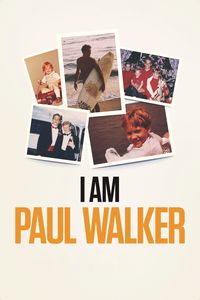
  • I Am Paul Walker (2018)

    I Am Paul Walker (2018)

    (On Cable TV, April 2021) The blunt, superficial version of Paul Walker’s life and death is very misleading: Actor known for action roles dies in a car crash. But as I Am Paul Walker sets out to demonstrate, there was quite a bit more to it. For one thing, Walker was almost an accidental movie star — growing up near Los Angeles and being gifted with great looks as a child, he was regularly cast in small parts, to the point where becoming an actor felt almost natural, perhaps even a nuisance. At the end of high school, Walker had essentially dropped out of the acting circuit to focus on the lifestyle of a surfer bum and indulge in his love for the sea. It’s only when debt collectors came calling that he felt responsible for the well-being of his daughter and ex-girlfriend and returned to acting as a relatively easy way to make ends meet. But Hollywood kept calling, director Rob Cohen cast him in The Fast and the Furious… and the rest is history. Except that Walker kept trying to get out of the business, talking about taking lengthy breaks that never materialized, and putting off dreams of pursuing marine biology. The circumstances of his fatal accident are detailed only to the point of making it clear that it wasn’t his fault, and reinforcing the opportunities cut shot by his death. As with other “I am” biographies from Network Entertainment, I Am Paul Walker is meant to be a warm, affectionate, uncritical look at the man by friends and family — while points of contention are sometimes mentioned, they’re never explored in any detail. Not that there’s a lot worth investigating here — Walker-the-man was noticeably lower key than Walker-the-action-persona, spending as much time away from Hollywood as he could. It’s a great documentary for going a little deeper than the facile summary of his life that his death cemented.

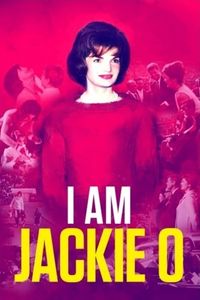
  • I Am Jackie O (2020)

    I Am Jackie O (2020)

    (On Cable TV, April 2021) Stepping away from the entertainment celebrities that characterize most of its topics, Network Entertainment’s newest entry in its “I am” series takes on Jacqueline Kennedy Onassis. Once one of the most famous women in the world as the First Lady of the John F. Kennedy administration and then the wife of one of the world’s richest men, “Jackie O” is now a bit of a historical trivia — her considerable influence was not something that translated well to history books, and it’s noteworthy that the latest event film about her, Jackie, was an examination of the days immediately following the assassination of her first husband. In this context, I Am Jackie O serves more as good refresher about the woman behind the easy clichés and historical pictures. Born to a wealthy family but incredibly intelligent, the young Jackie seemed to have trouble finding a husband until the young and ambitious John F. Kennedy Jr. walked into her life. The Camelot years remain the highlight of her life, as the young and culturally hip couple brought a revitalization of Washington. The impact of the JFK assassination is brought home by the film’s explicit commentary that, at once, she lost her house, her job and her husband — leading to a later romance with a billionaire that many took as a betrayal. I am Jackie O goes a bit too fast on the Onassis marriage and her later years as an activist in New York City, perhaps out of recognition that, no matter what she did in the thirty years after the JFK assassination, people had trouble seeing her as anything else. Fortunately, the portrait that the rest of the film offers is revelatory — both of her sharp intellect and her turn toward architectural activism late in life. Plenty of talking-head interviews and historical footage pepper the film — plus a few great pictures showing her adorable freckles. As with other films in the “I Am” series, the portrait is highly sympathetic — we may, at most, hear a few lines about JFK’s affairs and their estrangement when he was constantly on the campaign trail, or the critical reactions to her marrying Onassis, but the film seldom goes further. On the other hand — what else would there be to say? While perhaps not as revelatory as other entries in the series (something inevitable considering the historical distance of the topic), I am Jackie O nonetheless remains a serviceable history lesson in an approachable package.

  • I Am Richard Pryor (2019)

    I Am Richard Pryor (2019)

    (On Cable TV, April 2021) As someone who watched his movies as a 1980s kid, Richard Pryor was the likable goofball who was featured in Superman III and Brewster’s Millions, a kid-friendly comedian who got his laughs by mugging for the camera. That, to put it mildly, is a hilariously erroneous impression of Pryor, who had decades of experience as an edgy comedian before settling down for family-friendly fare. I Am Richard Prior chronicles the very different phases of his life, from clean-cut (and moustache-less) young comedian to his far more provocative period, beginning in the late 1960s and gradually fading away in the 1980s as he took on the family fare I watched as a kid. As you may expect, the film focuses far more on what he brought to American culture in his edgier phase, with album names I can’t even bring myself to write here, and a take-no-prisoners approach to stand-up that mixed incredibly personal material with an unwillingness to comfort audiences. Pryor was a model to an entire generation of later comedians, and the bits and pieces we hear throughout I Am Richard Prior are only the tip of a much funnier body of work. The not-so-different flip side of this public persona was Pryor’s messy personal history, from a sordid childhood to decades-long drug abuse, numerous marriages (although this aspect is not emphasized here, because his last wife, Jennifer Lee Pryor, also produced the film), many children to different mothers, one spectacular injury where he set himself on fire while freebasing cocaine and miscellaneous health problems, perhaps explaining his death from a third heart attack at 65. Compared to other “I am” documentary biopics from Network Entertainment, I Am Richard Pryor is far more honest about the flaws of its subject. I strongly suspect that this is due to the openness of the family and friends participating in the documentary — Pryor made no attempts to hide this part of his life even in public stand-up performances (to the point of joking about setting himself on fire), so it’s not as if there are any lesser-known incidents to leave undisturbed. Jennifer Lee Pryor is unabashedly frank (and often hilarious) in discussing her deceased husband’s issues, which does help round out his portrait. It does amount to a pretty good overview of an interesting person, and one that does not shy away from his less admirable traits. The only remaining warning about I Am Richard Pryor is that a little bit of Pryor’s comedy is liable to make you seek out the rest of his work, and there’s a lot of it.

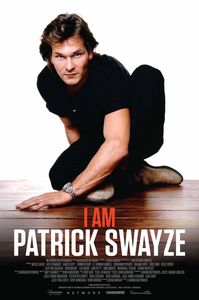
  • I Am Patrick Swayze (2019)

    I Am Patrick Swayze (2019)

    (On Cable TV, April 2021) It’s interesting to see how Patrick Swayze has maintained his good reputation despite his death in 2009. His peak movies between 1987’s Dirty Dancing and 1991s Point Break are a legendary streak (yes, especially Road House) and cynics will say that it helped him to peak well before his death — by the time he passed away, he had managed to escape Hollywood and see his legacy solidify. Still, he did die before his time at 54, and in keeping with Network Entertainment’s “I Am” series of documentary biographies, the film is a paean to him by friends and family. Plenty of family footage appears over interviews about him, archival footage and excerpts from his films. The portrait we get is one of a supremely gifted dancer who turned his attention to Hollywood and got what he wanted out of his superstar years — namely, the opportunity to buy a ranch and have a life away from the spotlight. It would have been interesting to delve a bit deeper into why he has such a spotty filmography after becoming a box-office superstar — even in the 1990s, there could be years between his roles and I’m not sure the film clearly explains why. Still, the result is emotional enough: Swayze, as portrayed here, is the epitome of a good soul: kind, humble, and graceful, with a variety of interests and skills. Jennifer Gray’s description of what it was to work with such a generous actor is moving, and so is the work ethic that led him to work on his last TV series through chemotherapy. Perhaps a bit more sentimental than other films in the “I Am” series, I Am Patrick Swayze reflects its subject by taking a more emotional and gentle approach. It’s a really good reminder of why Swayze became so famous despite a relatively small number of career-defining features — you could see the man shine through the roles, and that was more than good enough to charm everyone.

  • I Am Burt Reynolds (2020)

    I Am Burt Reynolds (2020)

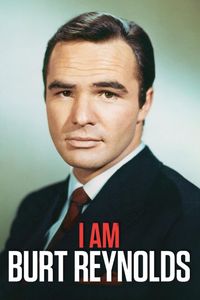
    (On Cable TV, April 2021) In keeping with Network Entertainment’s “I Am” series of documentary biopics, I Am Burt Reynolds ends up selecting a highly charismatic celebrity, although Burt Reynolds is slightly unusual in how he lived a full life and didn’t die prematurely, as most of the series’ subjects have. Still, the attraction here is Reynolds himself. A promising football player as a young man, he redirected his life to acting after a bad injury in the late 1950s and gradually became a superstar by the mid-1970s. This film doesn’t spend a lot of time on Reynold’s lengthy apprenticeship — it almost skips directly from post-college acting to 1972’s Deliverance, underplaying his fairly lengthy phase as a journeyman actor and occasional stuntman. But one thing that the film does capture in spades in Reynold’s extraordinary charisma, especially in talk-show appearances when he could be self-deprecating with the assurance of being an extraordinarily good-looking man. I am Burt Reynolds does feature dozens of snippets of Reynolds talking about himself, and nearly every single one of those is a funny one-liner. It’s not an exaggeration to say that Reynolds went directly from talk shows to stardom — his breakout role in Deliverance came on the heels of a casting based on his talk-show appearances, and so did his then-striking nude photoshoot for Cosmo magazine. The next ten years saw Reynolds at his best and biggest, culminating in the first two Smokey and the Bandits films. If the documentary serves one purpose, it’s to make contemporary audiences understand why Reynolds became such a sex symbol at that time—while contemporary standards have evolved and Reynolds may belong to a somewhat 1970s view of masculinity, you can understand through his appearances and footage why Reynolds was a hit—confident, funny, tough and clever at once. In keeping with other films in the series, this is a fundamentally sympathetic look at the character — his struggles with painkillers, money management and divorce are not underplayed, but there’s also far less darkness to Reynolds (who died at the ripe old age of 82) than with other subjects of the series. The glimpses at his life at the ranch reinforce that this is a documentary made by family and friends, as does the rather large place left for director Adam Rifkin to talk about Reynolds as the star of The Last Movie Star, which consciously aligned its character with the actor. The resulting documentary is a very decent homage to an often-underestimated actor and a grander-than-life personality. The lack of objectivity of the documentary is still in-keeping with the I am series, but there simply isn’t as much here to criticize in Reynolds himself.

  • I Am Sam Kinison (2017)

    I Am Sam Kinison (2017)

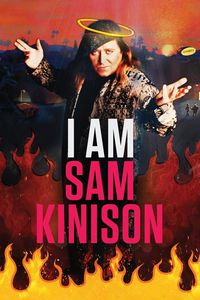
    (On Cable TV, April 2021) I can certainly see why Sam Kinison would be a good subject for Network Entertainment’s “I Am” series of documentary biopics: He was a grander-than-life entertainment figure, he died young at 38, and he had many well-known friends willing to sit down and talk fondly about him. But unlike the subjects of other films in the series, Kinison’s legacy hasn’t necessarily aged as well — most of his career as a shock stand-up comedian lasted from 1985 to 1992, leaving little trace in permanent medium. His two movie credits include a little-known action film and a small (but memorable) turn in Back to School. His style of aggressive, misogynistic comedy may have been a revelation at the time, but it’s been overtaken and then marginalized by the zeitgeist since then. As the documentary clarifies, Kinison’s public persona was unfortunately close to his private one. Born in a preacher’s family, Kinison did get some experience as an ordained minister before turning to comedy — but an appetite for drugs and two bitter divorces didn’t leave him the most well-adjusted person. The documentary is perhaps at its most interesting in delving into the Los Angeles stand-up comedy scene of the early 1980s, as Kinison lived hard and put together his reputation as a comedian’s comedian. His rockstar-lifestyle (not an exaggeration in his case, as he dabbled in rock music and consumed unbelievable amounts of drugs and alcohol) does lead to enjoyable moments of utter debauchery in the vein of well-known life-fast-die-young narratives. The affection of his friends (Bob Saget, Jay Leno, Joe Rogan, Tommy Chong and Charlie Sheen among them!) is still obvious even decades later — leading up to one of the film’s most vexing characteristics, albeit one shared across the entire “I Am” series: Perilously close to hagiography, it’s a documentary that seeks to minimize the issues surrounding a controversial figure. Kinison’s well-documented misogyny and homophobia are repeatedly given a pass, and the paradoxical consequence of this is that we’re not given a lot in order to appreciate what made Kinison so well-known: For modern-day viewers, much of his shtick is just weird and not funny. The film provides the building blocks to describe how he failed to achieve his potential — in particular, his lackadaisical work ethic and penchant for confrontation that got an entire Hollywood film project shut down barely into shooting. But I Am Sam Kinison is far more concerned about interviewing friends and excusing his behaviour with a now-irritating series of “boys will be boys,” winks. Interestingly, this minimizes the central irony of how the film presents Kinison’s death—that after hard-partying years, he cleaned up, met a woman, was on his way up to a second act—and then died in a freak car crash, not at all like everyone expected him to die even a few years earlier. It’s certainly an interesting film, and one that does much to create interest in a figure that has passed into obscurity. But I am Sam Kinison is far from being the most accurate documentary possible on Sam Kinison.

  • I Am Heath Ledger (2017)

    I Am Heath Ledger (2017)

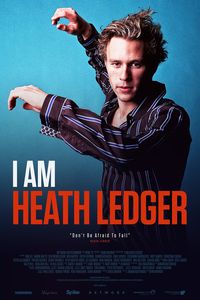
    (On Cable TV, April 2021) Another entry in Derik Murray’s “I am” series of biographical documentary features about deceased celebrities, I Am Heath Ledger offers a sometimes-surprising look at the short life and even shorter career of the Australian actor, who earned strong reviews from his opening performance to the last. One of the biggest surprises of the film is the belated realization that for all of the good press and solid hits he played in, Ledger had a Hollywood career of barely nine years, from 10 Things I Hate About You in 1999 to his death at 28 in 2008, even as that year’s The Dark Knight led him to a posthumous Oscar. His filmography has many exceptional roles, and anyone can only imagine what else he could have done had he lived longer. The other, more documentary-specific surprise is the demonstration that Ledger had been an incredibly creative artist and budding filmmaker — I am Heath Ledger showcases numerous short movies and other examples of his always-bubbling exploration of arts. (There’s a short film, possibly shot by himself over a few minutes, that shows terrific craftsmanship in building suspense out of a relatively mundane walk outside.)  Ledger was clearly aiming to become a director — and that, too, only leaves anyone to wonder what else he could have done had he lived longer. As with other “I am” entries, this is a film clearly meant to praise its subject—family members are interviewed, the filmmakers clearly had privileged access to Ledger’s video archives and the film sometimes mentions but really does not dwell on less positive aspects of his life—the drug use, controversies, scattered interests, burn-fast personality and numerous relationships. Most notable is significant ex-partner Michelle Williams’ absence from the footage, even though she reportedly gave her blessing to the project. But while I am Heath Ledger may not give a full picture of its subject, it does remain an uncommonly affectionate recollection of him. Nearly every interviewee seems uncommonly wistful about him, and the result—even with its deficiencies—is an intriguing look to someone gone far too soon.

  • I Am Evel Knievel (2014)

    I Am Evel Knievel (2014)

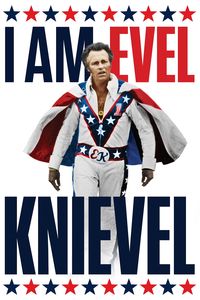
    (On Cable TV, March 2021) As with most Canadians with a Cable TV subscription, I have seen an almost-endless series of “I am [Dead person’s name]” movies scroll in the program guide, but never watched one before I Am Evel Knievel. I may have let an interesting series pass me by — As a documentary, I Am Evel Knievel is a very entertaining look at a multi-decade life with a clearly defined arc. Knievel started out as nothing much more than a hoodlum, accumulating an extensive criminal record before discovering a talent for motorcycle stunts and self-promotion. Jumping over increasing distances with a stock motorcycle, Knievel grew to national fame thanks to some fruitful relationship with good promoters and producers, and by the early 1970s was commanding large audiences, TV shows, substantial merchandizing profits (much of it spent on frivolous pursuits) and even a movie featuring “him.”  (Viva Knievel! is, frankly, what rekindled my interest in I Am Evel Knievel — you can’t watch it in all of its unabashed awfulness and not want to know more about the character.)  This all came crashing down in the mid-1970s thanks to a combination of bad crashes and the ill-advised physical assault against a promoter who wrote an unauthorized book about him. Later years in Knievel’s life were spent becoming a better person, rediscovering faith and being focused on others. This is all told through an effective blend of documentary footage and interviews with acquaintances and friends blending together in a kind of oral history. The film is rarely as entertaining as when it blends snippets of interviews to give a richer account of specific events in Knievel’s life, such as when he was assaulted by a Hells Angel at the end of a show and several people came to his rescue. Knievel was a grander-than-life character and the film does lean into this mythology. It’s important to note that the drawback to a friends-and-family oral history is that you don’t get much of a critical perspective—while Knievel’s faults are acknowledged, I Am Evel Knievel presents them with a wink and a nod—he was a former felon, a womanizer, a spendthrift, and an alcoholic but (wink-nod) that’s what made him great, right? Alas, this means that he often gets a pass on things that should not be forgiven — the baseball bat physical assault that drove his victim to the hospital with broken bones and precipitated the end of Knievel’s lucrative sponsorship deals is actually defended by many interviewees in the film’s lowest point. Knievel’s naïve conservative worldview is hailed as admirable (reinforced by trite quotations shown on-screen) and there’s an anachronistic “here’s a real man, the likes of which we’ll never see again” atmosphere to the entire thing. Celebrities interviewed for the film include Matthew McConaughey, Kid Rock, Michelle Rodriguez and Guy Fieri. The film is on much stronger grounds when professional motorcycle stuntmen explain the immense risks Knievel took in jumping with a stock motorcycle, not bothering with the risk-reducing techniques and equipment that modern daredevils use to protect themselves. Furthermore, I am Evel Knievel does manage to cram enough information on-screen to allow viewers to make up their own minds — even if it’s a mildly critical line or two that is not seriously followed-up in the hagiographic whole of the film. Even if you’re not quite seduced by the character, it is a biography that does justice to a fascinating life.