Joan Allen

  • The Crucible (1996)

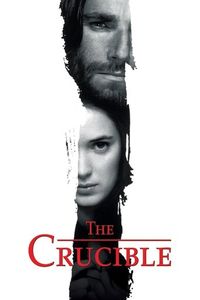
    The Crucible (1996)

    (In French, On Cable TV, September 2021) If the COVID-19 pandemic has made one thing clearer than ever, it’s that the veneer of contemporary education and knowledge is often an illusion. Basic scientific fact gets ignored the moment it confronts political ideology or personal comfort, and it doesn’t take much more than a dumb Facebook post to get people acting in self-destructive ways. The parallels with witch-hunt drama The Crucible, in other words, remain evergreen. Here we have several young women, led by a highly motivated leader, making up accusations of witchcraft against people they don’t like. By definition unfalsifiable, those accusations spread like wildfire through the small New England community, condemning people to death for not good reason. Made from a script by Arthur Miller, adapting his own classic McCarthy-era play to the big screen, The Crucible does have a timeless quality in-between its period setting and powerful themes. It helps that the infuriating subject matter is handled by powerhouse actors — In-between Daniel Day-Lewis, Paul Scofield and Joan Allen, Winona Ryder looks like an amateur despite doing very well for herself. The period recreation is credible, and the cranking of the tension to its inevitable end is effectively done. Clearly meant to provoke crowds, The Crucible remains very effective today. Alas.

  • The Ice Storm (1997)

    The Ice Storm (1997)

    (Netflix Streaming, October 2017) In genre-literature fandom, there is this incredibly unfair cliché that the average “mainstream” literary novel is nothing much more than a college professor writing about upper-middle-class ennui, tawdry affairs, dysfunctional families and pretentious pseudo-philosophy. In this light, The Ice Storm hilariously become an example of the form despite a few references to the Fantastic Four comic books. It is about upper-middle-class ennui and tawdry affairs, as husband and wife from different couples have an affair that is exposed during the course of the film. It is about dysfunctional families, as the kids of those two families have their own experimental games. The pretentious pseudo-philosophy comes from contemplating comic books, unsatisfying lives and unusual weather events, with a side-order of communal swinging at seventies key parties. The film is sure to resonate with many viewers—the 1973 setting is convincing down to the awful fashion, Ang Lee directs with a sure hand, and the film has a strong cast of then-established actors (Kevin Kline, Sigourney Weaver, Joan Allen, all very good) with a miraculous near-handful of then-rising names that have since done much (Elijah Wood, Tobey Maguire, Christina Ricci, Katie Holmes). But it doesn’t take much distancing to find The Ice Storm slightly ridiculous even as the film reaches for grief in the face of a freak death and familial reconciliation after trying times. From a non-sympathetic perspective, the clichés accumulate at a furious rate, the dramatic heft of the death isn’t earned and the film concludes without having much, everyone still being the same flawed characters than they were at first. But hey—it got nominated for a bunch of awards, so it must be good, right?

  • Death Race (2008)

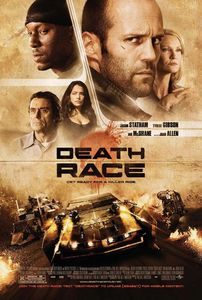
    Death Race (2008)

    (In theaters, August 2008) No one will be surprised to learn that this remake of a classic B-grade picture has twice the mayhem and none of the (thin) social commentary of the original. After all, it’s become somewhat of a signature move for modern remakes to go for the flash and forget the substance of what worked in the original. The inevitable result of such cutting, of course, is a lifeless piece of action cinema that barely manages to engage its audience. So it is with Death Race, which takes a nasty social premise and hammers it in a prison environment TV show where there’s no chance that any real issues can be discussed. Jason Statham is up to his usual gruff standards as a good tough guy manipulated in causing considerable violence, but the rest of the picture around him is as monotone as the processed industrial look given to the picture. Joan Allen is wasted as the mastermind behind the race, but then again most of the talent in this picture is similarly wasted. Director Paul W.S. Anderson is a certifiable idiot, but at least he manages to find half a dozen good sequences and images out of this whole over-edited mess. Among the film’s least admirable misogynistic traits is the use of young women as race navigators, only to conveniently forget them during the various crashes and deaths that follow –at one gruesome exception. You don’t need to know much more about this strictly routine film: it’s going to be straight to the DVD bargain bin for this title, and then on to “I didn’t even know they’d remade Death Race” obscurity.