John Landis

  • Innocent Blood (1992)

    Innocent Blood (1992)

    (In French, On TV, October 2020) I’m maybe halfway done seeing the John Landis filmography, but what’s left is clearly getting more and more esoteric—documentaries, juvenilia and feature films that have been overlooked next to some of his all-time classics. Innocent Blood dates from the two-third mark of his career, after That Accident and the peak of his fame, but before the steady slide in mediocrity that marked most of his last phase. It certainly feels like such a film—it’s not that good, but it shows flashes of dark humour, wit and confident use of genre elements. Anne Parillaud (then red-hot from her performance in La Femme Nikita) stars as a French vampire living in Pittsburgh and limiting her blood feasts to the undesirable elements of the city. A gang war gives her an excuse to feast (“go for Italian”), but she quickly earns the attention of mobsters and cops alike, accidentally creating a group of vampiric mobsters and falling for a likable policeman (Anthony LaPaglia). Before long, we get a vampire/mobster mashup with a bit of comedy and some romance to top it off. Landis boasted of shooting “A Hammer film as if it was directed by Scorsese” and that’s a fair assessment of the result, although it does fall short of what Scorsese would have done. Still, the rain-slicked city streets of the Pittsburgh downtown core look good, and the film does have its good moments. The usual group of Italian-American actors is there to portray the mob (including a few who would later star in many more mob movies), but the real fun begins once the mobsters turn into vampires and start making plans of their own. Parillaud is slightly stiff but LaPaglia is not bad, and Robert Loggia does bite into his role as an undead godfather. The script could have been streamlined, made funnier and slightly more compelling, but Innocent Blood is still an odd, entertaining film even for those who are jaded about vampire movies.
  • The Kentucky Fried Movie (1977)

    The Kentucky Fried Movie (1977)

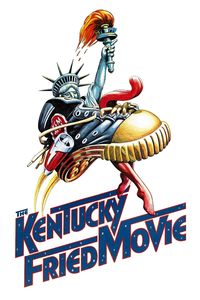
    (TubiTV Streaming, September 2020) Films like The Kentucky Fried Movie are best appreciated as portents of better things to come. The number and later pedigree of people involved in its production is incredible—sophomore feature film from John Landis, first movie script by the legendary Zucker-Abrams-Zucker trio, appearances by George Lazenby, Henry Gibson and Donald Sutherland… all in semi-related comedy sketches relying on a lot of sudden crudity, silliness and bare breasts. The problem, though, is that if The Kentucky Fried Movie is amusing, it’s not quite as frequently funny—there’s a sense that it’s all juvenile and not quite ready for prime time, even as it does its best to get laughs. What may be funnier now than it was upon release is the deluge of references to a variety of 1970s pop-culture, politics and sports: either watch the film with Wikipedia in hand, or enjoy the even stranger sense of jokes flying over your heads. The Kentucky Fried Movie would have many inheritors—it’s an early prototype of a style of comedy that would become Airplane! and Top Secret! and The Naked Gun, but it’s not quite cooked yet. (It’s still funnier than any of the spoof movies of the 2000s, though.)

  • Shlock (1973)

    Shlock (1973)

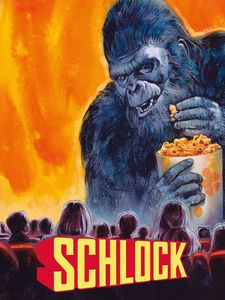
    (In French, On Cable TV, August 2020) Serendipity can be a cool thing, and so it is that Cable TV scheduling happenstance led to me seeing the first of John Landis’ films (Shlock) less than a week after seeing his last (Burke & Hare). While Landis’ career never really recovered from the on-set deaths during the making of The Twilight Zone: The Movie, the first ten years of his career were a cascade of highly imaginative comedies, with ultra-low-budget Shlock to set the tone. A parody of 1950s monster movies that almost retroactively serves as a lampoon of terrible 1970s creature features and 1980s slashers, Shlock is about a prehistoric creature (Landis in an ape suit) terrorizing a small Southern California town, alternately harming or helping characters. It’s meant to be parodic, so there are plenty of references to 2001: A Space Odyssey, cheap banana jokes and satire of 1970s TV reporting. It would be an exaggeration to call the result any good, but there are a few laughs here and there, and anyone can recognize Landis’ comic invention, so closely would the tone be replicated in later, bigger-budget movies. It’s definitely a curio, but not a bad one for Landis fans.

  • Burke and Hare (2010)

    Burke and Hare (2010)

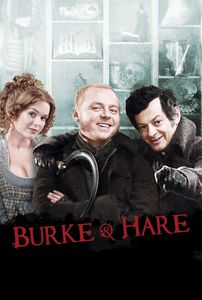
    (In French, On Cable TV, August 2020) As of this writing, a decade later, it looks as if Burke and Hare is going to remain John Landis’ last film—and it doesn’t inspire regret as much as good riddance. That’s quite a statement considering that Landis’ early filmography contains such classics as An American Werewolf in London, The Blues Brothers and Trading Places. But he peaked early: A fatal accident on the set of The Twilight Zone got him tried but acquitted of manslaughter, an ordeal from which his career never really recovered. After a major hit with 1988’s Coming to America (a film whose true paternity is very much attributable to Eddie Murphy), Landis gradually retreated throughout the 1990s, directing flop after flop after flop until the movies got much smaller and less distinguishable. Landis’s filmography then focused on TV directing to such an extent that Burke and Hare was itself Landis’ first theatrical film in over a decade. It’s not a flop, but it’s not much of a success either: Taking on the real-life facts of 18th-century serial murderers for a fanciful spin, it’s a film that tries to make dark comedy out of morbid themes (cadavers-for-cash turning into a lucrative serial killing business), and it doesn’t succeed all that well. This is despite a good cast that includes Simon Pegg, Andy Serkis, Isla Fisher and others. But what can a cast do when the script isn’t up to the task? Despite the natural fit of the source material for dark comedy, Burke and Hare ends up feeling as if it’s one single joke stretched over the entire film, without much to keep things interesting. Maybe a straight thriller would have been better if a comic approach can’t get laughs. Maybe a zanier romp would have made this funnier. Or maybe this was just an ill-begotten project in the first place. While Landis gets to play with a credible historical recreation and some talented actors, Burke and Hare rarely shines. On the flip side, Landis now seems to accept what he should have done in 1990—retirement’s not too bad, and far preferable to undermining a filmography with a long tail end of flops and misses.

  • Spies Like Us (1985)

    Spies Like Us (1985)

    (On Cable TV, October 2019) As I go through the 1980s back catalogue, it feels as if every new Chevy Chase movie I see highlights how badly his abrasive comic persona has aged. Or maybe been overexposed: his arrogant man-child persona has been repeated ad nauseam by other performers such as Will Ferrell and Vince Vaughn, and I found it all more annoying than funny in Spies Like Us. Whoever thought he was even remotely likable as a womanizer has now been proven wrong and unfortunately, we’re still stuck with the result. The film takes the low road to international comedy, by featuring two bumbling Americans being pressed into the spying business as decoys for other more competent operatives. Of course, the rules of comedy mean that they’ll end up being Big Heroes by the time the nuclear missile flies. (This shouldn’t be a spoiler.)  It’s easy to see why director John Landis would be interested in a script with large-scale comic set-pieces, international vistas, Dan Aykroyd and Chevy Chase and half-a dozen cameos from comedy directors that you have to be a cinephile to catch. Spies Like Us is not bad, but it does drag much longer than necessary and it relies far too much on Chase’s unpleasant comedy persona—Aykroyd is far more sympathetic. I do wish we’d see more ambitious big-budget comedies these days (rather than the improv-type stuff), but I don’t miss Chase at all.

  • The Twilight Zone: The Movie (1984)

    The Twilight Zone: The Movie (1984)

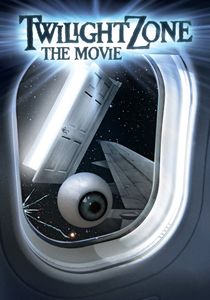
    (Second Viewing, In French, On TV, April 2019) There’s no use soft-pedalling it: The Twilight Zone: The Movie is an uneven anthology of stories inspired by the classic TV show, but it remains far more noteworthy for an on-set accident that killed Vic Morrow and two child actors, an accident that required changing much of the film’s first segment and considerably soured the films’ production—not to mention its critical reception. The behind-the-scenes drama is fascinating (there’s an entire book about it) but what’s on-screen is not quite as interesting. The opening sequence is cute but overlong. John Landis’ first segment, the one that led to the shooting deaths, is left as a trite morality tale—and while I think that unrepentant racists getting a taste of their own bigotry is wholesome entertainment, the segment feels like obviousness piled upon obviousness. The second segment, directed by Steven Spielberg, is far too cute and unsurprising to be interesting. Things do get quite a bit better with Joe Dante’s take on the omnipotent kid trope, with stylish directing (making the most out of the visual effects of the time) and an overall feeling of dread that makes the segment work even if we know about the twist well beforehand. But the best is kept for the end: the well-known (and much-parodied) remake of “Nightmare at 20,000 feet,” a typically intense George Miller production featuring John Lithgow as a terrified airplane passenger who glimpses something frightening on the airplane wing. That segment is a little marvel of tight editing, impressionistic direction (including bulging eyeballs in a split-second moment), Lithgow’s great acting and good execution rather than a striking premise. Those last two segments do much to erase the bland impression left by the first two stories, but the overall feeling left by The Twilight Zone: The Movie is very uneven, and a waste of solid premises made even worse by its cost in human lives. I actually remembered a few things from seeing this film when I was a teen, but my current disappointment with the film is newly renewed.

  • Three Amigos (1986)

    Three Amigos (1986)

    (Second viewing, On DVD, October 2018) It’s easy to see why noted film buff/historian John Landis would jump at the occasion to direct Three Amigos—among many other things, it’s a chance for him to re-create a small part of Hollywood history, specifically the early days of silent comedy films. Add to that the idea of satirizing Seven Samurai, as well as working with comedians such as Martin Short, Chevy Chase and Steve Martin … it certainly looks like a great project. Alas, the final version of Three Amigos is missing something. It’s not dull or bad, but it’s certainly duller and worse than it could and should have been. When I saw the movie as a teenager, my favourite sequence (and the only one I could remember thirty years later aside from the salute) was the one with the signing bush and the (fallen) Invisible Gunman. As a middle-aged man, it’s still my favourite sequence, and I think it shows just how wild and absurdly funny the rest of the film could have been—I liked the too-brief look at silent Hollywood, but I would have enjoyed Three Amigos far more if its tone had been consistent with the crazy singing bush/invisible man sequence. The rest often feels perfunctory and well-mannered despite a few good stunts and the potential to go beyond the obvious. Would it have been so hard to do just a bit more?

  • Gremlins 2: The New Batch (1990)

    Gremlins 2: The New Batch (1990)

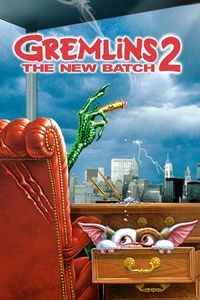
    (On TV, September 2017) Deftly taking up and amplifying the cartoonish anarchism of its predecessor, Gremlins 2: The New Batch continues in more or less the same vein, taking the mayhem even further. It’s not as good as the original: the effect of surprise isn’t there, and there’s a clear sense that Gremlins 2 is more dedicated at making fun of itself than delivering a story in the way the first film did. So it is full with cartoonish gags, affectionate pokes at its premise (“what if you’re on an airplane?”), anarchic fun and fourth-wall-breaking. The two leads from the first film are back, Gizmo gets tortured and the human antagonist is a blended parody of Donald Trump and Rupert Murdoch, but let’s not pretend that the stars of the story are anyone but the Gremlins themselves, especially when a conveniently placed genetics research facility makes them articulate, able to fly or capable of turning themselves into electricity. Under director John Landis’s prime-era imagination, the film is incredibly fun to watch. Various set-pieces stick in mind: While everyone will enjoy the sequence in which Hulk Hogan tells the Gremlins to put the movie back on, Canadians will be particularly pleased by a sequence set in a Canada-themed restaurant with plenty of freeze-frame details. Gremlins 2 isn’t the great movie that the first Gremlins was, but it’s a more than decent follow-up, almost perfectly calibrated to make fans of the first film giddy with happiness. 

  • An American Werewolf in London (1981)

    An American Werewolf in London (1981)

    (On TV, March 2017) It’s a good thing that director John Landis knows how to have fun, because otherwise there really isn’t much to An American Werewolf in London in terms of plotting. Young man gets bitten; young man contemplates the horrors of turning into a werewolf; young man dies. There’s the plot right there, but don’t get angry at the spoilers because this is not a movie about plot. Thanks to jolting dream sequences, sympathetic characters, a good dose of off-beat humour and the kind of why-the-hell-not filmmaking that disappeared after the eighties, An American Werewolf in London is an experience more than a story. The pacing picks up considerably after the first half-hour, if only because the main character gets hallucinations and dream sequences that allow for Nazi werewolves and sustained conversations with a dead decomposing friend (Griffin Dunne, far more interesting than the rather dull protagonist). Jenny Agutter is cute as a British nurse with a thing for lost American tourists, but the true nature of her role is looking sad in the film’s last moments. Otherwise, An American Werewolf in London is about the kind of genre horror practised so joyously in the early eighties. The humour of the film is undercut by the downbeat (but inevitable) ending. The pre-CGI transformation effects remain mildly impressive even today, while the soundtrack has a not-so-sly succession of “Moon”-titled songs. The abrupt ending does feel unsatisfying, but so does the end of a roller-coaster—it’s not the point of the experience.

  • American Grindhouse (2010)

    American Grindhouse (2010)

    (On Cable TV, September 2014) Given the renewed interest in self-aware exploitation filmmaking lately (largely thanks to the Tarantino/Rodriguez 2007 film Grindhouse), American Grindhouse offers a quick and entertaining primer on the history of seedy disreputable filmmaking.  A talking-head documentary with a copious amount of footage, the film reaches back to the beginning of cinema and makes its way to the present in describing the evolution of less-respectable cinema, ending with the somewhat surprising conclusion that exploitation cinema merged with the mainstream sometime during the seventies as blockbusters such as Jaws took on the lessons of grindhouse cinema.  (I’m not so sure –there is alternative cinema everywhere still, although I’ll agree that it’s harder to define as a single coherent entity against a non-existent mainstream)  The footage shown and movies discussed are enough to provide anyone with a list of must-see titles, while the various people interviewed collectively reinforce the film’s various theses and explain various topics.  (The best interviewee has to be director John Landis, as profane and entertaining as he is knowledgeable.)  Writer/Director Elijah Drenner has done a pretty good job of condensing decades of social changes in a mere 80 minutes, illuminating a number of sub-genres along the way.  Everyone will be reassured to learn that a film describing lurid movies features equally-lurid footage.  American Grindhouse is definitely worth a look, especially if you’re already sympathetic to the subject.

  • Beverly Hills Cop III (1994)

    Beverly Hills Cop III (1994)

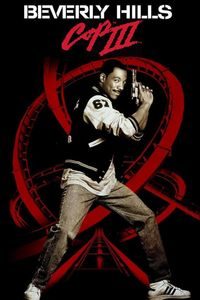
    (On TV, October 1998) A mess. Purely and simply. Sometime comedy, sometime action, the mixture just clashes—for instance at the end, where all three main characters have been seriously shot and the film plays is as a laugh-aloud funny moment. The more-than-obvious dialogue given to Eddie Murphy doesn’t help either. The worst thing about this unholy mixture of bad directing and awful writing comes after the last scene, when the credit sequence informs us that no one else but John Landis (Gremlins, The Blues Brothers) and Stephen DeSouza (Die Hard) have produced this piece of garbage. Sure, there are one or two good action sequences (the first car chase, and the ride rescue) but the remainder is bad enough to make you grind your teeth.