
John Lewis

  • Woman in Motion (2019)

    Woman in Motion (2019)

    (On Cable TV, November 2021) As someone who started watching Star Trek as a kid, I’ve had a crush on Nichelle Nichols for decades now, and Woman in Motion is merely fuelling it even more. Aiming for a retrospective of her life that wisely spends more time on her STEM outreach than her Trek role, director Todd Thompson brings together interview clips from her entire career, plenty of archival footage, interviews with friends and admirers (including such diverse notables as John Lewis, Neil deGrasse Tyson, Al Sharpton, Pharrell Williams and Vivica A. Fox) and some on-screen text to make a simple case: Beyond her role on Star Trek, Nichols’ biggest influence has been in her outreach to new audiences in diversifying the American astronaut roster. As Woman in Motion explains, the NASA effort to recruit Shuttle astronauts in 1977 was not reaching audiences beyond the white males who had been, until then, the face of the space program. Reaching for a well-known spokesperson, NASA recruited Nichols, who then spent a few hectic weeks convincing diverse audiences that they, too, could become astronauts. The effort paid off, and numerous former astronauts appear on-screen to testify about it. Nichol’s life and Trek career are given some time (including a gripping retelling of the famous encounter between her and Martin Luther King Jr. that convinced her to remain with the show), but the refreshing focus here is on her impact on the course of the American space program, and the debt that many people jostle to acknowledge here. It’s all quite entertaining, effective, and at times even emotional — it’s hard to listen to the much-missed John Lewis pay tribute to Nichols without getting caught up in the significance of it. Even in a crowded field of documentaries about Star Trek, Woman in Motion stands out by paying tribute to something that has had real significance well outside the realm of entertainment. Don’t stop watching once the end credits roll — Nichols then gets to sign “Fly me to the Moon” in a very charming coda.
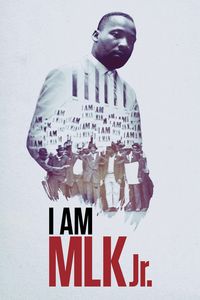
  • I Am MLK Jr. (2018)

    I Am MLK Jr. (2018)

    (On Cable TV, April 2021) After establishing its identity as a biographical series focused on deceased figures in the world of entertainment, Network Entertainment’s “I Am” series takes a political turn by focusing on Martin Luther King Jr., whose assassination in 1968 marked yet another trauma for a shell-shocked nation. Now, there are two ways to talk about MLK Jr.: The first one is the way he’s discussed in K-12 textbooks, as an admirable apostle of racial tolerance who was on the frontlines of the Civil Rights movement and became a martyr for it. It’s a portrait that mythologizes him without quite delving into a full portrayal. The other way to talk about MLK Jr. is considerably riskier. It’s one that talks about his problems, his doubts, his womanizing, his later turn toward class issues as a superset of racial issues and his opposition to the Vietnam War. Those are the facets of the man that are far less lauded by both sides of the American political spectrum on MLK day. Talking about him in a more even-handed fashion is also incredibly risky considering the iconic status he has since attained — even mild criticism can be seen as providing comfort to the racist elements. But even those who think MLK was a beacon of light (as I do) benefit from a broad critical examination of his life — the very thing that made him an icon comes from the entirety of his character. To its credit, I Am MLK Jr. does go there, at least halfway. You won’t hear much about his womanizing, but you do hear about his periods of self-doubt and the benefits he would have gained from therapy… if he had been comfortable enough to go to therapy. (As the film reminds us, MLK was an enemy of the state at the time, and there was considerable fear that any therapist would have been turned against him by the FBI.)  MLK’s eventual turn to class issues is given fair mention, though, as was the growing backlash against him in the late 1960s by those who weren’t pleased that the class structures of America were being challenged. (I expect this aspect of MLK’s work to be gradually re-popularized over the next few years as class issues get a fairer discussion.)  The rest of the documentary, as narrated by various friends and admirers, doubles as a primer on the civil rights movement. Unusually stylish for an “I Am” series entry, this film makes copious use of churches — nearly every interviewee is filmed in a pastoral setting, and the film features a few hymns performed specifically for the film. Notable interviewees include the always-insightful Van Jones, Civil Rights icon John Lewis, actor Nick Cannon, Al Sharpton, and many others. While other films and documentaries have tackled MLK and the events surrounding him, I am MLK offers a decent summary, and one that does not solely present him as an icon. I can think of a few ways in which it could have been better, but it’s already quite admirable as it is.