Joseph L. Mankiewicz

  • There Was a Crooked Man… (1970)

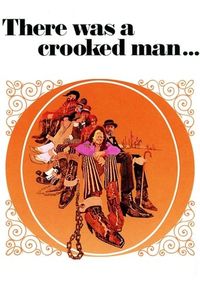
    There Was a Crooked Man… (1970)

    (On Cable TV, November 2021) I’m far from being the world’s biggest movie western fan — it’s a genre that easily falls into repetition and cheap dumb machismo. But hearing that There Was a Crooked Man was a creation of witty urbane dialogue-heavy director Joseph L. Mankiewicz definitely had me interested, an interest that only grew once Kirk Douglas and Henry Fonda (and Hume Cronyn) showed up in leading roles. The plot is a blend of hidden treasure thriller, prison procedural and ensemble drama all wrapped up in lighthearted direction except when people start dying. Douglas is particularly interesting as a bespectacled ruthless thief, and him going up against Fonda is a good screen pairing. Still, while There Was a Crooked Man has its moments of interest, the overall impression isn’t quite as strong as its pedigree or elements would suggest — it fades away more easily than you’d think, and doesn’t do enough to distinguish itself from so many other westerns. Too bad — I can see, here and there, how a better western could have been put together with those elements. Douglas and Fonda remain worth a look, though.

  • No Way Out (1950)

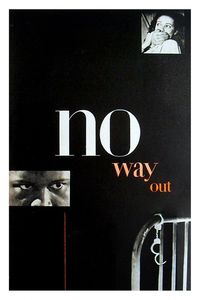
    No Way Out (1950)

    (On Cable TV, June 2021) It’s almost amazing to realize that No Way Out was Sidney Poitier’s feature film debut, because it already shows the characteristics and the persona that would transform him into a movie star during the following decade. Here, he plays a black doctor confronted with a deeply racist criminal as a patient (Richard Widmark, fully playing up his cad persona) that he nonetheless has to treat. A mysterious death ends up causing no end of troubles for the young doctor, and the film keeps exploring racism in a way that still resonates today. Written and directed by the legendary Joseph L. Mankiewicz, No Way Out is well-written and well-structured — a joy to watch despite the tough subject matter. Poitier is already exceptional and the script’s naked racism still rankles today.

  • Suddenly, Last Summer (1959)

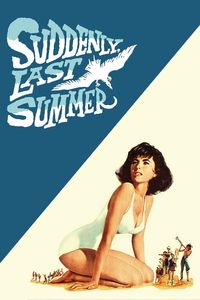
    Suddenly, Last Summer (1959)

    (On Cable TV, June 2021) It strikes me that a good way to distinguish between new classic movie fans and veteran ones is to ask them about Suddenly, Last Summer: Novice film fans, not having seen the film, are likely to be astounded by the top talent assembled here: Elizabeth Taylor, Montgomery Cliff and Katharine Hepburn on the acting front, with Joseph L. Mankiewicz at the direction and none other than Gore Vidal and Tennessee Williams penning the script, how can it be anything than terrific? Then there are the veteran classic movie fans who, having seen the film, are simply shaking their heads while saying, “You should see it before getting excited.” The most important name here is probably Tennessee Williams, since his specific sensibilities dominate the film’s narrative in such a way as to influence everything else. True to form for Williams, the story he’s telling is a melodrama with a central (but faceless) character who’s as homosexual as could be at the time. If I understand the film’s production history, the Williams one-act play was then adapted for the screen by Gore Vidal, leading both to accuse the other of sabotaging the result. No matter who wrote it, director Mankiewicz went for maximal melodrama in executing it, with Hepburn being an enthusiastic participant in the result — her role as a family matriarch is heightened opera the moment she descends on-screen in an enclosed throne, and the flowery soliloquies she delivers would have been ridiculous from any other actress. Cliff does his best to keep up as the audience’s representative in understanding the profoundly dysfunctional family in which he’s been asked to intervene, but he routinely gets overshadowed by Hepburn’s arch overacting and Taylor’s ability to take her dialogue right up to eleven even with a heaving low-cut dress. The score is another intrusive participant, underlining every sordid revelation with a heavy note. It’s quite wild, and the narrative never stops one-upping itself, eventually reaching for a cannibalistic conclusion reinforcing the era’s prejudice against homosexuals. What’s more, I’m glossing over the rape, incest, and intended lobotomy as a way to keep the family secret — as I’ve said, it’s a wild movie, and one that’s more impressive for how quickly it becomes untethered from reality than for producing the results that the cast and crew would have preferred. By sheer happenstance, I followed up Suddenly Last Summer by the viewing of homosexuality-in-Hollywood-history documentary The Celluloid Closet, and I’m fortunate that this was the order I watched both films because The Celluloid Closet’s description of Suddenly Last Summer’s ludicrousness would have been too wild to believe if I hadn’t just watched the film. There are plenty of landmark movies in classic Hollywood history, and if Suddenly Last Summer is really not one of them, I still feel as if I just graduated to another stage of understanding Hollywood history simply by having watched it. Incredulously.
  • People Will Talk (1951)

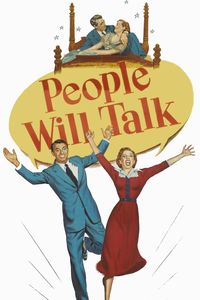
    People Will Talk (1951)

    (On Cable TV, May 2021) As much as I enjoy watching Cary Grant in every single film he’s made (well, maybe not Penny Serenade), I’m clearly done with the best and watching the rest in tackling People Will Talk. While the film is not a terrible one, I’m having a hard time deciding whether it’s a lower middle-tier or a higher lower-tier film. Here, Grant plays a doctor (a handsome one, naturally) who comes under scrutiny while working in a medical school. Mystery accompanies his earlier years, and the compassion he shows for others won’t stop an enemy from denouncing him to the authorities, lining up an inquiry with suspicious parallels to the McCarthy witch-hunts of the time. If the film has a hidden asset, it’s clearly writer-director Joseph L. Mankiewicz’s script. The acerbic dialogue is slightly toned down and the melodramatic plotting feels overdone, but the film nonetheless feels more ambitious than many of its contemporaries. A lot of heavy lifting is done by Grant’s natural charm in order to smooth over some of the film’s rougher edges, even if it doesn’t always work. Never mind the twenty-year age gap between him and his co-star Jeanne Crain—it’s the mixture of genres that doesn’t quite gel as comedy, romance, drama and mystery attempt to blend together. It’s not uninteresting to watch, but there’s a sense that something isn’t quite right with the results and that Mankiewicz could have used an editor to tell him where to focus. Grant is irreproachable but the film around him isn’t, and the result is something that doesn’t rank all that highly in his filmography despite intriguing elements.

  • The Honey Pot (1967)

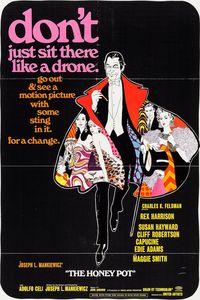
    The Honey Pot (1967)

    (On Cable TV, January 2021) I’m rarely disappointed by a Joseph L. Mankiewicz film, and The Honey Pot is no exception. It’s clearly a latter-day work by a filmmaker who understands the business inside and out, so deftly does it play with conventions and delivers something that escapes pure formula. It constantly (but smoothly) shifts tone and rhythm in ways that would seem doomed in theory, but works out well on-screen. It starts with a lengthy sequence during which an out-of-work actor is hired by a rich man for a special kind of acting job. Then things change as three past flames arrive, and murder interrupts everyone’s plans. Mankiewicz changes protagonist, plays with voice-overs (all the way to giving a voice to a dead character), messes with story structure and can’t help but include some really good quotable material in the middle of it all. If you think that you’ve got a handle on the story, you’ll keep changing your mind. Rex Harrison turns in a good performance as an aged playboy calling back his most significant past flames, while Cliff Robertson isn’t bad as the one we’re supposed to cheer for (well, maybe)—there’s a Jason Bateman-like quality to his performance that would almost justify a remake. If The Honey Pot has a flaw, it’s that it’s very obviously a film that relies on being different—the behaviour of the characters is clearly manipulated by the demands of the script, the overly cute references to other material or the artificial conventions of romantic comedies. The last few minutes of the film rely on a wrinkle of inheritance law that clearly belongs to legal fiction. But, somehow, it works. Even the damp dark depressing setting of overcast Venice (done 1970s-style in what looks like an un-restored print, which is even drearier than reality) can’t quite sap the narrative inventiveness of the result. I strongly suspect that The Honey Pot won’t sit well with viewers simply looking for something simple to watch. But it’s a bit of a gift to jaded audiences looking for someone intent on colouring outside the lines.

  • Julius Caesar (1953)

    Julius Caesar (1953)

    (On Cable TV, July 2020) In a fair fight, what would win: My innate inability to process Shakespearian English, or James Mason’s mellifluous voice? In this take on Julius Ceasar, Mason plays the backstabbing Brutus, alongside such notables as Marlon Brando (as Mark Anthony), Greer Garson and Deborah Kerr. Decently written and directed by Joseph L. Mankiewicz, the film attempts to be a blend between the sword-and-sandal epic movies of the 1950s and a more classical restaging of the theatrical material. Ultimately, it’s the black-and-white cinematography that traps the film closer to a theatrical space while a widescreen Technicolor approach would have freed the material. I found this Julius Caesar a bit dull, but considering that this is my default stance for nearly all straight Shakespearian adaptations, that’s not too bad of a review. Let’s admit that the film was made for the Shakespearian crowd and move on to the next review. I was only here for James Mason anyway.

  • A Letter to Three Wives (1949)

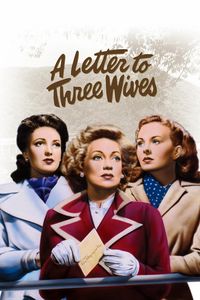
    A Letter to Three Wives (1949)

    (On Cable TV, January 2020) The best and truest thing anyone can still say about A Letter to Three Wives is that it’s really clever—it’s a straight-up domestic drama, but it’s structured in such an irresistible way (a letter is sent by a woman of ill repute to three wives, telling them that she’s run off with one of their husbands… and then the flashbacks and suspense begin) that it feels a great deal more dramatic than had it been more classically structured. It’s all from writer-director Joseph L. Mankiewicz, which made me think—have I ever seen anything from him that wasn’t interesting? (Good, not necessarily, but uninteresting?) The distinctive premise is a great hook, but once you add the unusual structure, the sharply-written characters, the exceptional bon mots and the beautiful rendition of the late-1940s, it’s a spectacular movie. There’s some sex appeal too—Linda Darnelle looks amazing in that glowing Classic Hollywood studio sheen, and a young Kirk Douglas gets a few good moments as a fed-up schoolteacher. You can even use the film as a prism to look at the fractures in the American institution of marriage in the immediate postwar era. But we always go back to the writing, the strong mystery at the heart of the story—Who is that Addie Ross woman, so perfect and beloved by all three husbands? Unexpectedly enough given its world-weary nature, the film even delivers a happy ending of sorts. It’s all wrapped up in terrific narration, even is it steps out of the film’s strict realism. A Letter to Three Wives is remarkably good even for those who don’t care too much for mainstream dramas—a testament to the power of great writing. [August 2021: Wait, The Simpsons lifted an entire episode’s premise off this film? It’s a TV show that has always had surprising depth to its movie references, but even for them, that’s a deep cut.]

  • Carol for another Christmas (1964)

    Carol for another Christmas (1964)

    (On Cable TV, January 2020) Calling Carol for another Christmas preachy is not being insulting: it’s being descriptive, and—considering its intentions—even complimentary. It comes to us modern viewers through a fascinating process: Originally produced for television as a Christmastime special, it was the first of a series of TV movies produced by the United Nations to promote the organization’s ideals. As such, it reuses the premise of Charles Dicken’s A Christmas Carol in order to teach its protagonist a lesson. But instead of having Scrooge learn about human kindness in his life, here we have a foreign affairs isolationist learning about the values of dialogue and diplomacy. The ghost of Christmas Past ferries the bodies of dead soldiers and reminds the protagonist to his past visit to Hiroshima. The Ghost of Christmas Present comments on the developed world’s ability to gorge itself while ignoring the hungry and the needy staring at them. Finally, the Ghost of Christmas Future takes us to a post-apocalyptic American town where a demented demagogue (played with relish by Peter Sellers) recites the lead character’s philosophy and remonstrates its idiocy ad absurdum. This last segment gets surprisingly dark (in keeping with the rest of the film, really), and the epilogue isn’t much of a comfort. The preachiness extends to characters spouting statistics and indulging in heated logical combat, as per a rather clever script from Rod Serling. With Joseph L. Mankiewicz at the helm, the film is far better-directed than you’d expect from a 1960s TV movie, further adding to its appeal. Reviews at the time of Carol for another Christmas’ broadcast were sharply divided, with even those who agreed with the message being annoyed at its didactic nature. Then the film disappeared from public view for nearly five decades, until TCM dredged it back up in 2012 for its Christmas special and infrequent broadcasts since then. From a modern perspective, the didactic insistence and preachiness have transmuted into something far more interesting—a time capsule from the cold war that still rings true today, bolstering its message to a degree that 1964 audiences couldn’t guess at. It’s also a fascinating repurposing of the Dickens classic for a purpose that can be re-watched any month of the year, and a collection in intriguing performances from some known actors. (Eva Marie Saint shows up as a WAVE in a short but effective role.) I found it particularly fascinating as part of a look at Peter Sellers’ work, especially with Britt Eckland in a small role. It’s also notable that the film is preachy without being sappy, a partial inversion of the usual takes on the Dickens classic. No matter how you size it, Carol for Another Christmas is a fascinating piece from the archives, and it’s worth a look once, even if it probably won’t make your list of Christmas classics.

  • Sleuth (1972)

    Sleuth (1972)

    (archive.org Streaming, December 2019) I have some admiration for movies that attempt ambitious or over-restrictive premises, and Sleuth certainly qualifies—it’s a bit of a spoiler to say that the film only has two actors (but not really, I mean—you can recognize Michael Caine in any kind of disguise) but that’s part of the film’s interest: An actor’s duel between Caine and Laurence Olivier, as two characters with plenty of secrets spend the entire film engaged in line-by-line combat. There was a chance that a film with such a limited number of actors could run dry, but fortunately there’s enough of a convoluted plot about thievery, lovers, deception and murder to keep things interesting. In the theatrical tradition that inspired it, much of the movie takes place in an elaborate library with plenty of visual interest. It’s quite a lot of fun, and with the calibre of the actors involved (the entire cast was nominated for best acting Oscars, a rare but not unique feat) it’s easy to be swept in the film’s high concept. Directed with a veteran’s ease by Joseph L. Mankiewicz, Sleuth manages to sustain attention with two actors and some great writing.

  • The Barefoot Contessa (1954)

    The Barefoot Contessa (1954)

    (On Cable TV, August 2019) If I had to boil down a review of The Barefoot Contessa to two words, they would be Bogart/Gardner, with Mankiewicz as the third word. Not much else is needed considering that the point of the film is to see Humphrey Bogart as a movie director witnessing the rise and fall of a Spanish dancer (Ava Gardner) groomed to become a movie star. Written and directed by Joseph L. Mankiewicz, the film is a Hollywood tragedy with strong ties to the European aristocracy, and much of the film’s second-half drama comes from entanglements with an Italian count. Savvily taking viewers from Hollywood familiarity to the escapist melodrama of the old-world, The Barefoot Contessa was part of the “Hollywood on the Tiber” movement which saw studio movies shot in Rome. The Technicolor production values are impressive, and they all serve to reinforce the film’s old-school glamour: in some ways, you can see the film as being very near the apex of the studio system and the style in which old-school Hollywood built itself. It is melancholic, however: the ending is a downer (in keeping with a film that flashes back from a funeral) and Bogart’s character has far less to do than you’d think from his top billing: he is a witness to events outside his control, a chronicler of someone else’s story. (There’s an interesting double-bill to be made here with In a Lonely Place as a glum Bogart-as-filmmaker mini-festival.) Off-kilter touches like that are why I keep going back to Mankiewicz movies—they clearly understood the way that Hollywood worked and used that to create an element of surprise or freshness. But let’s not fool ourselves: The Barefoot Contessa is Ava Gardner’s movie. The title of the film has become closely associated with her (she herself liked to go barefoot), and it still ranks high as a showcase for her specific brand of glamour.

  • Guys and Dolls (1955)

    Guys and Dolls (1955)

    (On Cable TV, August 2019) I remain amazed at how some movies can produce some consistent reactions for decades. If you look at contemporary accounts of Guys and Dolls prior to its release, the themes are similar: “What? Joseph L. Mankiewicz directs a musical featuring Jean Simmons and Marlon Brando? What craziness is this?!”  Considering that neither Mankiewicz, Simmons nor Brando ever went back to musicals after this one-off, you can get the exact same reaction well into the twenty-first century. Of course, we now have fairly entertaining stories of rivalry on the set between Brando and co-star Frank Sinatra, the latter of which was not impressed by Brando’s mumbling or singing deficiencies. (I’ll agree with Sinatra on this one.)  Guys and Dolls, seen from today’s perspective, is not entirely as slick as other musicals of the era—and Brando has the double disadvantages of not being in his element either as a singer or a comedian, his mumbling quickly becoming annoying. Sinatra is far more comfortable in going from song to jokes. The cabaret numbers are fun: I enjoyed the “Pet me Papa” cat-girl number a bit too much. Mankiewicz does relatively well in helming the production: The introduction is great, the conclusion makes good use of its impressive Times Square stage and the dice gambling scene is not bad either. The result is a bit too long at 150 minutes, but Guys and Dolls did scratch my itch for a lavish musical … and I look forward to future generations of cinephiles also asking themselves what Brando was doing in a musical.

  • All about Eve (1950)

    All about Eve (1950)

    (On Cable TV, March 2018) There’s a deliciously impish quality to All about Eve that becomes apparent only a few moments in the movie, and remains the film’s best quality throughout. It’s a cynical look at showbusiness, triangulated between actors, writers and critics. Writer/director Joseph L. Mankiewicz can use rich material in his exploration of the dirty side of theatrical showbusiness, and his actors, in-between Bette Davis, Anne Baxter and George Sanders, are all up to the challenges of his vision. (Plus, a small role for Marilyn Monroe.)  All about Eve has a lot to say about fame, acting, age and even a touch of closeted homosexuality. It does so with considerable wit—the film is good throughout, but it improves sharply whenever George Sanders shows up as a waspy critic acting as an impish narrator. The film still plays exceptionally well today: showbusiness hasn’t changed much, and much of the film doesn’t deal in easily dated artifacts … although some of the social conventions have thankfully moved on. A bit like contemporary Sunset Blvd, All about Eve is a film built on wit and a great script, so it’s no surprise that it would stay so engaging sixty-five years later.