Julian Sands

  • Tale of a Vampire (1992)

    (In French, On Cable TV, January 2022) Fully playing up the archetype of the brooding romantic vampire, Tale of a Vampire makes great use of Julian Sands as an old-school vampire who spends his days brooding after an old century-dead flame, conducting scholarly research and reluctantly feeding upon animals and the dregs of society. Compared to many other vampire films, it feels almost refreshing in its classical nature: the horror is not always played up, and the melancholic nature of its protagonist almost makes him sympathetic—especially when he’s manipulated by an old rival in meeting a woman who reminds him of his long-dead love. Unfortunately, there’s a penalty for going with the torpid brooding: much of the film is far less interesting than it should have been. While a first viewing may coast a long time on the promise that this is all leading to something interesting, writer-director Shimako Sato can’t quite make good use of his promising elements to turn out something that goes beyond the evocation of an interesting situation. Sure, there’s something sexy and likable about cute librarians being romanced in the stacks by suave immortal undead creatures… but once that’s firmly established in the opening act of the film, it doesn’t go beyond that. Too bad—although I suspect that the film plays better now as a forgotten film than upon initial release in the early 1990s when it had to contend with a full-blown romantic vampire craze. (There’s also a clear line from this film to the Twilight series.) But that’s the way it goes—those who like atmospheric films will like Tale of a Vampire better than plot-driven audiences. It’s still a bit better than your average vampire film.
  • Vibes (1988)

    Vibes (1988)

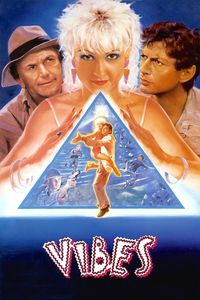
    (On Cable TV, March 2021) I’m not sure if the cast or the loopy premise is what makes Vibes worth a look despite not being that much of a good movie. It does start in a very weird, very dated way, as volunteers are matter-of-fact tested for psychic powers and the evidence is portrayed as incontrovertible. This, apparently, isn’t a big deal in the universe of the film, but rather a setup for a romantic comedy in which a psychometrist (a young and gangly Jeff Goldblum) meets cute with a trance-medium (Cindy Lauper!) that gets otherworldly information from an unheard spirit guide. Both of them are then hired under false pretence to find a treasure high up Ecuador’s mountains by a mysterious man (Peter Falk). It all leads to a mixture of romance and paranormal adventure, enlivened by a deliberately awkward performance from Goldblum and a bubbly take from Lauper. The casting surprises continue into the supporting role, what with Julian Sands popping up as an antagonist, an early turn by Elizabeth Peña in arresting lingerie, and Steve Buscemi in a brief role as a no-good boyfriend. Unfortunately, even the off-kilter opening and the intriguing cast can’t quite manage to make Vibes a success — at best, it’s an entirely forgettable film that struggles with the ideas and actors at its disposal. At worst, it feels like a cynical product, taking some woo-woo themes and awkwardly grafting it onto a formula blend of familiar genres and narratives. Still, the verdict is in, and the cast remains the best reason to seek out the film: Goldblum is definitely worth a look, and so is Lauper in one of her few acting roles.

  • Warlock: The Armageddon (1993)

    Warlock: The Armageddon (1993)

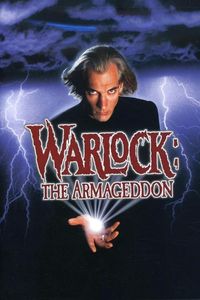
    (In French, On Cable TV, October 2020) Oh no! Another sorcerer coming to our world to end it! What do they get out of it? Isn’t it lucky that we always have someone ready to fight him? Wouldn’t we be better off if they had their way once in a while? Such are the questions that pop up unbidden during the lengthier stretches of Warlock: The Armageddon, a rather dull film occasionally enlivened by imaginative sequences. It’s really not worth watching for its over-familiar plot: As a warlock (Julian Sands, whose presence greatly exceeds his acting talents) roams the United States in search of the magical doodads what will enable him to summon Satan and end the world, older protectors train their young recruit in order to stop the warlock dead (again). This is basic stuff, regurgitated from low-grade horror clichés. But where Warlock: The Armageddon does slightly better is in the more memorable sequences that pepper the humdrum narrative: the antagonist makes his entrance in a disturbing and more effective than expected birthing scene that clearly shows that the film was scripted by a man. One of the deaths makes effective use of a skylight. There’s a rather good sequence showing the antagonist being vulnerable to the spells of his opponents at a distance. Every so often, Warlock: The Armageddon has zingers of interest, even if the overall quality of the result really isn’t worth crowing about. Still, I’ll take it—many horror movies can’t even achieve even one effective sequence, bet alone a handful. Plus, there’s Sands hamming it up, as a warlock coming to free the devil—they simply don’t make them like that any more.  Thankfully.

  • Il fantasma dell’opera [The Phantom of the Opera] (1998)

    Il fantasma dell’opera [The Phantom of the Opera] (1998)

    (In French, On Cable TV, September 2020) I don’t want to sound ungrateful, but—with Dario Argento writing and directing an adaptation of The Phantom of the Opera with Julian Sands and Asia Argento in the lead roles, I expected a lot more. This should be familiar material for Argento, who made the stage a centrepiece of his 1987 film Opera—alas, without much improvement. Argento-the-writer’s decision to change the Phantom from disfigured romantic to rat-friendly misanthrope is a crucial false note, while Argento-the-director to go full-gore on material that doesn’t necessarily call for it is another misfire. Julian Sands disappoints as the Phantom, although Asia Argento more or less performs at her level. Much of the same can be said about Dario Argento himself—if you were expecting much from 1998 Argento, then you hadn’t been paying attention for years at this point: the director was a shadow of his own self by that time in his career, and while fans could hope for 1970s Argento to handle the promising material, what they got instead was 1990s Argento and his substantial limitations. All of this to say that, unfortunately, Argento’s The Phantom of the Opera is closer to comedy than romantic horror: overly gory, not particularly attuned to the possibility of the material and decidedly showcasing the director near his worst, it’s perhaps most entertaining by being ridiculed.

  • Warlock (1989)

    Warlock (1989)

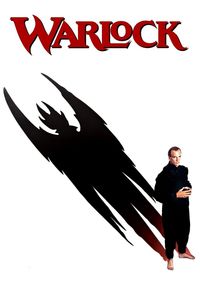
    (In French, On Cable TV, May 2020) By the standards of late-1980s horror, Warlock is both different and somewhat sedate. It follows the titular warlock (Satan’s son, we’re told) as he’s propelled from 18th-century Boston to circa 1989 Los Angeles, pursued by a witch hunter. While some of the details used in the narrative (the use of salt, notably, or some fish-out-of-water comedy from the two 18th century characters in modern times) are lively and show some imagination from screenwriter David Twohy, much of the film is a shrug-inducing battle between good and evil involving spells, magic artifacts and incomprehensibly end-of-the-universe high stakes. What does work well, however, is Julian Sands’ very charismatic performance as the warlock. While not horrible and tastefully restrained in matters of gory violence, Warlock is a bit of a snooze—it doesn’t come together as anything more than a middling fantasy/horror. It probably would have done better had it leaned more into comedy, or drama, or horror—but not in its current indecisive state.

  • Witch Hunt (1994)

    Witch Hunt (1994)

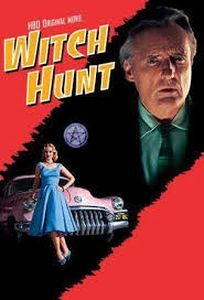
    (On Cable TV, August 2013) This quasi-sequel to 1991’s Cast a Deadly Spell brings us back to an alternate 1950s Los Angeles suddenly awash in magic, but nearly everything else has changed: The noir aesthetics have given their place to bright Hollywood glam, the lead Private Investigator role is now played by Dennis Hopper and the tone of the film shifts from criminal horror to social commentary.  Recasting McCarthyism as literal persecution of witches, Witch Hunt does get to be a bit too obvious at times.  Still, there are a few things to like here and there despite the limited budget, including the background details and emphasis on a glamorous era for Hollywood.  Hopper isn’t too bad as the lead, while Julian Sands is arresting as an evil magician and Penelope Ann Miller has an eye-catching role as a threatened starlet.  The ending is a bit weak and obvious in its hurry to denounce witch-hunting for political gains, but the real fun of the film comes before then.