Kirk Douglas

  • Saturn 3 (1980)

    Saturn 3 (1980)

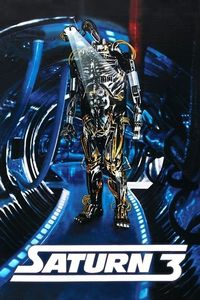
    (TubiTV Streaming, December 2021) I barely recall Saturn 3 from my childhood, but considering the racy violent content, it’s probably less for remembering the story than because it was a science-fiction film at a time when I was really interested in those. Ironically, the film’s plot is the kind of thing better suited to undemanding young audiences than anyone with the slightest appetite for complexity or subtlety. The most amazing thing about it for a middle-aged cinephile is probably the cast and (some) of the crew — featuring no less than Kirk Douglas and Farah Fawcett as a “don’t ask questions about their 31-year age difference” couple of scientists whose existence is disrupted by a dangerous man (Harvey Keitel!) and his homicidal robot. Saturn 3 is also directed by musical legend Stanley Donen, from a script by acclaimed novelist Martin Amis and Academy-Awards-winning Star Wars production designer John Barry. That’s one spectacular pedigree, but the difficult making of the film was reportedly an adventure that barely explains the mess on-screen. The story feels remarkably cheap and redundant, once reduced to the most basic gibberish of a killer robot attacking a young woman. The production design is terrible, with robots not even passing the indulgent muster of early-1980s special effects. Some of the early world-building is intriguing, but the script feels like a race to the known value of a killer-robot conclusion. Douglas, Keitel and Fawcett look embarrassed (something confirmed by Keitel’s later comments about the film) and by the time the film ends, the audiences won’t feel any prouder. So much talent for so little result — Saturn 3 is the kind of naïve Science Fiction film that makes the good one look so much better in comparison.

  • There Was a Crooked Man… (1970)

    There Was a Crooked Man… (1970)

    (On Cable TV, November 2021) I’m far from being the world’s biggest movie western fan — it’s a genre that easily falls into repetition and cheap dumb machismo. But hearing that There Was a Crooked Man was a creation of witty urbane dialogue-heavy director Joseph L. Mankiewicz definitely had me interested, an interest that only grew once Kirk Douglas and Henry Fonda (and Hume Cronyn) showed up in leading roles. The plot is a blend of hidden treasure thriller, prison procedural and ensemble drama all wrapped up in lighthearted direction except when people start dying. Douglas is particularly interesting as a bespectacled ruthless thief, and him going up against Fonda is a good screen pairing. Still, while There Was a Crooked Man has its moments of interest, the overall impression isn’t quite as strong as its pedigree or elements would suggest — it fades away more easily than you’d think, and doesn’t do enough to distinguish itself from so many other westerns. Too bad — I can see, here and there, how a better western could have been put together with those elements. Douglas and Fonda remain worth a look, though.

  • The Arrangement (1969)

    The Arrangement (1969)

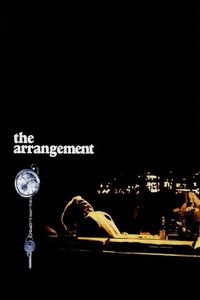
    (On Cable TV, September 2021) I don’t remember much about reading Elia Kazan’s The Arrangement nearly twenty-five years ago, but my contemporary notes suggest that I found it overlong and sporadically funny. That actually turns out to be a remarkably good take on the film adaptation as well — with writer-director Kazan adapting his own novel to the screen. The film version of The Arrangement does have the advantage of casting, though:  I’ll watch Kirk Douglas in nearly everything, and here he is as a California-based ad man going through a psychotic break in which he (the only sane man of the story, or so we’re told) starts rethinking the various social obligations that bind him. Suicide attempts, affairs, insulting clients, dying parents, arson, psychiatric confinement and pop-philosophy about the meaning of life in a modern world are what The Arrangement is made of. It’s… sporadically funny. Douglas is often much more compelling than the material, and the same goes for Deborah Kerr (who plays his wife) and Fay Dunaway (his mistress). It’s rather amusing to see Hume Cronyn play a dying man considering that he still had another forty years ahead of him as an actor. Still, despite the jokes and performances, there’s not much to like in The Arrangement. Self-indulgent and convoluted, it can’t be bothered to get to the point: it wanders in a quest to score fake epiphanies that feel trite today and can’t quite maximize its humour into something more cohesive. This may be Kazan at his most self-indulgent, as the result often seems to score goals against an unseen and uninteresting opponent. Oh well — it’s one more Douglas performance worth watching even in a film that’s not necessarily worth the trouble.

  • My Dear Secretary (1948)

    My Dear Secretary (1948)

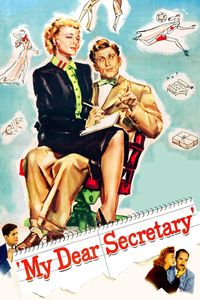
    (On TV, April 2021) There’s not a whole lot worth remembering about My Dear Secretary. From the title, we can suspect it’s going to be some hideously sexist romantic comedy, and the result doesn’t disappoint much, although (in keeping with Hollywood standards), there’s a bit more equality and reciprocity to make most viewers happy. At 94 snappy minutes, it barely has an impression to make, and the light subject matter doesn’t help. On the other hand, it is a film about novelists, and I can seldom get enough of those — and better yet, it’s a lot of fun seeing young and dashing Kirk Douglas as an author discussing matters of writer’s block and acting a cad whenever the screenplay gives him the latitude to do so. The initially one-sided relationship that begins when he hires a young intelligent woman as his secretary gets far more interesting when they end up marrying, she ends up being a better writer, they start having affairs and she ends up hiring a (male) secretary of her own. But don’t fret — My Dear Secretary goes back to enduring love by the time the credits roll. On the one hand, this is very familiar material with a few late-film twists and turns. On the other, Douglas is worth watching as a surly novelist, there are a few inspired lines of dialogue, and Laraine Day gives as good as she gets as his secretary-then-wife-then-competitor. Due to the terrible image and sound quality of the (public domain) version shown on TV, I’m probably going to watch this again in the future for a better experience, and we’ll see if familiarity breeds contempt. This is not such a bad pairing with the almost-contemporary Adam’s Rib even if the two are not in the same league.

  • A Lovely Way to Die (1968)

    A Lovely Way to Die (1968)

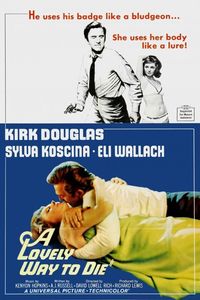
    (On Cable TV, March 2021) As much as I enjoy discovering the past classics of cinema, sometimes there’s no substitute for the kind of downmarket low-brow genre picture that more clearly reflects the quirks of its time than the timeless classics. Which brings us to A Lovely Way to Die, a slightly-trashy neo-noir swingin’ detective film best qualified as obscure. Whatever claim to an enduring legacy it has is solely in the casting: With none other than Kirk Douglas playing the lead character, the film automatically becomes more interesting. It doesn’t take much more than a few moments into the film, with its bombastic musical score and depiction of Douglas as a manly late-1960s renegade police detective, to realize what kind of film we’re getting — a type of film that would mutate in blaxploitation, but clearly belongs to its time. Dimpled-jawed Douglas plays the protagonist exactly like he should: without subtlety and with reactionary zeal, anticipating Eastwood’s Dirty Harry by two years. The plot is a murky concoction of matrimonial murder gussied up in tough-guy detective thriller, with Douglas smouldering so intensely that none of the female characters can resist him for long. Mostly shot in a vast mansion, the film does make its way to a courtroom in time for the third act. Douglas is a delight here, but maybe not for the right reasons — seeing a progressive icon like him play a reactionary tough cop who quits the force after bristling at criticism of his brutal methods is amusing, and having him being roughly twenty years too old for the part is additional material for hilarity. A Lovely Way to Die itself is average, but it’s the late-1960s quirks that make it special.

  • The Story of Three Loves (1953)

    The Story of Three Loves (1953)

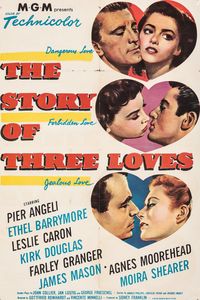
    (On Cable TV, March 2021) As much as we can admire classic Hollywood’s greatest hits, talk fondly about its actors and follow the filmography of its directors, not every film of the era leaves a mark, even when it does feature great directors and a cast of known names. That’s the case with The Story of Three Loves given its severe structural issues: an anthology film composed of three segments, it suffers from the usual afflictions of such movies. The actors are only there for a third of the time, the tone shifts all over the place, the segments aren’t equally interesting, and there’s less time to attach ourselves to the characters, which is particularly bad in discussing character-based romance. Accordingly, perhaps, each segment has its own gimmick — from ballet dancing to body-switching to trapeze. Alas, the three segments also feel like short takes on topics that would be best approached in better full-length movies such as The Red Shoes, Big and Trapeze, respectively. Sure, there’s Kirk Douglas tearing up the screen, Leslie Caron speaking French and James Mason’s distinctive vocal cadence. But they’re not there for the entire film — in fact, they’re in three different segments. Vincente Minnelli directs one segment but not the others. Perhaps inevitably, The Story of Three Loves doesn’t leave much of an impression, nor much to chew upon. It is an eloquent example of what early-1950s MGM could bring to bear on a project, but it’s not, by itself, something particularly striking.

  • The Final Countdown (1980)

    The Final Countdown (1980)

    (On DVD, February 2021) I’ve known about The Final Countdown for a long time before finally seeing it — even today, its premise (an aircraft carrier sent back in time to the eve of the Pearl Harbor attack) is striking enough to be of interest to anyone with a liking for alternate history. Alas, as so often happens, the execution doesn’t quite measure up to the hype. To be fair, there’s a really interesting techno-thriller built in The Final Countdown: Filmed with the cooperation of the US Navy, this is a film that takes us inside an aircraft carrier during operations, with plenty of naval aviation footage and scenes obviously shot on location. Military personnel are portrayed honourably, and the nuts-and-bolts details of a carrier being caught in a time portal are convincing. As a portrayal of early-1980s naval aviation, it’s quite interesting even today. Unfortunately, the problem comes when the script has to switch from military thriller to actual Science Fiction: Seasoned viewers will spot the opening of a closed loop almost from the first scene, and as the film advances, it’s clear that there will be no major deviations from history, severely limiting its impact. The rhythm of the film becomes increasingly slack, as it spins its wheels while not making any changes to history and waiting until the closed time loop can be established. The meaninglessness of one civilian consultant character who should be significant also becomes apparent, although the impact of that is somewhat diminished by the character being played by Martin Sheen, going toe-to-toe with none other than Kirk Douglas as the captain of the aircraft carrier. By the time the film concludes, the obvious time loop closes with a whimper and the film’s final revelation can be seen coming hours in advance. You can reasonably argue that doing justice to the premise would have required far more time and special effects than was available to the film’s producers, and that’s largely true: When a real Science Fiction author sat down to work out the implications of a modern carrier group being sent back in time to WW2, the result was John Birmingham’s messy “Axis of Time” trilogy. In The Final Countdown’s case, the limited imagination was built in the script from the get-go to prevent the film, largely aimed at military-friendly audiences, from getting too strange. As it went on, it struck me that it wouldn’t be the worst thing to see a modern remake, possibly executed as a miniseries. As a bonus, make sure that the captain is played by Michael Douglas and the civilian consultant is played by Emilio Estevez (or Charlie Sheen) and I think we’ve got a nice high concept going on.

  • Top Secret Affair (1957)

    Top Secret Affair (1957)

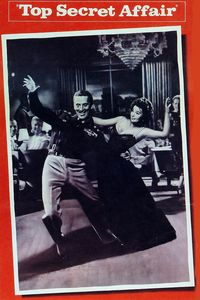
    (On Cable TV, November 2020) You can often best see the star quality of lead actors in their most mediocre films, and while Kirk Douglas was known for being an incredible leading man, Top Secret Affair will demonstrate it to you as well as his turn in masterpieces like that year’s Paths of Glory. Clearly cast as a superstar, Douglas here plays an American general targeted by a media mogul played by Susan Hayward. She wants to take him down through her outlets, but she hasn’t counted on him being a near-perfect human being, smart and athletic and incorruptible. There’s a lot of fun to be had in seeing Douglas play a character that measures up to his square jaw and impeccable frame—the film feels like a misogynistic throwback, but it does have quite a bit of charm and grace at how it goes about it, and even the way it half-canonizes its military character is a bit of a breather after so many villainous high-ranking officers elsewhere in later Hollywood history. I’m not going to try to convince anyone that Top Secret Affair is a particularly good movie, but it’s an easy watch, and it has its shares of smiles along the way. Plus, you get to see what Douglas was able to do in a movie where he clearly outshines everyone else… including his co-star. Amazingly enough, the film was originally intended to star Bogart and Bacall — that would have been quite a different film.

  • 20,000 Leagues Under the Sea (1954)

    20,000 Leagues Under the Sea (1954)

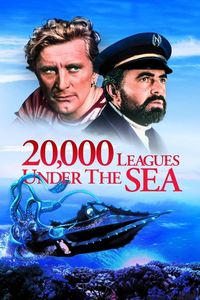
    (Google Play Streaming, July 2020) We can complain at length about Hollywood blockbusters, but when they’re well made, they endure. So it is that you can still watch Disney’s adaptation of Jules Verne’s 20,000 Leagues Under the Sea today and still have fun, even as the film is in the middle of its sixth decade. There’s a lot going on here—great underwater footage, good adventure sequences, and a lavish visual design that clearly anticipates steampunk or inspired it. There’s also the cast—a dashing Kirk Douglas in the lead role, mellifluously voiced (and bearded) James Mason as Captain Nemo, and a stocky close-cropped Peter Lorre as comic relief. Of all the film’s special-effects showcases, the squid sequence remains a highlight and quite convincing still. It all comes together in a good package where its dated nature is now part of the appeal.

  • The Vikings (1958)

    The Vikings (1958)

    (On Cable TV, July 2020) There’s certainly a spectacular aspect to The Vikings that makes it interesting to watch: Kirk Douglas going toe-to-toe with a bearded Tony Curtis as they debate the leadership of a Viking colony. Made at a time when historical epics were trying to lure audiences away from the TV, it has lavish production values and some credible outdoor scenes and combat—with longboats! Plus: Ernest Borgnine and Janet Leigh looking a bit weird in non-contemporary setting. It may not be as well-remembered as some of the Roman epics of the time, and the lack of big Viking movies lately is a bit of a wonder by itself (wasn’t the latest one the motion-captured Beowulf from 2007?) Still, let’s not overstate things: The Vikings is not that interesting and even gawking at the stars in unusual turns or the scenery isn’t quite enough to make up for the tepid pacing and overall lack of interest in plot or dialogue. Fortunately, director Richard Fleischer creates a lot of bombast here to keep things afloat.

  • The Fury (1978)

    The Fury (1978)

    (In French, On Cable TV, July 2020) As someone whose skepticism came of age at a time when parapsychology still had a semi-scientific veneer of plausibility, it actually gives me great pleasure to be able to watch films such as The Fury and wonder at the dated psi-power nonsense contained therein. It’s not necessarily a condemnation of the material itself—it takes a director with a flair for the crazy, such as Brian de Palma, to give full force to the kind of wackiness that the material requires, and at its best The Fury is a rollercoaster ride of special effects, crazy ideas, unrestrained plotting and over-the-top performances. The plot has to do with a CIA agent (Kirk Douglas!) using a young girl with psychic powers to find his missing son from the clutches as an evil ex-colleague (John Cassavetes), but don’t worry about the plot when the film is one set-piece after another, ending up with exceptionally violent imagery by the end of the film. It’s all handled in typically over-the-top fashion by late-1970s Brian de Palma. It would be a splendid double feature with Firestarter or Scanners for reasons too obvious to explain. Frankly, The Fury is crazy in good ways, and even more enjoyable now that parapsychology has been relegated to a proven heap of nonsense.

  • The Strange Love of Martha Ivers (1946)

    The Strange Love of Martha Ivers (1946)

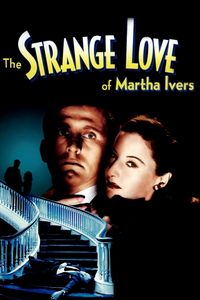
    (On Cable TV, May 2020) Film noir classic The Strange Love of Martha Ivers may not be all that iconic, but it has enough great things in it to warrant a look for fans of the genre. For one thing, it sports Grande Dame Barbara Stanwyck playing the kind of superpowered character she did best. Then the casting gets surprising: Kirk Douglas (in his film debut) playing her weak and easily cowed husband, then Van Heflin as a street-smart punk whose arrival on the scene creates danger—for he is the third holder of a secret that could have a devastating impact on the two other characters. There’s more, and quite a bit of murderous melodrama along the way, but the film (as with its score) builds up to a grandiose ending. It’s pretty good—although film noir fans will say that it doesn’t have enough noir concision to be a classic. True, but also besides the point: By the standards of mid-1940 Hollywood melodrama, The Strange Love of Martha Ivers is competent and absorbing. See it for Stanwyck, for Douglas or for Heflin, but it’s worth a look.

    (Second Viewing, On Cable TV, September 2021) It’s really interesting to revisit The Strange Love of Matha Ivers after tearing through Barbara Stanwyck and Van Helfin’s filmographies, because their on-screen antagonistic romance is the highlight of the film. It felt like a decent-enough film noir upon first viewing, but re-watching it with particular attention to Stanwyck’s performance as a femme fatale, and Heflin’s unusually muscular turn as a man who easily dominates every room he’s in (often roughly) is a different experience. As is, for that matter, seeing Kirk Douglas’ first film role as a meek, ineffectual, rather loathsome supporting character. The other highlight is the aggressive score, which shows no shame in highlighting the action with bold musical accents every time the characters butt heads – which is often. There are a few subplots and a prologue starring the characters as kids, but the film is most fascinating when Heflin and Stanwyck figuratively dance warily around each other, sometimes kissing, sometimes trying to kill each other. A fine noir melodrama, it’s easy to see why The Strange Love of Matha Ivers continues to earn such acclaim – and even more so if you’re a fan of both lead actors.

  • Two Weeks in Another Town (1962)

    Two Weeks in Another Town (1962)

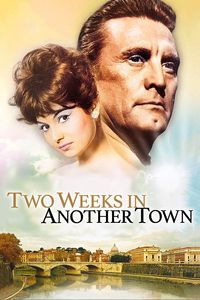
    (On Cable TV, April 2020) If you want to see the results of the Hollywood-on-the-Tiber era, during which Hollywood studios headed to Rome’s Cinecittà in order to take advantage of lower production costs and a studio built by Mussolini, then watch any of the dozen sword-and-sandal epic of the era. If you want a film about that filmmaking era, however, there’s Two Weeks in Another Town to bring back, a decade later, many of the main creative forces behind The Bad and the Beautiful in a thematic follow-up examining how Hollywood stars lived in their little Roman bubble far away from California. There are differences, obviously—Two Weeks in Another Town is in colour, and not quite as purely entertaining in its examination of Hollywood. But it does star Kirk Douglas as a washed-up actor trying to find a new place for himself in the movie industry, and a behind-the-scenes fictionalization of a difficult film shoot. Douglas is surrounded by notables such as Cyd Charisse (who’s not given enough to do), Edward G. Robinson (as a director at the end of his rope), and George Hamilton hilariously cast as a brooding artiste-type actor. While the film is interesting, it also has plenty of misplaced cues and darker themes that ensure that it’s not a feel-good film despite its hopeful ending. Studio meddling is apparently to blame for not delivering the core vision, but even in its adulterated form, the film features themes of suicide, professional uselessness, jealousy and isolation—all of which clash with the Dolce Italia atmosphere occasionally showcased. It’s a shame that some terrible rear-projection work takes away some of the late-film scene’s emotional effectiveness. Let’s just say that Two Weeks in Another Town gets about three-quarter of the way there—it’s interesting to give us a glimpse at an episode of Hollywood history, but not as great as it could have been had it figured out what it wanted to say and found a more disciplined way of telling it.

    (Second Viewing, On Cable TV, June 2021) The “Hollywood on the Tiber” era is one of the most interesting episodes in film history – Hollywood going to Rome in order to take advantage of fiscal incentives and Cinecitta, a top-notch studio built by Mussolini as a propaganda instrument. Hence the slew of swords-and-sandals films of the early 1960s and the numerous American films somehow set in Rome in the 1960s. Two Weeks in Another Town is one of the few productions of that era to be about itself, as our troubled protagonist (Kirk Douglas, reliably fascinating as always) gets a new chance to help a friend complete a Hollywood production shooting in Rome. There are glimpses at moviemaking, dramatic situations alluding to the reality of how movies were made at the time, and characters almost entirely portraying a fictional film’s cast and crew. The rather good cast also helps, what with Douglas playing a recovering alcoholic former star actor, Cyd Charisse as his ex-wife, a young and trim George Hamilton as a rising actor, and Edward G. Robinson as an aging director. On paper, there are plenty of reasons why Two Weeks in Another Town shouldn’t work, starting with the lead character: Who should care about a former movie star putting back together his life after alcoholism? Who should care about Charisse’s character when she barely has any dialogue? The film was apparently cut short by fifteen minutes by the studio, and those seams are more blatant when you start looking at the dramatic structure of the film. But, fortunately, there’s quite a bit more to it – the focus on filmmaking is strong enough (similarities with The Bad and Beautiful are all over the place, from its theme to a shared team of creative leads) and the glimpse at the Hollywood on the Tiber era is frequently charming enough to create a bit of longing for what it must have been at the time. It’s also hard to go wrong with Douglas in the middle of it all – Two Weeks in Another Town probably wouldn’t have worked with another actor.
  • Lust for Life (1956)

    Lust for Life (1956)

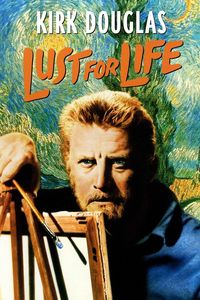
    (On Cable TV, March 2020) Kirk Douglas is quite a revelation in Lust for Life, surprisingly good at playing Vincent van Vogh as a tortured-artist archetype. (And if that’s not enough, you also have Anthony Quinn playing Paul Gaugin, because why not?) His red hair and beard are as striking in Technicolor as the artist’s vivid paintings, even if Douglas’ energetic performance is apparently not quite the right fit for the reserved painter. But let’s be clear—this is a Classic Hollywood biopic movie made in the 1950s by Vincente Minelli—there’s no way it would be melancholic, realistic or even accurate. This is l’artiste as presented to the moviegoing masses as a big weirdo, and it’s enjoyable even if we suspect that’s it’s complete bunk. Production values are high, the acting duet between Douglas and Quinn is quite good, and the paintings are given centre stage, so that’s that. If you’re particularly concerned about authenticity, there are many other Van Gogh movies out there—this one is best taken as an opinionated take on familiar material, with the gloss of a mid-1950s studio production.

  • A Letter to Three Wives (1949)

    A Letter to Three Wives (1949)

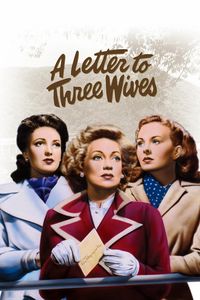
    (On Cable TV, January 2020) The best and truest thing anyone can still say about A Letter to Three Wives is that it’s really clever—it’s a straight-up domestic drama, but it’s structured in such an irresistible way (a letter is sent by a woman of ill repute to three wives, telling them that she’s run off with one of their husbands… and then the flashbacks and suspense begin) that it feels a great deal more dramatic than had it been more classically structured. It’s all from writer-director Joseph L. Mankiewicz, which made me think—have I ever seen anything from him that wasn’t interesting? (Good, not necessarily, but uninteresting?) The distinctive premise is a great hook, but once you add the unusual structure, the sharply-written characters, the exceptional bon mots and the beautiful rendition of the late-1940s, it’s a spectacular movie. There’s some sex appeal too—Linda Darnelle looks amazing in that glowing Classic Hollywood studio sheen, and a young Kirk Douglas gets a few good moments as a fed-up schoolteacher. You can even use the film as a prism to look at the fractures in the American institution of marriage in the immediate postwar era. But we always go back to the writing, the strong mystery at the heart of the story—Who is that Addie Ross woman, so perfect and beloved by all three husbands? Unexpectedly enough given its world-weary nature, the film even delivers a happy ending of sorts. It’s all wrapped up in terrific narration, even is it steps out of the film’s strict realism. A Letter to Three Wives is remarkably good even for those who don’t care too much for mainstream dramas—a testament to the power of great writing. [August 2021: Wait, The Simpsons lifted an entire episode’s premise off this film? It’s a TV show that has always had surprising depth to its movie references, but even for them, that’s a deep cut.]