
Kurt Wimmer

  • Spell (2020)

    Spell (2020)

    (On Cable TV, November 2021) There’s something almost interesting in Spell’s blend of folk horror, evil hoodoo and deep-Appalachian setting. After some rather meaningless throat-clearing, the film starts in earnest after a small plane crash brings a middle-aged black family man (Omari Hardwick, nod bad) into the care of a backwoods witch doctor (Loretta Devine, surprisingly good) who places a lot more emphasis on being a witch than a doctor. This is all very spooky, of course, especially considering that the man’s family (which was also in the plane) is nowhere to be found, that he’s got a debilitating foot injury and that our witch doctor seems to have perfected the art of dark magic. The result does have its moments (including two gruesome scenes of body horror —ugh, that nail—that harken back to the obvious Misery comparisons) but they remain moments — there’s some horror, some dark humour, some suspense, and some drama, but they feel like bits and pieces of a first draft before the work begins to make the entire thing cohesive and tonally consistent. While it’s almost a relief to see the all-black cast evacuating the racial question, the result is so limp that you have to wonder if Spell would have benefited from some obviousness, or being more daring in tackling social issues. There’s this impression that director Mark Tonderai is barely holding all of this together, so scattered does he seem to be going from one element to another without a focal point. The repetitiousness of the middle act doesn’t help and the ending seems curiously familiar, not really bringing any of the plot threads to a satisfying conclusion. (Bizarrely, the script is from Kurt Wimmer—who’s usually a far more energetic writer.) In other words, the promising elements of Spell never comes into focus, and the result is disappointing no matter which angle you prefer. There’s a much better film to be made out of this, but this isn’t it.
  • Salt (2010)

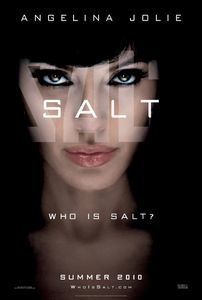
    Salt (2010)

    (In theaters, July 2010) There is something both successful and not quite satisfying in this Cold War espionage thriller throwback.  The straightforward revival of Russians sleeper agents as antagonists in Salt is amusing (even more so given recent news items seemingly custom-made to market the movie), whereas the good old suspense mechanics of assassinations and chases are competently handled.  After The Recruit and Law Abiding Citizen, screenwriter Kurt Wimmer is quickly becoming a reference for thrillers with just enough twists to be interesting, whereas director Phillip Noyce is good but not great as an action director.  (Sadly, the post-Bourne editing is often too frantic to be effective: There’s one over-the-shoulder shot of the heroine jumping down from one vehicle to another that would have been gripping as a one-shot, but is stupidly cut in two by a meaningless insert.)  As for the actors, the three lead characters seem ready to play according to type: Angelina Jolie as the capable action heroine no matter the hairstyle, Chiwetel Ejiofor as the stand-up guy you can depend on, and Liev Schreiber as the one you can’t completely trust.  In terms of pacing, Salt’s forward rhythm is undermined by unexplainable lapses: What should have been a full-speed-ahead action spectacular is slowed down by moody pauses and too-lengthy flashbacks that approach parody at times.  Preposterous plot problems can be forgiven in the name of pure thrills, which is fortunate given how the cheats become bigger and bigger as the film moves in its final act.  When it works, Salt is pure summer entertainment, going back to solid stunts rather than an overuse of CGI.  It’s fun rather than ambitious, solid rather than innovative, and just insane enough to make something palatable from Cold War plot elements we thought dead and buried.  Expect a sequel.

  • Law Abiding Citizen (2009)

    Law Abiding Citizen (2009)

    (In theatres, October 2009) There’s been a curious lack of straight-up thrillers in theatres recently, but it’s not overcooked, under-thought efforts like this one that are going to revive interest in the genre. Nominally the story of a grieving father whose vengeance efforts against a pragmatic DA become excessive, Law Abiding Citizen never manages to convince us of the superiority of the hero against the villain. Gerald Butler’s scary-smart vigilante is so compelling (especially alongside Jamie Foxx’s dull protagonist) that we never completely stop rooting for whatever he’s doing. The ending feels like a defeat at the hands of an undeserving hero, and a particularly dumb one at that: No one in their right mind would take the chances leading to the final detonation. But then again, much of Law Abiding Citizen is preposterous to begin with, what with an omniscient villain, nick-of-time plans, unbelievable contrivances and more Hollywood conveniences than you’d believe. What’s worse, perhaps, is that Kurt Wimmer’s script is not without a few good moments (the “cell phone scene” is a pure shocker; Philadelphia is fine; the ramifications of the villain’s day-job are worth a film in themselves) while Gary F. Gray’s direction makes a generous use of pans, helicopters, smooth transitions and crane-mounted cameras. There’s a sheer anarchistic glee in seeing a city’s judicial system being taken apart for pure vengeance, so you can imagine the disappointment when it all fails to cohere in anything better than an average pot-boiler thriller. This is one of those films where the trailer is quite a bit better than the actual film, and not just because hero and villains are so obviously mismatched.