Lauren Bacall

  • The Cobweb (1955)

    The Cobweb (1955)

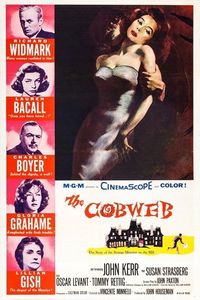
    (On Cable TV, September 2021) Unlike many other psychiatric institution movies, The Cobweb isn’t solely concerned about the therapy of its residents. Oh no — this film is about nearly everyone involved with the institution — patients, doctors, administrators and their spouses, as a question of drapes manages to ignite a near-vicious power struggle for the well-being of the institution. (The film is bookended by two title cards: “The trouble began” and “The trouble was over.”)  Richard Widmark stars as a workaholic doctor who gets involved in the trouble, and has to juggle patients, faculty infighting and marital troubles. The supporting cast is probably more interesting than you’d expect, what with the ever-beautiful Lauren Bacall and Gloria Grahame, a matronly Lilian Gish as well as an Oscar Levant as a patient. (Legend has it that Levant was incredibly difficult to work with, which feels entirely unsurprising.)  The Cobweb isn’t exactly a high-octane film — for all of the strife that it works toward, it all feels mild-mannered, even academic. Levant is underused in a role unusually close to his persona, while Bacall doesn’t have all that much to do either. Still, the film does offer a glimpse into mid-century mental health attitudes without quite delving into the usual clichés of the genre. It’s not that good but not that unbearable either, although careful viewing is required to remain invested in the ongoing story before it heats up to serious drama.
  • How to Marry a Millionaire (1953)

    How to Marry a Millionaire (1953)

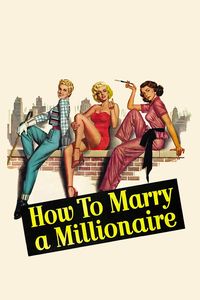
    (On DVD, March 2021) There are many, many reasons why How to Marry a Millionaire is a reprehensible film by today’s sensibilities (and perhaps even to the sensibilities of its time), but just as many reasons as to why it doesn’t really matter. The powerhouse cast is a good chunk of it: with Lauren Bacall, Marilyn Monroe and Betty Grable playing three women with devious schemes to snag themselves a rich husband (at a time when millionaire meant real money — roughly 10 times as much), the film is a snapshot of early-1950s sex symbols. Bacall is magnificent as the brainiest of the bunch, renting an apartment from a tax-evading millionaire and selling off the furnishings to meet her operational costs. Betty Grable may no longer have the cachet that she did at the time, but she’s also a lot of fun as the energetic Loco. Meanwhile, well — I’ve never been that big of a Monroe fan, but she’s in her best element here in a comedic role, and seeing her spend much of the film wearing cat eye glasses (leading to a very funny scene of mutual myopic flirting) is enough to make me marginally more interested. The other actor worth noting is William Powell, turning in one of his last suave performances as (what else?) a debonair multimillionaire targeted by one of the women. The gold-digging aspect would be far less amusing had it featured in a worse film. Here, however, the script is good enough and the characters are likable enough to overcome any ethical concerns we may have. Romance, in the end, triumphs —and Powell plays the character with enough disposable income to make all inconveniences go away as an amusing trifle. Shot in what would become the classic 1950s widescreen Technicolor sheen, How to Marry a Millionaire is bolstered by great vignettes of New York City, excellent individual scenes, winning performances, and a lighthearted tone that still works very well today. It remains a delight.

  • Written on the Wind (1956)

    Written on the Wind (1956)

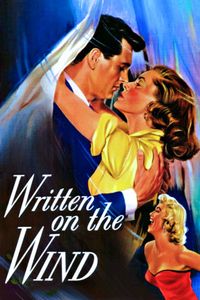
    (On Cable TV, October 2020) I have, in past reviews, used “melodrama” as a bit of an epithet, complaining about overwrought drama as if it was a bad thing by definition. But Douglas Sirk’s Written on the Wind has shown me the error of my ways, as its overblown, overwrought, overdriven plotting is a spectacular demonstration of the joys of melodrama when it simply stops caring about being plausible. From the first few minutes (even discounting the very dramatic framing device that gets us to murder in less than sixty seconds), it’s obvious that this isn’t a script that plays in subtleties, as characters get married on a whim and are soon enjoying line-by-line verbal jousting. Robert Stack and Lauren Bacall play bickering couples like few others, and both amazingly tear into their dialogue without cracking up at the absurdity of it all. Things get much better (or worse) once a scheming sister (Dorothy Malone, shattering her mousy persona with a brassy blonde hairdo) and a longtime friend (Rock Hudson, in a straight—ahem: sedate—performance that became rich in subtext when his homosexuality was revealed decades later) enter the picture and also start making trouble. The love square is inherently unstable, and it becomes even wilder once infertility, money, alcoholism, lust and plain old death enter the picture. The fifth character here is heard rather than seen—the orchestral score is exceptionally aggressive here, not underscoring the action as much as overscoring it—there’s a scene with a boy riding a mechanical horse outside a restaurant that has to be heard to be believed. It’s all very broad and outrageously in-your-face, so much so that the film flips into satirical territory by pure brute force. The kicker is that there really isn’t much of a difference between Written on the Wind and later soap operas, even glorified ones such as Dallas and Dynasty—Sirk was clearly ahead of his time here, or simply repurposing pulp fiction to the big screen with a ferociousness that would set a precedent. No matter why or how, Written on the Wind remains a striking movie today, going for madcap blatant melodrama and leaving a much stronger impression than many so-called serious dramas of the time.

  • Sex and the Single Girl (1964)

    Sex and the Single Girl (1964)

    (On Cable TV, January 2020) The sex comedy subgenre of the early-to-mid-1960s has not aged well at all, and yet it remains curiously irresistible. I could watch several of those films one after the other—the only thing stopping me is that I would run out of them too quickly. So it is that Sex and the Single Girl has both a prime-era Tony Curtis and a spectacular stockings-clad Natalie Wood battling it out romantically against the dual backgrounds of psychiatry and Manhattan magazine publishing. (I strongly suspect that this was one of the main sources of inspiration for 2003’s pastiche Down with Love.) Having Henry Fonda and a gorgeous Lauren Bacall in supporting roles really doesn’t hurt either, even if their roles are underwritten. While the film itself does miss several comic opportunities and could have been more sharply written, there’s a lot of fun to be had simply plunging into the film’s atmosphere, rediscovering relics from another time (gags from coin-operated devices?) and enjoying the naughty-but-not-vulgar style of that era’s guiltless sex comedies. Pure wholesome fun is the special glue holding these films together despite their specific weaknesses. Wood’s Audrey-Hepburnesque qualities are in full display here, and Curtis is at his most Curtisesque all the way to a reference to Some Like it Hot. While the film could have been written more carefully, there’s a deliberate approach to its idiot-plot structure, with misunderstandings and misdirection between characters growing bigger and wilder every minute, climaxing with a consciously self-aware highway climax that’s a pack-and-a-half of logistics to juggle. By the time the characters are all chomping down on pretzels, it’s all non-stop joy that ends remarkably well. I could certainly go for another film much like Sex and the Single Girl right now. A shame they’re not making them like this any more, even with the disappointing writing.

  • To Have and to Have Not (1944)

    To Have and to Have Not (1944)

    (On Cable TV, March 2019) On paper and on the screen, you really have Classic Hollywood running on overdrive in To Have and to Have Not: Let’s see—Howard Hawks directing from a script by William Faulkner from a story/treatment by Ernest Hemingway; Humphrey Bogart and Lauren Bacall as the lead couple, while they were having an affair behind the cameras that would lead to their marriage later on. Coming from Warner Brothers, there’s an obvious kinship here to be made with Casablanca, especially as the story delves into wartime shenanigans between the French Resistance and the Vichy government. Bogart himself clearly plays his own screen persona as the tough and glum smuggler, while Bacall (despite her young age) delivers an exemplary Hawksian-woman performance with more iconic lines of dialogue than most actors get in an entire career. None of this is particularly new (although the Hemingway/Faulkner collaboration is noteworthy), but it’s fun to have another go-around when it works so well—and the Bogart/Bacall chemistry would itself lead to a few encores. Typically for Hawks, there are a few choice quotes, and the direction is limpid, going to the heart of what you can do with Bogart-as-a-rogue and a luminescent Bacall as a strong wartime dame. Not quite noir but certainly not fluffy, To Have and to Have Not is so much fun to watch (although you may want to space your viewing away from Casablanca due to the inevitable parallels) that it ends a bit abruptly, although not without having Bogart shoot a guy, as it should be. The work of several craftsmen all working at the best of their abilities, it’s quite a treat, but also a good example of what the studio system could do when it was firing on all cylinders.

  • Murder on the Orient Express (1974)

    Murder on the Orient Express (1974)

    (On Cable TV, January 2019) As much as it may displease some purists, there are times where the remake improves upon the original film, and my feeling after watching the original Murder on the Orient Express is that this may be one of those pairs. Oh, I liked it well enough—there’s something just delicious about seeing a gifted detective stuck in a remote location (here: a train immobilized by snow) as a murder has been committed and everyone is a suspect. Agatha Christie wrote strong material in her original novel, and it’s up to the filmmakers to do it justice. Under Sydney Lumet’s direction, the atmosphere is quite nice, and the editing is surprisingly modern with a number of flashback cuts. The ensemble cast is remarkable, with names such as Lauren Bacall (who looks fantastic), Ingrid Bergman, Sean Connery, Vanessa Redgrave, Michael York, Jacqueline Bisset and Anthony Perkins in various roles –some of them with very little time as the story goes from one interrogation sequence to another. Still, as absorbing as it can be, it’s probably worth watching the original before the remake, as the cinematic polish of the later Kenneth Branagh version is far better controlled, and so is the take on Poirot: Here, Albert Finney plays him far too broadly as a farce character, whereas the remake wisely makes sure that behind whatever eccentricity shown by the detective is a conscious veneer soon exposed. The Murder on the Orient Express remake doesn’t necessarily strip the original of anything worthwhile, but it does make it feel slightly less impressive.

  • Dark Passage (1947)

    Dark Passage (1947)

    (On Cable TV, June 2018) Humphrey Bogart was the man’s man in the 1940s (and even well thereafter), his marriage to Lauren Bacall was the stuff of tabloid legends, and film noir was the decade’s flavour. So it is that Dark Passage goes down smoothly as we’re presented a sordid little melodrama of murder, double-cross, escaped criminal and cosmetic surgery. Unusually enough, much of the film’s first half does not show the protagonist’s face—the film either features first-person camera shots, or obscures the protagonist’s face until he undergoes cosmetic surgery and takes off the bandages—at which point he’s revealed to have none other than Humphrey Bogart’s face. The rest of Dark Passage speeds by, as our unjustly convicted protagonist tracks down his ex-wife’s killer and finds love with Lauren Bacall. San Francisco plays a good role in the story—there might have been something in the Hollywood water system at the time, given how Orson Welles’s noir The Lady from Shanghai also used the city’s backdrops liberally the same year. The plot is far-fetched, but the atmosphere and the stars help make Dark Passage a classic film noir.

  • Key Largo (1948)

    Key Largo (1948)

    (On Cable TV, February 2018) There are actors that elevate the material they’re given no matter the genre or how many years later you see the result, and so while Key Largo is in itself a perfectly serviceable thriller, having Humphrey Bogart in the lead role certainly doesn’t hurt. At times a small-scale thriller in which various people are trapped in a Florida hotel during a hurricane (showing its theatrical origins), the film eventually opens up to a boat-set finale. In another classic pairing with Bogart, Lauren Bacall plays the dame in distress, with strong supporting performances from Edward G. Robinson and Claire Trevor. Director John Huston keeps things tight and suspenseful as characters are forced to interacting in a small setting—you can see the influence that the film had over some of Tarantino’s work, for instance. Key Largo is not particularly remarkable, but it does have this pleasant late-forties Hollywood studio sheen, meaning that you can watch it and be assured of a good time.

  • The Shootist (1976)

    The Shootist (1976)

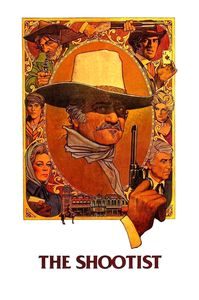
    (On TV, November 2017) One of the problems of approaching a movie education by going backwards in time is that you see the end before the beginning. You end up watching the revisionism before the classics that are being revisited, and actors at the end of their career paying homage to themselves at their prime. It usually makes sense in the end, but the first impressions can be strange. So it is that while I’m impressed by The Shootist’s approach to the last few days of a legendary gunman (John Wayne, in his final role), I can’t help but feel that I would have gotten far more out of the movie had I seen it after watching the dozens of essential westerns and John Wayne movies. Not only is The Shootist about a gunslinger counting down the days until cancer kills him, it’s explicitly about the end of the Far West as a distinct period—it takes place in a city where automobiles are starting to displace horses, water and electricity are changing the nature of living, and where civilization doesn’t have much use for killers, even righteous ones. The film explicitly ties itself to Wayne’s legacy by using clips from his previous movies as introduction to his character, and there’s an admirable finality to this being Wayne’s last role. I found myself curiously sympathetic to his gruff character, and easily swept along the plot even through (or given) I’m firmly in favour of modernity over the western. Other small highlights can be found in the film—Ron Howard plays a callow youth who learn better, Lauren Bacall looks amazing and there’s even Scatman Crothers in a minor role. Under Don Siegel’s direction, the atmosphere of a city entering the modern age is well done, and there’s a genuine melancholy both to the film and to Wayne himself as they contemplate the end of eras both social and personal. I’m not quite so fond of the specific way the film chooses to conclude, or the various action highlights that seem perfunctory as a way to alleviate what is essentially a contemplative film. But even as I head deeper in the Western genre, I think I’ve found its epilogue in The Shootist.