Marisa Tomei

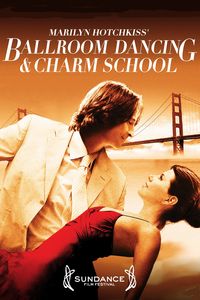
  • Marilyn Hotchkiss’ Ballroom Dancing & Charm School (2005)

    Marilyn Hotchkiss’ Ballroom Dancing & Charm School (2005)

    (On Cable TV, June 2021) I’ve been paying close attention to movies for a quarter-century by now, and yet I still get surprised at some of the films I’ve missed along the way. A look at the cast of Marilyn Hotchkiss’ Ballroom Dancing & Charm School will have anyone wondering why it wasn’t a bigger film. Featuring not only Robert Carlyle close to his career peak, but actors such as John Goodman, Sean Astin, Mary Steenburgen and Marisa Tomei (plus a few other surprises in smaller roles), it’s a bit of a time capsule of interesting mid-2000s actors. I have a specific fondness for Steenburgen and Tomei, so my surprise at the film is even less explicable. On the other hand, it just takes a viewing of the film to understand why it didn’t catch fire at the box office nor stayed in mind as a success. A mash-up of three timelines, it’s a film about 1) a man finding love on the dance floor as he tries to execute the dying wish of 2) a man dying of a car crash, who tells us about 3) his experiences as a young boy learning to dance. Unexplainably filmed in dreary almost-monochrome black-and-blue, it’s an amazingly ugly film to watch for no reason at all — and that, more than the age of the actors, may date the result as being from the overprocessed mid-2000s. While the film is meant to be a meditation on life and death, the result is often far too ridiculously overdone to be effective. It also calls to mind the more successful Strictly Ballroom, which is to no one’s advantage. When Hotchkiss works, it does so in bits and pieces: The montage in which our protagonist learns dance is a lot of fun, but it’s hard to mess up something to the tune of Cherry Poppin’ Daddies’ “Dr. Bones.”  Steenburgen and Tomei are as lovely as ever, but the heavy hand of the writer-director Randall Miller barely lets the characters breathe as one ludicrous coincidence after another is trotted out until the protagonist can achieve his quest. If I correctly understand the film’s production, part of the dislocation between the film’s three narrative strands can be explained by how the historical segments are from an earlier 1990 short film and were not shot specifically for the feature film. (That theory does not, however, explain the overprocessed look of the rest of the film, or the drawn-out nature of the middle segment that could have been handled in five minutes.)  In the end, Marilyn Hotchkiss’ Ballroom Dancing & Charm School leaves us with an ambitious but half-successful result — certainly likable, but constantly pulling audiences back through some weird narrative choices and disconcerting stylistic features. See it for the dancing or for your favourite actors, but keep your expectations in check.
  • Only You (1994)

    Only You (1994)

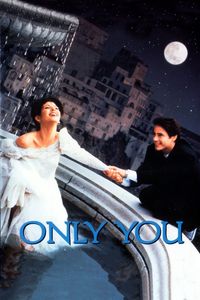
    (In French, On TV, February 2021) Capsule reviews are often about finding interesting things to say about a film, and there are a few hooks through which you can discuss Only You. As a bubbly romantic comedy set in Italy, it brings to mind both the wave of comfortable romcoms of the 1990s and the pedigree of Italian-set romances from Hollywood history. As directed by Norman Jewison, it’s another shining example of how versatile the Canadian-born filmmaker could be. Featuring a surprisingly featureless Marisa Tomei and a pre-downfall Robert Downey Jr. (plus a remarkable supporting turn from Bonnie Hunt), it’s a romantic comedy that knows that it has to be anchored by likable leads. With a narrative that initially straddles the line between romantic fantasy and magical realism, it plays a little bit with expectations before delivering exactly what is expected from it (including a finale at an airport). The Italian setting is pleasant enough — so much so that the film does lose steam once it gets back to the United States for its conclusion. But what does it amount to? More or less the romantic comedy that is advertised in the blurb, albeit with a few eccentricities to make it spiky and slightly more interesting along the way. Only You is not a great movie, but it’s charming enough to be what it aims to be.

  • Alfie (2004)

    Alfie (2004)

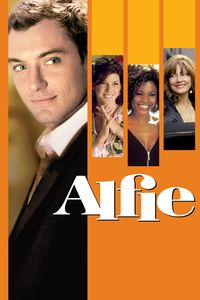
    (In French, On TV, February 2021) I wasn’t all that interested by 2004’s Alfie back when it was in theatres or during its most active video lifecycle, but a recent look at the original 1966 film featuring Michael Caine had me suddenly interested in the later version. Jude Law was among the best choices to measure up to Caine, but this newer take updates and tweaks so many things that it hardly feels like a remake, and more of a companion work. What has not changed is the conceit of having its irremediable cad of a protagonist (suggested to be the son of Caine’s character) regularly address the audience to boast about his philosophy of life: As a British man deliberately expatriated in New York to improve his chances of hooking up, his life is a tightly optimized machinery for meeting, bedding and discarding girls. The first few minutes of the film are all in good fun, but consequences come in the form of a worrying medical diagnostic, the end of a longer-term relationship and, most dramatically, a fling with a friend’s on-and-off girlfriend, resulting in an unwanted pregnancy. Shifting from insouciant cad comedy to a more serious recognition of his flaws, Alfie does follow the original’s dramatic arc, but rearranging and updating the material to make for a decent watch by itself. Law strikes just the right balance in being charmingly arrogant and showing the capacity to reconsider his life after multiple setbacks. He does remain a cad, but at least a marginally forgivable cad. A strong supporting cast has its own merits, from Marisa Tomei to Omar Epps to Nia Long to Sienna Miller and Susan Sarandon. The soundtrack includes many down-tempo pieces sung by Mick Jagger. It’s obvious that 2004’s Alfie can’t have the same epochal resonance as the 1966 Swinging London one — it’s a different time and place, and no one can match 1960s Michael Caine. But the remake is interesting enough to live on its own terms, even for those with recent memories of the original.

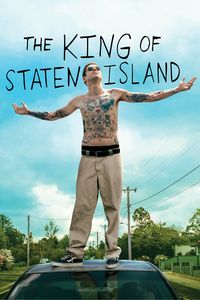
  • The King of Staten Island (2020)

    The King of Staten Island (2020)

    (On Cable TV, January 2021) The very nature of comedies about unlikable people growing up is that you first have to spend some time with them prior to their learning any better. Thus, the initial hurdle with The King of Staten Island is caring enough to delve deep into the life of its protagonist, a 24-year-old Staten Island resident only too content to drift aimlessly through life, haunted by the death of his father, daydreaming about becoming a tattoo artist despite insufficient skills, and content to smoke life away with friends in dimly lit basements. It’s not much of an inspiring character, especially when he decides that it’s a good idea to tattoo a nine-year-old on the beach. But that sets in motion a number of events that, in the end, make him a better person. The film does take an additional quality once you notice that it’s directed by Judd Apatow—The King of Staten Island does feel slightly more mature than his previous films: it’s still about adult slackers, but it doesn’t go for the gross humour of its predecessors, nor the sometimes-strange pacing decisions of films such as Funny People. In other words, Apatow himself may be growing up—and while the result may not be as outright funny as previous movies, nor as distinctive, Apatow may find a way forward as a smaller-scale indie director. He’s certainly able to get good performances: Marisa Tomei is aging well in appropriate roles as the film’s most familiar name, but the film is Pete Davidson’s show, as he stars and co-wrote the semi-autobiographical script. The result is not initially all that interesting, but it improves as it goes on, and ends up settling for a perfectly acceptable tale of maturity.

  • Parental Guidance (2012)

    Parental Guidance (2012)

    (In French, On Cable TV, December 2020) While Billy Crystal isn’t listed as one of Parental Guidance’s screenwriters (although he is a producer), his brand of amiable old-school humour gets a pretty good fit in this story of generational clashes. The laughs begin when a couple has to go away for business and calls their parents to babysit the kids for a few days. Predictably, the old-school parenting represented by Crystal (and co-star Bette Midler) doesn’t quite fit the caricatural newageish instructions left by the parents… and things go on from there. It’s all meant to be sweet and easy to watch, which means that you will see every subplot coming from a mile away. As expected, Crystal plays into cranky baby-boomer stereotypes whose blunter methods of parenting can fill the gaps left by the too-permissive parents, and the ending sees personal growth for everyone involved. Unobtrusively directed by Andy Fickman (which apparently means letting Crystal do whatever he wants), the screenwriting tricks are obvious, the comedy is played broadly and the stereotypes take the place of characterization. And yet, it’s not unwatchable. Marisa Tomei is always a plus, and even the predictable sappiness works in wrapping up the film satisfyingly. Sure, Parental Guidance is Hollywood in autopilot mode, but when the formula works for most audiences, it works.

  • Spider-Man: Far from Home (2019)

    Spider-Man: Far from Home (2019)

    (In Theaters, July 2019) Life goes on after The Avengers: Endgame, and so Spider-Man: Far from Home is our first glimpse at the way the MCU reconfigured itself in the wake of its latest event movies. In the Spider-Man context, it does mean going back to a more basic adventures, albeit not an unspectacular one: As Peter Parker and his high-school class heads over to Europe as part of their senior year, trouble keeps following Parker no matter where he goes. The psychological impact of previous movies isn’t forgotten (Parker’s hero worship of Tony Stark ends up being one of the film’s dramatic strands), but we can occasionally take a breath to focus on such teenage issues such as asking out a girl and/or dealing with romantic competitors. From a narrative standpoint, Far from Home is cut from the same cloth as other MCU movies: There’s an effective balancing of character, action, comedy and spectacular set-pieces, pulling elements from previous entries to add a bit more depth to the mayhem. The special effects are quite good, although the film’s ongoing theme of illusions does mean that we’re in for some disorienting visuals that seem markedly less than photorealistic. There is also some weirdness in terms of plotting and characterization (mostly Nick Fury’s, which seems like a parody of itself) that eventually get explained by the end of the credits, but they’re still distracting for most of the film. Tom Holland once again turns in a great dual performance as Parker and Spider-Man, with some great co-leading work by Jake Gyllenhaal, and supporting performances by Zendaya (finally realizing the promise suggested in the first film) and the Marisa Tomei/Jon Favreau couple. The result is generally satisfying, although it comes so close on the heels of Endgame and the spectacular Spider-Man: Welcome to the Spider Verse that it seems perhaps a bit too ordinary in comparison. Still, it’s guaranteed entertainment for dollars, and that’s been the trademark of the MCU for a while now.

  • The First Purge (2018)

    The First Purge (2018)

    (On Cable TV, March 2019) Every Purge instalment takes more care in detailing its premise, and each one has fewer and fewer interesting things to say about it. Prequel The First Purge takes us to the origins of the first purge, but has nearly nothing to say that hasn’t been covered yet. There is something almost interesting in how the series has been slowly shifting from having white to black protagonists in four instalments—and this one doesn’t pull any punches in having black heroes fighting white supremacy. Alas, this is the point that the last few movies have already made, leaving little thematic gas in the tank. Otherwise, though, this is all routine stuff, repugnant and boring at the same time. Describing the first purge is a mistake from series writer-producer James DeMonaco (not directing this time around) when the film’s not nearly as clever as it thinks—the portrayal is less interesting than what the back-story had left to the imagination. The First Purge starts grating very early on, to the point where I actually didn’t care for Marisa Tomei’s character—which is nearly a first. Everything is as nihilistic as dictates the box-office returns of the series—there will be purging as long as there is commercial potential to the series (and then two or three “final” instalments). There is something else at play, though—the first Purge was released at the tail end of the Obama years, back when it was possible to fool ourselves that things were getting better and the movie was over the top. Now we’re knee-deep in one of the most overtly mean-spirited presidential administrations in history, and the series premise hits too close to home. At this point, we don’t need any more entries in the Purge series—we need to pay attention to the newscasts and prevent it from happening.

  • The Rewrite (2014)

    The Rewrite (2014)

    (On TV, February 2019) I’m an enthusiastic and forgiving audience for stories about writers, so it was natural that I’d eventually gravitate to The Rewrite even years after its release. Focused on a washed-up Hollywood screenwriter who takes a teacher’s job in a northeastern university, The Rewrite is, at its best, an entertaining trifle of a comedy/drama with a few pointed jokes at Hollywood, academia and those who make “being a writer” too big a part of their identity. It’s actually the kind of story that begs to be a novel more than a movie, but I’m not about to complain given that it features the ever-likable Hugh Grant in the main role, and my perennial movie-crush Marisa Tomei. A strong supporting cast (J. K. Simmons! Bella Heathcote in a substantial role! Allison Janney!) helps the film get rolling and remain likable throughout. (Well, likable despite the unlikable character played by likable Hugh Grant. It’s that kind of film.) The plot itself is serviceably in thrall to the usual rom-com tropes, albeit with a bit of a harder edge than usual in terms of character growth. The clash of culture between Hollywood and Academia is amusing in its own right, and it feels as if the lead character does earn his happy ending along the way. The Rewrite is nowhere near an essential movie, but it’s likable enough to be worth a look for anyone interested in its lead actors or subject matter. I had a good-enough time watching it.

  • Spider-Man: Homecoming (2017)

    Spider-Man: Homecoming (2017)

    (On Cable TV, March 2018) Like most, I was very skeptical of yet another attempt to reboot the Spider-Man series. Only the idea that Marvel Studio was the creative force behind Spider-Man: Homecoming (and the affirmation that the film would fit within the MCU) kept me hopeful. As it happens, this new integrated take on the character is completely successful. Indeed coming back home to the character’s spiritual and physical origins, Homecoming manages a fresh take on an overexposed character, seamlessly blending him with the rest of the superhero universe and also taking on the Marvel house style honed to perfection over the past ten years. While I liked Andree Garfield a lot as Spider-Man, Tom Holland brings the required wide-eyed naiveté to the character, making the relationship with father-surrogate Tony Stark even more interesting. Strong action sequences and a credible villain (leading to an honestly surprising moment midway through the film where Peter Parker and Spider-Man’s identities come crashing together) do much to make the film fun, but so do the de-rigueur touches of humour and self-conscious goofiness. By choosing to depict a looser, funnier, younger Spider-Man, the MCU creative team has found a terrific antidote to the increasingly dour direction the character was taking, and the result is irresistibly fun. The integration even works at the story level, as the film deals with the fallout of having alien invasions and superheroes running around; the MCU is maturing nicely as it grows older. Veteran actors such as Robert Downey Jr., Marisa Tomei and Michael Keaton are used expertly to ground the film, while among the high-school crowd, Zendaya is remarkable despite having nearly nothing to do (at least until the sequel.) Homecoming adds up to a surprisingly entertaining movie, even more so given the low expectations. Once again, Marvel Studio defies the odds.

  • The Paper (1994)

    The Paper (1994)

    (Second viewing, On Cable TV, September 2017) I recall seeing The Paper on its opening week, happy (as a former high-school paper editor) to see a film where newspapermen were heroes. I kept a good memory of the result, but I was curious to see if it held up two decades later. Fortunately, The Paper remains almost a definitive statement on 1990s city journalism. Tightly compressed in not much more than 24 hours of action, The Paper follows a hectic day in the life of a newspaper editor juggling work, family and citywide tensions. Directed with a lot of nervous energy by Ron Howard, The Paper can boast of an astonishing cast. Other than a top-form Michael Keaton as a harried news editor, there’s Robert Duvall as a grizzled senior editor, Glenn Close as something of an antagonist, Marisa Tomei as a pregnant journalist desperate for a last bit of newsroom action, Randy Quaid as a rough-and-tough journalist … and so on, all the way to two of my favourite character actresses, Roma Maffia and Siobhan Fallon, in small roles. The dense and taut script by the Koepp brothers offers a fascinating glimpse at the inner working of a nineties NYC newspaper, bolstered by astonishing set design: That newsroom is a thing of beauty as the camera flies by and catches glimpses of dozens of other subplots running along the edges of the screen. You may even be reminded of how things used to work before the rise of the 24-hour Internet-fuelled news cycle. (Of all the things that the Internet has killed, “Stop the presses!” is an under-appreciated loss.)  The Paper is one of those solid, satisfying movies that don’t really revolutionize anything, but happen to execute their premise as well as they could, and ends up being a reference in time. I’m sad to report that by 2017, The Paper seems to have been largely forgotten—while I caught it on Cable TV, it rarely comes up in discussions, has a scant IMDB following, and is rarely mentioned while discussing the careers of the players involved. Too bad—with luck, it will endure as the kind of film you’re happy to discover by yourself. 

  • Before the Devil Knows You’re Dead (2007)

    Before the Devil Knows You’re Dead (2007)

    (On DVD, January 2017) As far as mean and slightly seedy crime dramas go, Before the Devil Knows You’re Dead hits most of the right notes. Featuring great performances (most notably from an often-naked Marisa Tomei, and Philip Seymour Hoffman, unfortunately playing a heroin addict) and a script that ping-pongs in time, this is the kind of low-stake but well-executed crime drama that doesn’t set the box office on fire but should feature in every moviegoer’s diet. (And I say this having missed the movie in theatres, only to catching a decade later on DVD.) The film does get grim as the consequences of “a simple theft” go awry in increasingly dramatic ways. By the end of the movie, you can expect a few deaths, a family torn apart and no one feeling particularly happy about the whole thing. Nonetheless, in the hands of veteran director Sidney Lumet, Before the Devil Knows You’re Dead steadily moves forward despite a slightly too long running time, and has a few surprises in store until the end. Not bad, even though I’d be surprised if viewers will be able to recall much of the plot weeks after seeing the film.

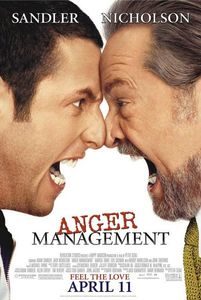
  • Anger Management (2003)

    Anger Management (2003)

    (Netflix Streaming, April 2015)  At the time of Anger Management’s release, there was something a bit clever in casting Adam Sandler in the role of a meek man who is led by circumstances into assuming his innate aggression: Early-career Sandler exemplified a violent man-child comic persona, so much of Anger Management is spent waiting for the inevitable explosions.  (After 2002’s Mr. Deeds, his persona would be softened to a gentler good-guy one.)  To see him paired off with Jack Nicholson (who has spent much of his late career perfecting abrasive characters) is a further wonder.  And, at times, Anger Management works: there are funny set-pieces, many showcase moments for Nicholson’s ability to be both unpleasant and compelling and Sandler navigates a fine edge between his early aggressive persona and his latter-day amiable everyday-man.  Marisa Tomei is likable in a somewhat generic role, with fun performance in smaller roles from Luis Guzman, John Turturro, Woody Harrelson and John C. Reilly.  (There are also more than a few celebrity cameos, as is often the case in Happy Madison-produced movies.)  Where Anger Management gets in a bit of a mess, however, is in its messy collage of absurd contrivances, late-revealed conspiracy, attempts to link back to a childhood prologue and ultimate claim to be about something else than simple anger management.  The last few minutes are a series of “Really?  Really??” that don’t add much to the film, especially when its reason for existing is simply seeing Sandler face off with Nicholson –if the film’s poster could get that right, then why didn’t the script?  Of course, Adam Sandler films aren’t exactly known for tight scripts and focused scenes – sometimes, it’s best to just enjoy the comic set-pieces and ignore the attempts at making it all mean something at the end.

  • Inescapable (2012)

    Inescapable (2012)

    (On Cable TV, September 2013) There’s something admirable in trying to deliver a foreign political thriller on a low budget and that’s exactly what Ruba Nadda attempt with Inescapable, as a Canadian man goes back to his native Syria in order to find his missing adult daughter.  It soon turns out that she was there in order to investigate her father’s past, and that he had made a number of enemies before leaving.  Alexander Siddig stars as a man with a tumultuous past who has to get back in the covert operations mindset in order to find and free his daughter.  The surprise here is Marisa Tomei, surprisingly convincing as an aging Syrian woman bitterly helping her ex-fiancée against the multiple enemies he still has in Damascus.  Inescapable has a number of interesting elements, but it may not have the means to make them work effectively: despite the tangled web of allegiances and secrets shared by the film’s characters, the film takes forever to heat up, and ends without a satisfying coda.  For all of the film’s accomplishment in evoking a spy thriller set in Syria (despite being filmed in South Africa with Canadian money), Inescapable is a bit too bland to be interesting as more than a home-grown curiosity.  The action sequences are filmed without particular flair, and the stand-offs don’t have enough energy to resonate.  Some secrets look far-fetched (how long did the daughter spend with the diplomat?) while others don’t have much of an impact.  There’s little tension to the proceedings –it’s tough to even believe that the daughter is in danger, and the ending seems wrapped in mystery more than precipitated by the protagonist’s actions.  As much as world-aware Canadian efforts such as this one are to be applauded on general principle, Inescapable’s execution is a bit too ordinary to warrant much attention.

  • Crazy, Stupid, Love. (2011)

    Crazy, Stupid, Love. (2011)

    (On Cable TV, June 2012) Romantic comedies tend to live or die on the strength of their cast, so it’s a relief to see that nearly everyone headlining Crazy, Stupid, Love is at the top of their game.  Steve Carell anchors the cast as a recently-separated middle-aged man seeking lifestyle counsel from a capable womanizer, but he’s surrounded by more great performances by a variety of known names in a variety of large-and-small roles, from Julianne Moore, Emma Stone, Marisa Tomei, Kevin Bacon and Ryan Gosling, alongside newer names such as Jonah Bobo and Analeigh Tipton.  Veterans Tomei and Bacon are hilarious to watch in small but effective roles, but Gosling is particularly noteworthy, charming his way through a character that could have been immensely repellent in less-capable hands.  After focusing on the protagonist’s attempt to recapture some of his male seductive powers, Crazy, Stupid, Love soon expands into a mosaic of romantic subplots, occasionally palming a few cards in order to deliver a few almost-cheap twists along the way.  No matter, though: it leads to a relatively pleasant conclusion despite the overused (but subverted) graduation-speech plot device.  Such genre-awareness is a crucial component of Crazy, Stupid, Love’s moment-to-moment interest: Beyond the well-used soundtrack (including a striking usage of Goldfrapp’s “Ooh La La”), the sharp dialogue and the snappy direction, Crazy, Stupid, Love is just a joy to watch: so much so that even the tangled subplots and tortured twists seem cute rather than annoying.  And that, one could argue, is a measure of the film’s success.

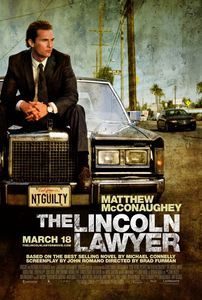
  • The Lincoln Lawyer (2011)

    The Lincoln Lawyer (2011)

    (In theatres, April 2011) There’s been a dearth of courtroom drama over the past few years, and The Lincoln Lawyer isn’t just a good return to the form, it’s about as good an adaption of Michael Connelly’s original novel as fans could have hoped for.  As with most readers of the book learning about the film’s casting, I wasn’t sold on Matthew McConaughey as protagonist-lawyer Mickey Haller: I had always envisioned Haller as more mature and cynical than McConaughey’s typical romantic-comedy laid-back persona.  So it’s a surprise to see him return to serious drama as an older, wiser, far worldlier presence, fully comfortable in the role of a professional defence lawyer operating from his chauffeur-driven car.  Brad Furman’s direction fully embraces the California-noir style of the novel, Los Angeles’ broad avenues offering as many dangers as tiny back-streets.  The cinematography is bright, sunny, energetic and compelling.  Rounding up the main cast are good supporting performances by Ryan Phillippe (detestable as always), Marisa Tomei and William H. Macy.  While the twists and turns of the plotting are familiar, they’re well-handled and make up for a refreshing legal drama that proves that execution is often more important than fresh concepts.  The Lincoln Lawyer may be less reflective about the role of defence lawyers than the book, but it still delivers enough legal manoeuvres to keep things interesting.  For some, it may be the start of a franchise (there are now three further Haller adventures on the shelves); for most, though, it’s a solid, well-paced, well-made crime drama with a cynical smirk: Exactly the kind of film that’s always welcome.