Mary Pickford

  • Rosita (1923)

    Rosita (1923)

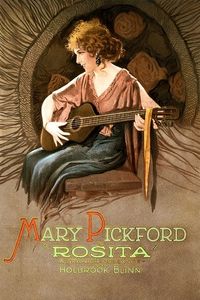
    (On Cable TV, December 2021) Despite my utmost admiration for Ernest Lubitsch’s sound movies, his early silent career is hit-and-miss. No real surprise there — dialogue is often the best part of a classic Lubitsch movie, and he was developing his style at the same time as the movie industry was figuring out the basics of film grammar. I’d put Rosita (his first Hollywood film, I believe) as an average silent entry in his filmography — not as good as his sound films, but not as underwhelming as some other Lubitsch silents. None other than Mary Pickford (in her first adult role) stars as a protest singer who, in criticizing the king, ends up making herself attractive to the king himself. Many romantic complications ensue as the heroine navigates between the attentions of the King and her own true love. Rosita is watchable and it ends well — but it’s no great Lubitsch comedy. Still, you have to admire the way the film was rescued from oblivion — for decades, it was considered lost until a safety print was discovered during the 1960s and that single copy was the sole version that existed for many more decades. It’s only in 2017 that a restored version was premiered, giving us access to a good crucial link in both Pickford and Lubitsch’s career. Rosita may not be that good of a film, but it doesn’t deserve obscurity.

  • Coquette (1929)

    Coquette (1929)

    (On Cable TV, September 2020) I do better when I approach 1920s movies with low expectations. To its credit, Coquette is one of the first dramatic films of the sound era—and it features then-megastar Mary Pickford in her first non-silent role. Unlike many movie actors who couldn’t deal with the transition to talking movies, Pickford did well: Her theatrical experience showed in her use of a rather pleasant voice, and Coquette is a decent showcase in a different acting style than the silent movie roles that led her to fame. Her character here isn’t the kind of cute girl that she played throughout most of the silent era, though: cutting off her curls, she here plays a young woman trying to reconcile her romantic feelings for a young man against the wishes of her father. The stage is set for a very melodramatic film, and that’s what we get, all the way to a somewhat glum ending shot. From a technical perspective, the film is clearly from the 1929, with the flickering images of the time supplemented by the rough technicalities of the early sound era: scratchy low-fidelity dialogue, and bolted-down cameras in their own soundproof booths. It does make the film a bit harder to watch for non-initiates, but I can guarantee that it’s better than if it was constantly interrupted by title cards, as it would have been even three years earlier: Enabled by sound, Coquette does get to use the tools of theatrical dialogue to good effect. I wouldn’t exactly call the result compelling, but Coquette is interesting both as a representative technical milestone of the films of the early sound era but also as its own melodramatic narrative, presenting a somewhat downbeat story the likes of which would largely disappear from Hollywood mainstream until the New Hollywood of the 1970s. It exceeded my low expectations, which is about as nice a thing I can say about 1920s drama films.

  • Mary Pickford: The Muse of the Movies (2008)

    Mary Pickford: The Muse of the Movies (2008)

    (On Cable TV, November 2019) It’s never too late to go back and document the earliest days of Hollywood, as Mary Pickford: The Muse of the Movies shows with a hagiography dedicated to one of the foremost actresses of the silent and early-talkie era. Considering the slight footprint that Pickford left in the sound era, it’s easy to overlook her star status throughout the 1910s and the 1920s—she was very much the first fan favourite, the first movie star. But it’s what happened after her screen acting retirement that’s perhaps more interesting, as she moved into the production side of movies and helped create United Artists, becoming the first movie studio executive along the way. All of this (and more) is brought forth through talking heads, restored archival footage of the film and cleaned-up audio of various interviews given throughout her life. The Muse of the Movies is, in keeping with most movie biographies, clearly a hagiography of sorts: Pickford doesn’t make bad decisions in this film, and it’s entirely dedicated to the creation of a portrait of Pickford as a film pioneer, nuance forgotten along the way. Still, even knowing this, there’s a lot to like here about someone often forgotten in modern times.