Orson Welles

  • Campanadas a medianoche [Chimes at Midnight] (1965)

    (On Cable TV, September 2021) The idea of Orson Welles taking on Shakespeare’s Falstaff as writer-director-star is almost irresistible. Seeing him show up as a grotesquely rotund lead (underscored with the roundest armour suit even seen) is a good start, and his intention to combine plays, deliver an ambitious battle sequence and blend a bit of comedy with the drama is laudable. The problem is: I have to be in a very specific frame of mind to appreciate Shakespearian dialogue (I have written about this before — I find Shakespeare more approachable in French translation), and today was not one of those days. I made it to the end, but reluctantly. I think I can see enough reasons to come back to this later on, but for now I’m going to rate the film as not quite interesting enough.

  • The V.I.P.s (1963)

    The V.I.P.s (1963)

    (On Cable TV, May 2021) In the end, I expected too much from The V.I.P.s. Admittedly, it’s easy to be seduced by the all-star cast and the simple premise: As fog envelops London Airport and prevents departures, an ensemble cast of characters has a last chance to resolve their problems. How can you resist a cast headlined by Elizabeth Taylor, Richard Burton, Orson Welles, Maggie Smith, Rod Taylor, Louis Jourdan and many others? But in the execution, the film falls flat — the rhythm is not a match with the sense of urgency that the characters are supposed to feel, the subplots scatter, the drama doesn’t build up and the pieces don’t come together to make something more than a collection of subplots. (Had they added a mad bomber à la Airport, mayyybe we’d have something to pull the strings together.)  The characters aren’t the only ones stuck here — viewers may tap their feet often during the nearly two-hour running time. This being said, it’s not a complete waste of time either — the accumulation of familiar actors has something interesting, and there is at least a minimum of drama going on, even disguised under British restraint. It does, if nothing else, offer the chance to hang out in an elite airline boarding lounge in the early 1960s, which is not a bad privilege. But even that may outstay its welcome in the end.

  • Mr. Arkadin aka Confidential Report (1955)

    Mr. Arkadin aka Confidential Report (1955)

    (On TV, May 2021) I’m at the stage of my cinephilia when any unseen movie from Orson Welles is a bit of a happy surprise — while I’m certainly aware of Welles’ fall from Hollywood grace and the haphazard nature of filmography, I rather like the persona he carved for himself in the later stages of his career, physical presence and terrific voice included. Now, Mr. Arkadin dates from a weird interstitial time in Welles’ life: generally burnt-out in Hollywood, but not quite out of it, as Touch of Evil was still three years in the future. But it’s clearly a film with a strong European flavour, and as such does anticipate the last half of Welles’ life. It also looks back at The Third Man, being explicitly based on the Harry Lime character and its dense web of international intrigue. The plot has to do with a shadowy businessman and a cross-continental quest for truth, but I really can’t say that the result is coherent. Part of it undoubtedly has to do with the version of the film that I watched: Out of the nine known versions of the story (!), the “public domain” version is acknowledged as “the least satisfactory” one (I’m quoting a specialist by way of Wikipedia here) and it’s not a good idea to try to make sense of its narrative. Which is just as well, because the film can often be best appreciated as a series of moments, images, Welles’ typically compelling performance and pure cloak-and-dagger atmosphere of postwar Europe. I will probably revisit Mr. Arkadin in the future, preferably through its better-reviewed Criterion edition. In the meantime, however, I’m just happy for a little bit more Welles.

  • The Long, Hot Summer (1958)

    The Long, Hot Summer (1958)

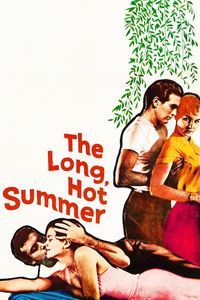
    (On Cable TV, April 2021) Long before becoming a respected Hollywood icon and salad dressing tycoon, Paul Newman was the designated bad boy of the late-1950s-early-1960s and The Long, Hot Summer clearly takes advantage of that persona. A rural melodrama featuring a drifter (Newman), a rural patriarch (Orson Welles!) and his daughter (Joanne Woodward, soon-to-be Newman’s wife), it breaks no new grounds in narrative matters. We can guess how these things go, but the film’s biggest asset is its sense of rural atmosphere, and actors such as Welles and Newman playing off each other. There are links here with Tennessee Williams plays (especially if you follow Newman’s filmography at the time), with later films such as Hud and with a certain kind of rural southern-USA drama that would periodically pop up in Hollywood history later on. For twenty-first century viewers, Welles is a bit in a weird transitional persona here — overweight and no longer young but not yet bearded nor all that old. The melding of three Faulkner stories into one film actually works well into getting to a coherent whole with plenty of interesting side-details. While The Long, Hot Summer does not amount to an essential film (well, except for those Newman and Welles fans), you can see the way it worked back then, and an archetypical kind of southern rural drama.

  • Jane Eyre (1943)

    Jane Eyre (1943)

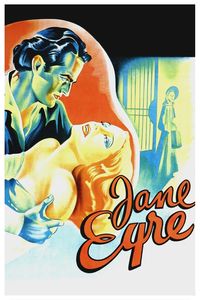
    (On Cable TV, February 2021) For anyone even remotely knowledgeable about gothic romances, Jane Eyre is the ur-example for the form — with its likable governess becoming entangled in a romance with the mysterious owner of a large estate, and a crazy woman locked in the cellar. This version of the much-adapted Charlotte Bronte novel does have a truly impressive cast and crew — a script featuring contributions from Aldous Huxley and John Houseman, Joan Fontaine in the titular role and, perhaps best of all, Orson Welles (who also produced) as the mysterious Edward Rochester. The film plays up its sombre era of abandoned children, cruel orphanages and mysterious manors halfway between Dickensian social criticism and film noir visual melodrama. The result is curiously enjoyable, although now in a self-aware register that wallows in the overdone style of the piece. Welles is credibly menacing here, already channelling the scene-chewing nature of many of his later performances. It’s a period drama of a far more mysterious nature than many of the literary adaptations of the time, and it fits remarkably well will the mini-wave of domestic thrillers of the mid-1940s. As usual with stories adapted so frequently to the screen, the 1943 version of Jane Eyre is more remarkable for the cast and crew assembled for the occasion, as a snapshot of what Hollywood could do with the source material at the time than for the innate qualities of the story itself.

  • Moby Dick (1956)

    Moby Dick (1956)

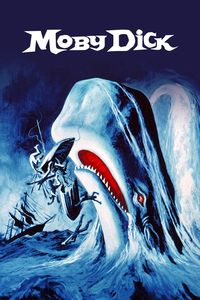
    (On TV, October 2020) Considering the central place of Herman Melville’s Moby Dick in the American literary canon, any film adaptation would be an ambitious undertaking, roughly akin to Captain Ahab’s maniacal quest for the Great White Whale that maimed him. It’s hard to imagine a better director for that gigantic endeavour than a middle-aged John Huston, considering the ways his directorial style has been described. In some ways, this adaptation is quite good: With novelist-screenwriter Ray Bradbury cracking the case of adapting a very long book into a movie, the script is not bad. Some very good production means (for a mid-1950s movie) have gone into recreating the world of a whaling ship and the gigantic animal they intend to fight. Where Moby Dick doesn’t do as well is in a small but crucial detail—casting. Specifically, the casting of Gregory Peck as Captain Ahab—look, no one ever dislikes Peck, but he is far too well-mannered to be an effective Ahab. You want someone able to spittle around their grandiose rants, with crazy eyes and stabby hands. In other words: Not Peck. It’s not that he’s bad, it’s just that he’s not close enough to the ideal version of the character. This is driven even deeper with the knowledge that John Huston was right there, behind the camera rather than in front of it. Or that Orson Welles shows up briefly for a cameo but not as Ahab. Too bad—with a fresh coat of CGI paint and another lead actor, this Moby Dick could be much, much better.

  • RKO 281 (1999)

    RKO 281 (1999)

    (In French, On Cable TV, May 2020) It makes perfect sense that one of the most famous movies of all time would spawn its own making-of TV movie. No, not a documentary—a full scripted drama with enough good actors to make this a prestige TV event. Yes, RKO 281 is a slick dramatization not only of the making of Citizen Kane, but the subsequent thunderstorm of disapproval that came from media mogul William Randolph Hearst, who was convinced the film was an attack on him and his girlfriend Marion Davies. As someone with a fair amount of knowledge about the film and its era, I was very happy with the result, even if I knew where the story was going. Some very impressive means have been spent to come up with convincing period details, and the cast is almost pitch-perfect for their roles—Liev Schreiber as Orson Welles? John Malkovich as Herman J. Mankiewicz? James Cromwell as William Randolph Hearst? Melanie Griffith as Marion Davies? RKO 281 is one wonder after another. Sixty years after the events depicted, the film pulls no punches: Hearst is the villain, and Hedda Hopper is the henchwoman. It all culminated, as film buffs know, in the dumbfounding decision to give that year’s Best Picture Academy Award to How Green Was My Valley—although this, curiously, is not in the film considering that RKO 281 ends soon after Citizen Kane’s premiere. (Maybe RKO 281 knew that biting the hand that hands over the Oscars was not a good idea, even for a 1999 TV movie.) It’s certainly not perfect (there are anachronisms and simplifications and not enough attention paid to the artistry of Kane) but it’s a decent dramatization, even if everyone will know not to take it as a documentary. Some special editions of Citizen Kane on physical media include this film as a bonus, and it’s a good one.

  • The Eyes of Orson Welles (2018)

    The Eyes of Orson Welles (2018)

    (On Cable TV, April 2020) I’m usually a good audience for documentaries, but The Eyes of Orson Welles lost me along the way. In theory, the idea of exploring Orson Welles through his private art (drawings, sketches, paintings) is intriguing—but then writer-director Mark Cousins takes a very stylized approach to the topic by narrating the film as if to Orson, penning thoughts and wrapping up movie excerpts, location footage, an interview with one of Welles’s daughters, and so on. I will defend that choice on novelty alone, but it is intrusive and showy to an unusual degree. As a film-length musing on a beloved subject, it’s immensely detailed: Cousins weaves in and out a dizzying number of very pointed comments about Welles’s life that clearly show his understanding of his topic. But while I can appreciate the intent, I had a surprising amount of difficulty in remaining interested. (Lack of closed captions on a noticeable Irish accent did not help.) It gets wilder: Cousins wraps a critique of his own work by having Welles (via impersonator) answer back at the end of the film. By that point, though, I was pining for dull and boring objective documentary rather than what The Eyes of Orson Welles ended up becoming. A disappointment, then, although I suppose that some will like it more than I did.

  • Journey Into Fear (1943)

    Journey Into Fear (1943)

    (On Cable TV, March 2020) There’s something slightly insane about those WW2 thrillers shot and released as the war was going on—trying to comment on topical events despite the long length of film production (which was admittedly shorter then than now) and the possibility that real-world events would overtake them. And that’s not even mentioning the biggest uncertainty of all: not knowing how the war would end. Usually, screenwriters went around this problem by focusing on personal adventures, slightly blurring the background, cranking up the propaganda and hoping for the best. Journey into Fear is one of those instant-WW2 thrillers, but making life even harder on itself by adapting a 1940 novel. (Famously, the film’s protagonist has to escape to another country than in the book because France had been overrun by the Nazis in-between.) The result is a claustrophobic thriller about escaping the Nazis in one of the less overexposed fronts of WW2: Turkey. Journey into Fear is short (68 minutes!) and to the point, with a rather good action climax after a film that largely takes place aboard a passenger ship filled with tension. Orson Welles shows up on-screen and seems to have fun as a Turkish general, but the film’s messy production history holds that Welles was also involved as screenwriter, director and producer—effectively making this an unofficial early-Welles picture. Joseph Cotten and the beautiful Dolores Del Río also co-star to good effect. While not a great movie, Journey into Fear remains an effective thriller, and to think it was produced as the war went or, with no less a mercurial presence as Welles, is almost mind-boggling.

  • Ein Unbekannter rechnet ab [Ten Little Indians aka And Then There Were None] (1974)

    Ein Unbekannter rechnet ab [Ten Little Indians aka And Then There Were None] (1974)

    (In French, On Cable TV, November 2019) As murder mysteries go, And Then There Were None is one of the darkest ones and it remains one of Agatha Christie’s best-known novels. I first read it in high school, so it keeps that timeless aura that, paradoxically, makes its various film adaptations more interesting. In the case of this 1974 version (a multinational collaboration, but shot in English), the appeal here is in a very specific 1970s take on the material, not particularly faithful to the original text but interesting in its casting and audience-friendly choices. It’s obvious from the first few frames that it’s going to be a very 1970s kind of film—the fuzzy colour cinematography, the fashions of the day played up and the actors being a multinational bunch of then-celebrities. Take a look at that cast: Charles Aznavour, Elke Sommer, Gert Fröbe, Oliver Reed, Richard Attenborough and Orson Welles. But it’s in the changes to the story (many of them reprised from the 1965 version by the same producer) that the film ends up being most interesting. Dispensing with the traditional island location, this one ends up in the Iranian desert prior to the revolution—the impact still being isolation in the middle of nowhere. Thus transplanted in a sand ocean, the story largely goes about the same way until it hits its third act, at which point the plot is rejigged in most Hollywoodian fashion to allow for foiling the book’s entire plot and allowing some characters to survive the events of the film. As a Christie enthusiast, I suppose I should be aghast at the way the entire harsh point of the novel is softened into crow-pleasing pablum. But in the end, I’m not particularly bothered by the changes—I find them interesting in the way they alter the premise, and I’m never totally opposed to happy endings anyway. The original novel remains available for all to read if you want the real deal—and considering its enduring popularity either now or in the 1960s–1970s, there’s a fair case to be made that the filmmakers were able to give something new to audiences expecting a straight-up retelling of the book. Add to that the now-delicious patina of 1970s style and the 1974 version of Then There Were None remains worth a look.
  • F for Fake (1973)

    F for Fake (1973)

    (On Cable TV, November 2019) We could easily rename F for Fake to F for Fascinating and it wouldn’t change much. Abandon any preconception of a standard narrative or documentary film, because from the first few minutes (which feature a suspiciously specific disclaimer that “everything we will tell you in the next hour is factual”), Orson Welles is clearly having fun playing with cinematic grammar, placing himself front-and-centre and messing with expectations. The subject matter, as we gradually discover (Welles doesn’t make it easy) is to talk about four fascinating personalities: Elmyr de Hory (celebrated art faker), Clifford Irving (journalist and de Hory biographer, discovered during filming to have faked an autobiography of Howard Hughes), Howard Hughes (mogul turned mysterious hermit, then far more mysterious than now) and finally Orson Welles himself (no stranger to fakery as a filmmaker and radio broadcaster). F for Fake a feature-length series of impressionistic digressions on fakery leading to a final fifteen minutes that goes somewhere unexpected. This is a film best seen with Wikipedia on hand, though, as it assumes quite a bit about what an early 1970s viewer would know and find interesting. My favourite part of the film is easily Welles’s larger-than-life presence himself, as the film allows him to charm the viewer and even witness as he holds court in a restaurant—if anyone ever wondered how much fun it would be to hang out with later-day Welles at his storytelling best, then wonder no more. Otherwise, there’s quite a bit of fun to see Welles subvert expectation and mislead his audience (as he tells us he’s going to do in the first few minutes). Welles buffs will also come away from the film far better informed about Oja Kodar, something that’s probably essential to understand Welles’s last few years and the tortuous path that The Other Side of the Wind took to its final release. There’s an entire film’s worth of supplementary material to be read about F for Fake, so keep that Wikipedia link close by.

  • The Stranger (1946)

    The Stranger (1946)

    (On Cable TV, October 2019) In Orson Welles’s filmography, The Stranger is often regarded as one of his least remarkable efforts. An early film noir set in a small town where a Nazi-hunter comes to investigate, it was (at the time) an attempt by the disgraced Welles to prove that he could be counted upon as a dependable actor/director, free from the drama that punctuated the first few years of his career. We all know how Welles’s career eventually turned out when driven away from Hollywood, but he was successful in turning out a competent and profitable result with The Stranger. Alas, this work-for-hire means that the film has far fewer of the distinctive touches we associate with Welles at his best: while highly watchable, the result seems rote. The action moves efficiently through stock characters, and Welles even at his most commercial is still a cut above most directors of the time. The dialogue has some great moments (such as the magnificent speech about the nature of Germans, as horribly stereotyped as it may feel now) but the film’s biggest distinction is how closely it engages with the immediate aftermath of WW2: Never mind the film’s interest in escaped Nazis living in the States: it also features then-new graphic footage of concentration camps … including a pile of bodies. Just to make it clear what this is about. You can certainly see in The Stranger a transition film in between the domestic thrillers of the early-1940s and the more fully realized noir aesthetics of the end of the decade. The result is still worth a look, not least for the compelling performances of Welles, Loretta Young and Edward G. Robinson. It’s a striking illustration of what happens when a great artist is given familiar material.

  • Le procès [The Trial] (1962)

    Le procès [The Trial] (1962)

    (On Cable TV, April 2019) I generally enjoyed watching much of Le procès, but it’s clear that I’m not smart enough to understand this film. Coming from writer-director Orson Welles’s middle-years phase, it’s an adaptation of Franz Kafka’s The Trial, and it plays up the disorienting nature of the original text. As a man is accused of some unspecified offence, his attempts to understand the charges and defend himself are constantly rebuffed by an uncaring system that barely seems human. The story is not meant to be understood—it’s meant to be felt, and Welles gets to work in splendidly visual fashion, putting his characters in vast cavernous spaces, confronting them with early computers and nightmarish bureaucracy. From a purely cinematographic standpoint, there’s a lot to like here. The casting is also nothing short of amazing, in between names such as Anthony Perkins, Jeanne Moreau, Romy Schneider, Michael Lonsdale and Orson Welles himself. Where the film intentionally falls apart is in making sense of it all. It’s not supposed to, and yet at times it feels like anything for anything’s sake. Many shots are arresting; some of the absurdity is funny; but eventually, Le procès hits a point where the whole thing feels too long and undercooked. Nonetheless, it clearly remains an Orson Welles film, and one where he really gets to work his magic.

  • The Magnificent Ambersons (1942)

    The Magnificent Ambersons (1942)

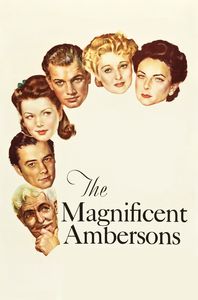
    (On Cable TV, April 2019) If Citizen Kane is Orson Welles’s biggest hit, then The Magnificent Ambersons is the one that got away—a favourite of those willing to start digging into the filmography of the famously difficult writer-director and see where, arguably, it all started to go wrong. What’s on screen is easy to admire. There’s something admirably modern in the way the story begins, with directing and editing well in advance of its time with voiceovers, visual segments and droll vignettes combined in order to adapt a novel on-screen in an efficient, dynamic fashion. This is really Orson Welles at his best, immediately following on the success of Citizen Kane. The Magnificent Ambersons rolls on good acting, good themes, exceptional direction and great sets, with the camera moving into them to track the characters in long shots. But there is a catch: the ending really isn’t as satisfying as the beginning, and trying to understand why it is will quickly get you reading about Welles’s clashes with the studio—a pattern that would repeat itself for the rest of his life. Perhaps more has been written on what’s missing from the film than what remains, but what remains is impressive—even though the unsatisfying and rushed ending clearly demonstrates the meddling even to those uninterested in reading about the film’s production.

  • Catch-22 (1970)

    Catch-22 (1970)

    (In French, On Cable TV, September 2018) Coming in toward the end of the Vietnam quagmire, 1970 was a strange year for war movies. On the one hand, you have the blockbuster example of Patton, with its portrayal of a grander-than-life soldier’s soldier against the noble backdrop of World War II and sweeping tank battles. Then there is the satirical trio of Kelly’s Heroes, MASH and Catch-22, all of which took a jaundiced satirical look at war, taking potshots at the very ideals that earlier movies such as The Longest Day would have promoted a few years earlier. (Even Patton isn’t immune to the critical re-evaluation, as Patton himself is portrayed as exceptionally flawed and prisoner of his own nature.) Catch-22 betrays its literary origins through elaborate dialogue sequences often taking over the cinematic qualities of its sequences—most spectacularly during a sequence in which some inane dialogue takes place over the crash landing of a plane behind the characters. This being said, there’s an admirable commitment to historical recreations in Catch-22—the film put together a bomber air base just for shooting, and the results are some impressive sequences with real military hardware and none of that fluffy CGI stuff. An all-star cast is enough to keep things interesting—from Alan Arkin’s too-sane protagonist to Orson Welles turning up as a military commander. Much of the film has a compelling twisted logic to it, pointing out the limits of military thinking in exceptional situations. While the result could have been tighter, more focused and perhaps just a bit less talky, it still amounts to a compelling anti-war statement.