Paul Bartel

  • Lust in the Dust (1984)

    Lust in the Dust (1984)

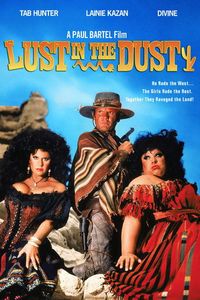
    (On Cable TV, December 2021) As far as western comedies go, Lust in the Dust hits a very specific and rather sweet spot of camp flamboyance, ribald naughtiness and over-the-top absurdity. Divine stars as a rotund dancehall girl lost in the desert, where she encounters a taciturn cowboy (Tab Hunter, no less) and goes treasure hunting with the help of strategically tattooed maps. As comedies go, this one combines a dumb premise with weird characters, unusual situations and good one-liners even if the rhythm is uneven throughout. Still, Divine does well as the unravishable heroine (and the cross-dressing aspect hasn’t aged as badly as you’d think), while Lainie Kazan and Gina Gallego provide much of the nudity and raunch that make the film even funnier. By the time the film works itself off to a mutual stand-off above a treasure, well, we’re satisfied. Director Paul Bartel’s filmography is all over the place when it comes to comedy (Everything from Cannonball to Eating Raoul) and Lust in the Dust doesn’t clarify anything about his approach. While the result can’t be called a great comedy, it’s watchable and funny enough to be worth a look.

  • Chopping Mall (1986)

    Chopping Mall (1986)

    (On Cable TV, August 2020) In retrospect, it was inevitable that someone would seek to combine the 1980s robot movie craze with the slasher horror of the beginning of the decade. Of course it had to be from Roger Corman’s production company. In Chopping Mall (retitled from Killbots), we head back to the very recognizable Sherman Oaks Galleria for a night of terror as three couples of teenagers sneak into the mall for a night of horizontal mattress bouncing. Alas for them, the mall has just introduced robot sentries and a freak thunderbolt has just switched the robot’s main directive switch from “apprehend” to “KILL, KILL, KILL.” The rest of the film plays out like your typical horror movie, as the number of remaining characters dictates how close we are to the ending—and how sexual activity will doom some characters sooner than others. The low-budget nature of the film is most clearly seen in the inconsistent staging of the action, the wobbly robots or the slap-dash way the script doesn’t even stick to the specifications it posits for its killbots. There are some unintentional moments of mirth, but a few very deliberate laughs as well. One of the highlights of the film comes early during a demonstration of the robot (anticipating Robocop’s ED-209 sequence by a year) in which we’re treated to a short cameo from Paul Bartel and the ever-cute Mary Woronov as their own Eating Raoul characters, cracking wise at the product demonstration in front of them. Otherwise, there isn’t much to Chopping Mall than a memorable but not exceptional techno-horror movie: ridiculous, cheap, short but with just enough distinction for it to be easily remembered. “Oh, yeah, that movie where robots kill teenagers in a mall…” Yeah, that’s it. Cinematic immortality of a sort. Also, a really catchy main theme.

  • Eating Raoul (1982)

    Eating Raoul (1982)

    (On Cable TV, September 2019) Dark comedy is a tricky balance of elements, and for every dark comedy I liked, I can name you two others I didn’t—it takes a lot of skill to balance the grimness with the laughs, and many people who try only sound like complete psychopaths at the end of the process. But the alchemy holds in Eating Raoul, as singular a film as it’s possible to image. Writer-director Paul Bartel not only cooked up the script and made it happen, he also stars as half of the couple that are the film’s protagonists: Intelligent, likable, off-beat, asexual, poor and amoral, they eventually cook up a scheme to kill off “rich perverts” by posing as sex workers and luring marks to their deaths. The scheme soon spins out of control, but the joke of the film is that its eccentric characters are the heroes of the story, and no temporary disagreement is going to tear them apart. It goes all the way to the dark extreme suggested by the title, but somehow never loses its verve or its utterly deadpan humour (a more appropriate expression than most here—there’s even a joke about having separate frying pans for murder and for cooking). It’s remarkable that the film remains funny without being cloyingly comic: this is a film made for a specific audience that can learn to get the jokes rather than have them explained to them. Much of the credit for the film’s success goes to Bartel as a performer—overweight, balding, not all that photogenic, but likable all the less—and the pinup-worthy Mary Woronov as his partner in crime. On paper, Eating Raoul sounds like a repulsive mess—but on-screen, it quietly works wonders. It’s quite an achievement—and a terrific film as well.