Peter Cushing

  • The Curse of Frankenstein (1957)

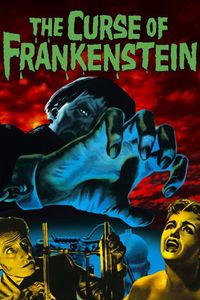
    The Curse of Frankenstein (1957)

    (On Cable TV, October 2021) I’m a latecomer to the Hammer renaissance of the classic Universal Monsters, but I’m slowly getting there. For those who are following me in this path: Universal had an amazing series of successes in the early 1930s, creating at least five of the classic movie monsters (Dracula, Frankenstein, Wolfman, The Mummy and The Invisible Man, with an honourable mention to the Creature of the Black Lagoon) that still dominate Halloween iconography even today. That success largely waned throughout the 1940s, with parodies and insipid sequels being mere echoes of the originals. But by the late 1950s, British studio Hammer had similar success re-creating four of those monsters (Dracula, Frankenstein, Wolfman and The Mummy) in glorious Technicolor and with some of the best possible actors in those roles—specifically Christopher Lee and Peter Cushing—for a lengthy series of films that not only re-created the originals for a new generation, but went far in their own direction. All of this began in 1957 with The Curse of Frankenstein, which spun the classic monster closer to its literary origins, focusing on Doctor Frankenstein more than its creature. The result still feels fresh today — less well-known than the first two Universal monster movies, but interesting in its own way. Cushing is quite good as the mad Doctor Frankenstein (with Lee as the monster), and the production values have a nice period sheen to them. After nibbling at some of the Hammer horror films over the past year, I’m stuck wishing that there was a Blu-ray box-set as nice as the Universal one so that I could dive into the extended series serially and see how it developed over time. (Yes, I know about the Mills Creek collection—but it doesn’t have everything.)
  • Frankenstein Must Be Destroyed (1969)

    (On Cable TV, October 2021) By 1969, Hammer Studios had gotten the hang of producing their own takes on the classic Universal Monsters, with successive entries free to take the mythos in a different direction without worrying too much about continuity. The fifth of their Frankenstein films, Frankenstein Must Be Destroyed, begins as the doctor’s lab is trashed, and he goes on to find a way to transplant the brain of an associate in a new body. That’s pretty much it for plot, but then there’s Peter Cushing as Baron Frankenstein to hold the pieces together. (And there are pieces indeed—due to studio interference, an incongruous rape sequence was added despite the director, co-stars and audience objections. And that’s without mentioning the comic relief sequences.)  Frankenstein Must Be Destroyed is a film best seen by Frankenstein devotees—because it plays with familiar elements of the myth and rearranges them in ways that aren’t beholden to presenting the canonical version of the story.

  • The Uncanny (1977)

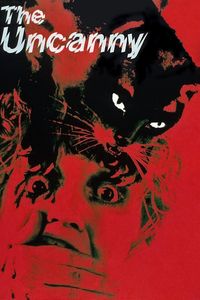
    The Uncanny (1977)

    (In French, On Cable TV, March 2021) I suppose that if you look long enough, you’ll find horror movies on every imaginable topic. The Uncanny brings us closer to the fullest understanding of this axiom by featuring no less than three stories about the evil of cats, and a framing device to hang it all together. A late-1970s Montréal-based English-Canadian production, it’s clearly made on a small budget and technically rough around the edges. Fortunately, there’s a bit of a story to go with it. The framing device, as we eventually discover, has to do with a publisher meeting the author of a manuscript documenting how cats are the evil force controlling the world — and the three stories are meant to illustrate the thesis. In the first one, cats take revenge upon their mistress’s murderer. In the second, a young girl avenges her cat’s disappearance through witchcraft. In the third, a cat takes revenge on a Classic Hollywood actor for murdering her mistress. By the time we get back to the framing device, cats are ready to kill in order to protect their secret, and they’re theatrical enough to wait until their target is walking down picturesque stairs). You get the idea: cats and revenge are this film’s main themes, with a budget that doesn’t quite allow more than two or three sets per story. While well-known names such as Peter Cushing and Donald Pleasence show up briefly, the main attractions here are the short stories. If they don’t quite work, just wait a few minutes and there will be another. The pacing is not that good — nearly every story has its lulls, especially when it’s obvious how they’re going to end. Still, as a concept, it’s cute, and French-Canadian viewers may be surprised to recognize some old-school actors and actresses in minor roles.

  • Moulin Rouge (1952)

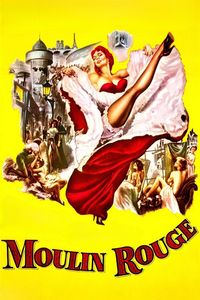
    Moulin Rouge (1952)

    (On Cable TV, December 2020) There is a particular charm to the way Hollywood used to make biopics – a mixture of caricature, big stars in famous people’s roles, mannered filmmaking and some very specific idea of what a “prestige” picture could be. So it is that in Moulin Rouge, we head to late 19th-century Paris to learn about the life of Henri de Toulouse-Lautrec, as played by José Ferrer. The attraction to the topic should be obvious: Toulouse-Lautrec was a genius and a tortured man – physically stunted due to a childhood accident, unlucky in love, spectacularly alcoholic and perpetually living close to poverty. He incarnated much of what many people imagine when they think about troubled artists in the 1890s. For 178cm Ferrer, taking on the role of 152cm Toulouse-Lautrec meant undergoing a physical transformation and making good use of unusual filmmaking techniques such as trenches, fake knees and body doubles. Then there’s the visual attraction of the topic: It would have been unthinkable, even in the 1950s, to shoot Moulin Rouge in anything but colour. The musical numbers are, of course, very can-can: I strongly suspect that most of what we think of as being the aesthetics of the Moulin Rouge (or that period), including the 2001 version of Moulin Rouge!, can be traced back to this film. Absinthe shows up (naturally), as do dark stockings and garter pants. The character of Toulouse-Lautrec perfectly fits the colourful, seedy, exhilarating world created here: Director John Huston knew what he was doing, and the result is a film that deserved its Academy Award nominations. Ferrer is quite good, and there are other known names, such as Zsa Zsa Gabor, Peter Cushing and Christopher Lee in the cast. The 2001 Moulin Rouge! (which doesn’t share much than the title and the setting) is one of my favourite movies of all time, but this 1952 title is perfectly likable in its own way.

  • The Hound of the Baskervilles (1959)

    The Hound of the Baskervilles (1959)

    (On Cable TV, October 2020) Hammer horror and Peter Cushing take a swing at Sherlock Holmes’ classic story in the 1959 version of The Hound of the Baskervilles… and generally succeeds. Making quite a few updates to the narrative, the film nonetheless lets Cushing realize a long-held dream of playing Holmes, bringing along an impeccable understanding of the character. At his side, André Morell plays Watson as a real, competent character. (And there’s Christopher Lee in a supporting role!) Compared to the Basil Rathbone films, the colour cinematography brings Holmes into a more modern era, with the patina of foggy horror that the Hammer films perfected. The least faithful aspect of the production is its lack of adherence to the original short story, but that’s absolutely not to the film’s detriment—in fact, the added attraction of having a little bit of Hammer Horror thrown into a Holmes story adds considerably to the film’s distinctiveness. It’s all quite watchable, although I would only recommend the result to those who are both Holmes and Hammer fans in order not to get false expectations. It’s a shame that the Holmes Hammer series did not continue beyond this initial instalment—Cushing is good, and the horror-infused take is distinctive.