Police Academy series

  • Police Academy 4: Citizens on Patrol (1987)

    Police Academy 4: Citizens on Patrol (1987)

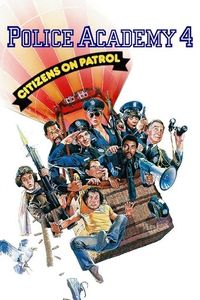
    (Second Viewing, On DVD, November 2021) I somehow remembered Police Academy 4 as one of the high points of the series — but then again, twelve-year old me thought the series was terrific, so I wasn’t the best movie reviewer at the time. Suffice to say that this fourth entry is, by now, comfortably stuck in the confines of its own style — the jokes are as obvious as the characters, and the ludicrous climax shows that the producers had money to burn in order to deliver a final spectacle even when it didn’t really fit the tone of the series. I remembered just enough of the gags to feel a general sense of familiarity with the jokes, and some recognition from the dialogue. Steve Guttenberg, in his last appearance in the series, remains the randy straight-man cornerstone while, at the other end of the spectrum, Bobcat Goldthwait turns in a remarkably weird performance as an ex-con turned policeman. Everyone else gets their one-joke character stretched thin — with even the other characters telling them to cut it out. There are a few surprises in the cast list — Sharon Stone as a bouncy journalist, David Spade in his film debut, and even Tony Hawk somewhere in there. The memorable title song is stupid but fun, which is roughly the same thing we can say about Police Academy 4 as a whole — although I can’t quite tell how much of this appreciation is a residual feeling of the twelve-year-old critic who’s still part of me.
  • Police Academy 3: Back in Training (1986)

    Police Academy 3: Back in Training (1986)

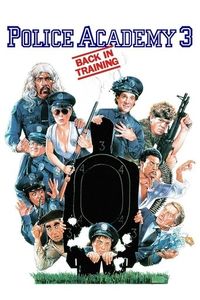
    (Second or Third Viewing, October 2021) I’ll avoid expounding again how I once thought the Police Academy movies were the funniest thing ever as a 12-year-old — time moves on, and I finally get why it has received such bad reviews ever since its release. But at least this third instalment, featuring a “back to school” scenario for many of the characters being asked to help train another batch of recruits, is a step above the terrible second film. Oh, Police Academy 3: Back in Training has its problems: The jokes often scrape the bottom of the comedy barrel, there are far too many characters to do them justice, and the script is often laborious in how it sets up the jokes long enough to see them coming. But its anarchy can work in its favour: if you’re not happy with a character and their associated humour, just wait and there will be something else twenty seconds later. There’s also the fun of seeing mid-1980s Toronto being used very obviously (in a pre-CGI age) as a film backdrop—the skyline, TD bank, Younge Street address and Toronto Sun newspaper boxes being part of your “Toronto references” bingo card. I chuckled a few times (sometimes out of nothing but recognition at moments long forgotten) at Police Academy 3: Back in Training and that’s about all I could hope from a film that never aimed high to begin with.

  • Police Academy 2: Their First Assignment (1985)

    Police Academy 2: Their First Assignment (1985)

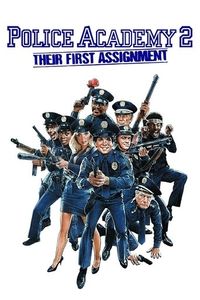
    (Second or Third Viewing, On DVD, August 2021) There was a time (back when I was, like, nine) when I thought the Police Academy series was one of the best things in movies, only second to Star Wars. Well, that time is long gone, and watching Police Academy 2: Their First Assignment is now sometimes an exercise in teeth-gritting exasperation. The first film in the series still works, and if my memories don’t betray me too much, the fourth one has its moments. But this sequel has a harder time getting any respect. Loosely picking up after the training of the first film, this follow-up sees the motley crew of ridiculous police officers on their first assignment in a crime-ridden area of the city. Much of the cast is back alongside Steve Guttenberg, with some significant introductions, such as Bobcat Goldthwait in the role of a gang leader who would later become part of the police crew. The story is a loose frame on which to let all of the actors play their comic shtick. Some of it is more successful — anything with David Graf’s Tackleberry is usually fun, for instance, whereas anything to do with Art Metrano’s Mauser isn’t. What’s perhaps most frustrating about the result is not necessarily the juvenile repetitiveness of the jokes as much as uneven levels of absurdity. The good absurd sequences are funny (such as the various security systems deployed in the opening sequence, or the “disrobing guns” scene), but they come sandwiched between long stretches of very mild jokes. Coupled with the generally low-brow humour level, it doesn’t completely work, and leaves viewers asking for more. Now let’s see if my memories of the third instalment are similarly destroyed…

  • Police Academy (1984)

    Police Academy (1984)

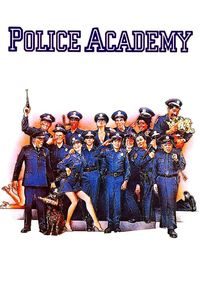
    (Second viewing, On DVD, May 2018) I will forever embarrass myself by recalling this, but here goes: As a young pre-teenager, I was a moron when it comes to movies. I distinctly recall having a conversation with friends about why (wait for it…) it wasn’t movies like Police Academy that won Oscars. Why not?! From the perspective of a twelve-year-old boy, Police Academy was far better than Terms of Endearment: it has laughs, a simple plot, great characters, plenty of nudity and none of that troublesome meditation on the meaning of life and the relationships we have with others. As I’ve grown older but not necessarily wiser, I approached Police Academy with some reluctance—I knew the movie wouldn’t hold up to teenage memories, but would it at least hold up as a comedy? Fortunately … it mostly does. Not a great comedy, not a classic one (although that theme song is instantly recognizable) but one more or less on the level of similar late seventies/early-eighties offerings. Think Caddyshack, Meatballs, Stripes, Revenge of the Nerds, and Animal House, as comedies in which misfits take on institutions of power and eventually win over the system. Those films are often more politically militant, in a vulgar way, than one would expect: To cheer for the heroes often means cheering for women, gays, blacks, disabled and just plain eccentric people for a more inclusive society. As a result, Police Academy has aged better than I would have thought—what’s more, this first entry in the series benefits from a relatively solid structure and characters that haven’t yet fallen into a self-aware parody. Toronto doubles for an unnamed American city, and Pat Proft (of latter spoof-comedy fame) appears in the writing credits. It is crude (albeit in that relatively sweet early-eighties way that doesn’t seem so crass compared to more recent offering), dumb, and aimed at teenagers. Some of the scenes are markedly worse than others—one of them involves a horse. But Police Academy isn’t quite as bad as I feared, and it doesn’t make me feel all that bad that as an early teen, I liked something clearly aimed at early teens.