Richard Brooks

  • Elmer Gantry (1960)

    Elmer Gantry (1960)

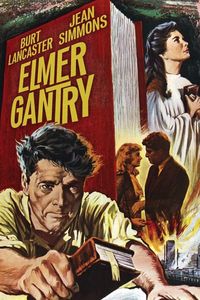
    (Criterion Streaming, March 2020) If you’re the kind of person to seek optimism in the most desperate situations, you can take a look south of the border in these desperate times and remind yourself that America isn’t solely composed of idiots—and more pointedly, there have always been sane voices in the wilderness highlighting the mistakes of the nation (past, ongoing and inevitable). Go back to 1960, for instance, and we already have Elmer Gantry as a mature, full-throated warning about the similarities between conmen and preachers. Burt Lancaster, never afraid to use his good looks in the service of questioning traditional masculinity, plays the titular Elmer, a fast-talking huckster who turns his talents to revivalist religion in order to woo a fetching young woman (Jean Simmons). Loosely adapted by writer-director Richard Brooks from a muckraking novel by Sinclair Lewis (Brooks won an Academy Award for the screenplay), Elmer Gantry isn’t content with merely making a link between confidence games and small-tent religious revivals—it’s a film that digs and digs into the characters, their unsavoury pasts, impure intentions, zealotry and mob vengeance to deliver a sobering statement on being taken by fast words and empty promises. Lancaster is terrific as a salesman turned fire-and-brimstone preacher, easily capturing audiences on both sides of the screen. (He also won an Oscar for it.) Elmer Gantry greatly benefits from his presence, and he helps the film overcome its excessive length. It probably doesn’t help that while Elmer Gantry confronts issues important to circa-1960 America, much of what it has to say is now common wisdom… or is it?
  • In Cold Blood (1967)

    In Cold Blood (1967)

    (In French, On Cable TV, April 2019) 1967 was a remarkable year in American cinema history, as the tensions building up in the wake of freer social mores finally came to a head and ended up producing a landscape-shaking slate of films that are still being hailed today: Bonnie and Clyde, The Graduate, In the Heat of the Night, and so on. In Cold Blood isn’t so often mentioned in the same breath (it wasn’t nominated for a Best Picture Academy Award even if it got four other nominations) but probably should be, considering that its raw quasi-documentary style and downbeat tone both make it feel different from most of what came before in Hollywood history. It was clearly a neo-noir at a time when noir was barely defined—darker and harder than what the Production Code allowed in its depiction of crime and punishment. While adapted from a celebrated “no-fiction novel” by Truman Capote, no one will ever accuse the film adaptation of being a slavish copy: thanks to some very interesting directorial choices from writer-director/producer Richard Brooks, such as very stylish visuals, naturalistic approach and a soundtrack by Quincy Jones, it’s very much its own thing. In Cold Blood still feels fresh, and more unnerving than countless other mass-murderer thrillers.

  • Looking for Mr. Goodbar (1977)

    Looking for Mr. Goodbar (1977)

    (In French, On TV, February 2019) One of the niceties of being a French-Canadian cinephile is having access to channels that work on very different standards than the Anglosphere. Such as the one filling its Thursday late-night movie slot with racy material from cinema’s crazier years, often dipping into little-known oddities that have probably been forgotten by nearly everyone else. (I suspect that there’s a filter effect to the necessity of showing dubbed movies—some decent films have never been dubbed while bad ones have been, and you can guess from which catalogue the programming director makes their selection.)  Which brings us to Looking for Mr. Goodbar, a dark and depressing exploration of the perils that await a young woman as she sinks in ever more extreme levels of hedonism, regularly bringing back strange men to her apartment. The biggest surprise here is the casting, with Diane Keaton (looking a bit like a young Juliana Moore or Nicole Kidman) playing the lead role in an utterly off-persona performance as a schoolteacher by day, drug-sniffing party girl by night. Other familiar (but young!) faces include Richard Gere, Levar Burton and Tom Berenger as the big villain of the movie. Looking for Mr. Goodbar is not a fun film to watch, as it comes straight from the gritty New Hollywood era and keeps heaping more and more abuse on its heroine until an utterly bleak ending that takes everything from her. Richard Brooks’s direction can be intense at times, with numerous pulls into the character’s inner life and fantasies without warning, and a strobing red-and-black colour scheme that brings on the extreme violence of the ending. It’s quite an unpleasant film, with disco music being the least of it. Chicago nights are scary in this film, and the script (adapted from a novel) adds some heavy-duty family drama to make things seem even less pleasant. There’s plenty of nudity and viewers will pay the price for it: in the 1970s, nobody was allowed to have fun at the movies on either side of the screen. I’m glad that I got a chance to catch Looking for Mr. Goodbar, but I’ll be even gladder to let it fall in obscurity.