Richard Fleischer

  • The Vikings (1958)

    The Vikings (1958)

    (On Cable TV, July 2020) There’s certainly a spectacular aspect to The Vikings that makes it interesting to watch: Kirk Douglas going toe-to-toe with a bearded Tony Curtis as they debate the leadership of a Viking colony. Made at a time when historical epics were trying to lure audiences away from the TV, it has lavish production values and some credible outdoor scenes and combat—with longboats! Plus: Ernest Borgnine and Janet Leigh looking a bit weird in non-contemporary setting. It may not be as well-remembered as some of the Roman epics of the time, and the lack of big Viking movies lately is a bit of a wonder by itself (wasn’t the latest one the motion-captured Beowulf from 2007?) Still, let’s not overstate things: The Vikings is not that interesting and even gawking at the stars in unusual turns or the scenery isn’t quite enough to make up for the tepid pacing and overall lack of interest in plot or dialogue. Fortunately, director Richard Fleischer creates a lot of bombast here to keep things afloat.

  • The Narrow Margin (1952)

    The Narrow Margin (1952)

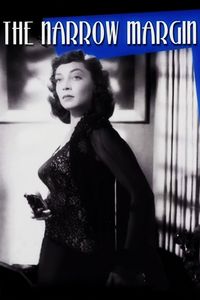
    (On Cable TV, April 2020) At 71 minutes, film noir The Narrow Margin doesn’t have a whole lot of fat on its muscled thrills. While it takes some of the archetypes of the genre (the widow of a dead criminal making her way across the country to testify at a major trial… also known as just another day in film noir world), it remixes these familiar elements with the romance of cross-country train rides—especially for twenty-first century audiences. While efficient, The Narrow Margin does take its time to build the strands of plot required for its blend of drama, romance, suspense and action. The oppressive claustrophobia of the train setting is used quite well, and there’s a bit of style in the way handheld shots are used to elevate a fight sequence—director Richard Fleischer would go on to direct some far more famous movies. A third-act twist feels surprising and arguably makes some of the late narrative feel hollow. Still, the best part of the film may be Marie Windsor, looking quite attractive in a very unusual, almost Ida Lupino-esque way. But she’s only one of the highlights in a taut, capable thriller that punches far above its weight in twists and turns and good moments.

  • Fantastic Voyage (1966)

    Fantastic Voyage (1966)

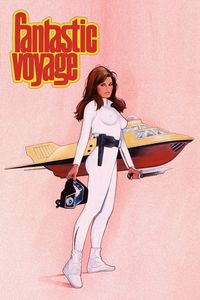
    (On Cable TV, February 2020) I’ve been on a self-imposed quest to watch past nominees and winners of the Best Special Effects Academy Award, and it’s proven a far more interesting project than many of the Best Picture nominees. Of course, it’s a category that dating faster than any other, and Fantastic Voyage is a prime example of the sort. It’s the kind of movie that exists because of special effects, so there’s no surprise if the plot takes a distant backseat to the visuals. (My first exposure to the story was through Isaac Asimov’s novelization, which had two distinctions: For one, Asimov wrote quickly while the film experienced one delay after another; for another, Asimov as a trained scientist and practising SF writer left no plot holes unexplained—leading to a situation where his novel had been out for six months by the time the dumbed-down movie came out, leading many to assume that the film was an inferior adaptation of Asimov’s concept. ) The narrative confusion and outdated technology are exhibited from the film’s first few minutes, as the film ponderously takes us through “high technology” offices that look ridiculously dated, barely explaining a premise that makes increasingly less sense. Then Fantastic Voyage compounds its own technology and narrative problems by treating its sole female character (played by Raquel Welsh, no less) as a piece of art to be ogled. In the dialogue. From a contemporary perspective, we can deal with the outdated special effects far more easily than the misogyny. There’s plenty of evidence that usually-competent director Richard Fleischer was outmatched by the premise, starting with the lack of energy in the editing. Some stylistic intentions (such as the wordless opening, or the first forty minutes without a score) become more annoying than inspiring, and that’s without discussing the increasingly psychedelic visuals. Despite my best intentions, I can’t say that I enjoyed Fantastic Voyage. While there’s some charm in seeing how they faked some of the visual effects, the film itself feels long and ponderous. It also doesn’t help that a much better take on the same idea—Innerspace—has been released since then.

  • Tora! Tora! Tora! (1970)

    Tora! Tora! Tora! (1970)

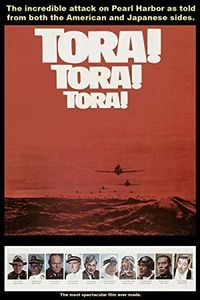
    (On Blu Ray, September 2018) Looking at Pearl Harbour from American and Japanese perspectives (and co-directed by Richard Fleischer, Toshio Masuda and Kinji Fukasaku, with script contributions by Akira Kurosawa), Tora! Tora! Tora! has aged remarkably well. There’s a credible verisimilitude to the entire film that is enhanced by the careful character development of characters on both sides of the war, with the Japanese even coming across more favourably than the Americans at times. The various tactics, strategic objectives and errors made by the characters are well identified, and we almost feel as if we’ve learned something from the entire film by the end of it. 1970 was an … interesting year for war movies (with anti-war statements MASH, Catch-22 and Kelly’s Heroes being released the same year) but Tora! Tora! Tora! manages to feel distinct from the other ones by being more analytical than satirical in going beyond the jingoism of earlier eras. Seventies special effects standards mean that the film does have great battle sequences—sadly, they may feel underwhelming to those who grew up on Michael Bay’s typically bombastic Pearl Harbour. Tora! Tora! Tora! does have the edge in terms of character, though, even if Pearl Harbour does just a little bit in providing closure with the Doolittle bombings. In my mind, I have a pretty good mash-up of both movies combining the authenticity and cleverness of Tora! Tora! Tora! with the special effects and story structure of Pearl Harbour (with maybe the beach scene from From Here to Eternity thrown in). Prepare an extra-large bowl of popcorn to accommodate seven hours of movie-watching and see them both as a complementary double feature.