Spencer Tracy

  • Dr. Jekyll and Mr. Hyde (1941)

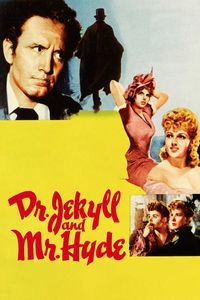
    Dr. Jekyll and Mr. Hyde (1941)

    (On Cable TV, April 2018) From our twenty-first century perspective, we routinely complain about remakes … but the truth is that the early decades of cinema were just as rife with movies being remade. Of course, back then they did have better excuses, as the state of the art in moviemaking kept progressing at a pace that would astound us today. Take the leap between the 1920 and 1941 versions of Dr. Jekyll and Mr. Hyde: One of them silent, crude and garish while the latter one being more nuanced and controlled. Spencer Tracy delivers a truly good performance in both eponymous roles, relying on sheer acting (and hairstyling, and makeup) to distinguish between the two characters. The direction is more ambitious, the story a bit more sophisticated, the portrayal of evil not quite as comically quaint as in the previous film. As a result, the 1941 version can be watched today with far fewer obstacles between the film and the viewer—sure, the colour is missing … but not much more. Where the 1941 version suffers a bit, especially when watched as a double-feature with the 1920 version, is that it has fewer surprises to offer in telling the same story. In a way, that frees the viewer to appreciate the execution and Tracy’s more impressive performance largely bereft of prosthetics.

  • Guess Who’s Coming to Dinner (1967)

    Guess Who’s Coming to Dinner (1967)

    (On Cable TV, January 2018) It’s not a failure if some social-issue films don’t work as well now than at the time of their release—sometimes, the world moves in the direction advocated, and as a result the film looks as if it’s been outpaced by the future. So it is that the central conceit of Guess Who’s Coming to Dinner (a white girl bringing back a black fiancé home for her parents’ approval) doesn’t quite have the same charge fifty years later. And that’s quite all right. This being said, let’s not take this for a condemnation of the work from director Stanley Kramer, or by Spencer Tracy, Sidney Poitier, and Katharine Hepburn. After all, the film finished shooting six months before Loving v. Virginia actually legalized interracial marriages across the United States. But it does feel a bit stuffy, all the way to a conclusion that boils down to an intensely paternalistic “Father has thought about it and will let you crazy kids do whatever you want” conclusion. It’s not quite fair to dismiss the film in such a way (and indeed, Guess Who’s Coming to Dinner’s ending gets far more potent once you read about how Spencer Tracy died two weeks after shooting his final scene and final film with long-time co-star Katharine Hepburn) but it is definitely a reflection of its time, and time has moved on.

    (Second Viewing, On Cable TV, October 2018) As I suspected, revisiting Guess Who’s Coming to Dinner after watching a handful of Spencer Tracy/Katharine Hepburn movies has significantly improved my opinion of the film. This was a partial re-watch, focusing on the scenes featuring Tracy and Hepburn, and it affirms that Guess Who’s Coming to Dinner is a terrific victory lap for Tracy, whose kindly-father persona here acts as a capstone to a career that saw numerous pairings with Hepburn at various moments in their careers. It’s easy to imagine a shared backstory for their characters that includes bits and pieces of Woman of the Year or Adam’s Rib, and that’s when context can become crucial in seeing what the fuss is about a particular movie. If you de-emphasize the racial message and focus on the Hepburn/Spencer couple, this film becomes a satisfying epilogue to a shared on-screen career, well worth watching if you’re familiar with the rest of the Hepburn/Tracy filmography.