The Matrix series

  • The Matrix Resurrections (2021)

    The Matrix Resurrections (2021)

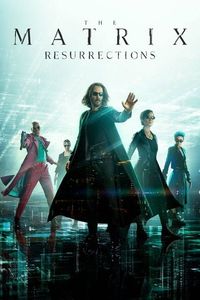
    (Youtube Streaming, December 2021) Is it really a surprise if a Wachowski film ends up being a mixed bag of highs and lows? After all, that’s been the norm for them even since The Matrix — they never quite managed to recapture the blend of elements that made that film such a success, and it’s not The Matrix Resurrections that will break the streak. Let me be clear: The first Matrix film is (now) a classic, and (still) one of my favourites: As such, I could help but be attracted to and apprehensive about the idea of a belated sequel. To its credit, this fourth instalment does grapple with that apprehension: it features a lot of meta-referential material, especially in a first act that seems delighted in rerunning through the first film’s key scenes while joking about how it refers to it. Alas, it doesn’t start the film on the right foot: that first act can be tedious at times, as the references pile up and so many clips from the first films are shown that it creates the impression that this newest take lacks confidence in itself: “See how cool those first movies were? Yeah, we’re in that tradition!”  Except that it is not, at least crucially in the execution. While many will appreciate how Lana Wachowski, Keanu Reeves and Carrie-Anne Moss are back, the absence of Bill Pope (cinematography), John Gaeta (Special Effects), Don Davis (score) and Zack Staenberg (editing) is far more noteworthy: The atmosphere of The Matrix series is absent, and what replaces it seems perfunctory most of the time. The action sequences are underwhelming (although they get better toward the end) and there’s nowhere near the degree of visual innovation in the Wachowskis’ previous work. As for the story, things improve after a fan-fiction-worthy first act: That’s when The Matrix Resurrections finally finds its own plot, makes intriguing additions to the canon (well, not all of them — I’m still wondering why Lambert Wilson showed up if it was to be a green-screen special) and engages in a surprisingly romantic arc. It’s the Matrix, but doesn’t much feel like it: in-between the humdrum directing and a script that features very little memorable material, it feels like a disappointment. Of course, the question can be: what was I expecting? One can’t step in the same river twice and all that, but even then, the result seems both ambitious and timid at once. I expect that it will take a while for people to decide whether this is a good film (let alone a fitting follow-up)… and I’ll probably have another look real soon to take it all in again.

    (Second Viewing, YouTube Streaming, December 2021) Whew—I hadn’t revisited a film critically at less than a week’s notice since, well, the last Matrix movie. But a second look at The Matrix Resurrections doesn’t really change my mind — There are some really interesting things in the concepts featured in here that are ill-served by their execution. A fair amount of meta-commentary on the nature of a next-generation sequel is amusing, but there’s a point when the self-reference becomes a dismissive poke at the fans who are the reason why the film was produced. (Similarly, self-awareness can be catnip for detached critics and a really great excuse for anyone arguing in bad faith to say, “If you don’t like it, you’re not smart enough.”)  Similarly, I liked the bold flashforward sixty years after the previous instalments and how some things have evolved, while others have not panned out to the previous generation’s hopes. But that aspect is shoehorned and relegated to supporting material, as the film is first consumed by its self-referentiality and then by a far less cerebral love story that feels stretched to twice the length it really needed. The idea of undermining the idea that Neo is the One to make him part of a pair is intriguing, but it’s completely botched in the execution, with a point made about him being supported by a flying Trinity… only to cut to a scene where the flying thing is a done deal. I certainly haven’t changed my mind about the lacklustre and plodding action sequences that are pale shadows of even the worst moments of the original trilogy. I thought that a lower budget may have been a factor, but then I learned that the film still costs a generous $160M to produce — clearly cost was not the limiting factor here, especially with cheaper CGI now available. Even after a second go-around, I’m still thoroughly mixed on the result, probably tipping toward “disappointed” — The Matrix Resurrections is not terrible, but it certainly causes irritation in many of the unforced choices it makes. Was that the result worth waiting twenty years for? Expectations do count for much.
  • The Matrix Revolutions (2003)

    The Matrix Revolutions (2003)

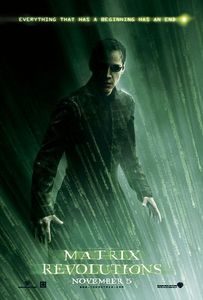
    (In theaters, November 2003) Sometimes, it’s best to take one’s inner fanboy and temporarily lock it in a cage. Otherwise, said fanboy would rant on and on about how, even with its problems, The Matrix Revolutions is one of the year’s most enjoyable film just because it so happens to be one of the very few hard-core SF films of 2003. Well, stuff the fanboy and let slip the vitriol of betrayed expectations. By far the most infuriating thing about this third episode in the series is how it doesn’t even answer the dozens of questions raised by the second film. It lets all the balls drop, one by one, until the juggler is left saying “sucker!” But the film’s flaws certainly don’t stop there: The elegant focus of the first film was diminished in the second and finds itself crudely forgotten here: all is chaos and confusion, whether you’re talking about the dialogue, the themes, the visuals or the direction. In the process, all of what made the first volume so worthwhile has been ignored. The characters are emotionless parodies of themselves. The dialogues are painfully predictable. The special effects aren’t half as spectacular as Tharini Mudaliar in her all-too-brief appearance. Then the conclusion sinks into the woo-woo morass that has afflicted so much anime in the past; a pointless fight which only concludes when the screenwriter simply decides so, and in which the viewer has to perform all of the intellectual justifying work. Ay, yay-yay, what an ignominious end for a trilogy that had started so well. The Wachowskis pretty much blew up all accumulated credentials with this misguided effort, and effortlessly proved the law of diminishing returns: However much money and chaos you put on screen, sometimes it’s just not worth the effort. It’s fitting, in so many ways, that even the Rage Against The Machine-less soundtrack is the lesser of all three films.

    (Second viewing, On DVD, April 2004) Nope, still haven’t changed my mind about the film: It’s a lousy end to a trilogy that had started so well, but there’s still enough pure Science Fiction content and images to make me happy. This initial DVD edition, however, has a lot of good stuff in reserve: Plenty of special-effects supplements (you won’t believe some of the stuff they had to use for the final fight!), some useless background material (including a badly-designed collection of stills and “historical” information) and an intriguing look at a on-line game that will probably look quite silly in two or three years. Die-hard The Matrix fans ought to get this, if only for the sake of completing the series.

    (Third viewing, On DVD, May 2005) I suppose that only the most ardent fans of the film will have the patience to watch both sets of commentary tracks on The Matrix Ultimate Edition trilogy. Those brave few who do, however, will get much out of “The Philosophers” commentary: Ken Wilbur and Cornell West each bring a perspective on the meaning of The Matrix trilogy that does much to add depth to the second and especially third segments. Don’t get me wrong: I still thing that this third volume is over-indulgent, long and falsely profound, but Wilbur’s idea about the trilogy being the story of the re-unification of disparate realms (body, mind and soul; blue green and gold; Zion, Matrix and Source) in a new trinity (a Neo/Trinity, one might say) brings a different light to it. Not bad, but still not recommended to anyone who’s not already a freakishly obsessive fan.

  • The Matrix Reloaded (2003)

    The Matrix Reloaded (2003)

    (In theaters, May 2003) Yes, this film has flaws. Deep, serious flaws that show the self-indulgence in which the Wachowskis were allowed to wallow. Falsely profound dialogue, pretentious pontificating, overlong fights, flaccid editing, ordinary writing and lopsided structural beats. Those would be enough to give pause to anyone not already plugged into the Matrix. But that’s my case, and as a fan boy, I’m pleased as punch with this second volume. The Matrix was an accident: A nerd-triumphant story that touched a mainstream nerve thanks to a few conceptual kicks and an impeccable sense of style. Matrix Reloaded is all geek no mainstream: I would be bold as to suggest that if you don’t understand why there’s a Giant Robot scene in this film, you don’t deserve to watch it: The Wachowskis now have all the means in the world to put on-screen every single little geeky obsession they’ve dreamt about for years, and they’re going to do it. While the result can be exasperating (some oh-so-profound dialogues are really meaningless –or worse, trite!) they are as often exhilarating: The “gratuitous” Seraph-Neo fight is straight out of kung-fu clichés, the equally-motivated Neo/Smith fight is an anthology sequence and that fourteen-minute car chase scene, well, it redefines the standard for action goodness. The conceptual punch of The Matrix Reloaded is equally as strong, though unfortunately back-loaded in the last five minutes, leading to a badly-paced film that could have used some tightening. Ditto with the editing, though fortunately the Wachowskis still have an impressive flair for fantastic camera work. (Best example: the gorgeous rave scene, which runs too long, diluting the strong images into something approaching self-parody.) But enough with the unkind comparisons to the original, or to our own long-idealized sequel: The Matrix Reloaded is a heady SF/action blockbuster, a perfect blend of geeky stuff I’m actually content to pay to see. The Matrix Revolutions can’t come soon enough.

    (Second viewing, In theaters, June 2003) Yikes; I was afraid that a second viewing might lead me to this unpleasant conclusion: No, The Matrix Reloaded isn’t as good as its prequel. The editing is loose, the dialogues are average, the pacing is slow, especially when you measure it against the ideal set by the Wachowskis in their previous effort. Oh, I don’t regret paying to see it again; even on a second viewing, the film still holds up better than most other first-run viewings. The action sequences are deeply impressive, especially considering the flawless integration of most CGI. (Unlike the first film, there are only two obvious “bullet time” moments, and they flow a lot better than previously) The images are strong, and so is the direction. A lot of the plot doesn’t make much sense (and threatens to make even less less sense the more I think about it), but I’d like to maintain reservations on that topic until I see the sequel. At this point, five months away from the concluding chapter of the trilogy, it’s difficult to get a proper grip on The Matrix Reloaded. Well, except for one thing: It could have been much better. Closer to what we wanted to see, that is.

  • The Matrix Revisited (2001)

    The Matrix Revisited (2001)

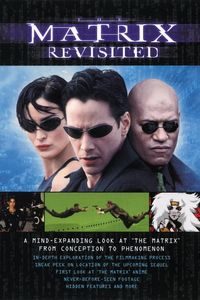
    (On DVD, November 2001) Only die-hard fans of the original The Matrix film (of which there are many) should apply for this making-of documentary. This being said, it’s one of the best making-ofs I’ve seen so far, clocking in at slightly more than two hours, including everything from conception to critical acclaim. It’s a shame that the rest of the so-called extras aren’t very interesting… but then again the in-depth main feature is cool. Fans will love it; non-fans won’t see the point. As is should be.

  • The Matrix (1999)

    The Matrix (1999)

    (In theaters, March 1999) Oh! That’s probably one of the few things left to say right after seeing this film. Oh cool; a mixture of Hong Kong-style action, far-out existentialist Science-Fiction, straight-out over-the-top theatrics and pure imagination. Oh sharp; the direction is simply wonderful, bringing stylistic excess to mesh with the carefree hyperkinetic action. Oh yeah; this is the best action movie since Face/Off, the best SF film since Dark City and the best comic book visualization since The Fifth Element. Whatever your “Oh!” means, The Matrix is one heck of a ride. Despite the numerous logical flaws in the script (don’t get me started on that…), some juvenile pop-philosophy and uneven pacing (not to mention the criminal underusage of Carrie-Anne Moss), The Matrix gets top marks as a superlatively put-together blockbuster. See it on the biggest screen you can.

    (Second viewing, In theaters, April 1999) I very seldom go twice to the same movie, but The Matrix is definitely cool enough to make me do so. (Okay, granted, I was going with someone else, but still…) Though I wouldn’t go as far as saying it’s as good the second time around, it’s still so technically well-done that even another viewing is worthwhile. The Wachowskis’ direction is very visually exciting and makes even the slow moments (of which there are quite a few, all things reconsidered) interesting. The stoopid science, plot holes and juvenile philosophy are still sore spots, though. Now a surefire choice for my top-ten list of 1999, The Matrix almost compensate for all the other awful SF movies released by Hollywood lately. Almost.

    (Third viewing, On DVD, September 1999) At a time where most SF films tend to be brief flash-in-the-pan visual delights, it’s a relief to see that The Matrix still holds up pretty well to a third viewing. The special effects are still as good, the pop philosophy is still as unsubtle and the bad science still as grating, but the direction, art design and acting each do a lot to maintain interest. The DVD is exceedingly well-done, packed with a “Making of…” feature, two short special effects documentaries and a rather tepid commentary track by Carrie-Anne “Trinity” Moss, Special Effects supervisor John Geta and Editor Zach Straenberg. (Unfortunately, the commentary is badly edited, often redundant and with lengthy pauses.) The DVD-ROM content is promising, but will have to wait until I get an adequate player.

    (Fourth viewing, On DVD, May 2003) Four years later, I’m still jazzed up about this film, which holds up admirably well to yet another repeat viewing. The direction is still as good as ever and shores up a film that suffers a lot from structural problems both in the first half (where all is explained and nothing happens) and the second (where a lot of stuff blows up but nothing is explained). It’s a shame, in retrospect, that the heavy noir influence of the first five minutes is seldom seen afterwards. Well worth another look in light of the last two volumes of the trilogy, as the meanly focused nature of the story expands into something much bigger later on, and given that two or three throw-away images of this original film end up taking quite another significance after even only The Matrix Reloaded