Tim Robbins

  • The Truth About Charlie (2002)

    The Truth About Charlie (2002)

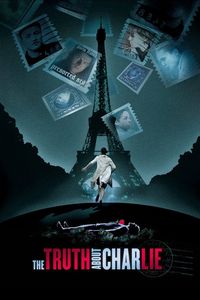
    (In French, On Cable TV, February 2021) I never bothered watching The Truth About Charlie at any point in the past eighteen years, discouraged by its lousy reviews and having missed it during its period of maximum hype. But having seen Charade (the 1963 film of which this is a remake) was enough to get me curious—and being reminded that Thandie Newton starred in the film didn’t hurt either—Mark Wahlberg is no Cary Grant, but I’d probably think a few seconds before choosing between Newton and Audrey Hepburn. Surprisingly enough, the remade script doesn’t mess all that much with the premise of the original: we still have a newlywed coming back to Paris to discover her husband gone and their apartment empty. We still have a mysterious stranger claiming to help despite being allied with three dangerous people. We still have the stamp thing and an American embassy official. It’s more in the directing style that The Truth About Charlie distinguishes itself from Charade — and really not in a good way. Director Jonathan Demme throws in a flurry of circa-2002 stylistic quirks, plus many more of his own (such as the staring-at-the-camera dialogue shots) and the result isn’t dynamic as much as it’s intensely irritating. While the basics of the narrative are still there, they’re made less comprehensible by the showy direction and the elided connective material. It gets worse once you realize that little of the film’s stylistic excesses really serve the thriller — a lot of them are actively distracting from the narrative, and some of them (such as Charles Aznavour showing up to sing) remain completely unexplainable — I happen to think that featuring New Wave director Agnès Varda in a small strange role is Very Significant in figuring out that there’s nothing to figure out. Tim Robbins is fine in the Walter Matthau role, Wahlberg is miscast and Newton is always a delight, but the film around them struggles to keep a coherent tone or even clearly presents its narrative. I suppose that remaking an intensely watchable suspense film as an arthouse experiment is more interesting than simply aping it verbatim, but it completely misses the point of why people loved the film so much in the first place: I’m not sure anyone ever watched the original Charade (which, to be fair, does have its moments of first-act weirdness) and thought, “You know, what this movie needs is more incomprehensible stuff.”

  • Dark Waters (2019)

    Dark Waters (2019)

    (On Cable TV, November 2020) Much in the same vein as the Oscar-winning Spotlight (which shares headliner Mark Ruffalo as he settles comfortably in older, heavier, gruffer, more cerebral roles), Dark Waters takes on a big target and humanizes the fight against it. This time, the story begins once a farmer brings evidence of severe animal poisoning to a lawyer used to argue on behalf of Dupont. But, intrigued by the story, he starts poking and prodding at the evidence, eventually unearthing, after a decade of work, an incredible corporate coverup of toxic material dumping. It’s easy to think of similar films (Erin Brockovich also comes to mind), but that doesn’t make them any less relevant every time: we need to vulgarize those stories to give an example of what can happen when the system works. It may work slowly and grind those involved in it (Dark Waters is merciless in describing the toll that such a vast undertaking can take—Anne Hathaway’s character seems included solely to work that angle), but it can work and effect change. The problem is keeping a light on it. Dark Waters, as befit its title, is not a light and colourful film: shot in muted, cold cinematography, it looks serious and important even before any dialogue is said. But it’s successful at summarizing a complex matter of biochemistry and law in a way that doesn’t insult viewers—it makes the complicated accessible, even if we often feel the invisible strings of dramatization work their magic. Ruffalo (who also co-produced the film) makes for a likable low-key protagonist, with some assistance from noted co-activist Tim Robbins (who gets a fine speech that may reconcile a few viewers with the necessary role of lawyers), Bill Pullman, Victor Garber and Bill Camp as the very down-to-earth farmer who initiated it all. I wasn’t expecting to like Dark Waters so much, but found myself steadily engrossed in it. It does have the heft of an important film, but it doesn’t lose track of its requirement to keep audiences interested.

  • Majorie Prime (2017)

    Majorie Prime (2017)

    (On Cable TV, June 2020) An example of how science fiction can take place in mere words rather than necessarily drowning in special effects, Majorie Prime is an adaptation of a theatrical play exploring memory and grief through the replacement of deceased persons by androids. It’s an intimate and quiet SF film with quite a cast—Geena Davis and Tim Robbins in heavy-duty dramatic roles, Jon Hamm in a role that’s both charming and profound, and perhaps most of all Lois Smith as the grieving woman who finds solace in an android version of her ex-husband. Most of the actors have quite a challenge in approaching their characters in two different ways. Director Michael Almereyda keeps Majorie Prime quite restrained in presentation (it’s essentially a living-room movie), but the narrative gets wilder and wilder as it digs into its themes, landing on a tone not dissimilar to a Black Mirror episode. There is some unachieved potential, perhaps due to a limited budget and a consequent refusal to get to the end of the premise. (One fundamental limitation: Actors who remain the same age.) Ever the contrarian, I found myself darkly amused by Majorie Prime’s less-than-comic resolution: the particulars of the SF device justifying the plot don’t always make a lot of sense, even if it leads to a conclusion of pitch-black humour in which our cast of characters has become something else, co-fabulating their ways into better and better memories.

  • Howard the Duck (1986)

    Howard the Duck (1986)

    (Second Viewing, On TV, June 2020) Moviegoers are a forgiving and indulgent lot, but some movies, like Howard the Duck, simply ask for too much. Starting from a juvenile and irritating script with few surprises, it simply adds to its troubles by asking us to believe in a duck protagonist badly executed through dwarf actors and a grotesque costume. Ugh. A modern CGI-heavy remake may do slightly better… but not that much better, given the film’s heavy-handed approach to its humour (every joke underlined twice), confused tone (raunchy humour in a kid’s movie) and blunt-force plotting. But here’s the question: despite all of this, does it have charm? Well, maybe. Lea Thompson looks terrific in mid-1986 fashion and Tim Robbins turns in a remarkably embarrassing performance. There are a few amusing moments and the film does have a “have you seen this?” quality that’s hard to dismiss. Still, while not atrocious, Howard the Duck remains deeply misguided—even being indulgent (which is not the same thing as being ironic), it’s still asking for a lot.

  • Bull Durham (1988)

    Bull Durham (1988)

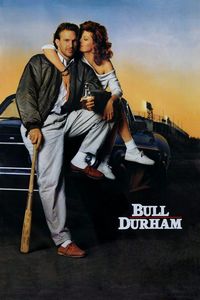
    (On Cable TV, May 2020) While baseball is integral to Bull Durham, this is not a film in which the entire plot depends on a make-or-break play coming at the very end of the film. It’s more of a baseball-adjacent romantic comedy where the sport plays a load-bearing role, but the real action is elsewhere—in this case, a romantic triangle between a young hopeful (Tim Robbins), a grizzled veteran (Kevin Costner) and a middle-aged woman (Susan Sarandon) who picks one hopeful per year for romance and education. Because of this unusual out-of-focus role for the sport in this romantic comedy, there are a lot of things to like about Bull Durham—the focus on a less-than-stellar league and team, the interesting three-way relationship between the three leads, one of Costner’s best performances, and some telling small-town details. (And let’s not forget that Sarandon is scorching hot here.) Writer-director Ron Shelton drew upon his own experience as a minor-league baseball player in putting together the film and that familiarity shows in many subtle details that make the film even richer. But, more than anything else, Bull Durham is a romantic comedy that both plays with the form and upholds it in the end. It’s not hard to like, even if you’re not a baseball fan.

  • Dead Man Walking (1995)

    Dead Man Walking (1995)

    (In French, On Cable TV, May 2018) Some movies stay with you and some movies leave without much of a fuss, and writing this capsule review a few weeks after seeing Dead Man Walking, I’m having trouble remembering anything specific about the film. This may or may not tell you more about the film than myself. After all, the film was a modest hit upon release, sparking discussions about faith, revenge and the death penalty. It’s executed soberly, and director Tim Robbins gives a wide berth to star Sean Penn and Susan Sarandon to show what they can do as actors. It touches upon a highly dramatic subject, what with a nun trying to help a death row prisoner atone for his sordid actions. It even leads to the kind of life-and-death climax that ought to leave an impression. Alas, my attention checked out early, perhaps motivated by the realization that I had seen this kind of Oscar-baiting movie countless times before, perhaps encouraged by the certitude that I would not see anything here outside of the usual Hollywood mould for issues drama. Once the premise is clear, so is its execution and conclusion. The film runs through expected paces, and the chosen tone of the story limits what it will do on its way to a foregone conclusion. I certainly do not expect anyone else to react the same way as a jaded cinephile such as myself would do—in fact, I would applaud strong reactions to the film by others. I can only report about what I think of the film, or how quickly it has evaporated in my mind.

  • The Player (1992)

    The Player (1992)

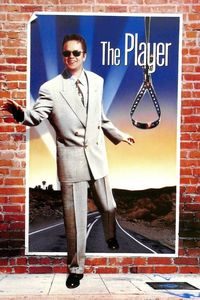
    (Second viewing, On Cable TV, March 2018) I first saw The Player sometime in the mid-nineties and fondly remembered it as a good satire of the Hollywood system. Seeing today, now that I’m venomously better-informed about moviemaking, is almost better than a first viewing. Tim Robbins stars as a studio executive who, harassed by an unknown person, comes to accidentally kill a screenwriter. The rest of the film is about avoiding detection even in the face of persistent investigators. Writer/director Robert Altman has rarely been funnier as he (somewhat gently) skewers the Hollywood machine, portraying nearly everyone as self-absorbed jerks capable of the worst. Back in 1992, much was made of The Player’s nonstop parade of cameos—twenty-five years later, it’s turned into a game to spot people whose fame has considerably waned a quarter of a century later, or non-actors Hollywood royalty whose face were never that well-known in the first place. The film does begin on a very high note with a complex seven-minute shot that neatly introduces a bunch of narrative threads and characters. It spends a remarkable portion of its first half-hour lining up joke after joke even as it gradually builds up its premise. The rest of the film isn’t as constantly funny—The Player does take its plot seriously after a while, and the detective subplot isn’t particularly high on satire. The last few minutes, however, do go back to the satire, with an amusing movie-in-a-movie and a killer last few lines in which, well, “forget it Jake, it’s Chinatown.”  While I don’t think I’m quite as bullish about the movie as when I first saw it, I still like it quite a bit.

  • Nothing to Lose (1997)

    Nothing to Lose (1997)

    (On DVD, October 2016) For some reason, Tim Robbins’s persona in my head has solidified as a bit of a semi-presidential intellectual at this point. So it feels surprising to see him ham it up in Nothing to Lose as an ad executive whose life crumbles to dust and is forced to ally himself with a disreputable quasi-criminal. The surprises don’t stop there: Martin Lawrence is almost likable as the motormouth criminal, which doesn’t reflect the unbearableness of his later performances. The rest of the film, though, plays almost on autopilot, with only a few surprises along the way. The first act chronicles how a successful man appears to lose nearly everything, while the second act shows him regrouping and the third taking vengeance against someone who has apparently wronged him. It’s familiar stuff, unimaginably contrived but moved along at a decent clip. Twenty years later, it’s potable but hardly revelatory—the social issues in allying a white executive with a black quasi-criminal film are nearly the same in 2016, which is depressing enough. At least there are a few laughs along the way. The soundtrack nearly feels like a time capsule at this point. While Nothing to Lose isn’t essential viewing, it’s not a complete waste of time either.

  • Arlington Road (1999)

    Arlington Road (1999)

    (In French, on Cable TV, November 2015)  Some movies are made before their time, and I really wonder if Arlington Road would have been a more unnerving film had it been released three (or more) years later.  There is, of course, a definite mid-nineties vibe to the proceedings, drawing from the Oklahoma City bombing to Ruby Ridge and Waco in setting up an anti-government domestic terrorism rationale: Three years later, the American national paranoia would be obsessed about foreign-driven terrorism.  Adding foreign involvement to Arlington Road would have muddled an already preposterous plot that draws equally upon unlikely coincidences, comically evil plans, superhuman levels of deception by the antagonist and plans that would have a near-impossible chance to succeed if this wasn’t a movie.  There’s emotional manipulation nearly everywhere, and at times it’s hard to believe that anyone in the cast, even Tim Robbins and Jeff Bridges, can keep a straight face pushing the story forward.  On the other hand, well-executed ludicrousness has a believability of its own, and so Arlington Road has the decency to remain interesting on a pure “OK, what will happen next?” level, egging us on to the next unlikely plot point.  I’m not sure that it helps that the film is so determined to get its downbeat ending: you can forgive a lot more silliness if it’s all neatly wrapped with a happy bow.  It makes for a more-memorable-than-average thriller, but it doesn’t necessarily make for a better one.