Tony Richardson

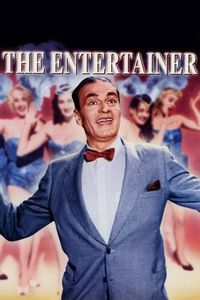
  • The Entertainer (1960)

    The Entertainer (1960)

    (On Cable TV, December 2021) For all of the self-serving myth-making that actors sustain about the profession of acting, there’s something more interesting to say about The Entertainer’s merciless look at a failed performer, one steadily heading toward irrelevance as the world moves on. The film takes place on a seaside British town, the kind of summer destination with performing halls fit for tourists. It’s a near-perfect playground for our protagonist (honestly played by Laurence Olivier), even if it’s in his own mind: As he performs to smaller and smaller crowds, his egocentrism prevents him from seeing how his life is falling apart — his repeated affairs harming his second marriage, his brother off to war, his father getting older, the music-hall tradition going away, and his commercial appeal being practically gone. Filmed in stark black-and-white by director Tony Richardson with an equally unsentimental script, The Entertainer is the cautionary tale warning anyone against an acting career. It’s really not a fun time at the movies, but the seedy atmosphere of desperation permeates the character and gives the film a still-unique feeling.
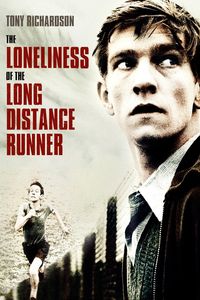
  • The Loneliness of the Long Distance Runner (1962)

    The Loneliness of the Long Distance Runner (1962)

    (On Cable TV, May 2021) There’s a recognizable thematic ambition to The Loneliness of the Long Distance Runner that’s rather easy to admire — a blend of class metaphors literalized in individual sports, a coming-of-age story that results in quiet rebellion rather than meek acquiescence and a portrait of the dismal state of the United Kingdom in-between postwar austerity and the Swinging Sixties. You can read analyses about the film and nod in recognition of the cleverness of the film’s intentions. But all of this fails when the execution isn’t particularly gripping — this is British neorealism at its dreariest, without an inkling of humour or panache. Director Tony Richardson’s take on the New Wave of cinema sweeping Europe feels as basic as it comes, and you have to like that style in order to get invested in the result. As a result, my appreciation for The Loneliness of the Long Distance Runner tends to be more intellectual than personal — I can contextualize it as an important piece of 1960s British cinema, but I will almost certainly never recommend it over the other far more entertaining films of the era.