Whoopi Goldberg

  • For Colored Girls (2010)

    (On Cable TV, September 2021) Adapting a theatrical play that relies on the strengths of that medium to the big screen in a risky exercise, and writer-director Tyler Perry doesn’t make things easy for himself in choosing to impose his vision on a fiercely feminist work. You can certainly feel the clunkiness at play when the film shifts gears from a rather straightforward (if harsh) melodrama to flights of eloquent soliloquies as the characters give voice to their innermost thoughts. As an ensemble movie with many ongoing subplots, For Colored Girls gets both the benefits of the form and its drawbacks — it can boast of a stellar cast in Janet Jackson, Loretta Devine, Thandie Newton, Kerry Washington and Whoopi Goldberg, plus a pre-stardom Tessa Thompson… I mean, wow. On the other hand, with no less than ten lead characters, the development of the subplots can be abrupt and sketchy. Coupled with Perry’s intentional lack of directorial flair and sometimes on-the-nose writing, it does make the film creak in places, and the accumulated melodrama (which gets absurdly dark in places) flirts dangerously with unintentional amusement. The biggest irony is that the film truly becomes magical in its most theatrical moments, as the women give voice to the stage soliloquies and unload the meaning of the stage play’s original title for colored girls who have considered suicide / when the rainbow is enuf. (You can read some of the soliloquies, but they’re far from being as effective as when heard from actresses who get the cadence of the words.)  If nothing else, the film will make you wonder if you can find and listen to the original. It would be easy to focus on the film’s structural and directorial shortcomings — there’s something in Perry’s traditionalism that feels out of place (it’s hard not to notice that the film’s sole gay character is a self-loathing liar who gives AIDS to his wife — yikes) even as the film is a powerful progressive work by itself. Some of the weirdness even comes from the original play — it makes sense for all of the male characters (at one minor exception with little screen time) to be evil and destructive, considering the intent of the work to focus on women’s lives at their lowest point. Still, I rather like the result: It’s a wonderful showcase for the actresses involved, and when the film takes flight, it does carry the power of the original work. Even a decade and many more black-women-focused films later in a far more diverse cinematic landscape, For Colored Girls still packs some punch.
  • Nobody’s Fool (2018)

    Nobody’s Fool (2018)

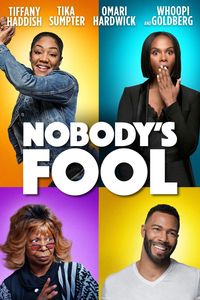
    (On Cable TV, June 2021) My ongoing effort to watch Tyler Perry’s filmography took a strange turn with Nobody’s Fool. Just as I was thinking I had a handle on Perry’s approach (a pedestrian, PG-rated paean to traditional values as filtered through the black American experience), here comes a film that opens with a lascivious midriff shot and features Tiffany Haddish loudly rutting in the back of a pickup to conclude the film’s opening moments. Yes — upon verification, Nobody’s Fool is Perry’s first R-rated feature, and one that is associated with a major studio (Paramount) and with better-known actors (notably Haddish, but also Whoopi Goldberg, and a showy one-scene wonder by Chris Rock). In other words — this isn’t your usual Perry film, and Haddish’s typically exuberant presence almost bends the gravity of the production toward her. As a result, Nobody’s Fool often feels unbalanced: While Tika Sumpter does her best to lead the cast as a no-nonsense urban professional, Haddish steals every scene and is more often than not where all of the film’s R-rating material comes from. If she feels like an intrusion in Perry’s usually more mannered world, that’s probably not by accident. (Once I know more about Perry’s filmography, I’ll be able to confirm a suspicion — that her role in this film is not dissimilar to the studious transgression that Perry allows himself when playing Madea.)  It’s all interesting, but not quite enough to make the film successful. While there are bits and pieces of good ideas here (most notably its blend of rehabilitation, romantic comedy, and catfishing-or-not mystery), they don’t quite gel together satisfyingly. There’s a notable amount of idiot plotting going on, contrived to maintain suspense for far too long, followed by an obvious narrative cheat in resolving a romantic triangle by showing how one partner is suddenly completely unsuitable in the bedroom. Almost as if the film had no interest whatsoever in honestly resolving its own tension. Considering that Nobody’s Fool doesn’t have much in terms of stylistic execution, another rewrite would have been really helpful.

  • How Stella Got Her Groove Back (1998)

    How Stella Got Her Groove Back (1998)

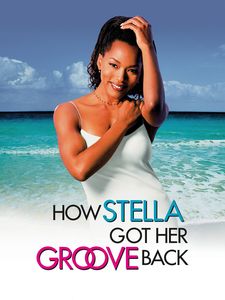
    (On TV, May 2020) Anyone who thinks that How Stella Got Her Groove Back is a one-quadrant romantic comedy solely destined to older black women is missing one thing—late-1990s Angela Basset was the complete package for all other three quadrants—simply a joy to watch given her versatility, precision in her acting choices, and devastating gorgeousness. The film knows it and wastes no effort in reinforcing it—she sports at least half a dozen hairstyles through the film and looks amazing in all of them. The story is also designed to let her go from one peak to another—she hits all of the right notes as the narrative takes her all the way from a tight-haired power broker to a lovelorn single mother to a grieving friend to a woman in limbo to, finally, affirming her own desires in their complexity. Refreshingly, the twenty-year-gap between the protagonist and her younger lover (a breakthrough role for Taye Diggs) is honestly dealt with. While there are no real surprises here (she does get her groove back: relief!), it’s a likable film even when it’s balanced on a bad idea. Add Whoopi Goldberg and Regina King and I’m disappointed I watched the film on a grainy standard-resolution channel. Obviously, your mileage may depend based on how you feel about Basset.

  • Soapdish (1991)

    Soapdish (1991)

    (In French, On Cable TV, February 2020) I wasn’t expecting much of Soapdish, a comedy revolving around the world of daytime soap operas. But much to my surprise, the film proved far more interesting than I expected, and got a few good laughs out of me. Sally Fields does well as an aging actress obsessed by her age, and convinced that the staff of the show is working against her. As it turns out, she’s not wrong—everyone around her despises her diva behaviour, and the showrunner sets a plan in motion to get her to quit. This goes through an old ex-flame of hers, a washed-up actor (Kevin Kline, hilarious) rescued from the tragedy of overacting in dinner theatre. Robert Downey Jr. is not exactly the best choice as the showrunner (at least not compared to his later persona) but he does get a few of the movie’s best lines, often delivered halfway to the camera at the end of his scenes. Whoopi Goldberg also gets a few choice lines (although, checking the quotes of the film, I realize that Soapdish is far funnier in English than the French dub). For someone my age, seeing Leeza Gibbons show up as herself is a welcome sight, almost outdone by Teri Hatcher as a self-aware sexpot. Hollywood does love to talk about itself, and using soaps as a satirical playground does offer it some plausible deniability. The script does occasionally teeter between comedy and drama, but much of the drama eventually reveals itself to be a mere setup for further comedy. The big third-act twist is a lot of fun, and it speaks to the success of the film that I didn’t bother anticipating it despite ample evidence pointing to its nature. The score is very catchy, with Latin influence and a main melody fit for humming. The one thing that hasn’t aged all that well is one late-movie transphobic joke—to be clear, having a character revealed as a transsexual (or transvestite—the film isn’t too clear about that and that’s an issue in itself) is not necessarily a problem: but having characters react as if it’s the worst thing in the world is what feels so terrible. Still, the rest of the film is far funnier than I would have expected, and Soapdish will score high on the rewatch desirability index.

  • Sister Act 2: Back in the Habit (1993)

    Sister Act 2: Back in the Habit (1993)

    (In French, On Cable TV, May 2019) Clearly rushed into production to capitalize on the success of a first film released the previous year, Sister Act 2: Back in the Habit makes the most out of Whoopi Goldberg’s appeal but can’t quite overcome a slap-dash script and a by-the-numbers production. Trying to recapture the preposterous premise of the original is ridiculous, but they give it a try even if it’s a lazy way to get an up-and-rising singer “back in the habit.”  The result feels like a re-thread of Dangerous Minds despite predating it by two years, as a tough teacher manages to turn around the life of her inner-city students through the power of creation, expression … and gospel singing. But it may be presumptuous to ask too much of the film considering its intentions as a hasty sequel to the original. The point here, like all musical comedies, is music sung loud and clear after a few initial setbacks. The students are fine (with standout performances here by young Lauryn Hill and Jennifer “Love” Hewitt) but the standout star remains Goldberg, floating above the film through sheer energy and comic talent. Sister Act 2: Back in the Habit will do as a mediocre follow-up to the original … as long as you don’t expect too much.

  • Sister Act (1992)

    Sister Act (1992)

    (On TV, April 2017) The trouble in watching some older well-known movies is realizing that while they were immensely popular in their time, they are nearly empty of anything interesting beyond their premise. (This is usually more obvious in older movies—for all of our complaining about newer films and how they all come down an assembly line, they can now depend on a wider variety of plotting clichés) So it is that Sister Act is purely formula-driven film, with easily predictable plot developments, a simple narrative arc and easily-digestible characters. After fifteen minutes, the film settles down into an incredibly familiar rhythm that it never escapes afterward. Whoopi Goldberg stars as a disreputable lounge singer who witnesses a murder and had to go in hiding at a convent. Her fallen persona makes for easy fish-out-of-water gags, but you can bet your three-act structure that they will all learn something from each other by the end of the story. Executed with all of the obviousness of early-nineties mainstream comedies, Sister Act makes sure to underlines every one of its jokes three times to make sure we haven’t missed any. It quickly becomes tedious. Goldberg is quite good in the lead role, but the film around her isn’t interested in wit or subtlety.

  • The Color Purple (1985)

    The Color Purple (1985)

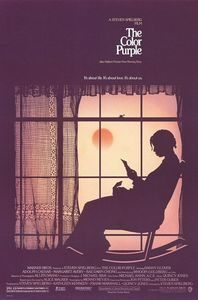
    (On Cable TV, February 2017) I gather that, at the time, seeing Steven Spielberg tackle a serious socially-conscious non-genre period drama such as The Color Purple project was a bit of a novelty. Of course, in retrospect it clearly shows the beginning of an important facet of Spielberg’s filmography all the way to Schindler’s List, Amistad and Lincoln. Has it held up in light of those latter examples? Yes and no. As hard as it can be to criticize a film denouncing injustice, there are times where The Color Purple gets, well, a bit too purple. Repeated scenes of abuse get tiresome, the film moves at languid pace (the victory lap epilogue alone feels as if it takes fifteen minutes) and as similar pictures has never gone out of fashion, I’m not sure the film feels as fresh today as it might have been back then. On the other hand, it is skillfully shot, expansively detailed and it features two terrific debut performances by none other than Oprah Whitney (in a non-too-complimentary role) and Whoopi Goldberg as the main much-abused protagonist. Danny Glover is also remarkable as a repellent antagonist. As for the rest, The Color Purple is about as far from Spielberg’s earlier work as it could be, even though it is thematically consistent with some of his later films—as an attempt to shatter perceptions about what we could do, it seems to have worked splendidly. As for the rest, the film does have a timeless nature—the depiction of the early twentieth century still looks credible, and had the film come out today, chances are that it would have done just as well in the Oscars sweepstake. Obviously best seen by people with an interest in period drama, The Color Purple may not be an easy watch, but it eventually proves its worth.

  • Ghost (1990)

    Ghost (1990)

    (On Cable TV, June 2016) There’s no denying that Ghost has ascended to the film pantheon as a romantic fantasy film (cue the pottery sequence!) but a fresh viewing shows that the film is a bit more than that: Beyond the romance, it’s got strong comic moments, a decent amount of imaginative flair and quite a few thrills. Anchored by Patrick Swayze’s fair performance and bolstered by a surprisingly funny and good-looking Whoopi Goldberg, Ghost is more interesting when it deals with the mechanics and complications of a ghost trying to make contact with the living. Suspense elements are woven (not always seamlessly) with comic sequences, giving the film a multifaceted appeal that doesn’t quite degenerate into abrupt tonal shifts. Demi Moore is a bit generic and baby-faced Tony Goldwyn is more fascinating than anything else considering how well he has aged in Scandal. Still, the film holds up relatively well beyond the pottery sequence, hitting marks on a wide spectrum of targets. It’s enough to make anyone wonder if today’s blockbusters have grown a bit too selective in their intentions for fear of tonal incongruity. Ghost, at least, deftly goes from romance to comedy to horror to thrills, and the result still speaks for itself.