Edgar Wright

  • Last Night in Soho (2021)

    (On Cable TV, July 2022) On paper, Last Night in Soho doesn’t sound all that promising, but if any filmmaker has earned my automatic interest, it’s writer-director Edgar Wright: His sense of cinema is close enough to mine that whatever he does is worth watching as far as I’m concerned, with no prior questions asked. Of course, that doesn’t mean I’m not going to ask questions during or after the film. Last Night in Soho is clearly an outlier in his filmography so far: slower paced, slightly more sedate, more leisurely edited and not quite as humorous as his previous films, it also features female protagonists and goes back in time for its topic matter. Much of the story revolves around a modern-day young woman (Thomasin McKenzie) coming to London to study fashion—but spending her nights in unusually immersive dreams that follow another young woman (Anya Taylor-Joy) in late-1960s London, as she too comes to the city with big dreams. The first half-hour of Last Night in Soho climaxes in a gorgeous historical re-creation of the glitz and glamour of the Swingin’ Sixties, executed with as much slickness as modern filmmaking allows. But this being a 2021 film, nothing stays fun for a long time: Much of the second act follows the historical heroine’s descent into prostitution as dreams are dashed, men take advantage of her and the glamour of nostalgia cracks under examination. The film burns through this plotline midway through, turning its attention to the modern echoes of these past events. The ghost story aspect of the tale comes across more clearly in an unexpected fashion, bringing the film back to genre material more familiar to Wright. It wraps up with an incendiary climax that should satisfy most of his fans. This being said, I have a number of issues with the film’s ultimate message that prostitution justifies mass murder as long as the victims are middle-aged white men, but that’s almost the default message of far too many movies these days, so I should just note and move on. What’s more impressive are the performances of the two young pleads, plus a deliciously villainous turn by Matt Smith and a decent last turn from Diana Rigg. In the end, the final result justifies continued sight-unseen interest in Wright’s next work: the slick polish of the film, its genre-blending plotting and ability to create interest where other filmmakers would stumble ensure that, even if Last Night in Soho is nowhere near his best work, it’s still a demonstration of skill from an engaging filmmaker. [May 2026: Harumph. Weirdly enough, I’m feeling a lot less positive about Last Night in Soho and Edgar Wright in general these days. His take on The Running Man was mediocre, and now I’m thinking that maybe even Baby Driver wasn’t all that. Not everyone keeps the “no prior questions asked” status.]
  • Baby Driver (2017)

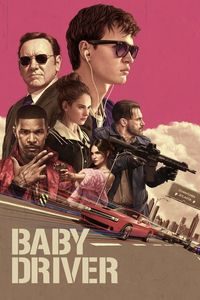
    Baby Driver (2017)

    (On Cable TV, January 2018) The appeal of Edgar Wright’s role as a director is multifaceted (you can like his impeccable editing, highly structured scripting, hip pop-culture references or ability to get great comic performances from his actors), but he is without peers in his use of music as an essential counterpoint to the visual aspects of his movies. Nearly all of his films so far have included at least one sequence that perfectly blend sound and images, and he pushes that facet of his work to its limits in Baby Driver, a movie in which nearly the entire film seems built around its soundtrack. I mean it in the best way, as the opening sequence proves: Wright dares to synchronize an entire feature film around a selection of underexposed songs and the result is a frizzy delight. Sure, it’s all in the service of a criminal revenge story … but why use labels when the entire film is a tour de force? From beginning to end, Baby Driver is a choreography of sound and visuals as it takes us in the mind of its music-obsessed protagonist. A movie experience with few peers, Baby Driver is meant to be listened to as much as seen—while I’m a big fan of watching movies with the sound down as so not to disturb other members of my household, I made an exception for Baby Driver—and it deserves to be played at the appropriate volume. Ansel Elgort is fine in the lead performance, but the supporting actors are far more interesting, in-between what is likely to be Kevin Spacey’s last high-profile performance, Jon Hamm leaning on his comedy and action skills, Jamie Foxx as a dangerous sidekick and Lily James as the love interest. Much of the overall plot is familiar, but it’s the execution that truly shines—Baby Driver is filled with cool little moments, set pieces and the usual amount of Wright’s clever writing that becomes more apparent upon viewing the film a second time. It’s a lot of fun and it’s a particular treat for anyone who’s been following Wright’s career so far.

  • The World’s End (2013)

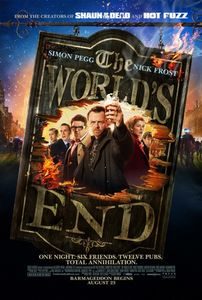
    The World’s End (2013)

    (Video on Demand, January 2014) Given the quasi-classic status that Shaun of the Dead and Hot Fuzz enjoy in my own personal ranking, I was waiting for The World’s End with loaded expectations: As the concluding entry in the so-called Cornetto trilogy, would it be as funny, as tightly-written, as visually innovative and as purely enjoyable as its two predecessors? Well, while it may not be as hilarious as Shaun of the Dead, nor as satisfying as Hot Fuzz, The World’s End definitely holds its own as a great piece of genre moviemaking. A boozy nostalgic comedy that eventually evolves into something far more outrageous (with a daring ending that crams another film’s worth of content in the last five minutes), The World’s End is perhaps most impressive for the interplay between structure and surface, as written signs comment upon the action, as the story is outlined in-text as a flashback before re-occurring during the film, or for the various (sometimes less-than-pleasant) questions raised by the ending. There is a lot of depth here, and some of it may not be entirely apparent at a first viewing. Still, The World’s End is no mere puzzle box: it works well on a surface level, whether it’s the actors reunited for the occasion (Simon Pegg and Nick Frost interchanging their hero/cad roles, obviously, but also Martin Freeman, the lovely Rosamund Pike, and a glorified cameo by Pierce Brosnan), the impressive fight choreography, the ironic dialogue and Wright’s usual attempt to push film grammar in new directions. While a first viewing leaves a bit unsettled, The World’s End steadily grows in stature as you reflect on it –another characteristic it shares with its predecessors. Mission accomplished for Wright/Pegg/Frost, then, as the wait begins for their next films.

  • Scott Pilgrim vs. The World (2010)

    Scott Pilgrim vs. The World (2010)

    (In theaters, August 2010) For a movie that only highlighted how truly old I am getting, I enjoyed Scott Pilgrim vs the World from beginning to end.  Transforming a fairly ordinary post-teenage romantic comedy into an mythological epic through fantastical devices such as videogame combats given life, Scott Pilgrim becomes a relentless, sometimes exhausting blend of action, romance and comedy gold.  Given that director Edgar Wright is best known for manic comedies Hot Fuzz and Shaun of the Dead, the whip-fast editing, witty dialogue and reality-defying direction should come as no surprise.  What is a bit more unusual, however, is the way Wright plays along with the grammar of cinematic storytelling, telescoping scenes together, taking fantastical flights of fancy in the middle of grainy indie dramatic scenes, or varying his approach just to keep things fresh.  This third successful film only highlights how Wright is pushing the envelope of comedy directing, daring older audiences (cough-cough) to keep up.  As a fan of the Bryan Lee O’Malley’s graphic novel series, I had a clue about what was in store.  But I couldn’t predict how cleverly the script would condense, simplify and amplify the storyline of the comic book into something that feels even more grandiose.  Streamlined to make the hero’s final success feel even more rewarding, Scott Pilgrim vs the World should please most fans of the original, while allowing newcomers to grab the graphic novels and find further delights in them: the way material from the book is rearranged in a new plot will keep fans of both versions entertained.  The resemblance of some actors to their graphic equivalent is astonishing, and their delivery of the dialogue, in a mixture of arch line readings and mumbled deadpan quips that I find irresistible, is often far funnier than the material would suggest.  I’m still only half-sold on Michael Cera as Pilgrim, but the supporting cast is strong and notable performances include Kieran Culkin as the cool roommate and Ellen Wong as a hot-tempered high-schooler.  But even better yet is the way Toronto plays itself as a big city capable of hosting cool stories: The script’s Canadian references are not only hilarious, but on-target as well.  Still, it’s not all fun and games as Scott Pilgrim has a few things to say about urban romance during post-teenage years (there are practically no older adults in this film, nor any need for them), or the way modern personal mythmaking comes from genre-dominated gaming rather than older sources of inspiration.  It all amounts to a hilarious, heartfelt, dynamic film that appealed to me in ways that felt very personal.  I’m not sure it could have been any better.