Year: 2002

  • Orange County (2002)

    Orange County (2002)

    (In theaters, March 2002) Even though it was marketed as just another road-trip teen comedy, Orange County has a bit more to offer. It’s the “oh-so-sweet” story of a teen trying to find his way in life, despite his tortured family, troublesome friends and incompetent adult figures. The journey isn’t as raucous nor as raunchy as some of the trailers would like you to believe. A bunch of mostly-unknown young actors get to beef up their resume with some skill (along with a few more familiar faces, from supporting players John Lithgow and Jack Black to cameos by Kevin Kline and Ben Stiller); we’ll probably see them in other movies soon. The pacing is okay though not spectacular, and that ultimately stands as an assessment of the film as a whole: Better than most teen comedies, sure, but ultimately nothing overly remarkable. The conclusion is of the “awww” variety, though one is compelled to wonder if the protagonist is ultimately one of those pitiful one-true-story type of writer.

  • Food, Susan Powter

    Pocket, 1995, 542 pages, C$7.99 mmpb, ISBN 0-671-56756-X

    Food is a deceptively simple title for such a complex book. Everyone needs to eat. Whole industries have been created around one of humankind’s most basic desire. Heck, there’s even an industry with the goal of teaching people how to eat less.

    Susan Powter’s follow-up to Stop the Insanity! remains primarily an unusually-detailed diet book, but that doesn’t stop it from providing the reader with a holistic look at food; what it is, how it comes to be in supermarkets, how it’s sold to us and how we use it as much more than simple fuel. Though it would be dangerous to suggest Food as an “ultimate” book on nutrition, it’s certainly provocative enough to strike fear, doubt and uncertainty in even the most convinced couch potatoes.

    It’s not as if Powter doesn’t know what she’s talking about, couch-potato-wise: As she relates to us again, and again, and again, a series of emotional disasters made her bloat up to 260 pounds before she got a grip and made herself melt back down to her current 130-odd pounds. Susan Powter’s relationship to food is more complex than most of us but don’t worry; by the end of the book (heck, by the end of page 25) you’ll be told her whole story in excruciating detail. Over and over again.

    We’ll come back to Powter’s particular manias in a short while, but let’s mention right away that Food is akin to the most unpleasant dietician you’ll ever meet. Organized in three part, Food gradually hammers down the usual American diet until nothing is left beyond tofu and organically-grown vegetables. “Stage One” is simple enough; spell “less fat” and you’ve mastered the essential of it. It’s not so simple, of course; Powter explains in tedious detail the “fat formula”, the wily ways of the fat industry and the insidious lure of fast food. There are recipes, calories tables and checklists: Food can be used as a reference book. It’s nothing you haven’t heard before, which if course doesn’t mean you’ll be any more receptive to it.

    Don’t worry yet; it gets worse. In “Stage Two”, Powter goes beyond the Fat paradigm and takes a chainsaw to the dairy industry, protein, sugar, chicken and everything else that makes eating good and just. If you’re not depressed by the end of that section, you haven’t been paying attention.

    I’m not sure if it gets worse in “Stage Three”, where Powter turns her attention to chemicals, psychological issues related to food and other jolly topics. On one hand, the eat-well message gets more and more rigorous; on the other, Powter’s own tics and motifs become so intrusive as to trivialize what she’s saying.

    Part of it is the Powter writing style; chatty, breathless as well as HEAVY ON CAPITAL LETTER AND EXCLAMATION POINTS!! It’s accessible, but best absorbed in small doses; otherwise, it’s like being stuck with a nagging shrew. What doesn’t help are the constant (and I mean constant) references to Powter’s life history, which eventually smacks of deeper problems than simply food addiction. (This isn’t as much of a catty comment as you might think; Powter herself acknowledges this, though it doesn’t make it any less annoying.)

    It’s difficult to describe the ultimate impact of the book. On one level, yes, it’s hard to continue eating in the same way after reading the catalogue of potential horrors trotted out in Food. Most of her recommendations make a lot of sense. Heck, I even find myself somewhat sympathetic to casual vegetarians, which is something I never thought I’d write in a public forum.

    On the other hand, I’m not seeing any behaviour modification in my own life after Food: You’ll only pry my red meat out of my cold dead mouth. (A potentially ironic statement, that!) Food is also, despite the breezy humorous tone, a deeply depressing book; post-Powter, food becomes not an obligation or a pleasure, but a chore and a highly complex chore at that.

    Given the massive amounts of partisan disinformation in the food arena, it’s dangerous to suggest that there’s an ultimate source of information out there. Powter’s Food certainly isn’t, though it’s an exemplary piece of argumentation. If nothing else, that’s a good start.

  • Men With Brooms (2002)

    Men With Brooms (2002)

    (In theaters, March 2002) Finally, Canadians now have a darn good reason to be culturally chauvinist! Deliberately engineered to tickle typically Canadian chords, Men With Brooms takes the usual sports/romance comedy template and applies it to the god-sent sport of curling, with highly enjoyable results. Writer/Director/Star Paul Gross does his best with a low budget (the deficiencies are most visible during the curling scenes, which aren’t much flashier than televised curling) but the real strength of the film is the script’s sense of fun. Good humour permeates Men With Brooms and ensures a constant level of giggling. It helps that the characters are enormously likeable, with particular props to the Gross/Molly Parker lead couple. Men With Brooms is shamelessly manipulative, but it works. (What doesn’t work as well is the whole wacky-Americans/NASA subplot, which feels a touch too contrived. Similarly, there are occasional tonal problems, especially in the third quarter.) The film even features digitally-created beavers, which somehow pushes back the state of the art in computer-generated special effects. All too often, local movies leave us saying a vaguely guilty “it’s good, for a Canadian film.”, but Men With Brooms actually warrants a “It’s good, because it’s a Canadian film.” Shoo, Atom Egoyan and your depressing work; the new hip Canadian cinema is here!

  • Ice Age (2002)

    Ice Age (2002)

    (In theaters, March 2002) It’s always risky to pre-judge a film on its trailer. Ice Age‘s trailer promised us a madcap cartoon with animal characters. The film itself includes the trailer as its first few minutes, but then continues on to tell us a far more conventional kid’s story in the Disney rather than the Warners style. Even though the end result is a fine piece of film for the kids, I’m still disappointed. Granted, I started as a hostile audience given my lack of affection for the look of the film; I thought the character designs were some of the ugliest things I’d seen in a while. That impression gradually disappeared though the movie, to be replaced by a far more substantial shortcoming: Ice Age is a bunch of very funny vignettes strung together with only an adequate plot. It’s probably all right for kids, but as an adult I though that there were some seriously dull stretches in between Squeak’s antics and the other action highlights (like the dodo segment or the wild ice cavern sequence) Ice Age has occasional charm, but it’s not an all-and-out success.

  • The Count Of Monte Cristo (2002)

    The Count Of Monte Cristo (2002)

    (In theaters, March 2002) For some reason, swashbuckling adventure is a genre that, if well-executed, never fails to set my spirits soaring. The romance, the action, the drama of it all! The Count Of Monte Cristo is the first such good film since 1998’s The Mask Of Zorro and the wait has been worth it. Here, the filmmakers run back to the classics for source material (Alexandre Dumas’ eponymous novel) and run with the concept, producing a film that has the feel of a timeless treat. Jim Caviezel surprises as Edmund Dantes, the innocent-to-awesome hero of the story; while Caviezel’s previous roles have been serviceable but hardly impressive, here he gets the chance to exhibit a great deal of range, strut a badass attitude and triumph against all odds. (He even exhibits a killer goatee) In comparison, even the dependable Guy Pearce is over-staged. (On the other hand, Luis Guzman finally gets a juicy supporting role!) Technically, the film is highly successful, with limpid directing, a good screenplay and top-notch cinematography. Even though the film is a solid 135+ minutes, it feels more epic than overlong. The epitome of good fun for everyone, The Count Of Monte Cristo is an unqualified success. There’s no reason to bitch and moan about the level of quality of Hollywood movies as long as films like this one continue to be released; go, rent, watch and enjoy!

  • The Secret of Life, Paul McAuley

    Tor, 2001, 413 pages, C$35.00 hc, ISBN 0-765-30080-X

    Paul McAuley’s previous novels had all left me mostly indifferent. I’d sit there at the word processor after reading them, trying in vain to find something interesting to say about them. It never happened—hence the absence of McAauley reviews elsewhere on this site. I could recognize a certain level of quality in his work, but it never translated in a strong positive or negative reaction. Pasquale’s Angels had an interesting uchronic premise but an overly florid execution. Fairyland had a good grasp of biological hard-SF, but a plot that floundered in nothingness. I couldn’t muster any interest in checking out his other novels.

    The Secret of Life is the kind of breakout book that makes me want to re-evaluate an author’s entire output. Like Kim Stanley Robinson, McAuley had to return to Mars in order to produce an accessible top-notch SF novel. (Like Robinson’s Icehenge, McAuley had set one previous story there, Red Dust)

    As with many recent SF novels, The Secret of Life presents a future where corporations trump government regulations and are well on their way to become the dominant political power. In the opening pages, an espionage operation goes wrong and dangerous alien micro-organisms are spilled in the Pacific Ocean. Months later, the micro-organisms have grown into a dangerous slick that is posing a significant ecological danger. Though she doesn’t know it yet, our heroine Mariella Anders is going to be drafted in an expedition of essential importance.

    Not that you’d want to entrust anything of importance to her; Mariella is a brainy but rebellious scientist, given to body piercing, casual sex and generally bad attitude. Her résumé is impressive but her asocial tendencies are worrisome. Still, some people think that she’s the best candidate for an emergency mission to Mars in order to spy on a recent Chinese discovery. Corralled in restrictive non-disclosure agreements, forced to work with her scientific nemesis, Mariella goes to Mars halfway screaming and kicking. Contrived? Well, yes, but not as much as what pleasantly follows. Her subsequent adventures will make her an interplanetary fugitive, hunted down by federal and corporate forces as she’s trying to piece together a fundamental scientific mystery.

    Clocking in at more than 400 pages of finely-detailed hard-SF extrapolation, The Secret of Life is amply worth its paperback cover price for readers thirsting for authentic science-fiction. McAuley was a professional research biologist and his latest novel is packed with the kind of insider detail that contributes so much to convincing SF. As biology becomes the primary science of the twenty-first century, it’s about time that SF moves beyond physics as its intellectual field of choice.

    What makes The Secret of Life so much fun is, in the end, how clearly it’s written. Despite the heavy dose of hard-science, it reads with the narrative power of a thriller. Granted, it’s a touch too leisurely to be entirely compelling (whole sections of the novel could have been condensed without too much impact), but it’s much more effective than McAuley’s previous novels. (Amusingly enough, there’s even a reference to Fairlyand‘s main character, though it’s unclear whether The Secret of Life is taking place in the same universe as the previous novel.)

    An unexpected element of The Secret of Life is the political message against corporate science and for open research. As real-world research becomes more expensive and hence increasingly affected by monetary concerns, it’s about time that open science becomes a major thematic component of SF. The Secret of Life isn’t the first book to do so, but it’s one of the first to make it an integral part of the narrative. McAuley can now claim to write truly mature SF in a vein similar to the latest works by Bruce Sterling and Kim Stanley Robinson. (There’s also an extended “ultimate hack” sequence that is reminiscent of a similar awe-inspiring segment in Neal Stephenson’s Cryptonomicon, though in molecular biology rather than computer science.)

    The Secret of Life is not only one of the major SF novels of 2001, but it’s also a breakthrough for McAuley, who finally manages to combine his scientific expertise and writing talents with an accessible elegance that will win him many more readers. I should know; I’ll be one of them.

  • Le Collectionneur [The Collector] (2002)

    Le Collectionneur [The Collector] (2002)

    (In French, In theaters, March 2002) French-Canadian cinema has, in the past ten years, adopted many marketing tactics from Hollywood, and here comes yet another one; the bestseller adaptation. Given the success of Chrystine Brouillet’s mystery series starring inspector Maud “Biscuit” Graham, its cinema incarnation was inevitable. The result is not bad, though it feels heavily derivative of everything else in the American serial-killer tradition, perhaps unjustly; is it possible to read a profiler story nowadays without thinking about Silence of the Lambs? From a technical standpoint, there isn’t much to complain about in Le Collectionneur; the direction is efficient, the overall level of quality is comparable or even higher than most low-budget crime thrillers. The script, on the other hand, is a mixed bag; levels of language vary widely, often even in the same scene with the same characters. The “edgy” child-prostitute sidekick feels gratuitous and annoying. Even the acting had occasional bad moment; Maude Guerin is often flat as the heroine, usually-dependable regulars like Yvan Ponton and Yves Corbeil are unnoticeable and the child actors are only a notch above annoying. Luc Picard mails in his performance as the psycho; it’s a good one, but it’s not up to his usual intensity levels. Still, the film has a definitely local atmosphere, and isn’t bad at all when seen as a whole.

  • Charlotte Gray (2001)

    Charlotte Gray (2001)

    (In theaters, March 2002) Whenever you get tired of loud action-packed WW2 dramas, why not go for quiet drama-packed WW2 dramas? Charlotte Gray takes a different approach to a common historical subject, almost a feminine/romantic angle as compared to the usual masculine/action focus. The incomparable Cate Blanchett plays the titular heroine, a young Scottish woman send deep behind the lines of Vichy France to liaise between the French Resistance and the English Secret Service. What follows is a long, sometimes dull, drama involving collaborators, resistance, Jewish children and Gray herself. While not overly absorbing, it’s a nice change of pace from the usual war film, and it manages to build up to a credible climax. Some threads -probably inherited from the source novel- are a bit superfluous and should have been strengthened or cut entirely. The acting is fine, though purists like your reviewer would have liked it best that the characters would have spoken the appropriate languages. (Here, like in Chocolat, everyone speaks British English, except for the rustic French, who speak English with a French accent… sigh…)

  • Blade II (2002)

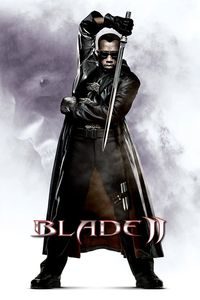
    Blade II (2002)

    (In theaters, March 2002) Once in a while, the mid-twenties male movie geek that I am finds a reason to fall in love with cinema all over again. Strangely enough, truly great films don’t do this as often as flawed B-movies that I happen to really enjoy. Sure, okay, Traffic is a good film, but it doesn’t inspire me to the same level of devotion as the wonderfully quirky Dude, Where’s My Car?. Blade II is one of those films about which I can rave for hours, simply on the basis that it’s one of those all-too rare horror/action film that really push the action quotient to insane levels. It’s furiously paced, it stars a highly charismatic hero (Wesley Snipes, better than ever), it doesn’t skimp on the special effects and gives you a geek-worthy movie experience. Blade II improves on most of the strengths of the original; more action, more vampires and more coolness. (One notable exception is the scant development of the vampire-world mythology, which revert from the original’s “council of vampires” to a more hum-drum “vampire monarchy”) The action sequences are directed with impressive skill and fluidity, though some blurry shots betray an imperfect integration of CGI and live-action elements. For director Guillermo del Toro, this is a triumphant return to mid-budget American films after the tepid Mimic. Perhaps the best thing about Blade II is how much it pushes the limits of its MPAA-approved rating, ending up as one of the hardest-R movies in recent memory. Hence my unconditional love for the film, vampire-slayings and tense action sequences aside; if middle-aged ladies can have their sensitive Bridges Of Madison County and pre-schoolers can have their safe Thomas The Magic Train, then why can’t I get my Blade II? Thank you, Snipes and del Toro; once again, cinema has something to offer me.

    (Second viewing, On DVD, January 2003) Adrenaline junkies should take note that there aren’t many better choices than this one as far as sheer action coolness is concerned. This film doesn’t try to do any anything but bring a kickin’ action comic book to life, and boy does it succeeds like few others. Blade II is packed with cool scenes, loud music and plenty of macho posturing. It’s almost perfect for what it wants to be. The DVD is enough to make any geek fall in love with the film again, as the 2-disc edition is dominated by the imposing presence of director Guillermo del Toro. His candid co-commentary (along with producer Peter Frankfurt) is reason enough to buy the DVD; profane, honest (he regularly points out flaws in the finished film, and is even less merciful with the original script he had to shape up for the screen), quick with an amazing array of classic comic/anime/film references and devastatingly funny, del Toro proves to be the best man for the job and a talent to watch. In comparison, the second commentary (featuring writer David S. Goyer and Wesley Snipes) is a bit too smug and scattered. If you like action movies, this is it; the slam-bang jewel of 2002.

  • Ali (2001)

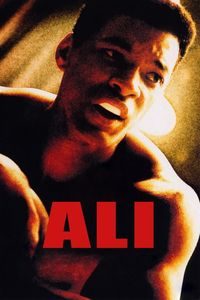
    Ali (2001)

    (In theaters, March 2002) I can recognize that Michael Mann is a great director, but goodness—please give him some espresso so that his films move more quickly. It’s not enough to spend the first twenty minutes of the film on a single fight, but we have to spend another five minutes later on jogging through the capital of Zaire and interminable moments on trivial details of Muhammad Ali’s life. It’s not only slow; it’s wasteful! Ali doesn’t add up, despite the best efforts of everyone involved, to a very good biography of its title subject; Seeing the documentary When We Were Kings immediately after this film gives an idea of the real significance of Ali, and how Mann’s Ali completely misses the target with a plodding, anecdotic narrative. Will Smith only looks like the younger Ali (not the older one of the “Rumble in the Jungle”) but whenever he talks, his voice inflexions are undistinguishable from the real Ali. It’s a courageous film (the political dimension of Muhammad Ali is never too far away) but ultimately a flawed one that ultimately squanders precious talent on a script that doesn’t give us a true measure of the man. Too bad!

  • For the Defense, William Harrington

    Pinnacle, 1988, 508 pages, C$5.95 mmpb, ISBN 1-55817-303-X

    Let us be brutally frank: Pinnacle Fiction has never been known as an editor of fine literature. As far as publishers go, it’s definitely a second-tier house, known nationally but not with the name-recognition of Bantam, Pocket or the other big-names. At least it’s a real publisher and not a vanity press. Still, you’d be hard-pressed to recall at least one author published by them.

    Even as an avid reader, my database lists only three of their titles, all very average genre fiction book. For the Defense is a surprising little exception to the norm, an enjoyable piece of legal fiction as gripping and amusing as anything I’ve read in the genre lately.

    It has the good fortune of starring a bigger-than-life heroine. As the novel begins, Cosima Bernardin is a young lawyer in a high-powered New York legal firm. She’s got everything lined up to succeed. In the first chapter, though, she’s asked to cede control of her most visible client -a rock group- to her senior partners. She not only refuses, but quits and decides to establish her own law firm in direct competition with her old colleagues. A few plucky lawyers join her fight, and For the Defense is the story of that David-versus-Goliath fight.

    Everyone is sucker for such a story, but For the Defense wouldn’t be half the novel it is if it wasn’t for the gallery of fun characters introduced in its pages. Even weeks after reading the book, some of the minor characters resonate more strongly than the protagonists of other novels read subsequently. Cosima herself is a wonderful heroine; a female protagonist with a good control on her destiny, unbounded ambition and considerable skills.

    She’s surrounded by rock stars, a ballerina, a frightfully powerful father, a senator sister, actors and actresses as well as other lawyers. There’s a lot of casual sex in this novel; Cosima herself sleeps around with a few men during the course of the novel, but to Harrington’s credit this never seems like an exploitative technique. (You know, like those so-called “feminist” male authors who just really like to play around with a wish-fulfilling promiscuous heroine.)

    Harrington’s writing is crisp, clean and compulsively readable. Cosima’s legal cases overlap and compete for her attention, but our own attention remains rigidly focused on what she’s doing. I was particularly impressed by For the Defense‘s ability to juggle multiple storyline, some of them impacting other, and some of them remaining stubbornly separate.

    I was also impressed by the versimilitude of the legal manoeuvring in the novel. From the author’s note (“I have the privilege of being a member of the Association of the Bar of the City of New York.”), we can assume that Harrington is a professional of the field, and his experience in such matters really shine through, as is his talent to vulgarize complex notions.

    Most of all, even though this is “merely” trashy genre fun, there is a definite pleasure in reading such novels from time to time; protagonists all get what they deserve, and that goes for antagonists too. For the Defense‘s universe is a richly moral one, and a contemporarily moral one too. Casual sex is acceptable, but sexism definitely isn’t!

    A compelling heroine, memorable characters, a boffo against-all-odds premise, convincing background details, clear writing… is there anything else we’d want from a genre novel? I don’t think so, and that’s why I recommend For the Defense if ever you can find it.

  • The Chronoliths, Robert Charles Wilson

    Tor, 2001, 301 pages, C$32.95 hc, ISBN 0-312-87384-0

    Any reader who’s been following the career of Robert Charles Wilson has been surprised more than once before. Wilson has transformed himself from a mid-level SF writer heavily relying on stock premises (Gypsies, The Divide) to someone capable of moderately entertaining riffs on familiar concepts (The Harvest, Mysterium) to more original novels hampered by significant problems (Darwinia, Bios). Now here comes Wilson’s most original and most satisfying novel yet, The Chronoliths.

    It certainly begins with a bang, as a monolith materializes in the middle of Thailand and further examination reveals that it’s a memorial to a military victory… twenty years in the future. No one can figure out how it got there and what it’s made of. Before long, though, other monoliths are appearing, celebrating other victories, always twenty years in the future.

    The novel also begins with an emotional bang of sort for our narrator Scott Warden, whose carefree manners finally catch up to him, resulting in a serious debilitating injury for his daughter and the dissolution of his marriage. As the narrative advances, Warden will find himself increasingly enmeshed in the mystery of the Chronoliths, with significant impact on his family and friends.

    There is no better way to hook a reader than with a fascinating mystery, and so The Chronoliths revolves around a big secret; the origins of the huge blue monuments that appear out of nowhere, creating considerable destruction over a large area. (It doesn’t help when they appear in densely-populated areas) Wilson plays well and plays fair with readers’ expectations, and the overall resolution of the enigma is rushed but satisfying. As with some of the finest time-travel thrillers, there is a delicious sense of impending doom, and the curious structure of the story essentially pre-loads the narrative with the dramatic confrontations that make the flashiest parts of the story irrelevant and so left to a few throwaway lines. Don’t be mystified; just read the book and you’ll be satisfied at how well it unconventionally comes together.

    It helps, of course, that Wilson knows how to write polished, limpid prose. Warden’s narration is easy to read, peppered with tense moments and filled with telling details. This is a book you can reasonably read in a single day; chances are that you’ll be so absorbed in the narrative that the though of doing anything else will seem absurd.

    For a writer who has only broken out of contemporary narratives with his last book (Bios, which took place in an appreciably distant future), Wilson does a fine job at setting up his future. The Chronoliths takes place over a touch more than a decade and its sense of social evolution is quite intriguing. After The Chronoliths, Bios seems even more of a successful writing experiment to help Wilson break out in new directions.

    You could quibble with the ubiquitous presence of the narrator in the various events of the Chronolith saga, but amusingly enough, Wilson anticipates the objection with some hand-waving about how everything links together in mysterious ways (In fact, the novel’s second paragraph is “Nothing is coincidental. I know that now.”) Cute. Works for me.

    Add the cool cover illustration by Jim Burns and you’ve got one of the finest SF novels of 2001. Wilson’s continued growth as a writer has finally produced a great SF novel without the caveats of his previous work. The Chronoliths is a best-of-career high for him, and a most encouraging portent of things to come. If you still haven’t read anything by Robert Charles Wilson, this is the place to start. If you’re already a fan, well, go forth and get it, already!

  • Unearthing Atlantis, Charles Pellegrino

    Avon, 1991 (2001 reprint), 355 pages, C$9.99 mmpb, ISBN 0-380-81044-1

    The legend of Atlantis has fascinated many over centuries, all the way from Plato to us. Could it be possible for an advanced civilisation to disappear, just like that? Through the rumors, the stories, the myth, what is the true story that inspired Atlantis, if there was one? Are there any lessons to be learned from the fall of Atlantis?

    In Unearthing Atlantis, Charles Pellegrino applies his considerable archaeological experience, writing talent and gift for vulgarization to give us an overview of what we think we know, at this moment, about the Minoan civilization, the buried city of Thera and how it all ties into the myth of Atlantis.

    It doesn’t stop there, of course. Pellegrino is pathologically incapable of sticking to one subject and Unearthing Atlantis takes delight in rummaging through Science’s entire bag of tricks. A gifted polymath, Pellegrino can discourse as easily on anti-matter rockets, archaeology or palaeontology. The result is unique, and a testimony to how much fun the pure acquisition of knowledge can be, both for the scientists and the average readers.

    This, unfortunately, can have an unfortunate scattering effect on the unity of the book’s structure. Unearthing Atlantis goes one way, then another and then in yet another direction. Fans of the author’s previous books already know this, but this can be disconcerting for a new reader. Fortunately, a complete index will help if you want to track down specific passages quickly.

    It’s not as if your attention will wander, even if Pellegrino’s narrative does: the stories he has to tell are fascinating. From the memorable bio portrait of the driven archaeologist Spyridon Marinatos to the “time gate” (an intellectual device possibly borrowed from Pellegrino’s own scarce Time Gate book, which I haven’t yet read.), here’s a vulgarizator who knows how to communicate the passion of science and the excitement of discovery.

    Pellegrino fans will appreciate that this book once more ties into his pet obsessions to a degree or another—most notably the Titanic wreck. This 2001 re-edition of Unearthing Atlantis is touted on the author’s web site as the “uncensored version”, which probably refers to the carbon-dating controversy in Chapter 11. (I believe that it is in Return to Sodom and Gomorrah that Pellegrino explains the highly adverse reaction of Egyptologists to even the suggestion that some of their canon might not match with independent carbon dating.) Fun personal anecdotes pepper the narrative, from Pellegrino’s run-in with Prince Charles’ security forces (an event casually mentioned in his novel Flying to Valhalla) to an amusing desert drama:

    ”…one Egyptian scholar became so disturbed by news that some of her pottery dates may have to be rewritten that she began to confide in me some chillingly detailed suicide fantasies. Since I was depending on this woman to get me out of the desert alive, I decided not to press the issue. As far as I can recall, she is the only person ever to have succeeded in shutting me up.” [P.265]

    In short, it’s another wonderful book by Pellegrino and a perfect example of good scientific vulgarization. Even as far as Atlantis is concerned, Pellegrino is careful to play down evidence of catastrophic destruction in the end of the Minoan civilization, noting that the empire was already showing signs of collapse.

    Still, it’s a lot of fun to speculate about a relatively advanced civilization, ready to spring forward yet destroyed by a freak geological event. Otherwise, how different would have been history? Might we already be standing on an extra-solar planet by now? Maybe. Who knows? With enough “What if?”s, it’s easy to make the legend of Atlantis stretch all the way from the past to our future.

  • Into the Storm, Tom Clancy & General Fred Franks Jr.

    Putnam, 1997, 531 pages, C$37.50 hc, ISBN 0-399-14236-3

    I’ve said it before, but it’s an axiom worth reprinting again: Publishing is a funny business. You can sell a lot of unlikely books if you have the right hook, and the quality of the product rarely has anything to do with the end result. Neither does reader enjoyment; you can slide and dice the numbers any way you want, but there aren’t very many rational answers for the wild best-selling success of Stephen Hawkins’ math-heavy A Brief History. Many have uncharitably suggested that it was a book that was more interesting to display than to read, and that’s not far from the truth. Not many people have read A Brief History of Time all the way through, but many poseurs proudly include it in their personal library.

    In much the same vein, General Fred Franks’ Into the Storm could have easily been yet another of those dry military history textbooks: Published by a specialized printing press, advertised in a few small magazines, bought by a few hundred universities and overwhelmingly invisible to the general public. Regardless of the quality of the work, this would have been a hard-core military book for a small audience of military buffs. Or, even worse, an unpublished manuscript.

    But in our universe, Tom Clancy stepped in.

    Or, should I say, best-selling techno-thriller author Tom Clancy stepped in. He (or someone else) thought it might be a good idea to co-author a series of non-fiction books with professional military personnel. Into the Storm is, reportedly, the first book in this series.

    In a sense, everyone should come away happy from this experience. Clancy gets to work with interesting people and acquires a considerable amount of credibility as an expert in the field. The co-authors get an experienced wordsmith and vulgarizator. Oh, and a best-seller is certain.

    And that’s the really surprising thing about Into the Storm. It’s a jargon-heavy pure military text. It describes the history of mechanized infantry from the Vietnam War to the Gulf War. It describes, in overwhelming detail, how ground troops prepared and fought in the Gulf War. It’s a biography of General Fred Franks. It’s a summary of fifteen years’ worth of changes in the US Army. It’s a primer on how to fight a modern war with modern weapons. In short, it’s not beach reading. And yet it was published, massively marketed and probably bought by thousands of readers who were probably expecting another Clancy pot-boiler. Gotcha!

    It’s not even a bad book, though it definitely has its limitations. For even the moderately knowledgeable military buff, it’s often dry reading. While the details are exhaustive, they’re usually not presented in a compelling way; there’s a limit to how excitingly you can describe transit operations and force preparation. Some of it is even dull beyond belief. You almost have to be a professional military analyst to enjoy the full book. There’s also an additional annoyance in that Franks seems to be using passages of Into the Storm to answer Norman Schwarzkopf’s criticism in his autobiography It Doesn’t Take a Hero. Naturally, readers who aren’t familiar with the previous book might not care at all.

    But don’t let that blind you to the interesting sections of Into the Storm. At its best, it’s a clear description of the overhaul of the US Army after the scars left by Vietnam. It’s a rather good autobiography of a professional military man. It’s occasionally a good description of the Gulf War. From time to time, you’ll even uncover a nugget or two of fascinating military trivia. Its grasp of the real-world military chain of command and logistics is also unparalleled in widely-available literature.

    But if you’re not a dedicated military buff, goodness, don’t pick up Into the Storm expecting another easy read by Mr. Clancy. It all too often happens that the publishing industry fools relatively smart people in buying total crap, but in this case it’s fascinating to see the complete opposite—the marketing industry managing to convince a large audience to buy over their heads. Now that Into the Storm has hit the remainder stacks, you can find out for yourself if you’ve got the mettle for 500+ pages of hard-core military jargon.

  • Cradle of Saturn, James P. Hogan

    Baen, 1999, 421 pages, C$35.50 hc, ISBN 0-671-57813-8

    James P. Hogan has always been a very peculiar writer, constantly dogging boffo premises with botched characters and limp execution. In a sense, he’s the incarnation of everything that’s good and bad about hard Science-Fiction with his unique extrapolation of original ideas mixed with an appalling inability to write. Cradle of Saturn is a frustrating novel that’s highly representative of his body of work.

    In a few words, Cradle of Saturn is yet another novel of implacable celestial catastrophe. The late nineties -driven by pre-millennial fever, the intellectual impact of the Schumacher-Levy comet on Jupiter or simply synchronicity- were filled of such stories on a variety of media: ARMAGEDDON, DEEP IMPACT, the TV miniseries “Asteroid”, Yvonne Navaro’s ludicrous Final Impact, etc… It wouldn’t be fair to criticize Hogan, however, for being unoriginal given the mood of the times. (He himself even bemoans his unfortunate timing on his web site)

    For one thing, he’s far more innovative in his choice of celestial body: Rather than hand-wave a collision between two rocks in the asteroid belt, Hogan postulates as-yet unknown planetary mechanism to extract a planetoid out of Jupiter. (the moniker “Athena” is inevitable) Before anyone can say “Uh-oh, not again”, Athena is lined up in a game of planetary snooker to send Earth in the corner pocket.

    The first half of Cradle of Saturn is its most embarrassing from a literary point of view. Characters have little meetings to hurls reams of expeditionary material at each other, nods gravely and then rush off to other expeditionary meetings. Our hero, Landen Keene, is a maverick engineer who only wants to build cool rockets without being hampered by a stunningly unimaginative government. (Stop me if you’ve read that one before.) For some strange reason, though, he seems to be surrounded by people who think that conventional scientific dogma is wrong on a number of subject. And for some other reason, the rest of the scientific community is a bunch of retarded morons who’ll do their best to ignore new evidence.

    Aside from the cliché characters, the cheap and constant “they laughed at Galileo!” discourse and the atrocious integration of cool ideas in a weak narrative, this half of the novel is actually quite interesting. Hogan’s science is far-fetched, but unusual enough to make us pay attention. His rant on the improbability of dinosaurs alone will be enough to make even the hardened skeptics very curious about alternate explanations. But the real argument of the book is about celestial mechanics, the formation of planets, the impact of near-misses on the atmosphere, the strangeness of our universe and scientific evidence hidden deep in our myths and religious texts.

    By now, readers familiar with recent pseudo-science might recall a similar theme of thought in Immanuel Velikovsky’s widely-debunked work. (Worlds in Collision, a staple of the sixties’ new-age fad) Given Hogan’s fascination for weird science (again, please refer to his web site), it’s unsurprising that he’d set up a premise suitable for a rematch. His arguments are vigorous and clever. He even conspicuously avoids any mention of Velikovsky apart from the novel’s dedication and stacks the deck with convincing fictional arguments. SF is a rational game of “what-if?” and Hogan plays it very well. Experience Hard-SF readers will read this section with glee and ignore the flaws.

    The second half of the novel, alas, isn’t nearly as good. Athena hits, most people dies and our heroes are on a mission to escape Earth. While one can temporarily forget the inherent elitism in letting most of the planet die to save a few valorous heroes, the problem is that when he’s not being intellectually stimulating, Hogan doesn’t have a whole set of narrative skills to work with. The latter action-oriented half of Cradle of Saturn is trite, long and boring. Rather than end on a triumphant success, Hogan’s novel ends on an mixed note of shameful escape and exasperating hypocrisy.

    Hard-SF fans might want to tolerate the flaws and savour the ideas. Others should be warned that there are more satisfying novels out there.

    [July 1998: James P. Hogan fans (and non-fans) already know that he’s not a very accomplished stylist. They might have a surprise with Realtime Interrupt, which is easily his best book yet. A tale of virtual realities that brings back memories of quasi-Dick-ian paranoia, Realtime Interrupt also takes the time to mull over various aspects of Artificial Intelligence. Corporate infighting is mixed up with mature romance and the result is slow to revv up, but worth the wait. It’s a shame that most of the first half of the book is fairly obvious to even the average reader; the last third gets better as it goes on. The climax is vivid. Readers disappointed by Hogan in various outings might want to check this one out.]