Year: 2010

  • Daybreakers (2009)

    Daybreakers (2009)

    (In theatres, January 2010) Every genre fan comes to develop a fondness for “the B-movie that could”, the twice-a-decade film that comes along with a little budget and big brains to take the genre in a newish direction.  While that’s a lot of praise to dump on Daybreakers all of a sudden, consider that it manages to combine horror and science-fiction to imagine a future society that has adapted to the fact that most people are vampires.  Add a few action scenes, Willem Dafoe playing a redneck with a fondness for crossbows and muscle car, tons of special effects and a script that doesn’t devolve into total silliness and the result is an impressive piece of work, especially in the doldrums of January.  It’s a savvy piece of work, one that privileges quantity of special effects, little details and genre-blending to deliver a mean and lean movie.  The direction is pretty good, the thematic underpinnings are solid, the pacing always accelerates and we have the sense of watching something that hasn’t been done before (no, Ultraviolet doesn’t quite compare).  It’s not a perfect piece of work: Ethan Hawke is a bit dull, some of the details make no sense, and the revelation on which the third act depends seems quite a bit… convenient.  Nonetheless, Daybreakers is a vigorous, stylish, entertaining B-movie that will earn quite a few admirers.  It’s probably my favourite vampire film since Blade II, and it pumps some blood back into what was becoming a tired monster.  I’m not sure what the writer/director Spierig brothers will do next, but I’m already interested.

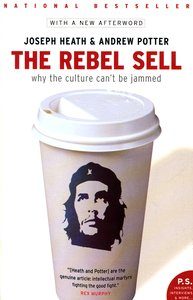
  • The Rebel Sell, Joseph Heath & Andrew Potter

    The Rebel Sell, Joseph Heath & Andrew Potter

    Harper Perennial, 2005 updated edition of 2004 original, 374 pages, C$19.95 tp, ISBN 978-0-00-639491-4

    Shortly after reading Naomi Klein’s virulent No Logo, I ended up buying myself a copy of Adbusters magazine despite Klein’s own misgivings about the publication. It was the first time I purchased the magazine since high school: I wanted to see what I had been missing in the years since then, and gauge the current state of the anti-consumerism movement.  I wasn’t impressed: In-between spastic graphic design, incoherent articles and a message that didn’t seem to have evolved since the early nineties (and which may, in fact, have regressed into further insularity), Adbusters seems more self-satisfied than relevant, a charge that also broadly applies to a number of activists on the left end of the political spectrum.

    So imagine my pleasure in finding kindred spirits in Joseph Heath and Andrew Potter’s The Rebel Sell. –also known as Nation of Rebels in the US market.  The book’s subtitle promise to tell us “why the culture can’t be jammed” and the demonstration is more than a discussion of co-optation.  Indeed, the authors demonstrate, there was never a need to co-opt, since counter-culture does nothing better than reinforce culture itself.  Their argument is complex and I’m not up to the task of summarizing their dense tapestry of ideas, but it generally breaks down in the realization that the mainstream doesn’t really exist.  Mass culture is made of many sub-cultures, including the counter-culture.  Nothing really stops anyone from adopting counter-cultural ideas as part of their individual identity, and there is a lot of money to be made selling ideas of rebellion.

    So far so good; but what really sold me on the book were Heath and Potter’s demonstration that the current (Canadian) system, albeit imperfect in countless ways, actually works better than anything else tried so far.  Whereas the far left thinks it will settle for nothing less than revolution, the author point out that small incremental changes have, historically, been the surest way to chip away at social inequity… not to mention the losing gamble that is the complete replacement of an established system.  It seems like a common-sense point, and yet one that’s not often taken seriously.  Of course, small incremental changes are boring.  They require work, tenacity and, at the very least, some involvement in the messy real-world conflict of interest that is organised politics.  The Rebel Sell may be a triumph of conventional thinking, but it’s also far more reasonable than anything it criticizes.

    Not always reasonable, though: The Rebel Sell is, in many ways, a sneering dismissal of left-wing power fantasies and at times it can’t avoid the trap of acting like the smartest kid in the class.  While most of the book is solid, it sometimes becomes wobbly in specific criticism.  They authors point and laugh at Naomi Klein’s musings about the gentrification of her neighbourhood in a way that almost makes me suspect that they must have had an argument with her at a Toronto social event or something.  (Not to mention their dislike of Alanis Morrissette!)  They also, regrettably, sketch a bit hastily over the point that not all No Logo-inspired left-wing activism is posturing: criticizing third-world sweat shops is about improving lives, not simply selling counter-culture merchandise.  (Maybe that point seemed obvious to the authors who, despite their targets, actually hail firmly from the left side of the political spectrum.)

    But none of this changes the fresh thinking in this book.  It’s articulate, a bit smart-alecky, almost daring in its embrace of middle-of-the-road progressivism.  It’s very Canadian in how it speaks from the middle against forms of excess, and uses the ideals of the left to police its own worst excesses.  (In a formula I’m adopting from now on, they point out that the left has trouble differentiating dissent from deviance.)  This review barely scratches at the fizzy intellectual fireworks of the book, but it’s a joy to read and great way to complete the picture painted by Klein and company.  It’s perhaps most useful as an antidote and vaccine against some of the most inflamed rhetoric that starts to sound so good after eight years of the Bush administration.  Most people are, after all, reasonable people.  They don’t all subscribe to Adbusters magazine and would rather live well than climb to the barricades.

    (Bonus Trivia: You can scour early-nineties Adbusters magazine and spot my name once in their letter columns.  If my memory of what I wrote there is correct, you will find out that I haven’t changed much since then.)

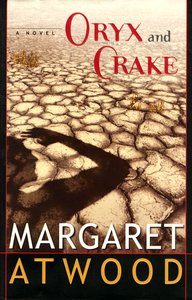
  • Oryx and Crake, Margaret Atwood

    Oryx and Crake, Margaret Atwood

    McClelland & Stewart, 2003, 378 pages, C$37.99 hc, ISBN 0-7710-0868-6

    When a talented mainstream author tackles a science-fiction novel, quite a few interesting things start to happen.  The novel is read by two largely distinct audiences (the author’s audience, and the genre SF audience as well), leading to what can be hilariously divergent takes on the result.  Historically, mainstream authors writing SF did so without the bag of tricks drilled into the heads of budding genre writers (consistent world-building, incluing, social complexity, etc.) and without any lifelong affection for the genre either.  The result tends to read like well-written, but substandard science-fiction: The background doesn’t hold together, the extrapolation is superficial and there’s a suspicion that everything is supposed to be a metaphor standing for something else.

    But Margaret Atwood is not just a “talented mainstream author”: In fact, despite her occasional protestations, she’s perilously close to qualifying as a true science-fiction writer.  She has written at least three SF novels so far, and one of them, The Handmaid’s Tale, remains a minor landmark of the genre.  Mainstream fiction novel The Blind Assassin even included a subplot about a hack SF writer in mid-twentieth century New York.  Atwood has apparently read a lot of SF in her formative years (which may explain her familiarity with an often-outdated notion of the genre) and clearly understands how it can be used to do things that mainstream fiction can’t explore.

    So it is that Oryx and Crake is a return to Science Fiction for her: While the framing device is about a man, a quest and a post-apocalyptic world, the meat of the story is the imagined biography of three people growing up in an increasingly unpleasant future.  Jimmy (later Snowman) is the main viewpoint character, and his experiences growing up with his friend Crake, and then meeting Oryx, form most of the bulk of the novel.  It’s not a pleasant future, what with deadly violence figuring prominently in popular entertainment, and genetic manipulations resulting in ever-stranger life forms.  When humanity is wiped out in the last third of Jimmy’s narrative, just in time to make place for the post-apocalyptic landscape Snowman has been inhabiting in-between telling the story of his life, we feel as if it’s a deserved end.  After all, it has already engineered its better descendant to inherit the Earth once they’re gone.

    Genre readers poking at Atwood’s imagined future won’t be impressed by the originality or depth of the SF elements.  Much of it appears recycled wholesale from other post-apocalyptic genetically-engineered nightmares.  Atwood loves portmanteau words and can’t resist the impulse to label everything in cute fake trademarks, surrounding her characters with a blizzard of consumerist tags.  Her future society, pre-catastrophe, seems to be one in which everyone is gleefully complicit with competing corporations, unchallenged pornographic entertainment and rotten “human” behaviour.  It’s not a nice novel, and even pointing out that it’s supposed to be dystopian satire doesn’t do much to quieten thoughts that we’ve seen all of this before, in more fully imagined settings.  This being said, Atwood does not embarrass herself with paper-thin future elements like so many of her mainstream colleagues: There may not be a lot of SF here, and it may not go far, but it’s good enough to suspend the disbelief of the average SF genre reader.

    But reading Oryx and Crake for the SF elements is like using a Ferrari to commute to the nearest bus stop: It’s a bit of a waste, and it denies the book’s greatest assets.  An Atwood novel is meant to be read for the writing, the sly humour, the deadpan take on human weaknesses.  Never mind the obviously converging plotting; it’s a book meant to be appreciated line-by-line.  Reading it is, if you want to go back to clumsy car analogies, like experiencing a performance engine put in an otherwise unassuming beater: The writing is polished to a level that would cause lesser writers to weep openly.  It doesn’t amount to much in the end, but it’s a ride to get there.

    Oryx and Crake even fans the deep and undying crush that mainstream-friendly SF genre readers may have on Atwood, who will always remain Canada’s hottest writer no matter how much we can take her for granted.

  • Futurama: Into the Wild Green Yonder (2009)

    Futurama: Into the Wild Green Yonder (2009)

    (On DVD, January 2010) Every one of the four straight-to-DVD futurama features has been less interesting than its predecessor, and so it is that Into the Wild Green Yonder in the least interesting of them all.  It’s still worth a look for confirmed Futurama fans, but there isn’t much here that sticks in mind: While the early Mars Vegas sequence is promising, the mini-golf throwaway joke becomes a stretched subplot, the environmentally-focused theme becomes overbearing (the eco-feminist subplot?  Eh.)  and by the time we’re supposed to realize that the film may be the last Futurama episode ever (thanks to an ending that wraps up a few romantic threads, and sends the entire crew somewhere else), it’s a bit of a relief that the thing actually ends.  There is a surprising amount of continuity with the entire series, another proof (if it was needed) of the intricate nature of the Futurama series, where nothing is quite a throwaway joke.  The best thing about Into the Wild Green Yonder may be the sales figures pushing toward another season of Futurama, hopefully in episodic 20-minutes installments for suited to the show’s nature.  The DVD adds an audio commentary that is up to Futurama’s entertaining standards, as well as a few other short features, the best of which being a hilariously misleading “making of” documentary that should satiate even the most rabid Amy/Lauren Tom fans.

  • From a Buick 8, Stephen King

    From a Buick 8, Stephen King

    Pocket, 2003 reprint of 2002 original, 487 pages, C$11.99 mmpb, ISBN 0-7434-1768-2

    At this stage of his career, Stephen King can take risks that a younger writer wouldn’t dare.  Risks like a novel that consciously withholds complete satisfaction from the reader, wrapping everything in a preachy blanket of “there are strange things we’re not meant to understand”.  No, I’m not talking about The Colorado Kid, but From a Buick 8, an uncanny novel that does things in ways few genre readers would expect.

    Which is just as well, because a very superficial look at the novel immediately summons memories of another King novel: his Christine is the first example that comes to mind whenever talking about “evil car horror novels” for instance.  But the similarities end there: In From a Buick 8, things are far more complicated than just a car haunted by evil spirits.

    After all, it’s not even a car.  When Pennsylvania State Troopers are called to a gas station to pick up an abandoned vehicle, they quickly find out that the object that looks like a Buick Roadmaster really isn’t: Not only do the details don’t match (extra decoration elements, oversized wheel, etc.) but the car won’t even move by itself.  Never mind how it got there, or where its driver has gone: Soon enough, the Troopers discover that the materials used to build the car are quite unlike anything they know, and that the car self-repairs when damaged.

    But wait: it gets worse.  Periodically, the car starts bending reality.  Temperatures next to it drop by several degrees and the inside of the car lights up with eerie electrical light.  Soon after those events, things either disappear or appear next to the car.  One trooper goes missing.  Repulsive plants and animals pop up next to the car.  Faced with such phenomenon, the troopers safely shutter the car in a shed.  Years pass.

    Don’t expect a tidy chronological third-person telling of the tale.  From a Buick 8, also much like The Colorado Kid, is a novel in which a younger protagonist is told things by older, wiser people who have seen it all happen.  In this case, a young teenager, whose recently-killed father knew the secrets of the Buick, prods and asks his father’s colleagues about the car he discovers hanging around the barracks.  Their tale goes from 1979 to the early years of the new century, in bits and pieces given how they don’t want to acknowledge all at once the piece of pure strangeness in the back shed.  The narration is one filled with regional expressions, jaded details, blue-collar vocabulary and homespun turns of phrase.  The teenager wants to know everything as soon as possible, and have it make sense, whereas the older folks know that it’s impossible: The car has been in their lives for decades, and it’s unexplainable as far as they know.

    In many ways, it’s a novel about storytelling and how it’s neater than messy reality.  The Buick becomes an irrational part of the characters’ lives, to be locked somewhere in a shed and occasionally confronted as it takes out another piece away from their orderly reality, or spits out something that has no right to exist.  It’s not a scary novel as much as it’s a quietly terrifying one as the characters come to terms with something that will never be explained.  In that regard as well, it’s a precursor to the dirty trick that King would spring on readers with The Colorado Kid, presenting them with a tantalizing mystery that the author refuses to solve.

    Yet From a Buick 8 is somewhat friendlier to genre readers than The Colorado Kid in that it does feature a decent amount of chills and thrills even before the conclusion, and that it does offer enough of an explanation and a conclusion to mollify most readers.  The central mystery itself remains, but most of the smaller details are tied together in a final vision, and the epilogue offers a surprisingly reassuring way out of the strangeness.

    It amounts to a strange and uncanny novel that works in ways that horror novels usually don’t.  It’s a pleasure to read thanks to the narration and the accumulation of details about the life of state troopers, but it does eventually leads somewhere with its steady freak show of small-scale terror.  The framing device works in large part because the conclusion jumps out of the frame and starts messing with the people telling the story.  Writers will recognize the risks taken by King here, but readers should feel blessed to be in the hands of such a good storyteller.  From a Buick 8 is not your average horror novel, and it’s all the better for it.