Month: July 2011

  • Sharktopus (2010)

    Sharktopus (2010)

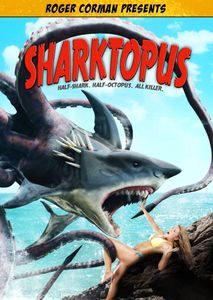
    (On DVD, July 2011) There seems to be an almost unexplainable appetite among young viewers for cheap trashy monster features, and Sharktopus seems determined to exploit this fascination without shame.  Playing up the camp elements of such stories, Sharktopus mashes a shark and an octopus (well, maybe a squid) and sets in in the middle of an intensely familiar monster-movie plot.  Someone gets eaten every few minutes while the plucky adventurers go hunting for the rogue creature.  Revelling in cheap special effects, Sharktopus doesn’t rise far above its “SyFy Pictures” straight-to-cable-TV pedigree: it only looks good when compared to some of the worst abominations coming out of SciFi/Syfy.  The acting is over-the-top, the script barely shows signs of sentience, the cinematography struggles to capture the lush tropical location… and yet, Sharktopus isn’t a complete waste of time, largely because it doesn’t really take itself seriously.  It’s not a comedy, but the nature of its set-pieces is ridiculous enough to suspect that someone is clearly having some fun behind the camera.  The actors have their own charm (Eric Roberts understands that he’s there to bark, whereas Sara Malakul Lane does have, to quote another character, that “sexy librarian thing going on”) and the forward narrative rhythm of the film isn’t too bad.  Sharktopus may be trash, but it’s engaging in its own way.  For producer Roger Corman, already a legend of B-movies, this is practically second nature: deliver an exploitation movie, make it fun, make it fast and don’t worry too much about respectability.
  • Casino Jack and the United States of Money (2010)

    Casino Jack and the United States of Money (2010)

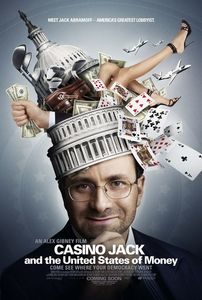
    (On DVD, July 2011) Documentary filmmaker Alex Gibney specializes in films designed to infuriate his audiences, and after such minor masterpieces as An Inconvenient Truth and Food Inc, documentary audiences are back for more with Casino Jack and the United States of Money, a non-fiction piece about the influence of lobbying in Washington… as seen through the story of Jack Abramoff, the most infamous lobbyist of them all.  Abramoff’s sin wasn’t being a lobbyist: it was pushing it so far beyond the venal standards of Washington as to be caught and reigned in.  As is now the case for many top-notch documentaries, Gibney’s entertaining exposé mixes fictional re-creation (“A documentary?  Why don’t you make an action movie?” says Abramoff in an email; so Gibney obliges by recreating a gun-down that figures somewhere in Abramoff’s checkered history.), talking heads, infographics, press clippings, archival material and a bit of original reporting.  It paints a damning portrait of a man who saw an opportunity to soak his clients and did it.  But Abramoff’s story is far from being the most infuriating aspect of Casino Jack Casino Jack and the United States of Money, given how thoroughly the film suggests, explains and demonstrates the astonishing power of money into the American political system.  Don’t like a law?  Pay lobbyists to call politicians, “explain” the issues to them (via exotic junkets and campaign contributions) and wait for results to roll in.  Call it a quick and nauseating primer into the way politics are conducted in the real-world.  Even cynics may be disgusted to see their worst fears given form.  Abramoff may have done prison time for his crimes, but it’s important to remember that it takes the willing participation of politicians for this scheme to work… and Casino Jack Casino Jack and the United States of Money ends on a somber note, pointing out how quickly the Washington establishment dropped any enquiries into the Abramoff scandal once it was assured that the lobbyist would go away for a long time.  While the brainy subject matter may not make this a crowd-pleasing favourite, it does make another entry in an increasing number of cogent high-quality documentaries tackling real issues.  It makes a compelling (if confusingly-named) double-feature with the docu-fictive Casino Jack, starring Kevin Spacey: Watch the fiction to sympathize with the character, then watch the documentary to get the facts.  In-between showing scenes from Abramoff’s Hollywood feature Red Scorpion and ending on the absurdist note of seeing Don Delay (who willingly built the infrastructure that made Abramoff’s schemes possible) on “Dancing with the Stars”, Casino Jack and the United States of Money speaks for itself and the self-satirizing nature of contemporary American politics.