Month: June 2013

  • Hotel Transylvania (2012)

    Hotel Transylvania (2012)

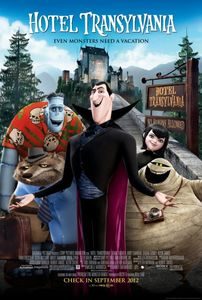
    (On Cable TV, June 2013) From the first few moments, in which we see a vampire father taking care of his baby daughter with hilariously re-worked parenting lullabies and tricks, it’s easy to be won over by Hotel Transylvania’s easy blend of sweetness, humor and dark visuals.  One of many recent kid’s animated movies to exploit horror imagery in relatively non-threatening context (also see; Frankenweenie, ParaNorman), Hotel Transylvania is easy to watch because of the gags inherent in “a hotel for monsters”, but remains compelling because it has something not too saccharine and not too rebellious to say about the need for teenage independence.  Adam Sandler turns in one of his least-annoying performances to date as the voice of the father-vampire, but it’s Genndy Tartakovsky’s direction that keeps things moving.  As with nearly all contemporary animated features for kids, the plot of often interrupted by musical numbers and frantic action sequences. (The final sequence with a vampire flying alongside a jetliner shows a bit of invention.) For adults, there’s a bit of fun in seeing horror monsters re-used to comic effect, as well as the exploitation of traditional tropes from the monster’s point of view.  Hotel Transylvania all amounts to an enjoyable family film, with a surprising amount of heart.

  • The Fly (1986)

    The Fly (1986)

    (On TV, June 2013) As amazing at it may seem, I had actually forgotten that The Fly was directed by David Cronenberg.  Don’t worry, though: within moments, it all came rushing back… as did the memories of being utterly terrified by bits of the film at age 12.  Seen from the perspective of an adult, The Fly isn’t as terrifying at a purely visual level.  It is, however, quite a bit more insidious about its body horror and the gradual devolution of its character into a mindless beast.  Jeff Goldblum can still look upon this as one of his most defining performances as the mutating scientist, while Geena Davis strikes just the right notes as a journalist who finds herself with a lot more grief than she expected chasing a good story.  What really doesn’t work so well is John Getz’s character arc going from creepy ex-boyfriend to shotgun-wielding saviour.  Cronenberg’s craft means that the film still, more than twenty-five years later, works quite well despite analog effects and sometimes-torpid pacing.  The Fly is worth a look, and not just as part of Cronenberg’s filmography.

  • Barton Fink (1991)

    Barton Fink (1991)

    (On TV, June 2013) Barton Fink’s reputation as a mystifying piece of cinema precedes it by years, and after watching the film I’m no wiser than anyone else in trying to explain what I’ve just seen.  It starts simply enough, as a New York playwright moves to Los Angeles to write scripts for Hollywood.  The initial satire of the industry can be amusing at times.  But then the film moves in another direction entirely with a run-down hotel, a threatening next-door neighbor, a brutal murder, more symbolism than anyone can use, and enough references to other things that one can profitably mine the film for endless analysis.  John Turturro is compelling as the title character, while John Goodman is surprisingly menacing as his neighbor/id.  What Barton Fink does not contain, however, is a simply digestible experience: It’s a hermetic film that seemingly delights in throwing off its audience and multiplying contradictory interpretations.  As such, it’s kind of fun: The Coen Brothers’ skill in putting together the film mean that individual scenes are compelling to watch, even as it’s maddening to piece them together in a coherent whole. 

  • Absentia (2011)

    Absentia (2011)

    (On Cable TV, June 2013) Horror and low-budgets are nearly made for each other, and films like writer/director Mike Flanagan’s Absentia continue to show why horror films made on a shoestring can still be worth a look.  As the film begins, we come to understand that our lead protagonist is nearly done grieving after her husband disappeared without a trace seven years earlier.  Putting up the last of her remaining “Missing” posters, she’s about to move away, give birth and settle down with her new lover.  But there are complications: First, her ex-junkie sister shows up, and then, right after signing the death-by-absentia papers, so does her husband.  What’s going on?  And what’s the link with the mysterious tunnel not too far away from their home?  Absentia doesn’t have a lot of money to spend on spectacle, but what it does put on-screen is worthwhile.  This is a quieter horror film that works on suggestion (even the CGI effects tend to be subtle apparitions in shadows), dread, existential horror and the tragedy of denied grief.  For jaded horror audiences, it’s a useful reminder that it’s certainly possible to do interesting things with a bit of imagination and skilled execution.  While Absentia certainly can’t shake its low-budget credentials (the acting is dull, the cinematography is grainy and the sets are definitely limited), it does a lot with what it has at its disposal.  The most annoying element of the film comes at the end, which is about as abrupt and tediously nihilistic as anyone would fear: it solves little and feels like an arbitrary way to end the film.  Still, let’s not be overly sour: Absentia works well, and sometimes better than many other bigger-budgeted horror films. 

  • 50/50 (2011)

    50/50 (2011)

    (On Cable TV, June 2013) Cancer is usually the domain of the made-for-TV sentimental tear-jerker aimed at women, not the kind of quasi-comedies aimed at young men.  But 50/50 takes the bet that it has something to say about cancer and friendship between young men and the result is far more impressive than you’d think.  Joseph Gordon Lewitt stars as a young radio producer who discovers that he’s got a rare and potentially fatal form of cancer.  Seth Rogen brings most of the laughs as his crude friend trying to cheer him up.  (The film squarely earns one of its most emotional moments when the protagonist discovers the highlighted best intentions behind his best friend’s cheerful facade.)  Meanwhile, Anna Kendrick gets a thankless role as a grief therapist who, against nearly all imaginable ethical guidelines, falls for her patient.  As a refreshingly younger and brasher take on the familiar cancer narrative, 50/50 ends up reaching a new audience in an honest way, and the result is both hilarious and affecting. 

  • Sparkle (2012)

    Sparkle (2012)

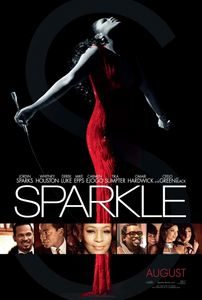
    (On Cable TV, June 2013) There’s something extremely comfortable in Sparkle’s story about three female singers trying to make it in late-sixties Detroit.  It doesn’t take a detailed history of The Supremes to know the place, understand the challenges and guess the dangers they face from boyfriends, drugs, fame and familial disapproval.  The music is familiar to the point of being curiously forgettable, the period detail easily mirrors countless other similar films and the stage cinematography feels like an old comfortable sequin dress.  The plot, more episodic than tightly-wrapped, can be followed along with some narrative pleasure even it’s a blend of conventional elements.  The only real question is whether the actors can do something with this material, and whether the music is worth it.  Sparkle doesn’t exactly sparks when it comes to its songs: they all skew toward the sultry rather than the rhythmic side of Motown –viewer’s appreciation will vary according to their own tastes.  Fortunately, the film does quite a bit better when it comes to performances: Mike Epps is deliciously evil as the antagonist, while Carmen Ejogo does fine as his main victim.  Jordin Sparks is comparatively duller as the title character (it’s not a challenging role, especially compared to Ejogo’s harsher dramatic arc) but relative newcomer Tika Sumpter gets a little bit more substance as the third sister of the ensemble.  Elsewhere in the cast, Whitney Houston gets one last role as the matriarch-who-learns-better, while Derek Luke is unexpectedly charming as the good guy.  While Sparkle won’t have much of a legacy, it is an acceptable film for those who want just a little bit more of that Motownish magic.

  • Black Gold aka Day of the Falcon (2011)

    Black Gold aka Day of the Falcon (2011)

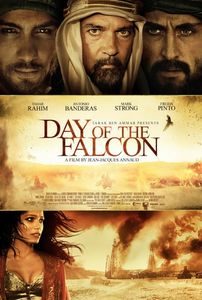
    (Video on Demand, June 2013) If you feel that there’s been a dearth of desert-adventure films out there, then take heart in Day of the Falcon’s existence and enjoy a trip to 1930s Arabia for an old-fashioned epic.  Tahar Rahim stars as Prince Auda, a bookworm son who eventually learns to lead an army and uphold progressive values at a time when the West is taking an interest in the oil reserves under the sand.  A co-production involving four countries, Day of the Falcon has a decent budget and a refreshingly earnest viewpoint toward traditional values in the face of western imperialism.  Directed with competence by veteran French filmmaker Jean-Jacques Annaud, the film can be enjoyed for its epic scope, interesting visuals and sympathetic characters.  It’s hardly perfect: there are a few pacing issues, and as much as I like Mark Strong and Antonio Banderas, casting them as warring emirs feels like a bit of a wasted opportunity for ethnicity-appropriate actors.  (The same goes, to a lesser extent, for Freida Pinto, except that she’s sultry enough to make anyone believe that the hero would wage all-out war simply in order to come back home to her.)  Historical parallels with the early days of Saudi Arabia are interesting (albeit not to be taken at face value) and so is the obvious commentary on the dominance of the oil industry in the region.  Parallels with Lawrence of Arabia are obvious, especially considering that the film offers a few desert-war sequences not commonly seen elsewhere in movies.  The stilted dialogues and acting definitely take a back seat to sweep of the film’s adventure.  For a film that probably flew under the radar of most north-American moviegoers, Day of the Falcon definitely qualifies as an underappreciated gem.