Month: September 2015

  • Ghost Town (2008)

    Ghost Town (2008)

    (On Cable TV, September 2015) Worth pondering: The good impression left by a film can often be measured solely against expectations.  For instance, I expected little of Ghost Town, so when the film managed to pull off decent sequences and amusing moments, it seemed far better than if I had gone in with high expectations.  Ghost Town remains, in many ways, a basic romantic comedy with a nebbish protagonist trying to impress a beautiful woman.  But this one happens to feature Ricky Gervais as a protagonist who suffers a near-death medical experience that leaves him able to see ghosts in Manhattan.  The supernatural element is brought in gently and is always presented wondrously: there isn’t a hint of darkness in the film which, considering that is deals rather heavily in death, is something to admire.  Gervais makes for a capable unconventional hero, with anti-social nature believably progressing into something approaching decency by the end of the film.  He is ably supported by Greg Kinnear as the ghost of a philanderer trying to meddle in his widow’s affairs.  Complications obviously ensue.  Fortunately, Ghost Town has an amiable atmosphere, enlivened by a couple of strong sequences.  There’s a hilarious hospital scene in which our protagonist discovers his temporary death, for instance; a rapid-fire exploration of the nature of ghosts hanging around Manhattan; and a poignant sequence in which our protagonist gets to help ghosts settle their affairs with the living.  It doesn’t make for a film for the ages, but it makes Ghost Town quite a bit better than its closest comparisons.  It exceeds expectations, and often enough that’s exactly sufficient to leave audiences with a satisfied smile on their faces.

  • Drive Hard (2014)

    Drive Hard (2014)

    (On Cable TV, September 2015) As much as I’m a good audience for car-heavy action movies, as much as I can tolerate a lot of silliness, as much as I’m willing to cut some slack to low-budget films, there’s something just off-balance in Drive Hard.  What should have been a generic action film almost-inexplicably features both Thomas Jane (looking shaggy) and John Cusack (in another low-budget role as a villain with a curiously sympathetic streak).  Such name actors unhelpfully raise the profile of a generic action buddy comedy beyond what it can be expected to achieve.  There are a few likable things about the film: Australia’s Miami-like Gold Coast is a picturesque but unusual setting, there’s a cute car chase featuring an underpowered car, and you can see how the rapport between Jane and Cusack exceeds the quality of the script they have to work with.  Unfortunately, that script brings the entire film down.  Structurally, it’s a bit of a mess, with subplots hastily cut down in a rain of bullet, the film’s best action scene placed far too early, jarring shifts of tone, an unpleasant misogynist subplot, and dialogue nowhere as smart as it thinks it is –with added bursts of extreme profanity that seem to come out of nowhere and cheapen the entire film.  I have only a small idea of the behind-the-scene story about the film’s production and hasty re-writes, but the result on-screen is a big disappointment.

  • Rob the Mob (2014)

    Rob the Mob (2014)

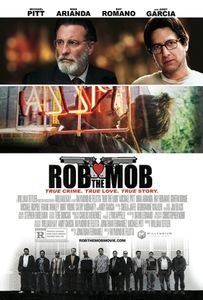
    (Video on-Demand, September 2015) At a time when it seems as if we’ve seen every mob movie concept imaginable, here’s a slightly different twist on the genre, and what’s more it’s based on a true story.  Here, against the backdrop of the 1991-92 Gotti trial in New York City, we get a sympathetic but dim-witted couple that decides to make ends meet by robbing mob social clubs.  The idea is smarter than it sounds when the protagonist realizes that there are no weapons allowed in mafia clubs.  Still, the protagonist makes plenty of mistakes along the way, and Rob the Mob is never stronger than when it can indulge in the inherently comic aspect of two small-time crooks taking on the powerful NYC mob and holding their own for a while.  Michael Pitt is fine as the lead Tommy, but Nina Arianda is a bit of a revelation as Rosie his charismatic wife, while Andy Garcia plays a fine fictional mob boss and Ray Romano is unexpectedly interesting as a journalist covering criminal developments.  The film moves well, doesn’t dwell on gore, makes heroes out of its unlikely protagonists and delivers the expected entertainment.  As an adaptation of real events, Rob the Mob sticks to the main points of the original story –still, it’s tempting to say that a far funnier film could have been made had the screenwriter taken a few more liberties with the source.

  • Cheap Thrills (2013)

    Cheap Thrills (2013)

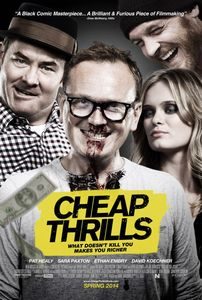
    (On Cable TV, September 2015)  There’s something admirable and repulsive in what Cheap Thrills is able to do: even as a very-low-budget film (200,000$ is the reported number), it manages to come up with a compelling hook, a controlled pace and a memorable ending.  It’s also the kind of film that you never, ever want to see again once you’re done.  The premise couldn’t be tidier, as a recently-fired family man, already anxious for money, befriends a couple of rich people willing to pay for entertainment in a series of dares pitting the protagonist against a recently-reunited friend.  The dares and the payouts escalate gradually, until the characters are crossing irremediable moral lines and doing irreparable damage to themselves.  While occasionally billed as a dark comedy, Cheap Thrills easily veers into horror midway through, and manages to make audiences hate the protagonist well before it’s over.  The performances are good, with David Koechner, the only “name” actor in the film, delivering a disquieting role far away from his usual funny-redneck persona.  Arguably more disturbing than the grand-Guignol gore of the Saw series, Cheap Thrills is very successful at what it attempts.  Unfortunately, what it does attempt to deliver is the kind of nightmare that you never want to experience again. 

  • Mary Poppins (1964)

    Mary Poppins (1964)

    (In French, Video on-Demand, September 2015) I had seen bits and pieces of Mary Poppins over the years, but never the entire thing from beginning to end.  So it is that “I can see why this is a classic” jostles with “wow, this is a long movie” as my first conclusions.  Clocking in at nearly 140 minutes, Mary Poppins unevenly goes from one set-piece to another, flirting with plotlessness before finally delivering something near the very end.  It’s obviously a musical, meaning that is comes with a Bollywoodian intent to cover all emotional bases during its lengthy running time, no matter the loss in economical storytelling along the way.  There’s also an argument to be made that in 1964, audiences were far more accepting of a meandering movie experience and that today’s 90-minutes feature competes with far many more entertainment options.  So be it –let’s simply say that the film often drags.  Still, it would be churlish to ignore the reasons why Mary Poppins remains a cultural touchstone: the charm of it all, the great performances by Julie Andrews and Dick van Dyke (whose physical energy in the film remains astonishing), plentiful special effects, the catchy tunes, the family-first message, the set-pieces that do work well.  (My own favourites include the partially-animated Jolly Holiday, Supercalifragilisticexpialidocious (of course) and the rooftop Chim-Chim-Cheree)  Must of the film feels dated, but in doing so has acquired a further patina of whimsy that can’t be replicated by modern films.  (Well, except for the use of suffragette activism as a motivation for a mother ignoring her kids –that’s even more annoying than it must have been at the time.)  While I itch for some editing power in making this film more focused from beginning to end, the end result is still a classic for the ages.  Note: The French version may be competently translated, but it’s nowhere near the catchiness of the original English soundtrack.

  • Rescue Dawn (2006)

    Rescue Dawn (2006)

    (On TV, September 2015) As far as difficult adventures go, Rescue Dawn tackles the plight of a Vietnam-era American pilot brought down in unfriendly country.  Quickly captured, he plot evasion and escapes through the jungle before being rescued.  Director Werner Herzog adapts his own documentary film inspired by a true story about the real-life odyssey of Dieter Dengler, and while the result never rises above the ordinary, Rescue Dawn is a well-made adventure film that gives a credible look into the plight of American POWs during the Vietnam War.  Christian Bale headlines as Dengler, once again showing off a feat of physical transformation during the course of the film.  Plot-wise, the film has an accumulation of man-versus-man-versus-nature events keeping things interesting from one moment to the next.  It may be a bit too long, with some dodgy aerial special effects and a few plot shortcuts along the way.  Still, Rescue Dawn remains interesting as a survival story, remarkable for Bale’s performance and impressive for the jungle scenery that wraps up the film. 

  • The Book of Life (2014)

    The Book of Life (2014)

    (On Cable TV, September 2015)  If anyone still needs a reason why diversity in cinema is crucial, The Book of Life should prove to be enough of an argument in itself.  As a middle-budget animated film, it has the freedom to explore a story based on a mixture of old classics, dress it up in colorful Mexican-inspired visual style and wrap it all up in a package easily accessible to a wide variety of audiences.  I may not think all that much about the framing sequence, but once the film gets to San Angel and the stories of Manolo, Maria and Joaquin, it quickly picks up charm and interest.  Reel FX’s animation may not be as polished as Pixar-grade state-of-the-art animated films, but The Book of Life makes up for it through eye-popping visual design, in-between stylized character design (many characters are wood puppets that turn to bone in the land of the dead), a broad color palette and bold flights of fancy.  It is, as a result, almost completely charming.  At two or three moments (usually during musical numbers), I just wanted to hug the film and say “You’re an adorable movie, yes you are!”  Thematically, the film dares to tackle life-and-death in a kids’ film (albeit in a very unthreatening fashion), and writer/director Jorge R. Gutierrez brings a delightfully different point of view to the result.  As a full-spectrum counterpart to Burton’s animated features, The Book of Life is likely to find a devoted audience.  It certainly deserves a wide one.

  • Little Nicky (2000)

    Little Nicky (2000)

    (On TV, September 2015)  I’m not a big Adam Sandler fan, but have seen enough of his films by now to say that most of them are likable in a fairly generic way –crude, oftentimes gross, certainly lower-common-denominator, but still aiming for kind of a genial comforting middle-America male consciousness.  Little Nicky is irritating in ways that I can’t completely articulate, though: From the early curious fascination with Hitler’s rectum, the simpering protagonist, the badly-executed CGI gags or the haphazard structure, this is a film that feels more botched than most, without much in terms of overall direction or aesthetics.  It’s a dumb comedy, granted, but it seems more aggressively dumb than most others in the Sandler filmography.  Sandler himself is annoying to watch, leaving little of his natural charm to carry viewers over to the end.  Terrible special effects don’t help, and neither are the various pot-shots at easy targets or the uninspired lack of thematic depth in what could have been an effortless opportunity to add more substance to the script.  In the grand scheme of Sandler’s career, Little Nicky is definitely a film at the end of his first, more immature phase –it’s easy to see 2002’s subsequent Mr. Deeds as a course-correction for the excesses of this one (not to say anything about Punch-Drunk Love, also immediately subsequent.)  This is strictly for Sandler completists.

  • The Hobbit: The Battle of the Five Armies (2014)

    The Hobbit: The Battle of the Five Armies (2014)

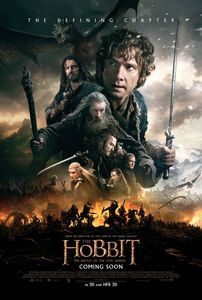
    (On Cable TV, September 2015) On one hand, watching The Hobbit after enduring so many generic fantasy films is like sipping very high-quality product: this is how fantasy should be done, respectfully and with big budget and capable filmmakers.  Everything feels slick, polished, handled with wit and intelligence.  Peter Jackson’s direction is fantastic, the script holds its own, the special effects are still capable of astonishing audiences and there are a number of great moments built into the film.  (The Legolas fight on top of a crumbling tower, in particular, is an action-scene showcase.)  It decently wraps up the trilogy, makes a solid bridge to The Lord of the Rings and shows how modern cinema can fully realise even the most complex fantasy mythology.  Well done.  But on the other hand… This third installment of The Hobbit, as well-made as it is, also shows exactly what’s wrong with modern Hollywood filmmaking: The quest for profits has blown a kid’s book into a massive movie trilogy, with added battles, characters, romantic subplot and links to the previous/subsequent trilogy.  Perhaps worse: the result feels intensely flabby, everything handled without nimbleness to the point of feeling oppressed by the imposed grandeur of the result.  This couldn’t be any more important, shouts the trilogy, as if there weren’t any other modes in which to tell the story.  At times, it feels dull –we expect the test questions to pop up at any moment to test our knowledge of all there made-up names and useless complications.  But, of course, that’s sort of the point of those films: to appeal broadly to people who aren’t invested in the story, while providing plenty of depth to the aficionados.  I just happen to fall on the wrong side of the divide (that is: the casual audience) most of the time.  Now that we’re done with The Hobbit, maybe Peter Jackson can do something else with his life than strip-mine Tolkien’s work.

  • Going Clear: Scientology & the Prison of Belief (2015)

    Going Clear: Scientology & the Prison of Belief (2015)

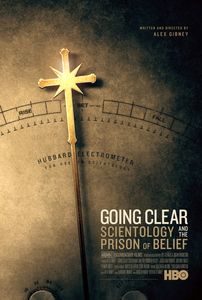
    (On Cable TV, September 2015) Documentary filmmaker Alex Gibney takes on the church of Scientology in Going Clear, and the result is as fascinating as any of his other movies.  Adapted from Lawrence Wright’s book Going Clear: Scientology, Hollywood and the Prison of Belief, it’s a highly critical look at the inner workings of Scientology, featuring a number of disillusioned former high-ranking members of the organization.  After a look at the colorful life of Scientology founder L. Ron Hubbard, Going Clear spends time detailing the recent and current activities of the organization and the reasons why several of its former members have left it.  Along the way, the relationship between Scientology and its star members John Travolta and Tom Cruise is detailed in ways to make us understand how they all benefit from the association.  It’s a slick documentary, although the “dramatic recreation” segments meant to illustrate some of the material is overdone: the interview alone are compelling enough.  Going Clear is builds to a highly critical portrait of Scientology, packaging together a lot of material that has been available for years but seldom presented in such a self-contained form.  Read the film’s Wikipedia article for more details on the ensuing controversy.

  • Bean (1997)

    Bean (1997)

    (In French, On TV, September 2015) All movies ask for a bit of indulgence as they take off from reality, and this is truer in slapstick comedy where we’re asked to play along what is obviously ludicrous.  Of course, you have to be willing to give in.  So it is that a high compliment that I can give to Bean is the way it manages to be funny despite my mild dislike for the character.  Rowan Atkinson is an exceptional comedian, but I’d rather re-watch the verbal wittiness of his Blackadder series than to suffer through much of his dim-witted Bean character.  The movie certainly doesn’t try to move away from the essence of the character: Bean is still terrifyingly stupid and the world around him seems to adjust itself in consequence.  Characters behave in brain-damaged ways, which to say that the comedy here is broad enough to let anything through.  Bits of the TV shows are repeated nearly verbatim, further cementing the film’s dedication to its protagonist.  And yet, despite my dislike for that kind of stuff, I did find myself chuckling more often than I should, especially in the last third of the film when Bean improbably acquires some idiot-savant skills and manages to pull off a half-clever scheme.  SO it is with reluctant admiration that I doff my hat at Bean’s success in making me laugh even when I didn’t want to.  One notes, however, that I ended up watching not only the French version of the film, but (due to Ami Télé’s intentional accessibility policy) the Described Audio French version of the film, in which a narrator describes Bean’s on-screen antics in a deadpan fashion.  It almost goes without saying that this makes the film quite a bit better, or at least far more pleasant absurd to watch.

  • The Maze Runner (2014)

    The Maze Runner (2014)

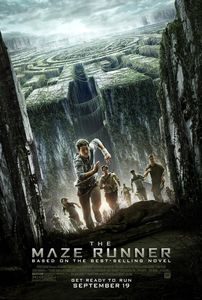
    (On Cable TV, September 2015) I’m currently burnt-out on dystopian young-adult science-fiction films, so forgive me if I’m not particularly enthusiastic about The Maze Runner.  It does have an effective mystery at its core, as teenage boys find themselves stuck in the middle of a vast deadly maze and must learn how to get out.  Conceptual breakthroughs ensue.  Still, I can’t help but feel that much of the material feels intensely familiar, and that the answers hastily provided at the end are cheap and easy.  It doesn’t help that there isn’t really a lot of plot in The Maze Runner, and that it’s stretched over what feels like a long time.  Or that the film concludes with an infodump frantically advertising the next film of the series.  Or that much of the background lore seems silly in a way that’s condescending to its younger audience.  I don’t exactly dislike the film: it’s competently made, features a number of fine young actors, marks an auspicious debut for director Wes Ball, occasionally manages interesting images and does make for an intriguing preview of its sequel.  But in the shadow of so many other similar series, The Maze Runner does seem deliberately manufactured for younger audiences, and I can’t help but wonder how long the multipart YA dystopia craze will last before we can move on to other things.

  • Just Friends (2005)

    Just Friends (2005)

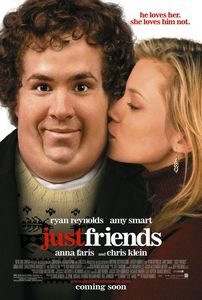
    (Netflix Streaming, September 2015) I wasn’t expecting much from this romantic comedy, but got a little bit more than I thought.  Much of the film’s laughs come straight from Ryan Reynolds, who plays a bit of a double role here as an awkward overweight teenager and then a womanizing music executive.  Stuck in his hometown while caring for a deliriously neurotic pop-star singer, Just Friends blends friend-zone dynamics with holiday scenery for a going-home story that sparkles once in a while.  Reynolds has impeccable comic timing (although the film loves him just a bit too much in gawky overweight makeup), and Anna Faris also has decent material to play with as the unstable diva.  (Meanwhile, Amy Smart is dull as the romantic lead… but she doesn’t have much to do.)  There’s something curiously sentimental in how the protagonist rediscovers his estranged hometown, picking up past relationships along the way.  Just Friends strings along its comic set-pieces, hitting the usual rom-com expectations along the way, but falters with its perfunctory ending, which basically mouths the words we’d been waiting for.  Still, this is not a film to see for the plot – it’s best appreciated as a collection of comic moments, set-pieces and character traits… and if you squint slightly, you’ll recognize that the movie was shot in a real Canadian winter and mentally adjust the script accordingly.

  • Freaky Friday (2003)

    Freaky Friday (2003)

    (Netflix Streaming, September 2015) I have very dim memories of seeing the original 1976 Freaky Friday as a kid, but I don’t think that it changed me or anything.  This remake won’t have much of an impact either, given how closely it sticks to its body-switching premise and the most obvious implications of it.  Here, Jamie Lee Curtis and Lindsay Lohan play a mother/daughter pair who, thanks to mysterious Chinese magic, swap bodies on a most inconvenient day.  It goes without saying that the mom is an overachieving control freak and that the daughter is a just as stereotypically rebellious teenager.  Both of them learn valuable life lessons, they learn about walking a day in the other person’s shoes and the universe goes back to normal.  The script slickly sets up all of the target it later takes down, leading to an experience that’s as professionally put-together as it’s intensely predictable.  Given that it’s aimed at teenagers, the film plays dumb often, failing the “would this happen in our reality?” test several times.  The shortcuts to show adolescent rebelliousness are crude, which is reinforces by a mildly annoying soundtrack that repurposes older songs in a punk style. (Let’s face it, though; as a teen I probably would have thought this would have been awesome.  Alas, I’m closer to parent of a teenager than a teenager nowadays.)  Still, Freaky Friday does have its redeeming qualities: Jamie Lee Curtis is pretty good when she’s letting her inner teenager run rampant, and a pre-downfall Lindsey Lohan shows what comic skills she once had.  There are a few chuckles here and there despite the rote nature of the film, and I suppose that everything could have been a lot worse.  The film’s heart is in the right place, and by the time the happy ending rolls around, I doubt that anyone cares.