Month: June 2019

  • La Strada [The Road] (1954)

    La Strada [The Road] (1954)

    (On Cable TV, June 2019) Given that I don’t particularly like Italian neorealism and that Federico Fellini hadn’t yet fully evolved into his more personal expressionist style by the time he completed La Strada, you can probably guess how I feel about the movie. An episodic drama focused on two desperately poor entertainers eking a life of misery on the road with a circus, La Strada is not a film for the impatient. While there is a plot of sorts that eventually distinguishes itself from the individual scenes, it takes a long time between the scenes to get the narrative ball rolling … and you may not like where it’s heading. Anthony Quinn, unusually enough, stars as the strongman Zampanò. Alongside him, Giulietta Masina (familiar from her later role in The Nights of Cabiria) plays the dim-witted long-suffering young girl basically bought by the strongman. I tolerated much of La Strada, but the parts I liked more were those that strayed away from the neo-realist style (into expressionism, into genre suspense). Otherwise, it’s enough to be able to scratch off this film from the umpteenth lists of essential movies on which it figures. One annoyance (or cool find): The five notes of the film’s insistent leitmotif are near identical to the opening of the theme to the James Bond film The Man with the Golden Gun.

  • Murder, My Sweet (1944)

    Murder, My Sweet (1944)

    (On Cable TV, June 2019) Aw yeah, pump that undiluted film noir stuff right into my veins, because I can’t get enough of that genre and Murder, My Sweet is as pure as it gets. Adapted from Raymond Chandler’s more innocuous-sounding Farewell, My Lovely, this is a film that goes right for the archetypes of film noir, what with the private investigator, femme fatale, precious McGuffin, criminal figures, gunplay and complicated plotting. The addition of a nice girl thankfully lands the movie in happy-ending territory without necessarily sabotaging what comes before. I had a bit of trouble accepting Dick Powell as Philip Marlowe, but was gradually won over by his sardonic humour, reasonable stature and flashes of vulnerability—the shadow of Bogart looms large of the character, but Powell’s take on it is excellent. Alongside him, Anne Shirley is as lovely as she needs to be as the only rock of morality in an otherwise gray-on-gray tale. Claire Trevor is ideal as a femme fatale, while Mike Mazurki is a presence as a dim-witted enforcer. Perhaps the best thing about the film on a moment-by-moment basis is the delicious tough-guy dialogue, played unironically given the film’s place in early noir history. Murder, My Sweet is, unsurprisingly, one of the most influential films in the noir canon—it had the good fortune of appearing on screens in 1944, alongside a class as distinguished as Double Indemnity, Laura, The Woman in the Windows and (arguably) Gaslight, a time when noir was gaining traction as a specific thing (even if defining it took another two years on another continent). There have been many, many imitators and some of them may even have surpassed Murder, My Sweet. But the original is still more than worth a watch.

  • Angel Heart (1987)

    Angel Heart (1987)

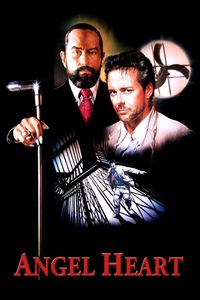
    (In French, On Cable TV, June 2019) I wasn’t expecting much from Angel Heart other than a mild curiosity as to why what looked like a neo-noir murder mystery was doing playing on a hard-core horror Cable TV channel. Well, as it turns out, one of the least of Angel Heart’s qualities is the way it shifts from neo-noir investigation to something quite more horrifying. Mickey Rourke turns in a good early-career performance as Harry Angel, a Private Investigator asked by a mysterious client to find out what happened to crooner Johnny Favourite (no apparent relation with the lead singer of the Canadian Jazz band). The mystery client is joyfully played by Robert de Niro, whose devilish behaviour (along with impeccably clawed fingernails) clearly suggests that he’s enjoying playing the part. Quite a bit of the Angel Heart’s second half features Lisa Bonnet shredding her former nice-girl image with a few unusually intense nude scenes. Much of the film’s initial appeal is going back to 1950s New York noir archetypes, albeit played with more bloodshed than the classics. Things take a turn for the much, much worse once our private investigator travels to New Orleans where (as is movie tradition) everyone seems steeped into some variant of voodoo magic. But that’s not the half of it, and even if you know where things are going, the film as a few more unpleasant surprises in store right until the end. Director Alan Parker does quite well with Angel Heart, creating unnerving sequences when it counts, delving into visual symbolism that’s at least one level deep, and taking great care with the musical atmosphere of the film in between the scares. The unusual coda keeps going throughout the credits. It all amounts to a bit of a surprise—the film isn’t unknown, but I had completely missed it and got to discover something more interesting than anticipated along the way.

  • The Woman in the Window (1944)

    The Woman in the Window (1944)

    (On Cable TV, June 2019) There are two distinct sections in classic noir film The Woman in the Window. The first takes up most of the film and is an exemplar of the form. The second is the film’s final two minutes, and it destroys what we think of a noir movie. I’m eager to discuss it in spoilerriffic details, but first we’ll have a few general comments about the film’s bulk. (Any readers unfamiliar with the film are advised to go see it—no, really, it’s worth a look—before proceeding any further.)  Edward G. Robinson reinvented himself in the role of a meek professor finding himself in the middle of a terrible situation, forced to kill the lover of the woman he just met, and then arrange a coverup that goes awry. Joan Bennett is quite good as the titular woman, beguiling enough (wow, that see-through blouse!) that she can lead men to murder and deception. Dan Duryea is the third highlight of the film, playing a would-be blackmailer who cranks the tension even higher. Director Fritz Lang brings some moviemaking savvy to the film, but the result seems uncomfortable with the implicit dark humour of the screenplay as ironies mount and surround the protagonist. For much of its duration, The Woman in the Window is pitch-perfect noir as our meek protagonist simply finds himself at the wrong place and the wrong time, and keeps making desperate decisions that run against his better judgment and make the situation worse. It all leads to a climactic sequence in which he swallows enough pills to bring down a horse … and wakes up at the beginning of the film, having imagined it all. Do note that there are enough clues and foreshadowing here and there to make the ending somewhat organic and premeditated rather than tacked on: our protagonists openly muses about degrees of murder in the opening segment, then talks about the siren call of adventure with his friends before falling into slumber. The problem with the film may be one of anticipated codes: What we know of noir as it developed after 1944 is that its protagonists don’t get an easy way out: they suffer the whims of a capricious universe that sends temptations, mobsters and femmes fatales their way, and even having a solid moral compass may not be enough to save them from ruin. Still, there is a feeling that the happy ending is not deserved, that it cheapens the dramatic buildup, that it runs counter to the very foundations of noir. Whether it’s good or not is immaterial—although film historians will be quick to point out that the film was a commercial success and that its immediate remake, Scarlett Street (released a year later and featuring the same director, stars, plot) with a far more unforgiving ending, isn’t as remembered as the original. Few stories, all mediums combined, ever try to attempt the “it was all a dream” stunt for good reasons, and The Woman in the Window is a study in why.

  • The Old Man & The Gun (2018)

    The Old Man & The Gun (2018)

    (On Cable TV, June 2019) If you’re a legendary actor looking to go out on top, you best bet is to call it quits after a reasonably good film that plays to your persona’s strengths. So, while we may or may not believe 81-year-old Robert Redford when he says he’s retiring as an actor as of The Old Man & The Gun’s release (cameos happen so suddenly, and these days not even death can permanently retire an actor), it does seem like an appropriate swan song for him. Redford has always possessed off-the-chart likability, so it’s appropriate for him to carry a film on his shoulders as an affable elderly bank robber who manages to rob a succession of banks with nothing more than a pleasant disposition and the quick flash of a gun in his hands. The film around him is not quite the same old chase thriller—our dogged policeman on the case ends up having little to do with our anti-hero’s capture, doesn’t have marital problems brought on by the case and only interacts with his prey two or three times. Much of the film spends its time trying to imagine the mindset of an old man only happy when committing (non-violent) crimes. Director David Lowery is quietly building a reputation as a canny explorer of unusual premises, and the result here is both elegiac (for Redford) and comfortable (for the viewer). Touches of humour, irony and flashbacks keep things interesting even when the plot won’t surprise anyone. For Redford, The Old Man & The Gun means going out on a relatively high note, and a powerful reminder of how good he could be just banking on his personal charm.

  • The Mark of Zorro (1920)

    The Mark of Zorro (1920)

    (On Cable TV, June 2019) I had a surprisingly good time watching the original The Mark of Zorro, even despite it being nearly a hundred years old, in sepia tones and without sound. Genre thrills carry through the ages, and when the film gets down to business, we get to see Douglas Fairbanks deliver action sequences of timeless physical ability. The story of Zorro needs no introduction, of course—the plotting is easy to follow, and the film distinguishes itself with the choreography of the fights and the small details of what it means to be Zorro. Those of us keenly interested in the secret origins of Batman in Zorro will be bowled over not only to see the dual-identity conceit used this early on (Don Diego is vastly more comfortable talking to women as Zorro than as himself), but also Zorro hiding his Batmobile horse in his Batcave underground stable, with a hidden entrance and access through a hidden trapdoor in his house! But the fun here is seeing Fairbanks (a bit pudgier than what we’d expect from an action star, although appropriate for “man of leisure” Don Diego) fighting and running his way through the scenery—some of the second-half chase sequence approaches parkour-level stunts. I still think that the 1940 version is superior (and the 1998 version is my own personal favourite) but this is one silent film that’s not too long, not too dull and not to be missed.

  • Scarface (1932)

    Scarface (1932)

    (On TV, June 2019) The real star of Scarface may not be Paul Muni as a Capone-inspired gangster, nor superlative director Howard Hawks, nor legendary screenwriter Ben Hecht, but multi-talented producer Howard Hughes and his instinct for anticipating what the American public really wanted to see. By today’s standards, Scarface is promising but familiar fare—the last ninety years have led to a very large number of gangster pictures offering vicarious thrills by portraying (sometimes with a bit of moralistic tut-tutting) the life of gangsters. Martin Scorsese built a career on such movies, and they seem hardwired in Hollywood’s DNA. Examples reach into the silent era (notably Hughes’ The Racket), but Scarface, along with the slightly earlier Little Caesar and The Public Enemy, helped codify the genre even as real-life gangsters were laying waste to urban areas. It was tremendously successful, and just as influential—all the way to a much better-known 1983 remake penned by Oliver Stone and directed by Brian de Palma. This original is much rougher—hailing from the early days of sound cinema, it does have a wild energy to it, and a good turn from Muni. While modern viewers won’t appreciate the innovation of the film in staging complex action sequences (including some savvy special-effects work!), the result on-screen looks and feels a lot like more modern movies. Pre-Code audiences liked it (even Al Capone was reportedly a fan), but Scarface raised so much controversy that it was shelved by Hugues and effectively disappeared for decades before resurfacing in the post-Production Code 1970s. Now, contemporary audiences can see what had been unavailable to prior generations and appreciate the result for themselves, as a hard-hitting gangster film that pushed the envelope and remains absorbing in itself. I’m sure Hughes would approve.

  • Funny Games (1997)

    Funny Games (1997)

    (On Cable TV, June 2019) There are a few films whose reputation not only precede them, but tell you everything you need to know about them. So it is that Funny Games is widely remembered as the home invasion horror film that plays unfairly with its audiences, intentionally toying with expectations in order to leave them with no way out. The infamous remote-control scene is as extreme a piece of meta-cinema as it’s possible to imagine outside a satirical comedy. I would argue that knowing as much as possible about the film’s ending is not a bad thing, because writer-director Michael Haneke (who remade his own film in English for an American studio in 2007, changing almost nothing) is determined here to make a statement about film violence and audiences’ desire for revenge. And that he does. Over nearly two hours spent circling the same idea, often not even bothering to move or turn off the camera. It gets very, very, very long. I think that some of what he has to say here is clever—but brevity is the essence of wit, and Funny Games is far too long to remain interesting when everything points to an ending that is then executed without many surprises. I’ll forgive nearly everything in the service of a happy ending, but not in the service of an everybody-dies one. It doesn’t help that I’m not really a fan of vengeance cinema—Haneke seems intent to score points with another kind of audience. Still, by the end, I was not only hating the over-the-top psychopaths serving as Haneke’s puppets, but the entire cast and crew of the film for going forward with such an indulgent and pointless piece of cinema.

  • Koroshiya 1 [Ichi the Killer] (2001)

    Koroshiya 1 [Ichi the Killer] (2001)

    (In French, On Cable TV, June 2019) Even nearly twenty years later, Ichi the Killer remains infamous as a film that goes well beyond whatever boundaries we expect even from hard-core horror cinema. Renowned for its excessively gory violence, twisted psychosexual themes and utterly amoral compass, it remains banned in at least three countries (including the normally permissive Norway), often pops up in lists of extreme movies and is often mentioned as a landmark to see how strong a moviegoer’s stomach is. And yet, while watching it, I found it curiously easy to remain uninvolved and unimpressed at the amount of gratuitous violence shown on screen. Gratuitous actually doesn’t become the right word—a better one would be grandguignolesque. Writer-director Takashi Miike has made a film to shock the rubes, and will stop at nothing to gross out the audience. Once you catch on to the trick, though… it’s not as if the film has anything like a conscience—seeing bad people do bad things to each other isn’t a path to the kind of empathy we’d need to be revolted at what’s on-screen. I could give you a long list of the terrible and unbearable sights in the film, but I fear that it would make it seem far more interesting than it is to watch. In reality, Ichi the Killer showcases such a relentless succession of atrocities that they become numbing—as if the brain throws up a circuit breaker in defence. As a result (and not helped along by a direction that cares far more about gory set-pieces than coherent plotting) the film does feel interminable, and increasingly obnoxious as it goes on. By the end, we’re so fed up with the whole thing that it doesn’t matter who kills who in whatever way—the film is over and that’s quite enough of a reward.

  • Summer Rental (1985)

    Summer Rental (1985)

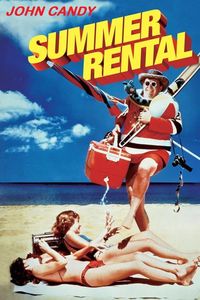
    (On TV, June 2019) There are a few movies out there that seem to spring from near-universal experiences, at which point the screenwriter adds nearly everything that could go wrong in such a situation and call it a day. At least that’s the feeling I get from watching Summer Rental, a typical mid-1980s comedy featuring John Candy as a father of a family headed to Florida for the summer. What initially looks like an idyllic rental location turns out to be a nightmare compounded by everything else going badly once settled in. They get into arguments, make local enemies and eventually find themselves in a third act sea racing set-piece because there’s got to be more to a script than simply a string of humiliations. It’s clearly a summer comedy, light to the point of being insubstantial. It is strung together by John Candy’s comic ability, although if you want something similar but better you don’t have to look very far for 1987’s very similar The Great Outdoors also featuring Candy. Summer Rental will do nicely if ever you’re bored out of your skull and it’s the only choice available in a place without Internet connectivity, or are trying to complete the Candy filmography. Otherwise, well, there are better movies out there.

  • The Thomas Crown Affair (1968)

    The Thomas Crown Affair (1968)

    (On Cable TV, June 2019) Even at more than fifty years of age, The Thomas Crown Affair remains the epitome of cool for several good reasons. The incredible pairing of Steve MacQueen and Faye Dunaway is reason alone to be interested, but there’s more. The film is extremely stylized, which is not something we necessarily expect from chameleon director Norman Jewison. This stylistic approach (all the way to a split-screen heist and a great soundtrack with odd choices that eventually make sense) more than compensate for some very light plotting, which seems more determined to bring the protagonists together and then drive them apart than making any kind of sense. The insurance investigator doesn’t deduce very much, as the plot manipulates her through hunches that happen to be right and the film’s ending interrupts what could have been interesting had it gone longer. But The Thomas Crown Affair is a film that revels in details, set-pieces and characters more than sustained plotting—the chess sequence is still impressive, and the sand buggy driving is made even more interesting by knowing that MacQueen did those stunts himself. The main character is emblematic of the film’s flaws and strengths, incredibly cool yet deeply flawed in interesting ways: As a highly successful businessman who turns into a criminal mastermind for thrills, he’s not exactly believable or approachable, but he is a grander-than-life archetype fit for MacQueen. The Thomas Crowne Affair is a film that could only have been made in the late 1960s (even the 1990s remake was a more controlled but less exciting take)—crammed with style and excitement, but not always so shiny under scrutiny. Still, it shows the burst of energy coursing through Hollywood at a time without falling into the excesses of New Hollywood, and that remains a good thing.

  • Grand-Daddy Day Care (2019)

    Grand-Daddy Day Care (2019)

    (On Cable TV, June 2019) There is a specific cinematographic flatness to many low-budget movies that’s easy to identify, and it’s perhaps fortunate that Grand-Daddy Day Care shows it from its earliest moments—just so we know what we’re getting into. Much of the film is as bland as its presentation—with a blocked novelist turning to creating a daycare for seniors as a way to make money, you can predict that the film won’t be a fount of wit and it’s not. I only watched the film for Danny Trejo, and he does impress in a slightly more serious role than usual, even in keeping with his usual persona. Alas, he’s almost entirely the sole impressive spot—While it’s great to see Margaret Avery in another role, the other actors aren’t given much to do and Reno Wilson seems stuck doing a sedated Kevin Hart impression. It’s not much to go on, and the rest of the film moves from one familiar scenario to another, even as it’s trying to pretend that everything is funnier with seniors in the lead roles. By the time we’re breaking a friend out of a retirement home with the heroes dressed as clowns, we’re stuck with the film we’ve chosen to watch. Amazingly enough, this is explicitly spun off from the Eddie Murphy Daddy Day Care movies, something that only affects a small (but perhaps funniest) scene in the film. While not eye-screamingly awful, Grand-Daddy Day Care isn’t much to contemplate. I’d be surprised if it even becomes more than a very forgettable footnote in Trejo’s filmography.

  • To Sir, With Love (1967)

    To Sir, With Love (1967)

    (In French, On Cable TV, June 2019) 1967 was an extraordinary year for Sidney Poitier, but while we readily remember In the Heat of the Night and Guess Who’s Coming to Dinner, fewer will remember the third of his movies that year: To Sir, With Love. This time, he’s off to London as a teacher in a tough school, befriending local hoodlums and wayward girls after the initial hostility. The same super-teacher movie has been made and remade many times since then, but two things help To Sir, With Love remain interesting fifty years later—Poitier’s performance, obviously, but also the street-level view of London in the mid-1960s, as the film confronts the rise in teenage rebellion. The film itself is definitely on the side of the establishment—as the protagonist befriends his charges, he lifts them toward notions of respectability and good manners, helping them fit in society. As such, you can see the film as deeply conservative, but that too is in the tradition of that kind of movie. To Sir, With Love is a film about the revolution but not a revolutionary film—as such, it may have aged a bit better than the trendy New Hollywood movies that followed slightly later. For Poitier, this is a great role—he gets to whip up a few youngsters into shape, befitting his image as the capable, nearly unflappable black man. There’s a lot to unpack in this persona, as it was the only one allowed to him at the time, but that’s a discussion for another time, and about his other two movies of 1967.

  • The Hot Spot (1990)

    The Hot Spot (1990)

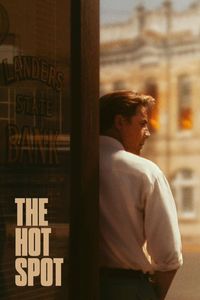
    (In French, On TV, June 2019) I don’t think that The Hot Spot is all that good a movie, but if you’re the kind of viewer who craves a bit of steamy neo-noir, then it will satisfyingly scratch that particular itch. The film, adapted by none other than Dennis Hopper from a 1950s novel, starts from the familiar premise of a stranger coming into a small Texas town and deciding to stay for a while. This being a neo-noir from the 1980s rather than the 1940s, there’s a lot more explicit sex and violence than its black-and-white predecessors, as our hero frequents a strip bar, befriends women played by Jennifer Connelly and Virginia Madsen, and gradually puts his plan in motion. True to noir, even a canny man of mystery is no match for the machinations of women with their own designs. The visual atmosphere of the movie does reflect the kind of torrid Texan heat best suited for the film’s subject matter. Don Johnson plays the protagonist with a certain stoicism not dissimilar from Kevin Costner, which does suit the film. Meanwhile, I may have been vocal before about how twenty-first century Madsen is more attractive than her younger self, but she looks really nice here (it’s the curly hair and the stockings more than the brief nudity). Meanwhile, Connelly is presented as innocence personified—misleading, but convincing. The pacing of The Hot Spot is a bit too slack for it to rank as a truly good 1980s neo-noir, but if you’re indulgent on that aspect then the film does deliver what it intended, and fans of the genre will find it very much to their liking.

  • 2010: The Year We Make Contact (1984)

    2010: The Year We Make Contact (1984)

    (On Cable TV, June 2019) The most common criticisms of 2010: The Year We Make Contact usually compare it to its illustrious predecessor and find it wanting. This, of course, is damning a film with excessive expectations: While 2010 is no transcendental experience like 2001: A Space Odyssey was, it’s a terrific science-fiction adventure with one heck of a send-off. It has the joy of the kind of nuts-and-bolts hard Science Fiction that I used to read by the truckload a decade or two ago—starting with the Arthur C. Clarke novel from which the film is adapted. Even the mid-1980s visual sheen to the film, grimy and realistic in the tradition of somewhat realistic Science Fiction, is a welcome sight. The plot takes a while to get going and usually operates at half-speed, but it does blend a delicious mixture of mystery, suspense, Cold War stakes and mind-blowing concepts. I particularly enjoyed the suspenseful sequence midway through in which two astronauts board the deserted Odyssey from the first film, their breathing setting the pacing of the action. The special effects are still good, even incorporating early photorealistic CGI in portraying the transforming Jupiter. The lead cast is star-studded, from Roy Scheider as the protagonist scientist, Bob Balaban as an AI expert of dubious loyalties, John Lithgow as an engineer pressed into service as a space traveller, and the timelessly beautiful Helen Mirren as a Soviet commanding officer. Writer-director Peter Hyams is near the top of his filmography here, keeping action going at a slow burn. The film’s science is not bad at a few gravity-related exceptions, but then again those effects were nearly impossible to do convincingly in a pre-CGI era. All in all, I really enjoyed 2010—it’s not 2001, but then again only one movie is 2001. This is an entirely acceptable follow-up, and a solid space adventure in its own right. There are even no less than two Arthur C. Clarke cameos!