Month: December 2019

  • Mandy (2018)

    Mandy (2018)

    (Google Play Streaming, December 2019) Even if Nicolas Cage has proven his capacity to turn in good dramatic performances, he is a megastar because of his uncanny ability to do justice to grander-than-life characters, chewing scenery like the best of them. There’s no doubt that his tax problems have led him to a spiral of smaller, duller roles in recent years, but occasionally, he gets projects like Mandy in which he can showcase the kind of typical performances that ensure his immortality. But Mandy isn’t your typical movie: Blending a revenge story with a highly stylized cinematography in which not a single frame has not been heavily colour-corrected, it’s a quasi-unique film in today’s landscape. Nodding to the 1980s almost as much as in his previous Beyond the Black Rainbow, writer-director Panos Cosmatos concocts a genre story with quasi-supernatural elements that unleash Cage. The story has something to do with a logger taking revenge on a hippie cult after they murder his wife (Andrea Riseborough as the titular Mandy), but the point is in the purpled-hued phantasmagoric imagery, the fantasy art featured in the film and the nightmarish odyssey that the main character takes to exact his revenge. Battling leather-clad demonic bikers, crafting a battle-axe and befriending a tiger, the protagonist reaches an apex of sort during a chainsaw duel featuring a ludicrous blade measurement contest. It ends, as it should, with him bathed in blood. There’s a cross-genre sensibility found in Mandy that brands it as a cult favourite in the making—time will tell if it has staying power, but this is probably the best Cage performance and his best movie in years.

  • Dressed to Kill (1980)

    Dressed to Kill (1980)

    (Google Play Streaming, December 2019) It’s perfectly understandable for anyone to approach Brian de Palma’s movies with a guilty-pleasure mindset—even the better ones. Throughout his career, de Palma has repeatedly aimed for excess, and shocking the rubes was part of the point. Dressed to Kill is no exception, what with its familiar blend of de Palma themes (violence, eroticism, doubles, voyeurism, gender-bending and aberrant psychology) that would make the film recognizable as his work even under a pseudonym. The opening of the film still has the power to shock, as it begins by following one character and, after a moment of explosive violence, switches perspectives to follow another. Michael Caine turns in one of his strangest roles here as a psychologist involved in murder, with Angie Dickinson and Nancy Allen co-starring. The plot barely makes sense—this is one of those “psychological thrillers” with tropes that aren’t impossible, but have never happened. But as with other de Palma movies, the point here are the bloody images, the suspense sequences, the atmosphere of dread where anything can happen and the troubling twists along the way. Dressed to Kill is certainly not a respectable film—borrowing liberally from slashers, giallo and noir, it’s clearly a genre film that revels in including as many provocative elements as it can. But it works, and still lead to several “I can’t believe this film is going there…” comments.

  • Hababam Sinifi [The Chaos Class] (1975)

    Hababam Sinifi [The Chaos Class] (1975)

    (YouTube Streaming, December 2019) Since I don’t want my review of Hababam Sinifi to create an international incident between Canada and Turkey Türkiye, now would be a good time to talk about a few axioms of movie criticism. Much as I believe in the universality of some great movies that manage to reach a wide public, I also believe that what makes some movies great for a specific audience also makes them incomprehensible to others. If you’re a philatelist and there’s a movie that caters to be very specific habits, in-jokes and dilemmas of stamp collection, those very specific aspects could reach you specifically while making the film far less understandable to audiences without knowledge of the hobby. Nearly everything in that statement could also apply to movies made at any time and place. I can think about dozens of French-Canadian movies that work because they reflect very specific aspects of their culture and society, but would be nothing special, or even impenetrable, to audiences outside that specific group. So (to get to the point), when I say that Hababam Sinifi left me wondering what the fuss was all about, I’m mainly recognizing my limits in assessing something so far away from my cultural reference points that I’m not even sure that I should be reviewing it. I got interested in the film because it’s often mentioned as one of the most popular Turkish movies ever made, and expanding horizons don’t usually hurt movie reviewers. It’s not as if Hababam Sinifi is an esoteric art film: it’s best described as a low-brow boarding school comedy in which the students take on the administration. The comic conceit of the film becomes obvious given that its lead actor Kemal Sunal was 31 at the film’s release, yet playing a high-schooler: this is not meant to be taken all that seriously. Episodic comic episodes make up most of the film’s running time, and either the comedy is not meant to be refined, or I missed most of the refinements through the rough translated subtitles. I probably would have gotten more out of the film is I had any affinity for high-school comedies, or if I recognized any of the actors. It’s occasionally fun, and it doesn’t take much to recognize that Sunal was a gifted comic actor. There’s even a link between Türkiye and French Canada as the characters make references to the then-upcoming Montréal Olympics complete with a T-shirt with the logo of the event. Nonetheless, I was left puzzled by much of Hababam Sinifi’s humour—it loses something once you’re out of the film’s cultural sphere. Still, I got what I wanted: exposure to something different, and one checkmark on most “Top Turkish movies” lists.

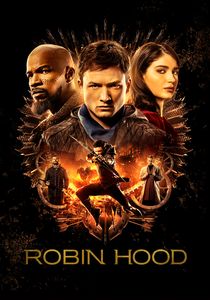
  • Robin Hood (2018)

    Robin Hood (2018)

    (Video on-Demand, December 2019) Every generation gets the Robin Hood movie that they deserve, and we don’t deserve anything better than a juiced-up action movie prequel with a protagonist named Robin Hood. Most of the expected elements are in place, what with “Robin of Loxley,” his girlfriend Marian, friend Friar Tuck, Moor mentor John, antagonist Sheriff of Nottingham and a corrupt royalty at the top. In terms of execution, however, this is where this Robin Hood distinguishes itself by embracing all the clichés of the moment, from a grim-dark visual atmosphere despite a lighthearted tone, special-effects-driven action sequences, insouciant anachronisms and young actors showcased as if they had somehow obtained superstardom. (I mean: Taron Egerton?) But while all Hollywood movies are ridiculous to some degree, Robin Hood is far more ridiculous than most. Yet another louder-hotter-sexier contemporary take on familiar material, it’s sometimes amusing, often frustrating and generally forgettable. The schizophrenic modernistic presentation of the film compared to its more traditional script does nothing but make us wonder if a modern or futuristic version of Robin Hood would have been preferable. It’s not necessarily a good thing that the film ends as “the familiar” form of Robin Hood is put in place, with a band of outlaws hiding from the Sheriff of Nottingham and ready to redistribute some riches. But at least the film is better, funnier, more interesting and far more entertaining than the dull gritty 2010 version of the story. Maybe, someday, we’ll get a Robin Hood that we can all enjoy without reservations.

  • Scanners (1981)

    Scanners (1981)

    (YouTube Streaming, December 2019) It took me far too long to watch Scanners, but it was worth the wait. Partially filmed in nearby Montréal, this early David Cronenberg film has nearly everything that’s great and terrible about Cronenberg’s work. It’s imaginative, as humans with superpowers hunt each other in a delightfully down-to-earth circa-1980 Montréal. It’s wild, as most people will first remember the shocking exploding head that comes much earlier in the picture than anybody expects, or the psychic battle finale that anticipates a whole anime subgenre. It’s crammed with interesting details, creating a sense of reality far greater than its meagre budget should allow. Unfortunately, Scanners is infamously undisciplined—as a result of production constraints, the script was reportedly rewritten on-the-fly, leading to significant lulls in interest, scenes that aren’t as strongly built as they should be, and tangents that aren’t strengthened. It’s got energy but little rigour, and if the science fiction/horror hybrid can be impressive in a blunt-force kind of way, it’s also incredibly disappointing as well—a stronger script would not have undermined the assets of the film. Nonetheless, I can see why Scanners has so impressed generations of filmgoers: it’s striking enough to be memorable, and not only for its infamous exploding-head sequence.

  • Wildcats (1986)

    Wildcats (1986)

    (In French, On Cable TV, December 2019) As far as I can determine, Wildcats is essentially Private Benjamin in an inner-city high school football context: a quirky blonde (Goldie Hawn) being thrown into a man’s world where she gets to overcome prejudice, grow as a person, and prove herself worthy. Add a little bit of inspiration for the disadvantaged students, and you’ve got every single uplifting teacher movie included in the mix as well. It’s a comedy, but it’s more annoying than amusing to get through. Of note: Wesley Snipes and Woody Harrelson both make their film debut here in minor roles. Goldie Hawn is certainly in her element, carrying the film as the star vehicle that it is. Otherwise, well, there isn’t much to say: Wildcats is a film on autopilot, obvious from the get-go as to how it’s going to end. There’s been better and worse movies along the same ideas, but you’d have a tough time picking this one out of a line-up.

  • Glengarry Glen Ross (1992)

    Glengarry Glen Ross (1992)

    (YouTube Streaming, December 2019) As befits its enduring popularity as a theatre piece for all-male casts, there aren’t that many better choices than Glengarry Glen Ross for pure actors’ showcases. A high-testosterone tale of crime, machismo, hustling and desperation, it’s two hours of shouting, posturing and profanity-laced dialogue. Directed unobtrusively enough by David Foley to create the ideal rain-soaked atmosphere for David Mamet’s dialogue, it leaves centre state to those who matter most: the actors. Even nearly thirty years later, it’s a dream ensemble: Where else can you see Al Pacino, Jack Lemmon, Alec Baldwin, Alan Arkin, Ed Harris, Kevin Spacey and Jonathan Pryce? Alex Baldwin, obviously, has the one-scene choice role here as the hotshot seller haranguing the troops into doing better and setting up the central conflict of the film—nearly everything that people usually quote from the film comes from his high-impact tirade—“ABC: Always Be Closing.”  The trickier fun of the script comes later as the men talk among each other and convince each other that can still do what they do best—convince people to give them money. It’s a reflection on masculinity and how it’s too often conflated with hustling, and no weakness can ever be displayed. Unlike many movies, it can be listened for the sheer joy of its dialogue as well as it can be watched for the physical staging. No matter how you cut it, Glengarry Glen Ross remains a highlight.

  • Zerkalo [Mirror] (1975)

    Zerkalo [Mirror] (1975)

    (Criterion Streaming, December 2019) At this point, I’ve seen enough of Andrei Tarkovsky’s non-Science Fiction films to be able to write the same review every time: Dour, long, dull. Great cinematography, clear mastery of the craft, fine actors, but ultimately not worth the time investment. Mirror almost perfectly fits the bill. It’s in colour, allowing Tarkovsky one more cinematic lever. It’s partially autobiographical, making it an essential part of his filmography to those interested in knowing more about his life. It’s also decidedly non-conventional, and perhaps even more so than many other of his movies: Executed like a poetic collage of images, it moves through time, characters, eras and themes to deliver something far more elegant than a straight narrative. Inward-looking and possibly hermetic to anyone but Tarkovsky, it’s made for the art-house crowd, and so I will leave the film to them.

  • Sholay [Embers] (1975)

    Sholay [Embers] (1975)

    (YouTube Streaming, December 2019) I wasn’t too sure what to expect from Sholay—my understanding of pre-1990s Indian cinema at this point is fragmentary and overly coloured by the spectacularly dour nature of Satyajit Ray movies. To my happy surprise, Sholay ends up being a crowd-pleaser of the first order, blending genres and situations to create a deeply influential cornerstone of popular Indian cinema. The great Amitabh Bachchan has a young man’s role here, and the film is unusually accessible to western audiences with a good understanding of the western genre: In between train robberies and prison sequences and villagers that must be defended against bandits, if often feel as if we’re on a grand tour of other movies, but made sufficiently different by the Indian setting to be interesting. However, be prepared for a long sit. A very long sit: clocking in at somewhere around three hours and a half, Sholay is also representative of the often-excessive duration of many masala movies. But if you time your snack breaks correctly, the film is a joy to watch during its best sequences, and it’s still surprisingly accessible to modern North American audiences.

  • Sleuth (1972)

    Sleuth (1972)

    (archive.org Streaming, December 2019) I have some admiration for movies that attempt ambitious or over-restrictive premises, and Sleuth certainly qualifies—it’s a bit of a spoiler to say that the film only has two actors (but not really, I mean—you can recognize Michael Caine in any kind of disguise) but that’s part of the film’s interest: An actor’s duel between Caine and Laurence Olivier, as two characters with plenty of secrets spend the entire film engaged in line-by-line combat. There was a chance that a film with such a limited number of actors could run dry, but fortunately there’s enough of a convoluted plot about thievery, lovers, deception and murder to keep things interesting. In the theatrical tradition that inspired it, much of the movie takes place in an elaborate library with plenty of visual interest. It’s quite a lot of fun, and with the calibre of the actors involved (the entire cast was nominated for best acting Oscars, a rare but not unique feat) it’s easy to be swept in the film’s high concept. Directed with a veteran’s ease by Joseph L. Mankiewicz, Sleuth manages to sustain attention with two actors and some great writing.

  • Bananas (1971)

    Bananas (1971)

    (Google Play Streaming, December 2019) This film is Bananas, B-A-N-A-N-A-S! Now that I’ve got that out of my system, let’s celebrate how this film was one of Woody Allen’s prototypical “earlier, funnier” movies—a non-stop carnival of absurdist jokes strung on a thin plot about a nebbish New Yorker (Allen himself, naturally) getting embroiled in a banana republic revolution. Definitely dated to early-1970s politics and pop culture, the film still gets its laughs today—the courtroom sequence that dominates the third act of the film is an all-time Allen highlight. The film reaches everywhere for jokes, never feeling over-attached to realism or even narrative consistency. It’s certainly one of the most overly comic films in Allen’s filmography, free from any attempt at pathos, drama or philosophical concerns—it’s a pure joke machine. While I can understand Allen’s desire to move forward with more nuanced fare later in life (and let’s remember that Allen was around 36 at the time of Bananas’ production—not exactly a young man even then) I wish he had done a few more overly comic movies with the verve, inventiveness and go-for-broke pacing that can be found in Bananas. No matter, though: the film is still worth a look today, and it’s still hilarious. Fans of the spoof comedies of the ZAZ era will find a curiously similar rhythm here.

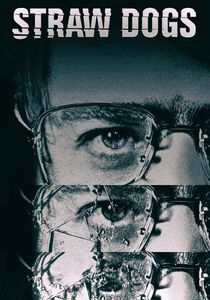
  • Straw Dogs (1971)

    Straw Dogs (1971)

    (YouTube Streaming, December 2019) It almost amuses me to realize that even after nearly fifty years of increasingly gory cinema, we can still point at Sam Peckinpah’s Straw Dogs and say, “Wow, that’s an incredibly violent film.”  That’s part of its point, I think: Violence can be an attitude more than red-splashed visuals and there’s still something profoundly disturbing in how the film was put together and presented. The story of an American intellectual heading back to his wife’s childhood rural home in England, Straw Dogs gets going once the locals don’t take kindly to someone quite obviously unlike them. The film hits its most violent peaks when the wife is raped in an excruciatingly long sequence, the locals decide to kill them and the protagonist decides to take revenge. As an exploration of when normal people decide to become instruments of revenge, Straw Dogs is not meant to be clinical and detached: the later half of the film constantly sinks lower and lower in exploitation thrills (including the threat of a second rape sequence) in order not only to make its points, but to ensure that no one can possibly miss them. The result is fundamentally ugly even today. (The remake softens a few things along the way.)  I don’t particularly like the result, or anything that violent for that matter, but there’s clearly a daring element from Straw Dogs that is indissociable from the New Hollywood of the early 1970s, daring the old-school audiences to be offended while providing blood-soaked revenge thrills to the younger audience that was fuelling movie theatre profits at the time. It’s one of the many reasons why I dislike the New Hollywood period, but not the only one—and Straw Dogs provides almost all of them, including the grainy gritty cinematography, the abandonment of heroic characters (what with Dustin Hoffman being the designated protagonist), the messy script and the ugliness of the results. I can see what the fuss about Straw Dogs is about—but I don’t have to like it.

  • El Topo [The Mole] (1970)

    El Topo [The Mole] (1970)

    (archive.org streaming, December 2019) As far as I can gather, El Topo is about Alexander Jodorowsky and friends wandering around the set of a Western doing wacky things and spouting pseudo-religious meanderings just for the fun of it. That’s being unfair, of course—Jodorowsky is an artist’s artist, and he’s doing whatever he wants according to his own logic. But I guarantee that El Topo is a lot more fun to watch if you’re imagining a bunch of people just making stuff up on the go. The production values are poor (the audio is very deliberately overdubbed, the cuts don’t match and I suspect that the video quality is poor, although the version I watched was too low-resolution to tell reliably) but the images are sometimes very strong—the film has a knack for finding and showing spectacular locations even though the sketches at those locations don’t make a lot of sense. There’s a strong dream logic running through El Topo that will either drive Cartesian viewers crazy, bored or forced to abandon any attempt to make strict sense out of it. It messes around with symbolism, delirium western movie iconography and ironic humour—the result is best described, as per Wikipedia, as an “acid western art film” for both meanings of acid, corrosive and hallucinatory. I can’t say that I enjoyed the entire film, but there were a few times where some scenes were either provocative, hilarious or just plain weird and that’s not a bad kind of experience. Even though my attention wandered a lot during the second half of the film, I may even re-watch it (in much better resolution) at some point in the future.

  • Mile 22 (2018)

    Mile 22 (2018)

    (Netflix Streaming, December 2019) I am of two very different minds about Mile 22, the fourth collaboration between director Peter Berg and star actor Mark Wahlberg. On the positive side, it’s a muscular techno-thriller, featuring strong central performances by both Wahlberg and Indonesian action star Iko Uwais. It has a few good ideas to play with, and the script must read like a strong concept with snappy tough-guy dialogue, good action gags and an encroaching sense of desperation. Berg, as a filmmaker, is fluent in the use of pseudo-documentary material to heighten the believability of his material—it’s worth pointing out that of the four movies he’s made with Wahlberg, this is the first that’s complete fiction. The utterly paranoid worldview of Mile 22 is clearly built to appeal to right-wing viewers, but I’m not as bothered by that as I should: paranoia is the fuel of thrillers, and if you’re going to justify special forces action pyrotechnics, there better be a dastardly act of terrorism to do so. (The script is also not quite as strident in imposing its worldview as other comparable films.)  We’re now living at a time when Russia is once again a bad actor on the geopolitical stage (gone are the days when action movie franchises went to Moscow!), and Mile 22 exploits this to the hilt. Unfortunately, there is a significant drop-off in effectiveness as the film moves from concept to execution. Berg’s blender-based approach to directing means that he almost entire wastes Uwais’s action talents in over-edited combat sequences.  He barely gives us a chance to appreciate what’s happening on-screen—over and over, the action is distanced through a camera filming a screen showing the footage of another camera, and we’re left to piece together what exactly just happened. The script suffers in execution as well: If you want to compare Mile 22 to Berg’s previous The Kingdom (as you should, given the similar “group of characters running a gauntlet through an unsympathetic foreign country” premise), you will find that Mile 22 suffers in comparison: the characters are largely unsympathetic (especially Wahlberg’s protagonist, proud to be abrasive and not quite as smart in his actions as his ultra-loquaciousness would suggest), the ending is a gratuitous downer, and the whole thing runs on a strong undercurrent of idiocy. Berg’s ability to make unbelievable events seem plausible shouldn’t blind viewers to the preposterousness of a hard drive deleting itself (or rather the atrocious oversight of not making a bit-level backup of the drive first); the ability to hack into remote foreign cars, buildings, and traffic lights; the truly dumb tradecraft of the film’s spies and operatives; or the way the ending wraps up not with geopolitical concerns but petty personal revenge. (Or what led to that revenge in the first place.)  Mile 22, despite having a few strong cards, ultimately disappoints through execution tics that should have been driven out of every action filmmaker’s repertoire outside the Bourne series. It feels, at times, like a barely digested wet dream from a trigger-happy paranoid. That may be intriguing for a first draft, but far more care should have been spent in production in making it more palatable.

  • Il conformista [The Conformist] (1970)

    Il conformista [The Conformist] (1970)

    (Google Play Streaming, December 2019) There are two or three movies in writer-director Bernardo Bertolucci’s The Conformist, and they’re far from being as interesting. The first has to do with an Italian man in 1930s fascist Italy, desperately trying to fit in normal society. He gets married for the appearance of it, he takes a job in the secret police because it’s the quickest way to attach himself to the state, and he does his best not to stand out—there’s an intriguing premise here all right, except that the film seems intent on reducing his personality quirk to a single childhood incident and ends up in homophobia along the way. (A far more empathic take on the same topic would have been possible, but that’s not what Bertolucci is interested in doing nor what the original novel was doing.)  The second third of the film has our newly married protagonist going to Paris to reconnect with an old teacher, and to kill him. But there’s the teacher’s wife and a quickly sketched love triangle to complicate things. Finally, there’s a depressing third act to the film, back in Italy, where the point is to show how things fall apart. What does bring the film together is a strong sense of visual style, with a stunning use of fascist-era architecture and impeccable visual composition. The Conformist may be disappointing in the way it ties (or doesn’t) its story threads, but it’s still worth a look of a sheer visual basis alone. The genre elements of the impending assassination prevent the film from sinking into mainstream drama morass, while the striking visuals help distinguish it from strict neorealism. It’s still of limited interest, but it does have some interest and that is more than I can say about other similar movies of the era.