Bus Stop (1956)
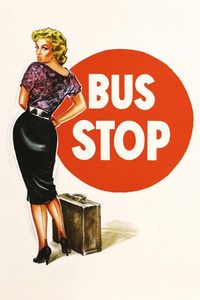
(On Cable TV, September 2020) For movie buffs, Bus Stop is probably best known for being one of Marilyn Monroe’s few dramatic roles, following her year spent studying acting at New York City’s Actors Studio. It does demonstrate some range, although she does remain more memorable as a comedienne than a dramatic artist. The film itself shows a romance between two imperfect people, a naïve cowboy and a small-time signer—best showing its theatrical roots through a heavy reliance on two people verbally interacting through their own character growth. There’s an interesting aspect to the film in how it plays with some classic western tropes in 1950s America—there’s a strange blend of cowboys and buses, saloon singers and telephones. On a visual level, the film couldn’t be more of a 1950s Technicolor film if it tried: If you came across the film cold, you’d be surprised at the blue-and-yellow flesh tone—it’s worth wondering if the film, as shown, has even been restored properly. As a romantic drama, Bus Stop does rely on very dramatic moments, so any appreciation of the film will hinge on whether those moments are believable or not. But there’s an interesting simplicity to the result, focusing more and more intently on the two lead characters until the climax that brings it all together.
(Second viewing, On Cable TV, August 2022) I’m far from having watched all of Marilyn Monroe filmography, but I definitely have my preferences: She’s far more interesting as a comedienne than a dramatic artist, and I’m one of those for whom she’s not much of a sex-symbol. (I’m not denying the fact that she was and remains one —I’m just saying she doesn’t do much for me except when wearing glasses and getting laughs in How to Marry a Millionaire.) Bus Stop, which tries to play up her dramatic abilities in a rather downbeat context, has her being the love interest to a naïve and irritating young man. She thankfully gets one musical number, but otherwise plays a reluctant love interest to someone who should be the villain of the film. Bus Stop amounts to a somewhat obnoxious film if you’re not already onboard the Monroe mythos—not fun to watch, not particularly entertaining when the male lead is so obnoxious, and not particularly deep when it comes to the drama of it all.