Month: September 2020

  • The Greasy Strangler (2016)

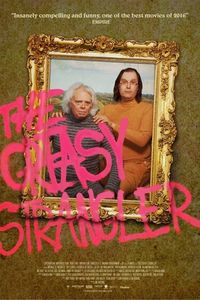
    The Greasy Strangler (2016)

    (In French, On Cable TV, September 2020) There are a few horror subgenres that seldom work well for me, and The Greasy Stranger seems intent on combining two of them. For one thing, it’s a horror/comedy, which often ends up making me wonder why I’m supposed to laugh at horrible people doing terrible things. Then there’s the aesthetics, which (as the title suggests) wallows in an oily mixture of grime and awkwardness. (If movies smelled, I wouldn’t want to see this one.) The story has to do with a serial-murdering father, his son and the woman that comes between them. Taking liberally from the deadpan Midwestern-gothic style of movies like Napoleon Dynamite and the ultra-gore of video nasties, The Greasy Strangler is a film that, on paper, looks sure to irritate any possible indulgence out of me. While I’m still not too fond of the final result, even I have to admit that the film occasionally works better than I thought. There’s an over-the-top nature to the result that sands off the edge of the gore, while the humour does get understandable after a while. The serial killer bit (slathered in grease, popping eyes out via strangulation, cleaning himself in a car wash) is overdone to the point of being almost funnier than gross. The Greasy Strangler is really not a movie for everyone and it certainly relies on that specificity in how it builds its story. It holds nothing back either in gratuitous nudity (male and female), gross moments and overall lack of morality. I was ultimately defeated by the too-nihilistic ending, but for the longest time, the film played better than I thought. Still, this is more of a one-time joke than a kind of film I’d like to see more often.

  • House (1985)

    House (1985)

    (In French, On Cable TV, September 2020) I may need to watch House a second time, because what I got from it was not at all what I was told I would get from it. Various sources say it’s a horror comedy, and, on paper, it’s got a few things that I should love: a writer protagonist, a haunted house, and plenty of gooey 1980s special effects. But in practice? It feels dull, featureless, repetitive and ordinary—just about the base level of what a haunted house film should be, except without any wit or humour. The integration of Vietnam War trauma into genre horror is intriguing but falls flat, and much of the family drama seems overly serious for what’s supposed to be lighthearted. I don’t know—maybe I just wasn’t in the mood for House. Maybe I’ll have another look at some other time. Until then, though, I can’t recommend it.

  • Bell Book and Candle (1958)

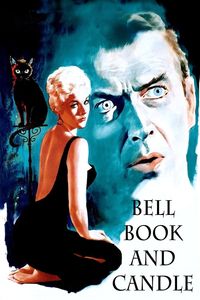
    Bell Book and Candle (1958)

    (On Cable TV, September 2020) The ridiculously charming Bell Book and Candle combines a few of my favourite things: James Steward, Jack Lemmon, witches, cats and a supernatural romantic comedy. Pairing-wise, there is a nice contrast between Kim Novak’s glamorous sophistication and Stewart’s down-to-Earth affability, and the film doesn’t skip an occasion of making good use of it. Lemmon (and Ernie Kovacs) brings more overt comedy in the film’s subplot. Even the cat has a role to play—and it all takes place in Manhattan’s Beatnik-central Greenwich Village. Shot in very enjoyable Technicolor, Bell Book and Candle is both a fairly standard romantic comedy and a very cute one. [November 2024: Let it be recorded that, inspired by this film, I tried for months to get my cat to stand on my shoulders. I occasionally succeeded, which is not bad given the nature of my cat. The pandemic was weird.]

  • A Woman Rebels (1936)

    A Woman Rebels (1936)

    (On Cable TV, September 2020) If there is no Katharine Hepburn biography titled A Woman Rebels, then it’s a missed opportunity for the ages. The film of that name is so very much a 1930s Hepburn film, featuring her headstrong personality and embracing surprisingly feminist themes roughly three decades before everyone else. In Victorian England, a woman shows her independence by raising a child out of wedlock, and by becoming an activist for women’s causes -an ideal role for the iconoclastic Hepburn. Often blunt but nonetheless fascinating, A Woman Rebels is an illustration of just how good Hepburn was in the 1930s—a mesmerizing beauty, a ferocious screen presence and a canny performer. Alas, the film flopped and led to a near-career-death experience for Hepburn, who took years to get back on top as box-office performer. File this one under “the future knew better.” Also worth noting: Van Heflin in his film debut. While A Woman Rebels is not that good of a film (a bit fuzzy, a bit jumbled, a bit overlong), Hepburn easily overpowers those flaws to make the film worth watching, especially for her fans or anyone interested in film progressivism.

  • Easy to Wed (1946)

    Easy to Wed (1946)

    (On Cable TV, September 2020) Considering that Libeled Lady is one of the great comedies of the 1930s, I wasn’t sure that a decade-later remake could be all that good. But Easy to Wed turns out to be one of those remakes under the form of a musical comedy, and a much more farcical tone thanks to actors going for laughs over fidelity to the first film. Van Johnson, Esther Williams and Lucille Ball sing and strut their stuff (in and under water, in Williams’ predictable case) to end up making something so pleasantly different from the original that it becomes its own thing. As a bonus, you can see in Ball’s scene-stealing performance the kernels of her later Lucy character. If you like musicals, Easy to Wed is not a bad remake—but be sure to see Libeled Lady for a better movie.

  • The Kentucky Fried Movie (1977)

    The Kentucky Fried Movie (1977)

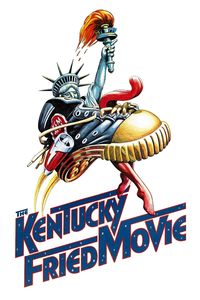
    (TubiTV Streaming, September 2020) Films like The Kentucky Fried Movie are best appreciated as portents of better things to come. The number and later pedigree of people involved in its production is incredible—sophomore feature film from John Landis, first movie script by the legendary Zucker-Abrams-Zucker trio, appearances by George Lazenby, Henry Gibson and Donald Sutherland… all in semi-related comedy sketches relying on a lot of sudden crudity, silliness and bare breasts. The problem, though, is that if The Kentucky Fried Movie is amusing, it’s not quite as frequently funny—there’s a sense that it’s all juvenile and not quite ready for prime time, even as it does its best to get laughs. What may be funnier now than it was upon release is the deluge of references to a variety of 1970s pop-culture, politics and sports: either watch the film with Wikipedia in hand, or enjoy the even stranger sense of jokes flying over your heads. The Kentucky Fried Movie would have many inheritors—it’s an early prototype of a style of comedy that would become Airplane! and Top Secret! and The Naked Gun, but it’s not quite cooked yet. (It’s still funnier than any of the spoof movies of the 2000s, though.)

  • The Adventures of Buckaroo Banzai Across the 8th Dimension (1984)

    The Adventures of Buckaroo Banzai Across the 8th Dimension (1984)

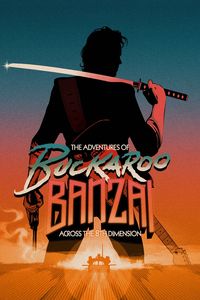
    (Youtube Streaming, September 2020) This may count as my second viewing of The Adventures of Buckaroo Banzai Across the 8th Dimension, except that my first viewing, decades ago, left me with disconnected, confused memories. Not that this second viewing is any different because this film really feels as if it’s a mashup of about six different movies thrown in a blender, with the protagonist somehow inheriting the characteristics of all six leads. Buckaroo Banzai, after all, is a physicist, neurosurgeon, test pilot, and rock star whose various specialties (and equally diverse collaborators) are ideally suited to detecting and countering an alien invasion of Earth. Filled with non sequiturs, outrageous contrivances, deadpan humour and bizarre combinations of tossed-off awesomeness, The Adventures of Buckaroo Banzai Across the 8th Dimension is a cult classic in the purest sense: It’s going to be incomprehensible to most, and beloved by a few. I’m firmly but not obsessively in the second camp—this is brilliant, off-beat stuff, the likes of which only the 1980s were capable of producing. Peter Welles is unflappable in the lead role, while Jeff Goldblum is hilarious as a supporting player, and John Lithgow chews all the scenery he can find in what feels like an audition for 3rd Rock From the Sun. Even its dearest fans will tell you that The Adventures of Buckaroo Banzai Across the 8th Dimension has the flaws of its qualities: that it’s ridiculously undisciplined and that at least another script rewrite to bring it all into focus would have produced wonders. But when it works (or rather, if it works), then it really works. The biggest surprise, frankly, is why there hasn’t been a remake since then—this strikes me as the ideal fixer-upper; the best Doc Savage film ever made under another name. Even thirty-five years later, we still stare at it in awe.

  • Nashville (1975)

    Nashville (1975)

    (Kanopy Streaming, September 2020) I don’t think I’ll ever love a movie from writer-director Robert Altman (well, maybe The Player), but I can certainly admire a few of them, like Nashville. Of course, Nashville is The Big One for Altman—the one most often referred to as the purest incarnation of his themes and methods, the one selected for inclusion in the National Film Registry, the one with perhaps the biggest scope and cast. It follows no less than 24 characters over five days in Nashville, in between many music performances and one political convention. Equally fascinated with music and politics, Nashville is a messy, unclean film: everything is improvised, everyone has shaggy hair, everywhere you look shows America at its most 1970s. (There’s a very real time-capsule element to this film.) This is Altman at his most Altmanesque, with overlapping dialogue, accidental cinematography, improvised narrative, grainy images and a mixture of artistic and political. It’s not, at 160 minutes, a breezy watch: the need to keep track of who’s everyone and what they’re doing can give brain cells a workout by itself. It’s not, to be blunt, my kind of film: I like cinema to be tight, focused, overengineered and deliberate. But as a demonstration of what’s possible at the antithesis of what I like, Nashville is eloquent enough. Not easy to like, but easy to respect.

  • Black Hand (1950)

    Black Hand (1950)

    (On Cable TV, September 2020) In retrospect, it’s amazing that legendary singer-dancer-choreographer Gene Kelly would take a few months in the middle of his most productive years as a musical star to play the lead dramatic role in Black Hand, a very serious film noir about the Italian Mob in New York City. I mean, sure, he’s pretty good at it—but isn’t it a waste? He’s certainly not the weak link in this competent but hardly inspired gangster film: Director Richard Thorpe delivers a perfunctory product, slightly more stylish than similar 1930s urban crime films but not by much. Despite being produced by MGM, it often feels more Warners—not everything is polished to a sheen, and it really embraces the urban gangster theme. On the other hand, Black Hand does feel too long even at 92 minutes. Kelly would play plenty of dramatic roles before the end of his career, but this was the first and perhaps the hardest edged of them all.

  • River of No Return (1954)

    River of No Return (1954)

    (On Cable TV, September 2020) It took a lot to combine Robert Mitchum, Marilyn Monroe and director Otto Preminger on the set of a colour widescreen Western shot in Canada. But was it worth it? Watching River of No Return and then reading about its eventful production history suggest that a film about the making of the film would be more interesting than the film itself. While not strictly a failure, this is a movie that seems oddly conceived, awkwardly executed and barely worth the trouble. Mitchum stars as a taciturn farmer who’s robbed and forced to race to town on a raging river, alongside an estranged son and a saloon singer (Monroe). A very 1950s script doesn’t make things better, considering that it includes a near-rape scene between “hero” and “heroine” and a retrograde portrayal of Native Americans. Technical aspects have not aged well, with obvious differences between studio footage and on-location shooting (which is the kind of thing you learn to tolerate from period films, except this one tries to be an action movie). In the end, River of No Return barely claws its way to mediocrity, which is a far deal less than what we could expect from the talent involved. If you’re even remotely familiar with Mitchum, Monroe and Preminger, then the feeling that all three are out of their urban environment persists throughout River of No Return—and reading about the troubled production of the film only reinforces the idea that there was no way this was going to turn out to be a good movie. As a Mitchum fan, I’m not impressed; as someone who’s not a Monroe fan, I am still disappointed; and as a Preminger fan, I understand why he walked away from the film in post-production.

  • Un divan à Tunis [Arab Blues] (2019)

    Un divan à Tunis [Arab Blues] (2019)

    (On Cable TV, September 2020) Only one word was needed to get me watching Un divan à Tunis: Golshifteh. The delightful Golshifteh Farahani, specifically—an actress of Iranian origin (now exiled due to her playing in films that the government did not approve) living in France who’s been catching my eye since 2010’s Body of Lies. While she’s been in various films on both sides of the Atlantic since then, Un divan à Tunis gives us the opportunity to see her in a comic leading role, as a Tunisian-born psychiatrist who returns home from France with the intention of setting up a psychoanalytic practice of her own. Much of the comedy consists of seeing this very liberal and educated woman encounter various prejudices and try to improve people’s lives despite many obstacles. As many Tunisian cinephiles have commented, this is ideologically far more of a French film than a Tunisian one—although the local colour of the film is strong and the sense of place of Tunis is charming. As for Farahani, she is wonderful in a film designed as a showcase—funny, attractive, clever and sensible. (Even her terrific hair gets a subplot of its own, as an ill-advised haircut gets immediately nixed in favour of a better curly alternative.) I like the actress a lot—she’s better than the material—but if Un divan à Tunis is not meant to be particularly deep or nuanced, it’s quite a bit of fun by itself.

  • Spies in Disguise (2019)

    Spies in Disguise (2019)

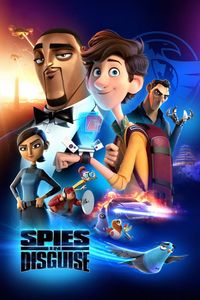
    (On Cable TV, September 2020) While hardly the best or most original animated film in recent memory, BlueSky’s latest (and possibly last) offering Spies in Disguise is a pleasant, fast-paced, funny and likable family film. Will Smith is in fine form as he voices a top-secret agent who gets transformed into a pigeon and must investigate who framed him against his own clandestine agency—with Tom Holland awkwardly voicing a nebbish teen science genius. There’s a good blend of action and comedy here, with the two creating sparks when the inherently ridiculous concept of a human transformed into a pigeon goes poking against the most serious tropes of spy fiction. Clearly funnier to younger members of the audience without necessarily losing their adult chaperones, Spies in Disguise often plays it safe with its pacifist message, broad physical comedy and bright colourful visuals. But, hey, it works—I can’t imagine anyone being angry at this film…, but then again, I can’t imagine anyone older than ten really loving it. But that’s fine—We’re not expecting the world out of Spies in Disguise, just being entertained for an hour and a half.

  • Beat the Devil (1953)

    Beat the Devil (1953)

    (On TV, September 2020) I’m a bit surprised at how Beat the Devil doesn’t work as well as I was expecting. On paper, it looks like a slam-dunk: a comic adventure starring Humphrey Bogart (plus Jennifer Jones, Gina Lollobrigida and Peter Lorre!), directed by John Huston and co-written by Truman Capote, all taking place in exotic British East Africa. It’s explicitly made as a parody of earlier films, and concerns swindlers trying to claim uranium-rich lands. I mean, how can this fail to deliver? But it does—the herky-jerky script struggles with consistent tone (a likely artifact from having been reportedly rewritten on a daily basis), the comedy is weighted down by bland direction and the visual flourish of the film is nothing worth reporting on. Some of the film’s production history suggests that it was almost treated as a vacation by Huston, Bogart and others, and this lack of discipline clearly shows—it’s also unclear if Huston had a sense for comedy, as demonstrated by what Beat the Devil tries to pass off as funny. This being said, I’m putting an asterisk (*) here to revisit this film in a while, just to see if I either understand more about what it’s reputedly trying to parody, or if I’m in a potentially better mood to accept what’s going on here.

    (Second Viewing, On TV, December 2021) This is my second go-around on Beat the Devil, and I’m still as dumbfounded (or disappointed) as during the first. At another glance, this still feels like a can’t-miss film: A group of shady characters; striking actors such a Humphrey Bogart, Peter Lorre, Gina Lollobrigida and Jennifer Jones; directing by John Huston; and a script by Truman Capote. Better yet – the film is often presented as comedy, spoofing the kind of character-based adventure films that Hollywood was churning out at the time. The problem is that none of these things quite add up. It’s clearly not serious, but it’s not all that funny either, and the florid dialogue doesn’t add up to a compelling storyline. Some of this weirdness can be explained by taking a look at Beat the Devil’s production history – with the director ripping up the script on the first day of shooting and Capote churning out material as the shoot went on. The disjointed aspect of the film isn’t helped by actors goofing off when the goofing off doesn’t have a point. I gave the film a second look hoping that it would make more sense a second time around, but merely found my interest wandering again for what I feel are the same reasons. Oh, the occasional bon mot perked up my interest from time to time, but it’s not enough, not sustained into a coherent narrative nor a coherent comic tone. Maybe I’ll give it a third try. Maybe I’ll just ignore Beat the Devil as something that simply doesn’t work on me.

  • Edward, My Son (1949)

    Edward, My Son (1949)

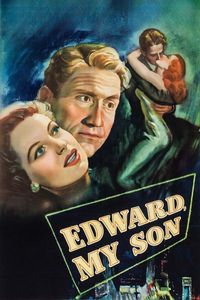
    (On Cable TV, September 2020) There are two interesting things to chew upon while watching Edward, My Son—first, the conceit of having a film named after a character that is never shown (or heard) on-screen; and second, seeing Spencer Tracy play a despicable character. The film is a character study of the father, as his own personal failings help shape the deplorable personality of his (unseen) son, all leading to retribution both legal and personal. The protagonist’s egomania fuels his desire to shape his son into a more privileged version of himself, and this shaping extracts a toll on both men. It’s a decent theme and an intriguing premise (somewhat stylized by presenting the passage of time through candles on birthday cakes—this is adapted from a theatrical play) but in execution falls somewhat flat. The pacing is off, the staginess of the presentation reminds us that this is all a conceit, and all the parts don’t quite come together harmoniously. But, hey, Spencer Tracy being evil—at least there’s that.

  • The Enemy Below (1957)

    The Enemy Below (1957)

    (On TV, September 2020) While The Enemy Below may, at first glance, be nothing more than a naval WW2 adventure between an American destroyer and a German submarine, a few rewards await those looking a little deeper. For one thing, it’s shot in pretty good Technicolor, giving further life to a wartime adventure. For another, it’s directed by none other than Dick Powell, in the third act of his life as a filmmaker after being a musical matinee idol and then a film-noir tough guy. The result of his fourth directorial effort, adapted from a novel, is a tense cat-and-mouse game between two experienced military officers with unequal means. The destroyer does not have an advantage over the submarine, and that keeps the action going throughout most of the film, and provides a spectacular climax between the two war machines. It took two great actors to fill the shoes of the characters, and we get that with Robert Mitchum (surprisingly credible as a military officer) and Curd Jürgens as the Hitler-hating German submarine commander. The Enemy Below won an Oscar for special effects and looks like it. It’s all quite enjoyable—relatively light at 98 minutes, and buoyed by capable lead performances. Even in the generally good subgenre of submarine movies, it’s above average.